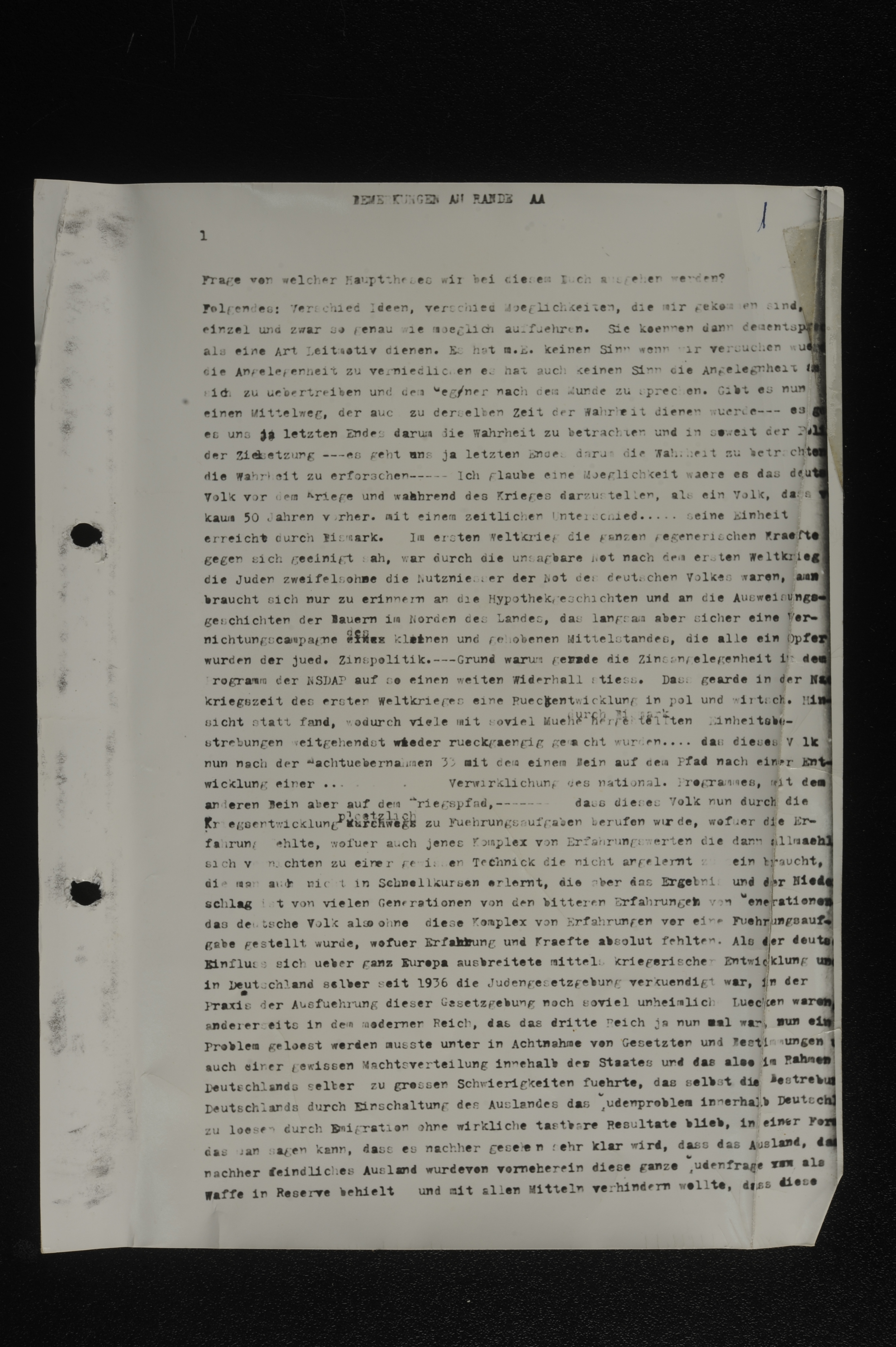
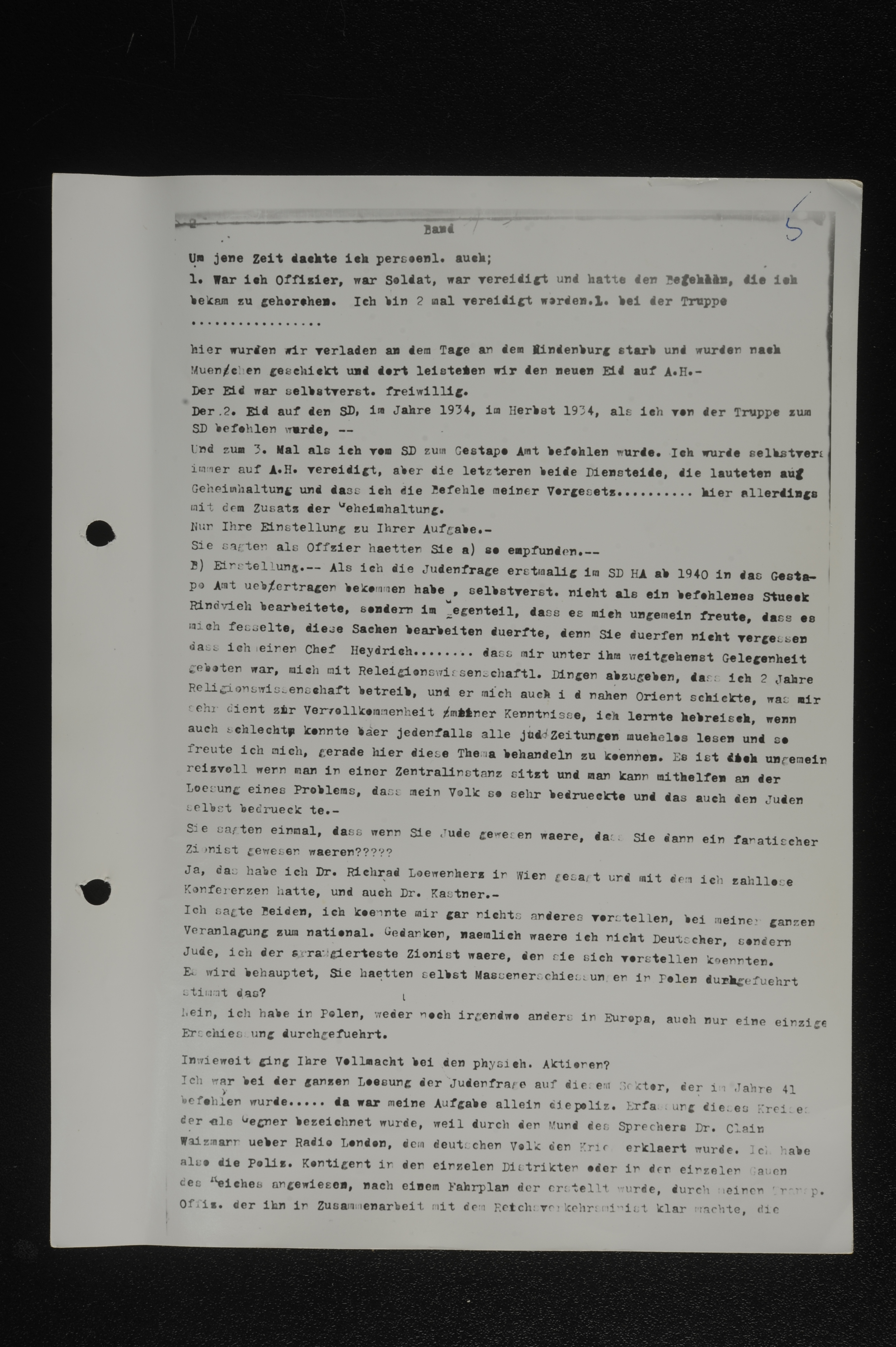
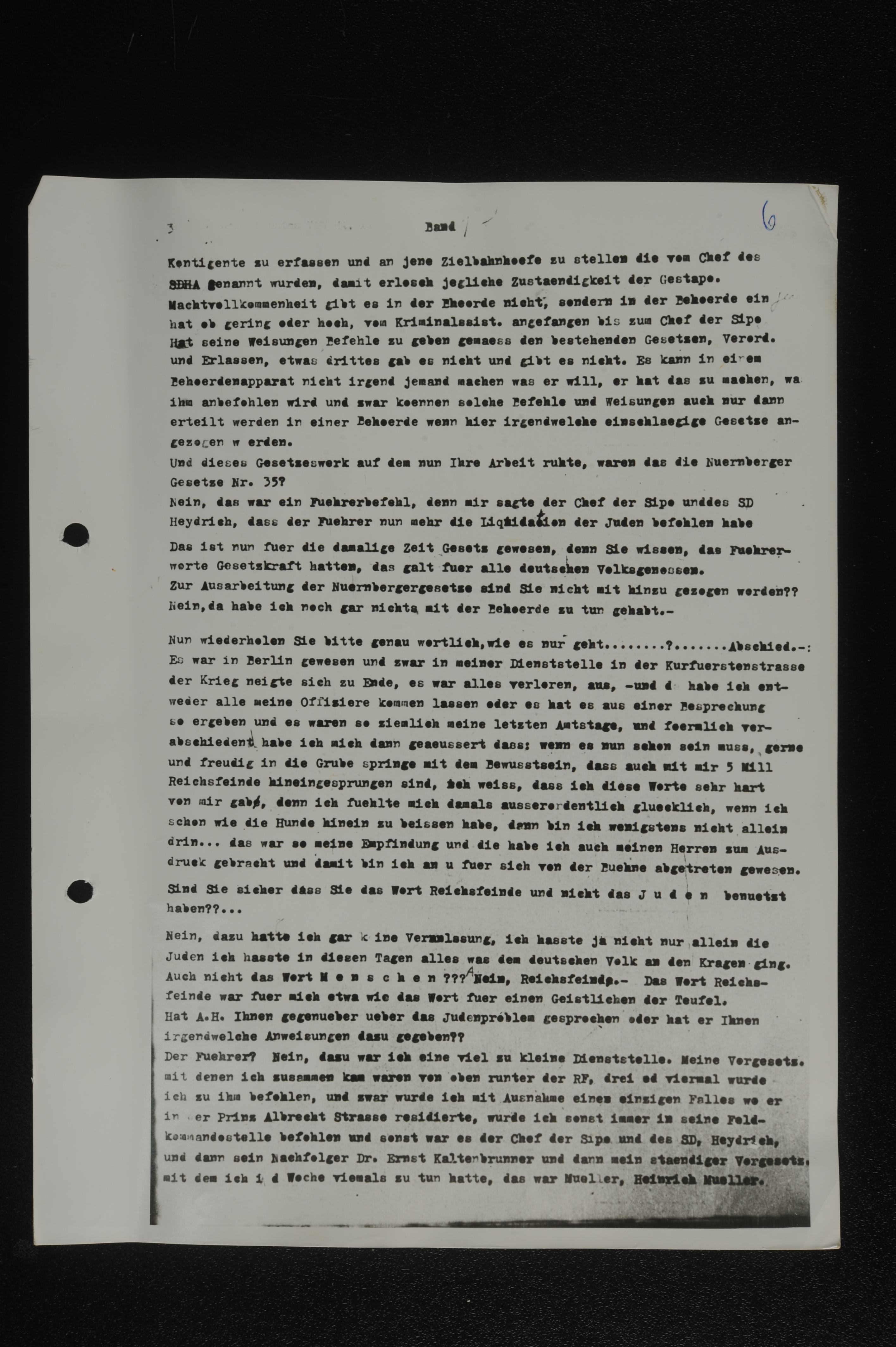
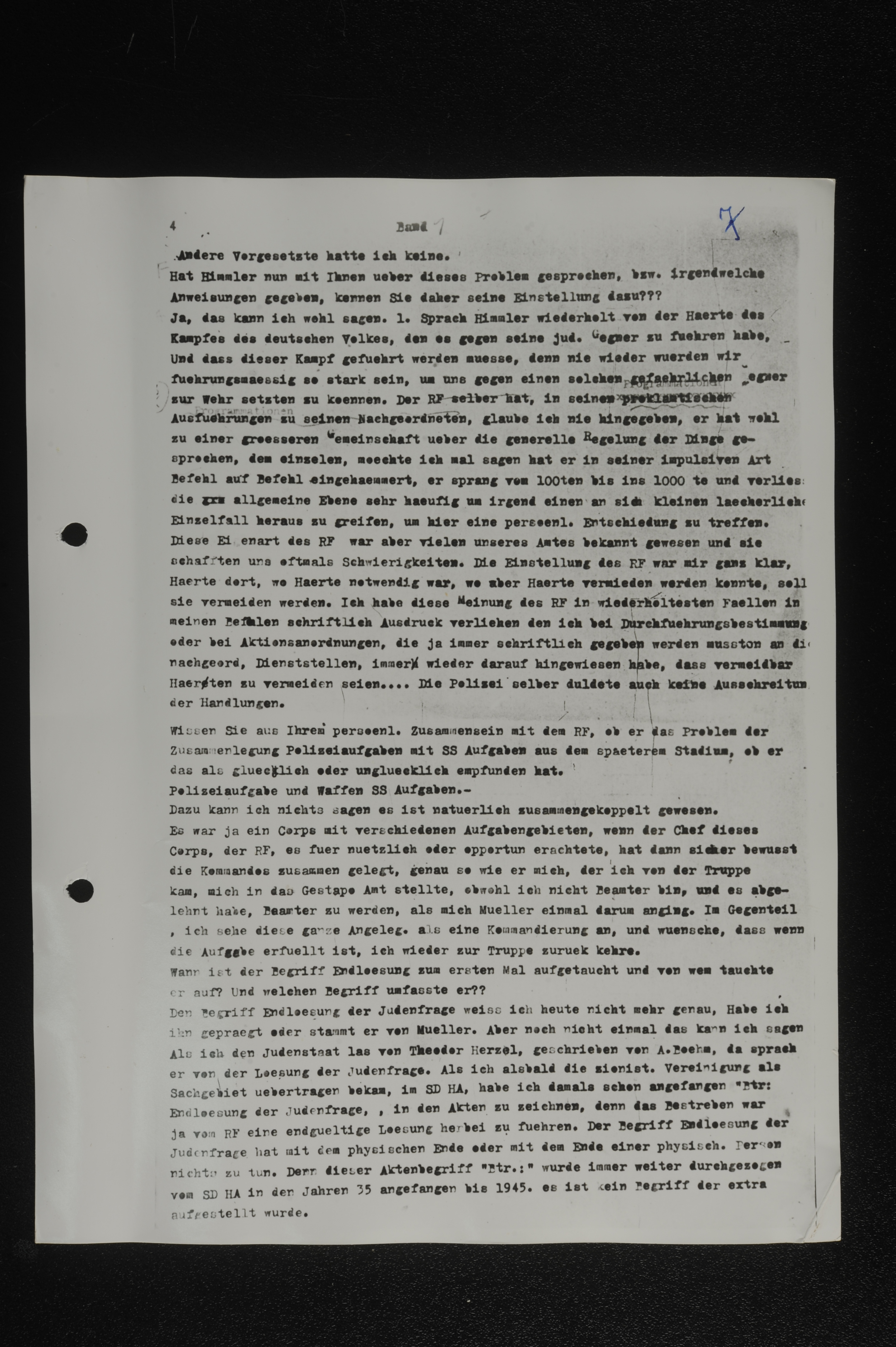
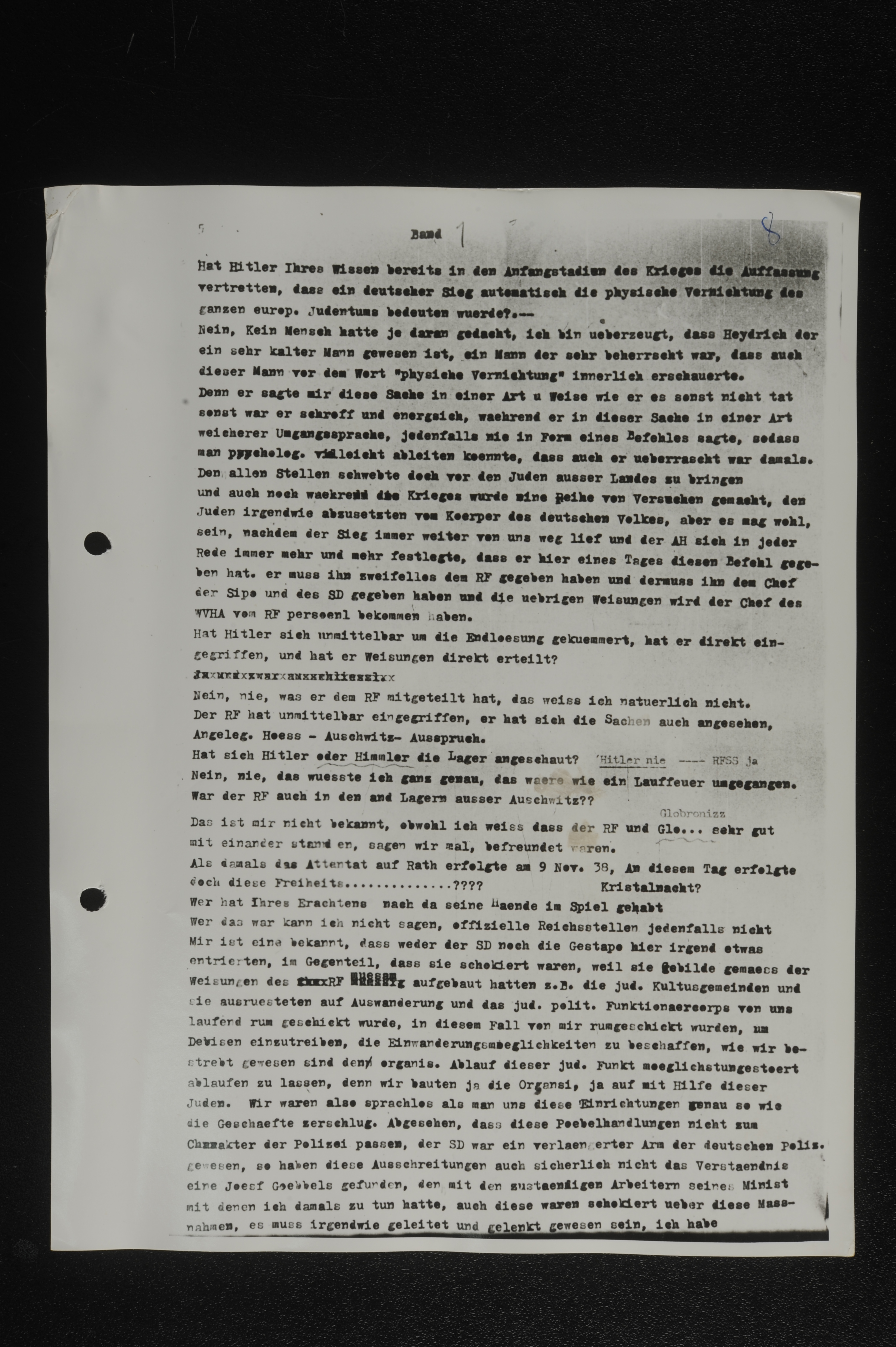
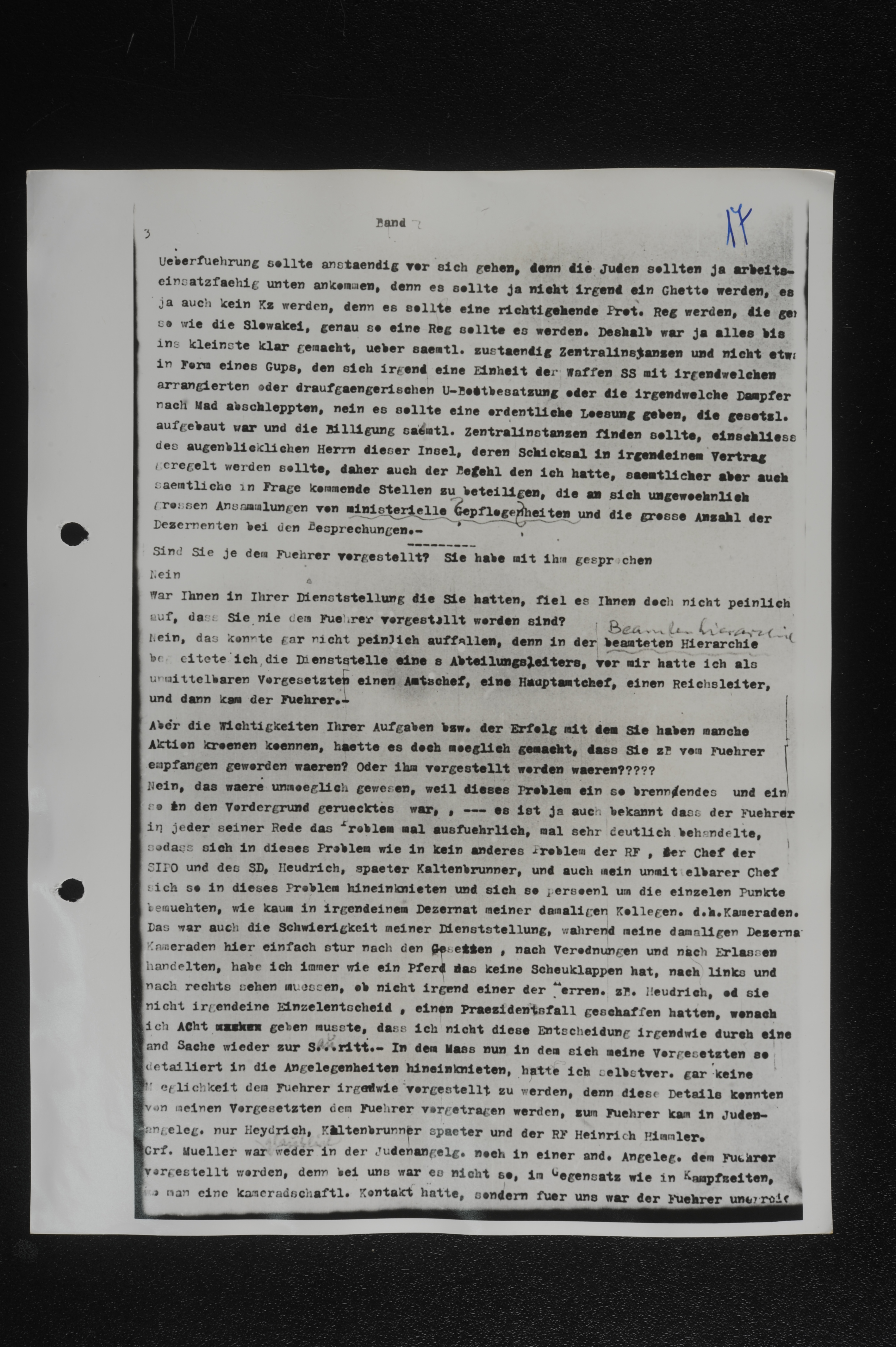
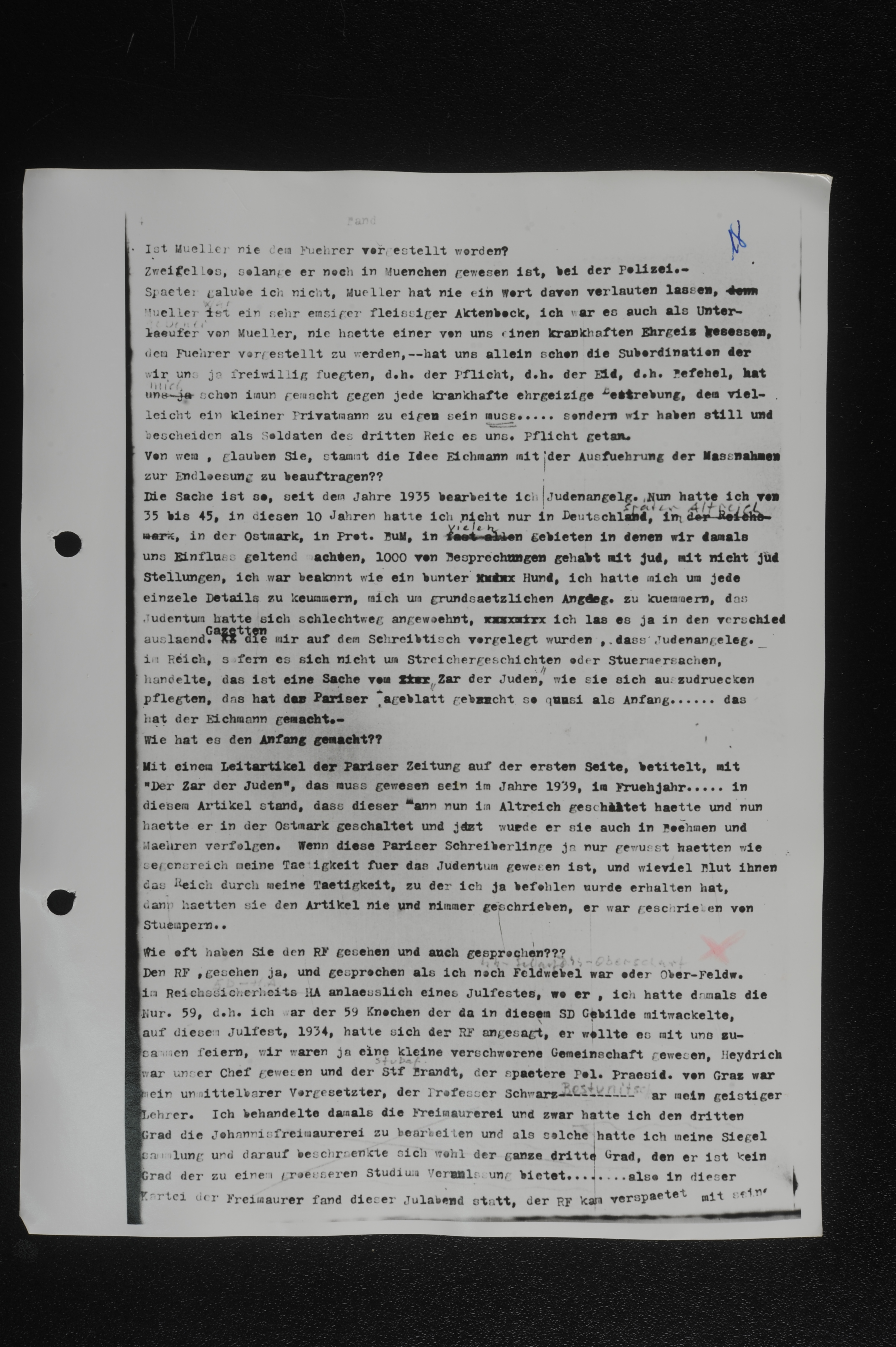
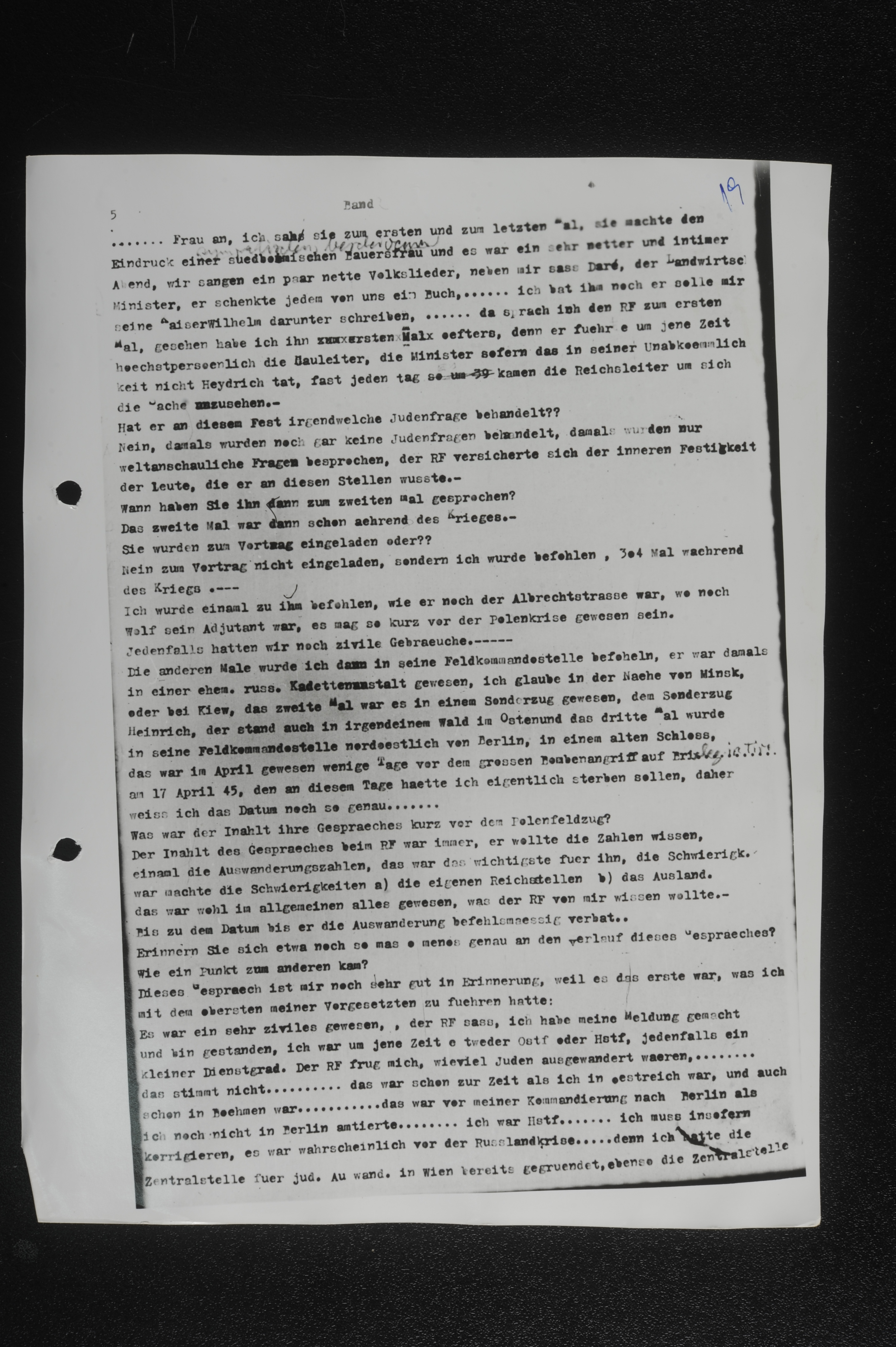
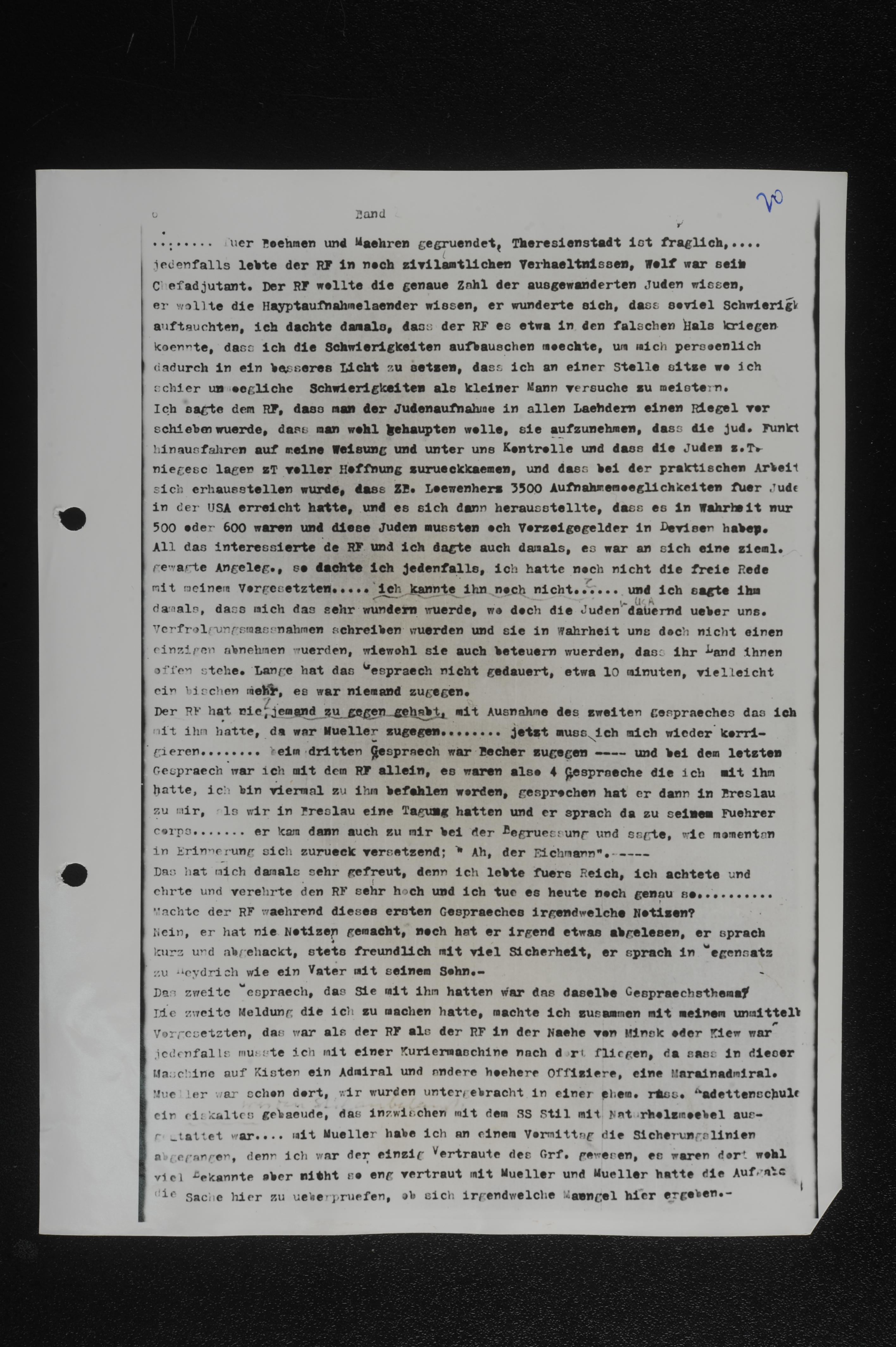
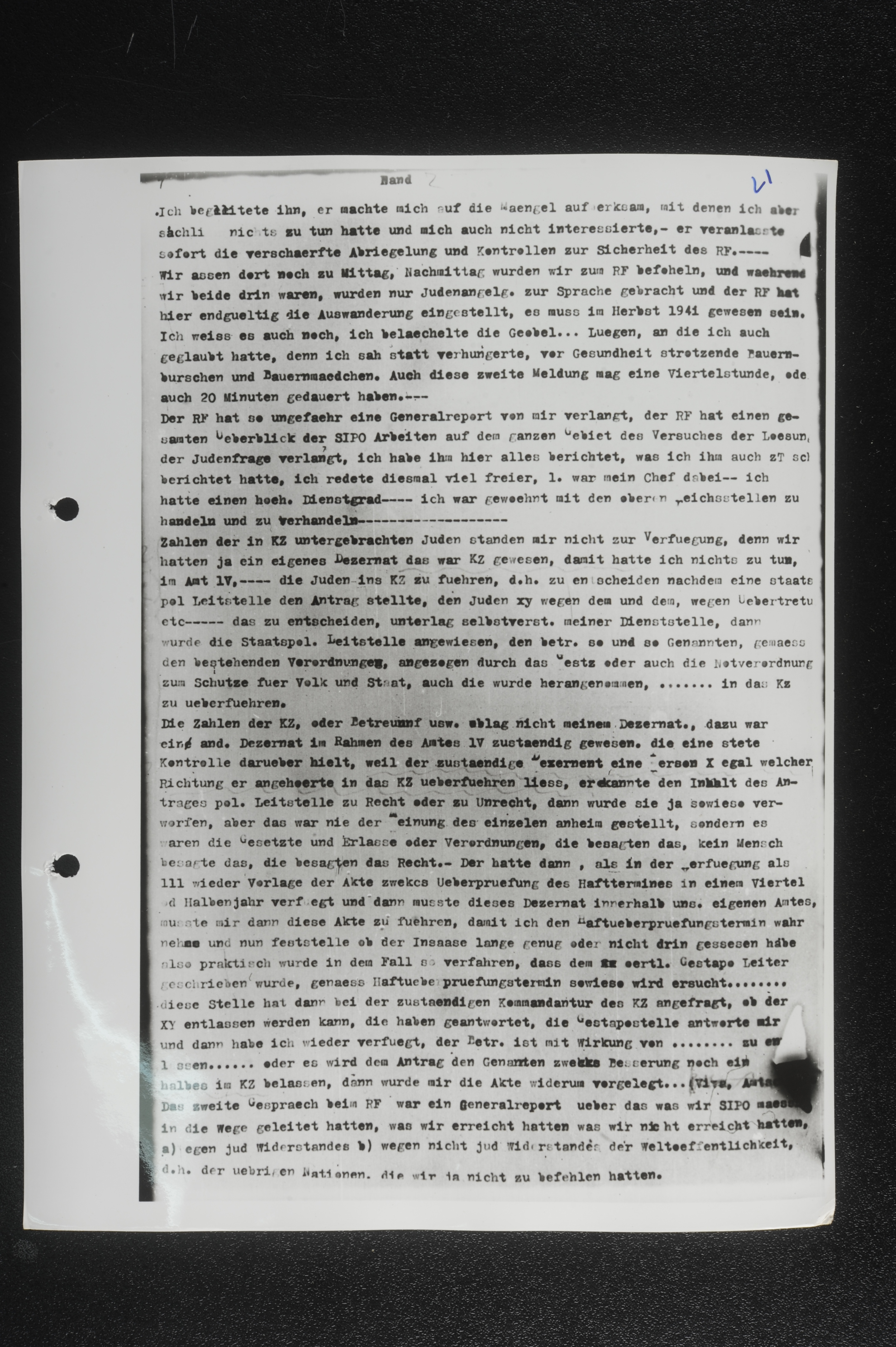
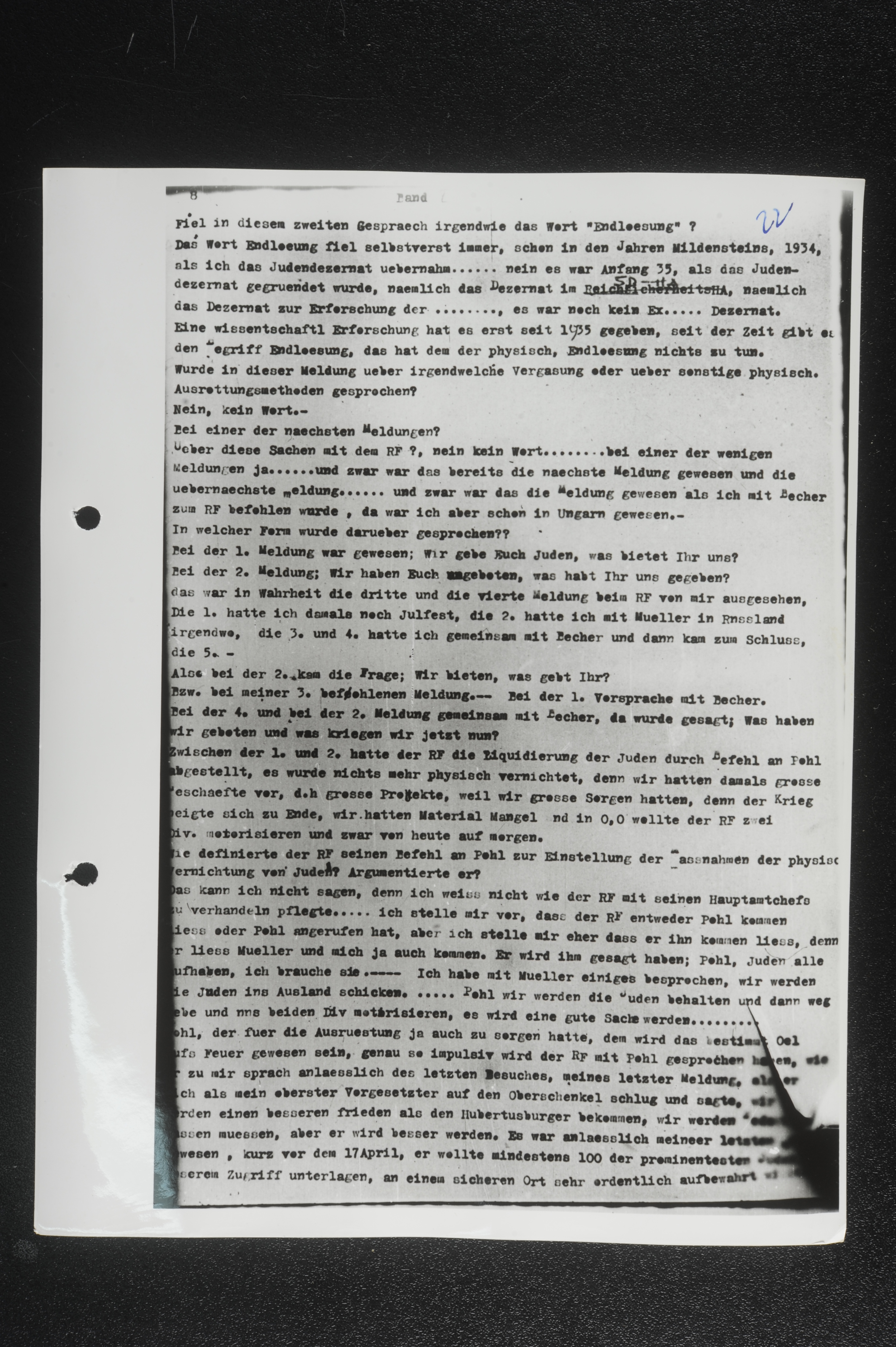
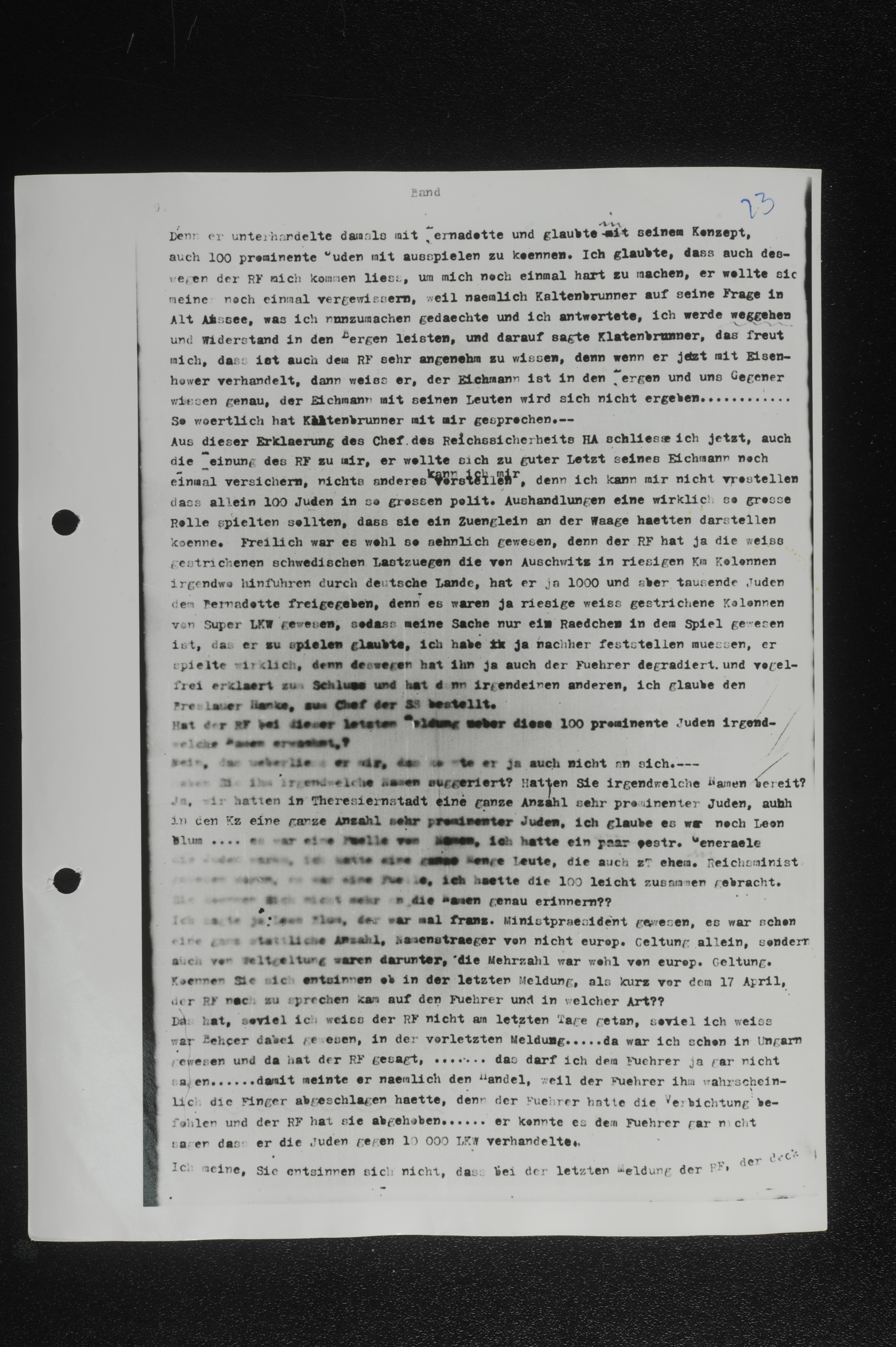
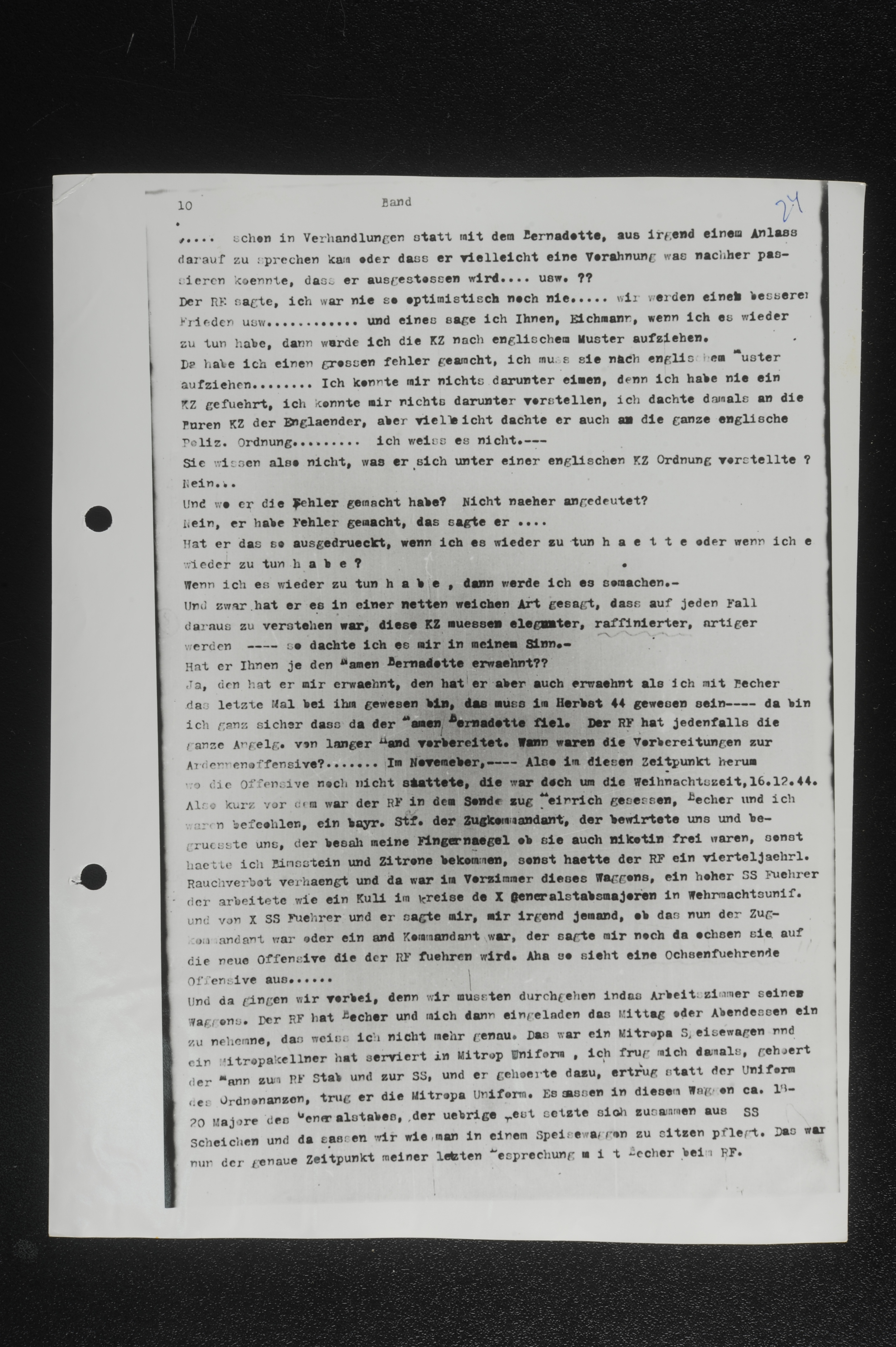
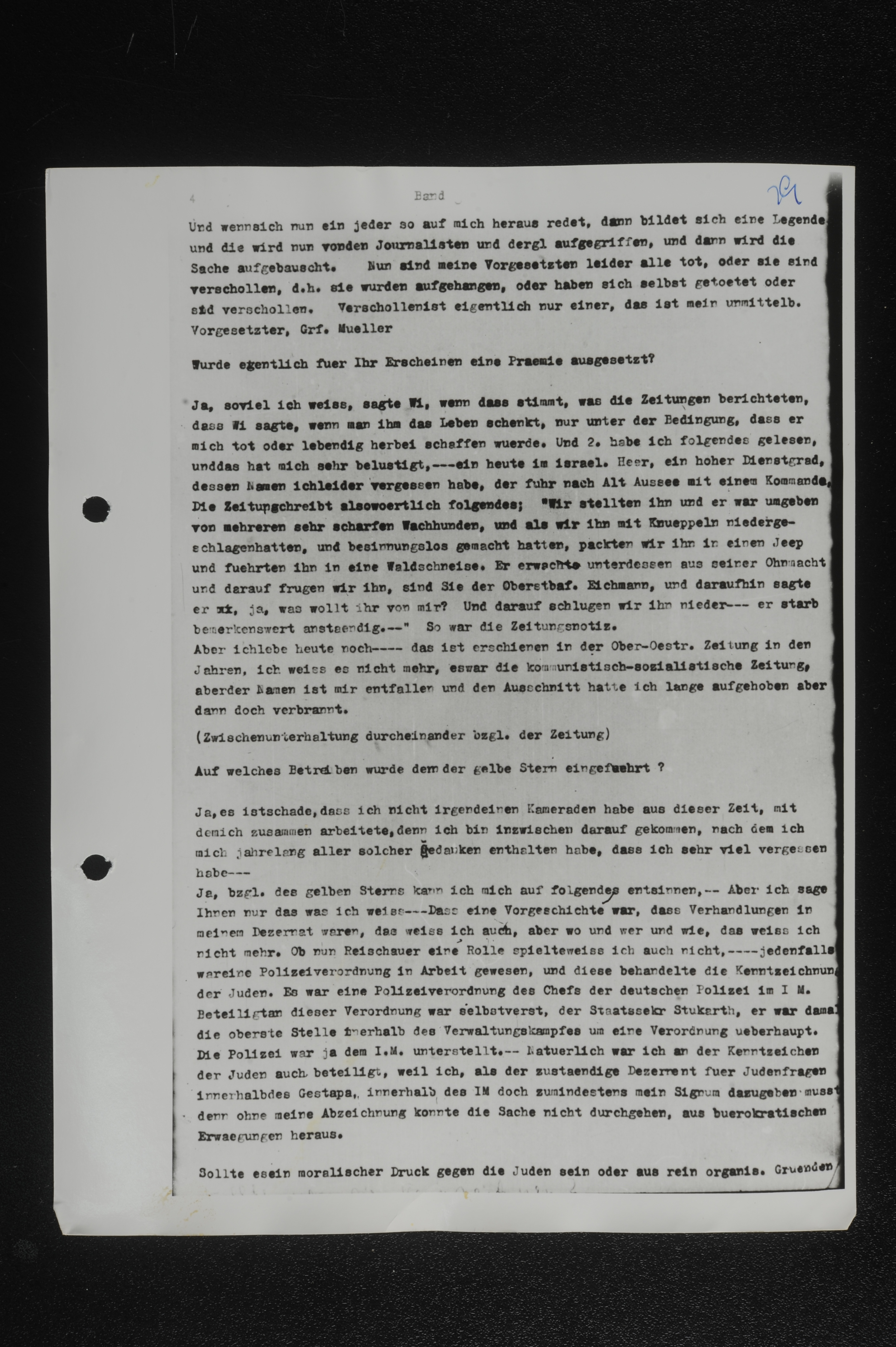
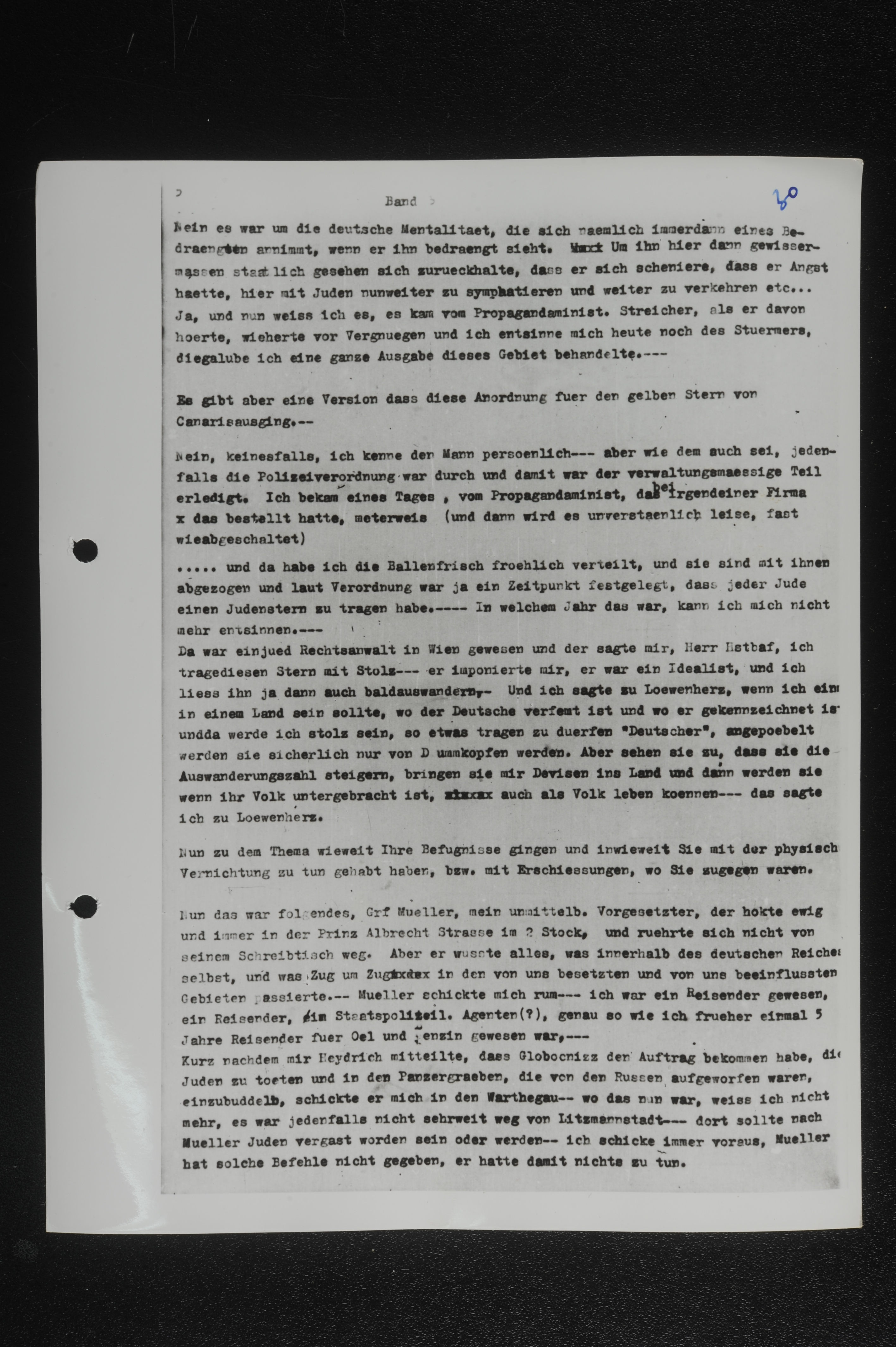
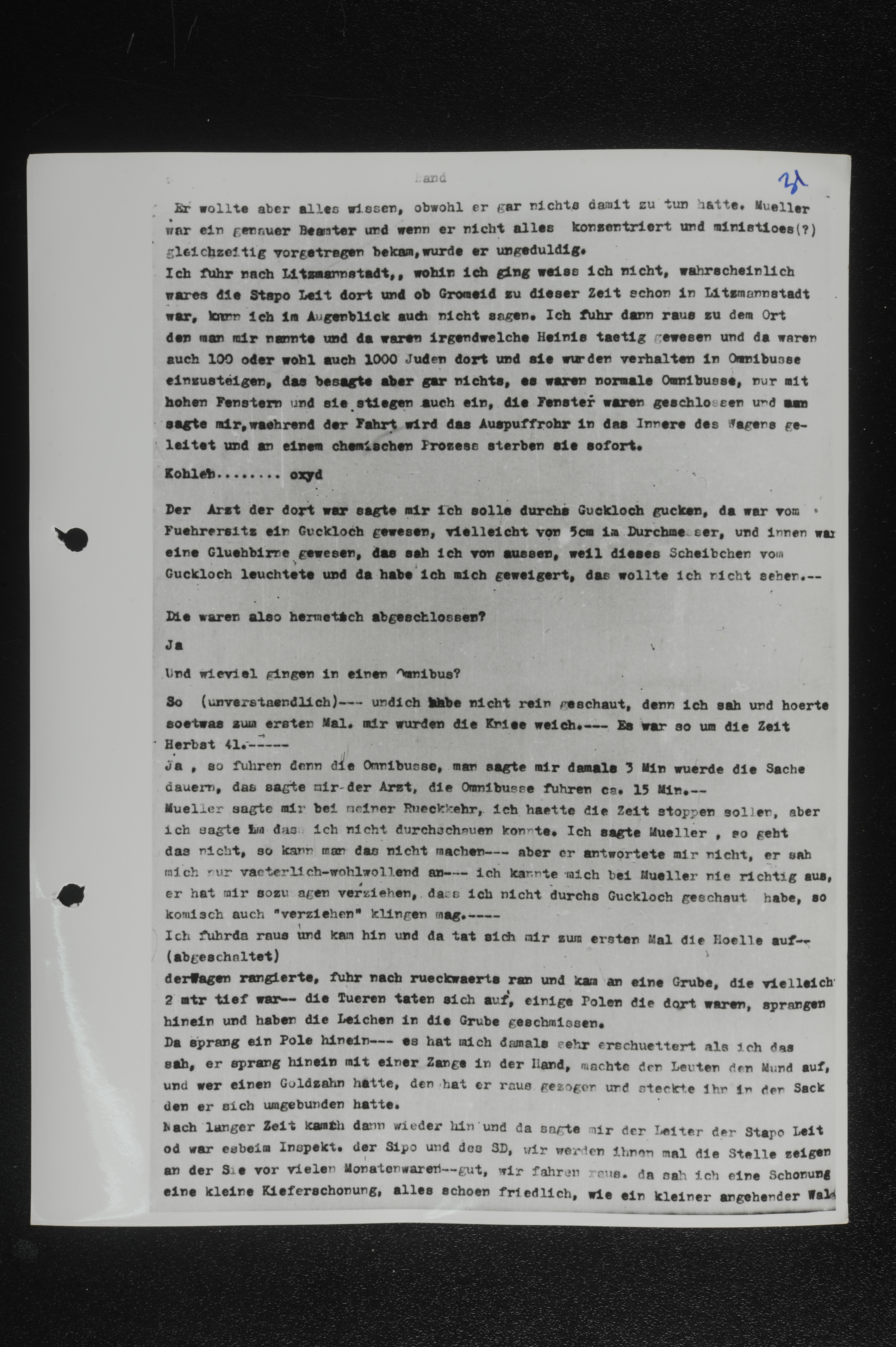
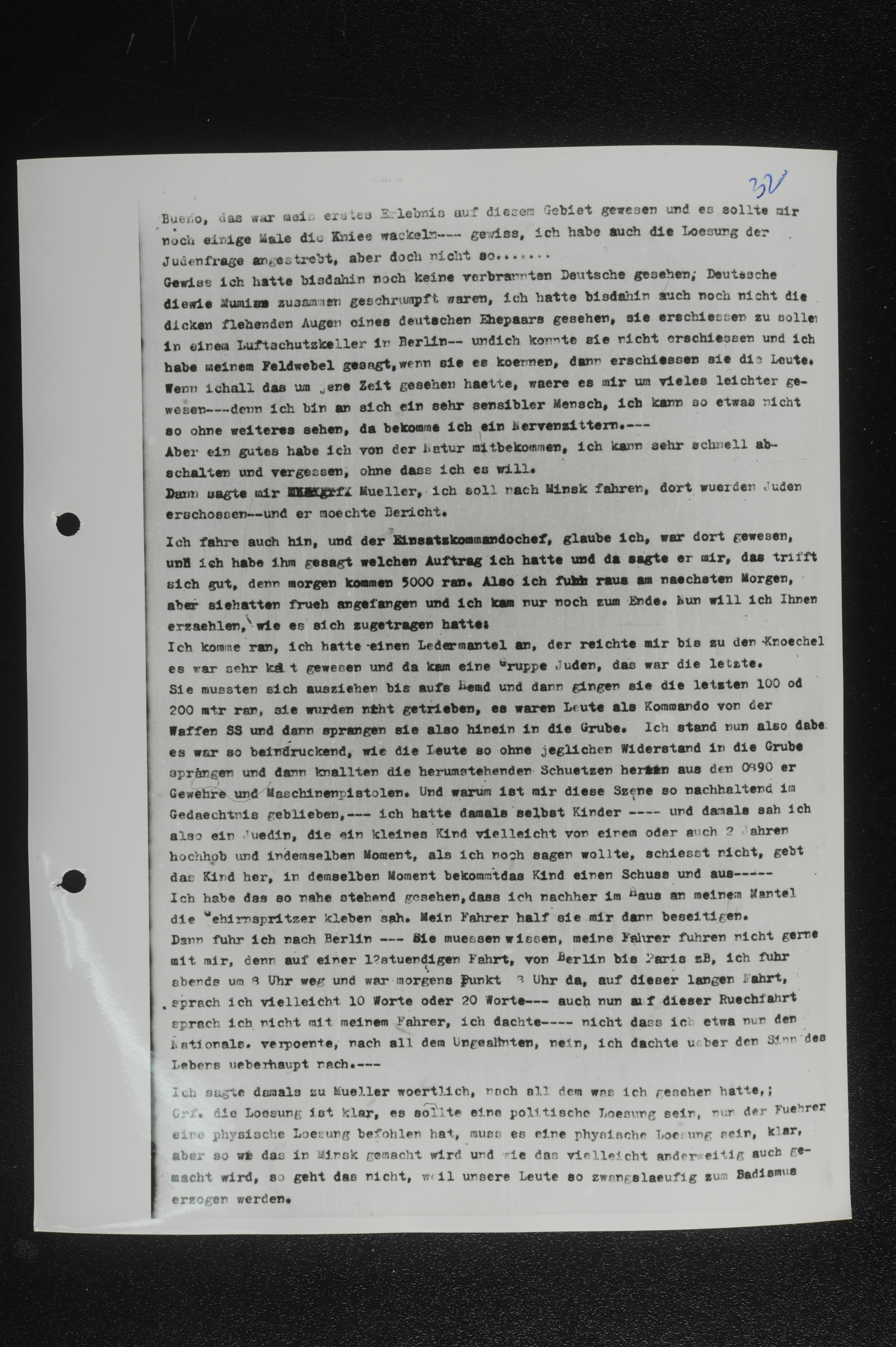
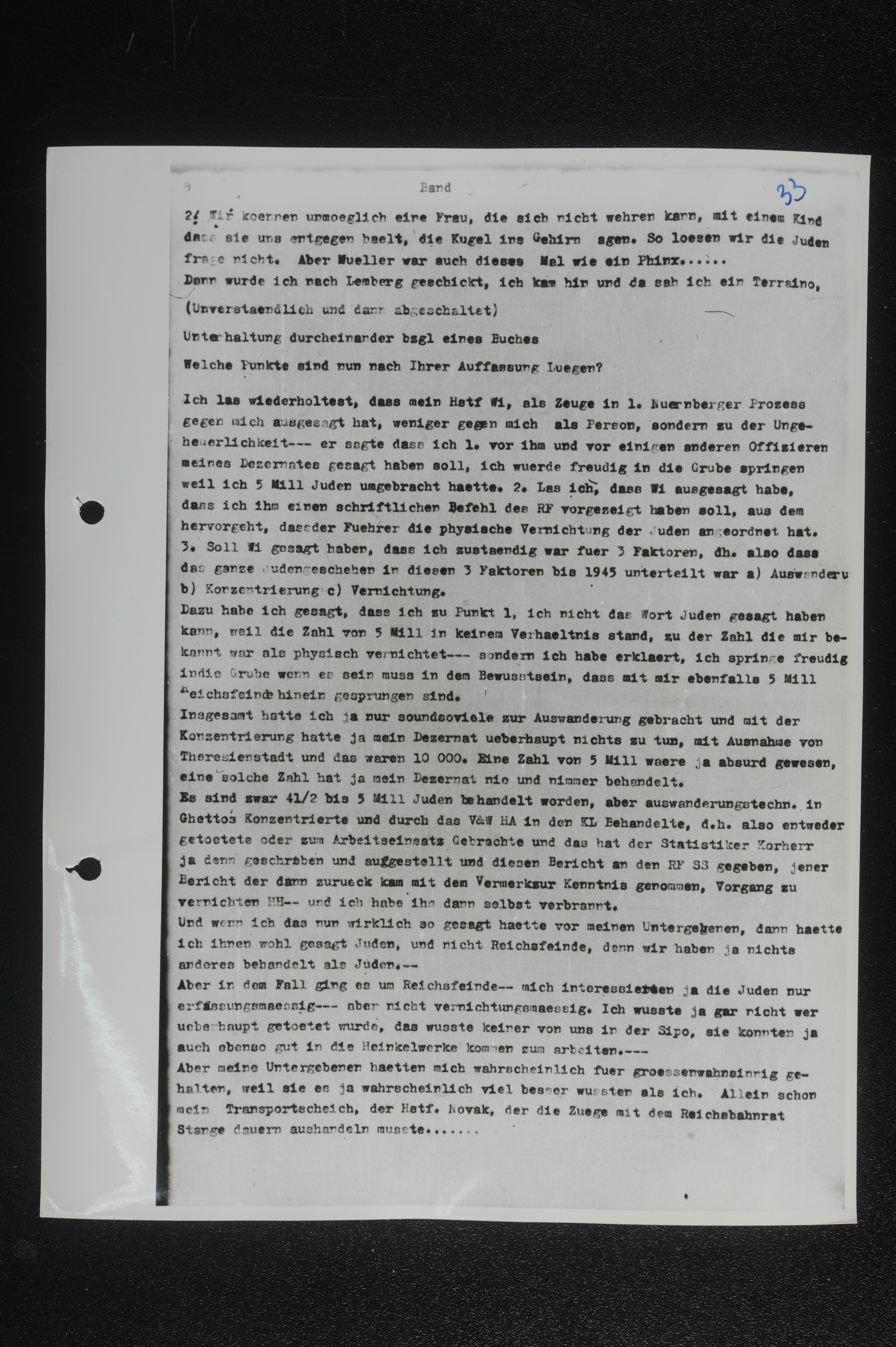
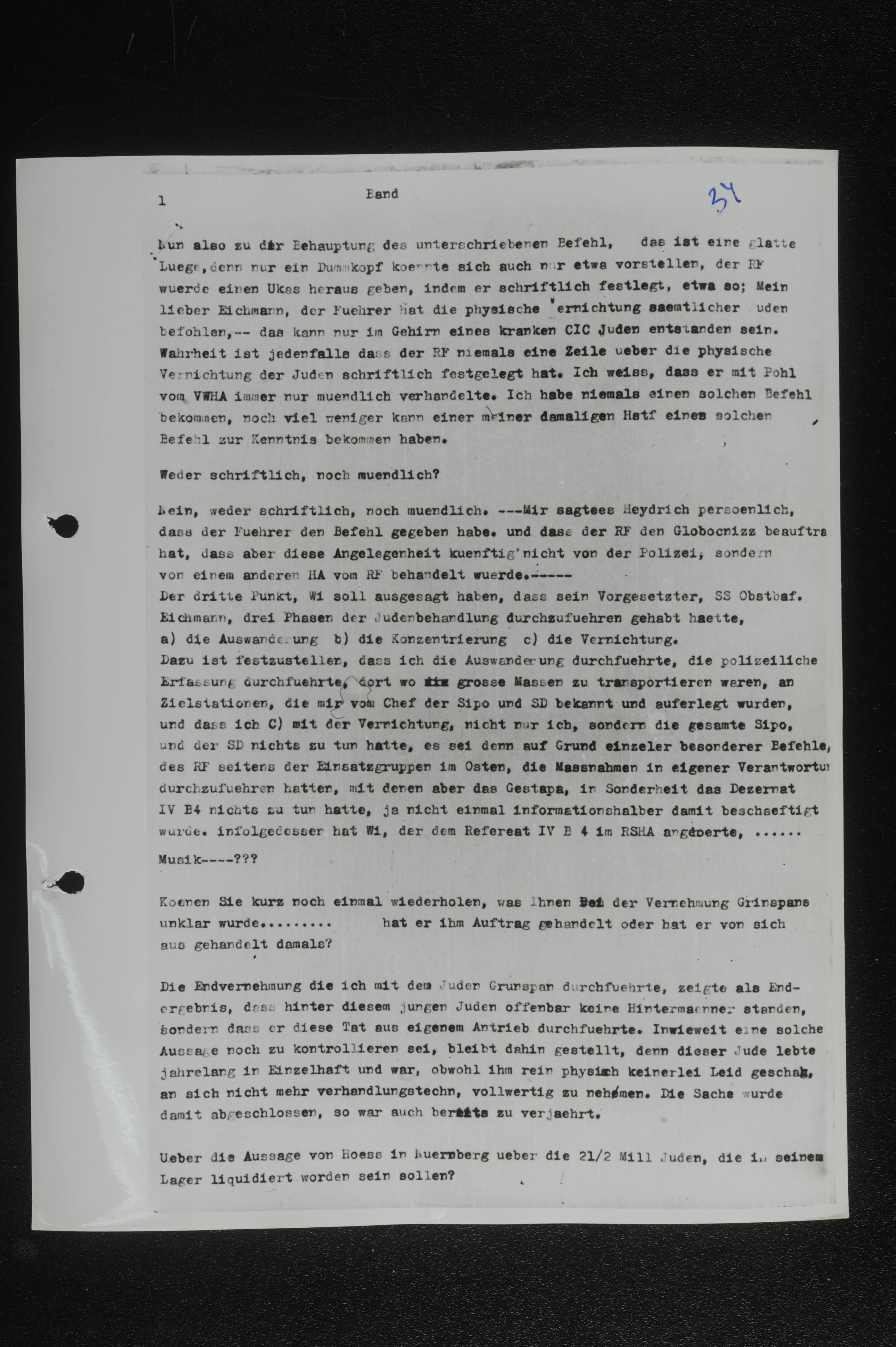
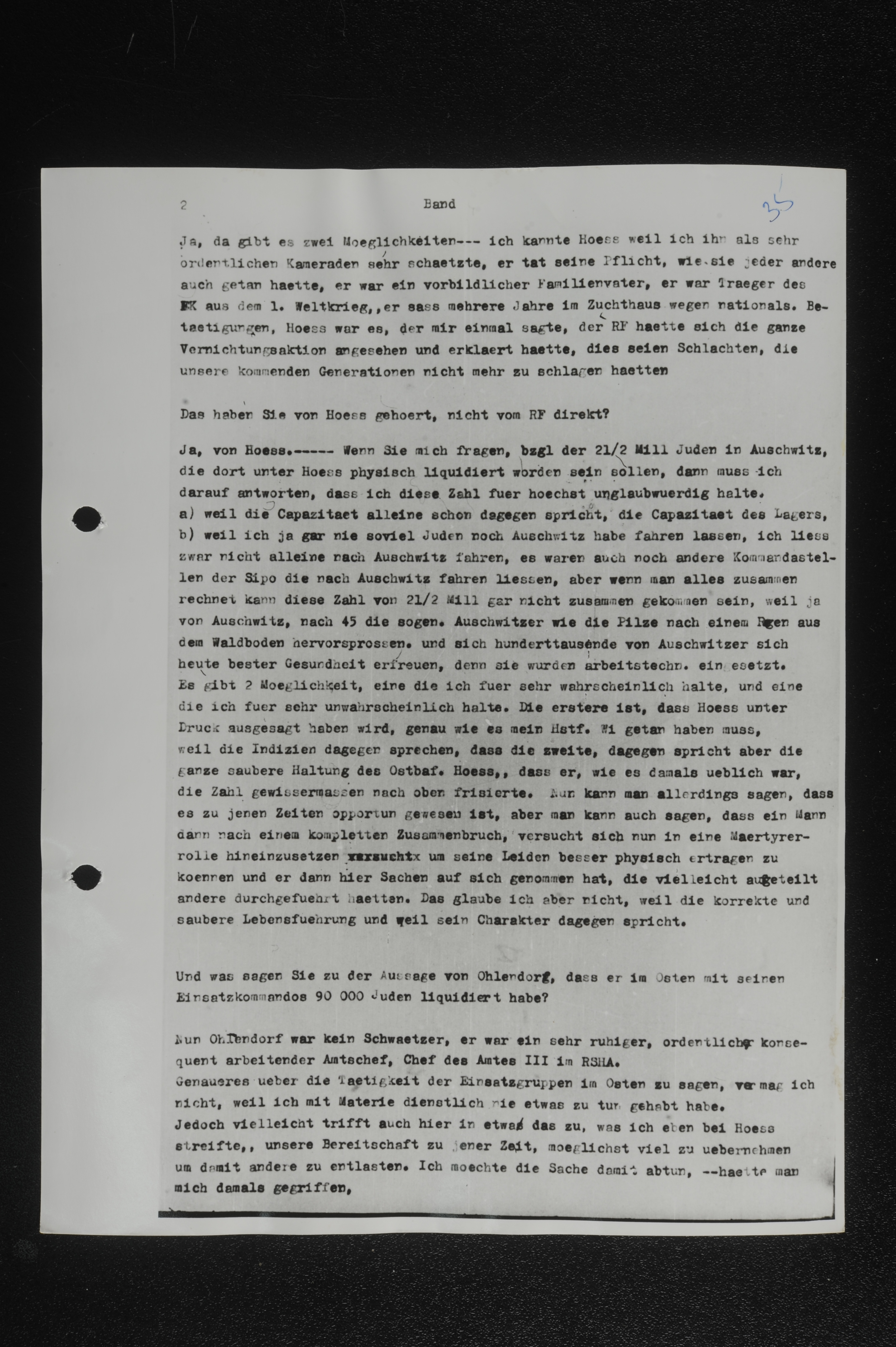
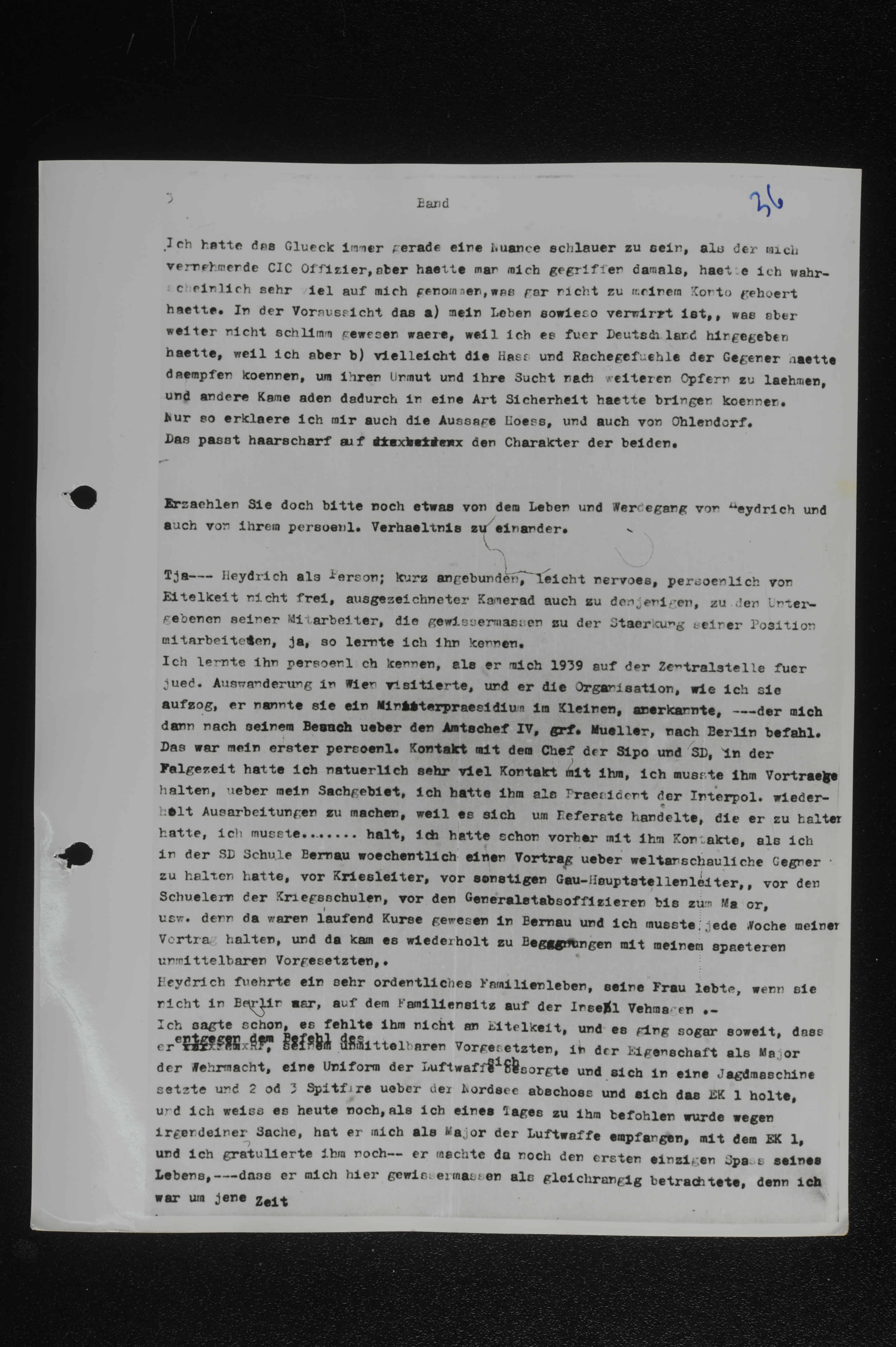
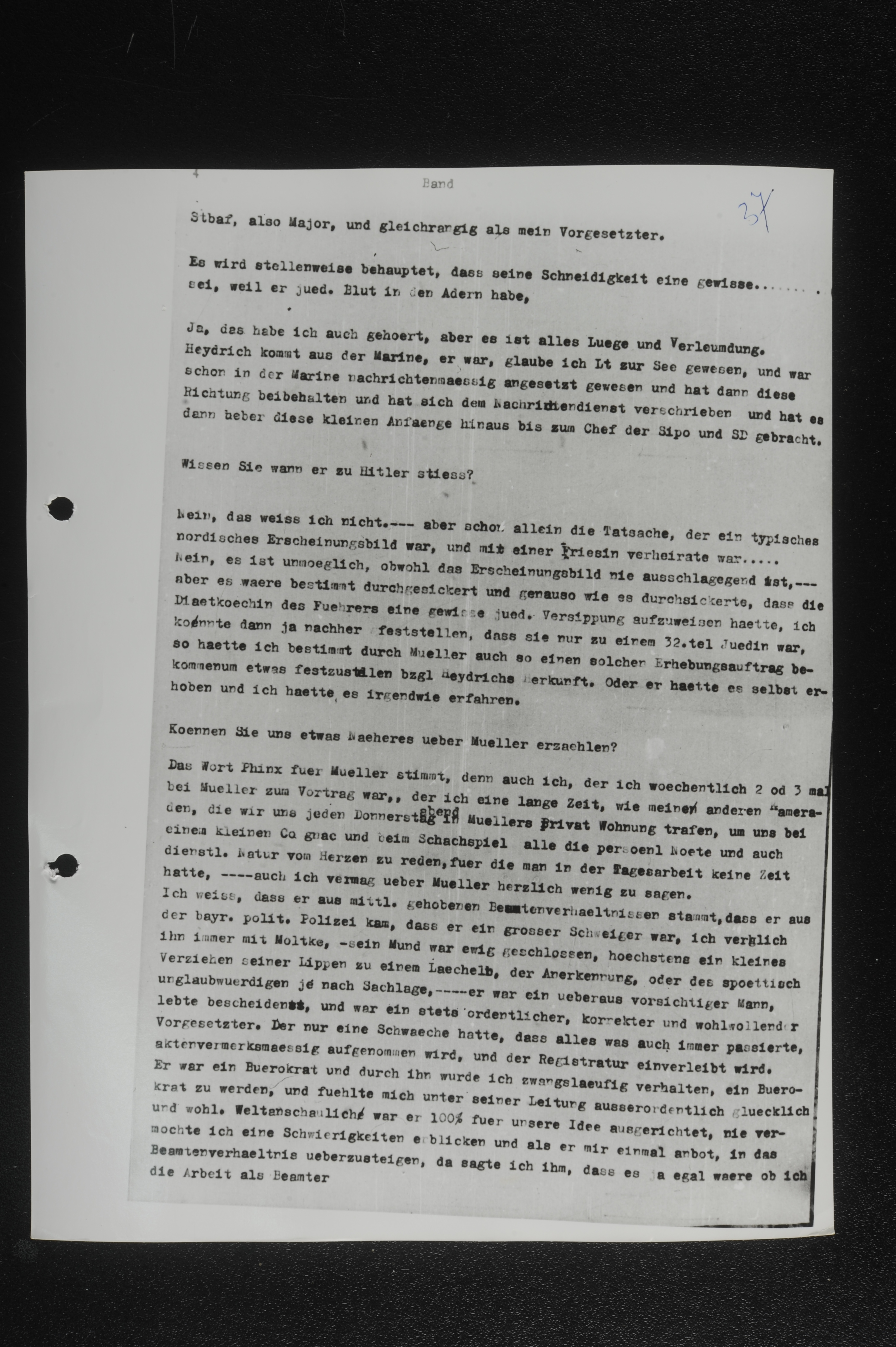
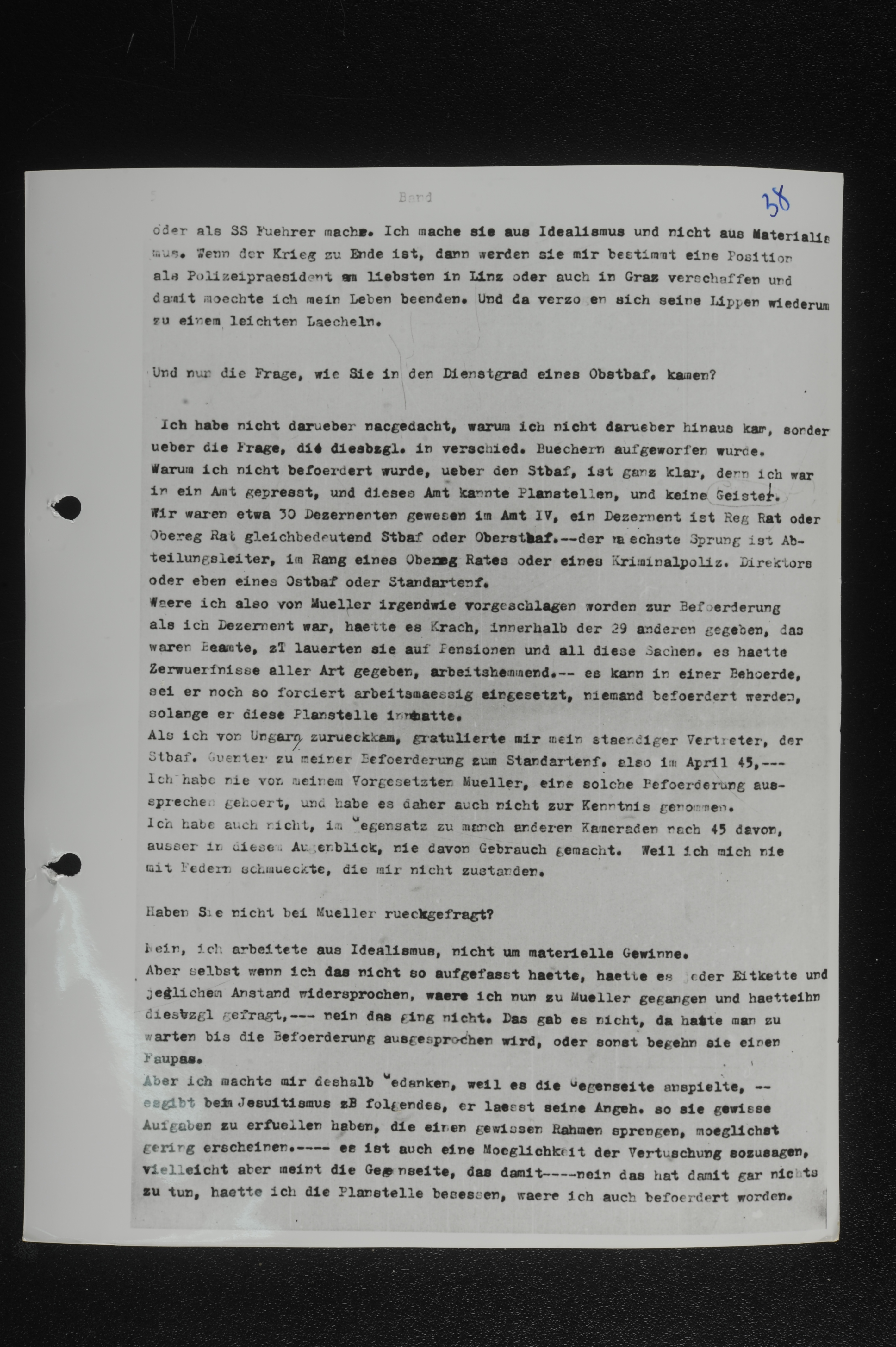
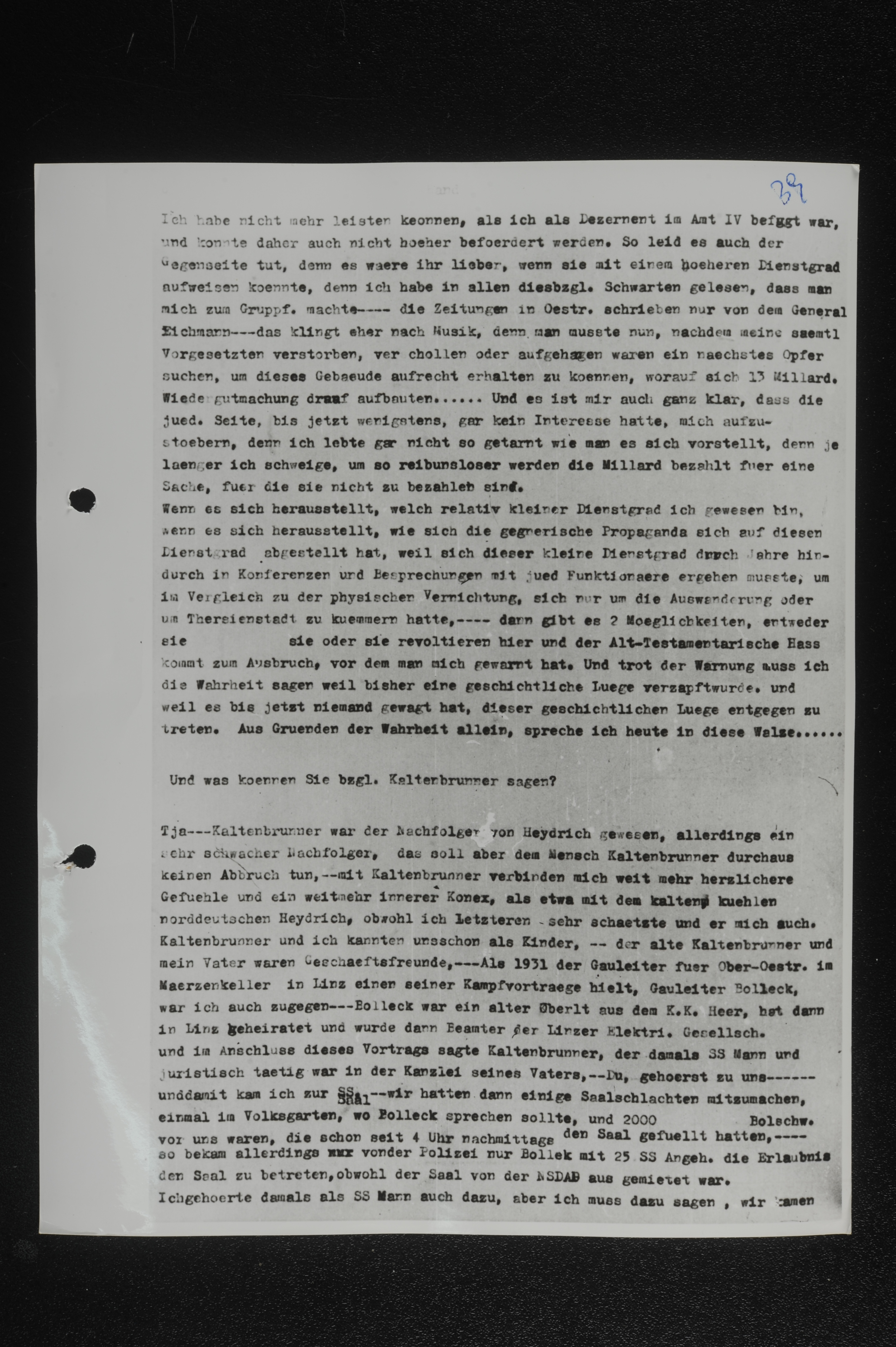
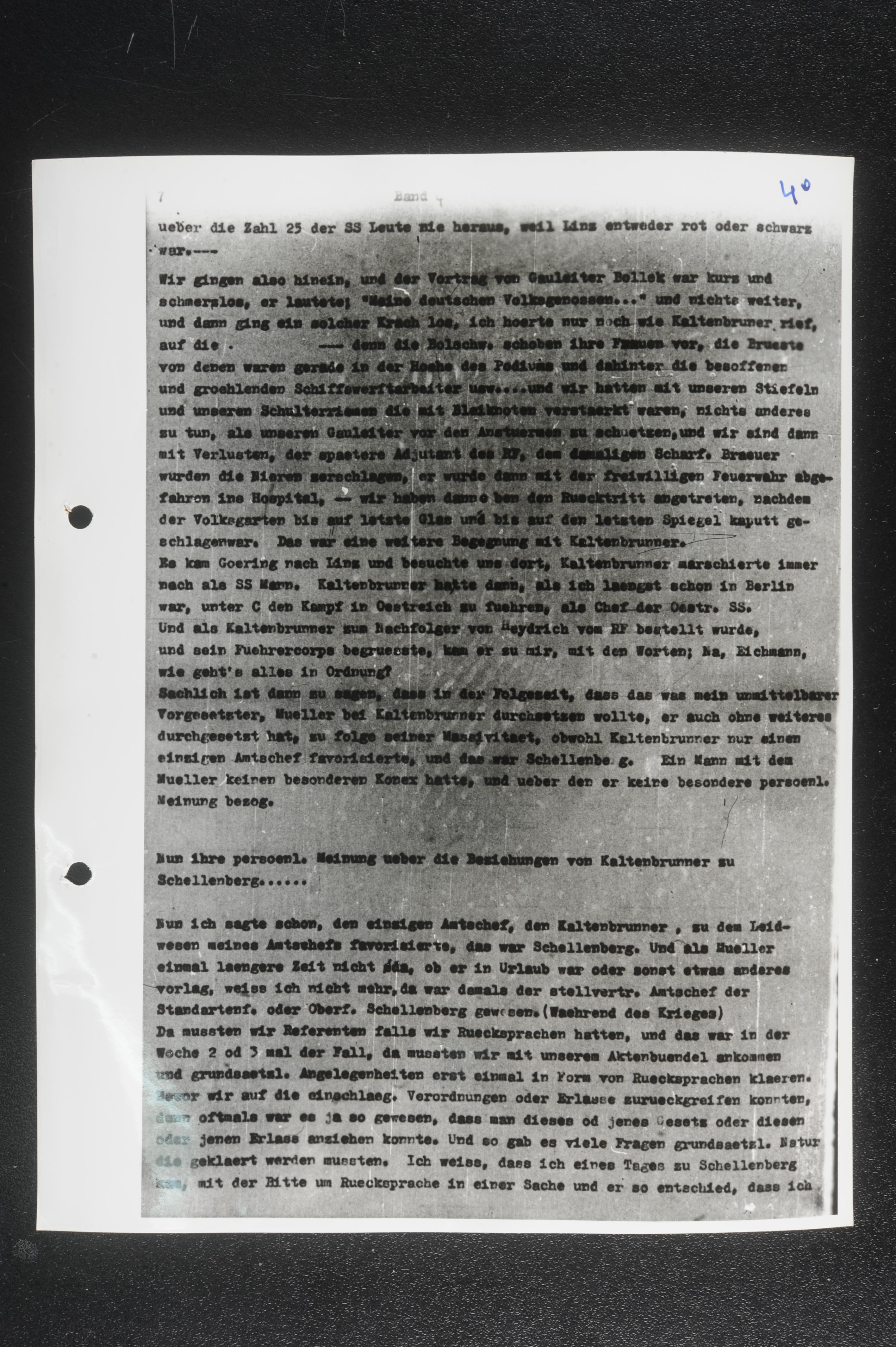
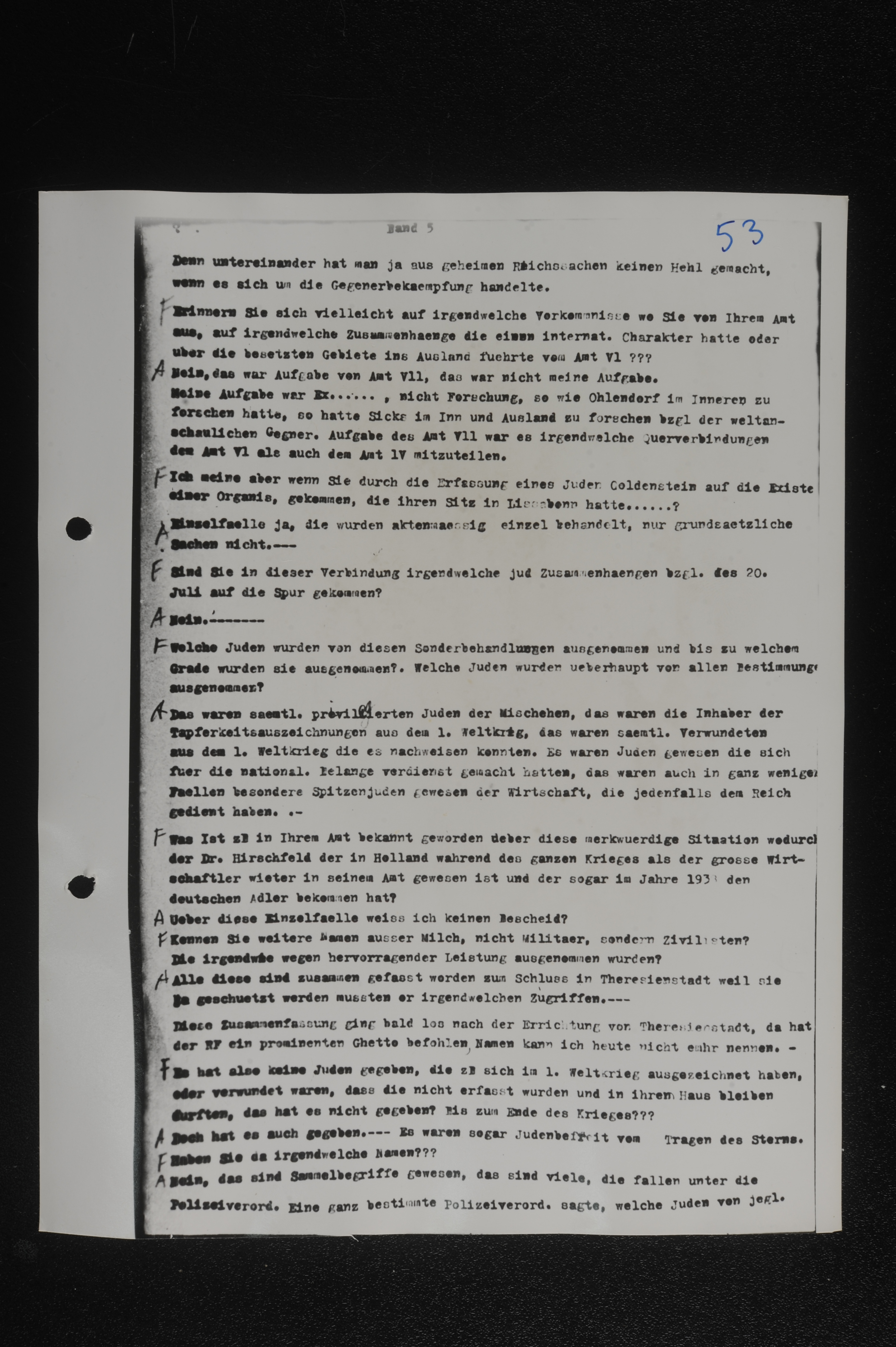
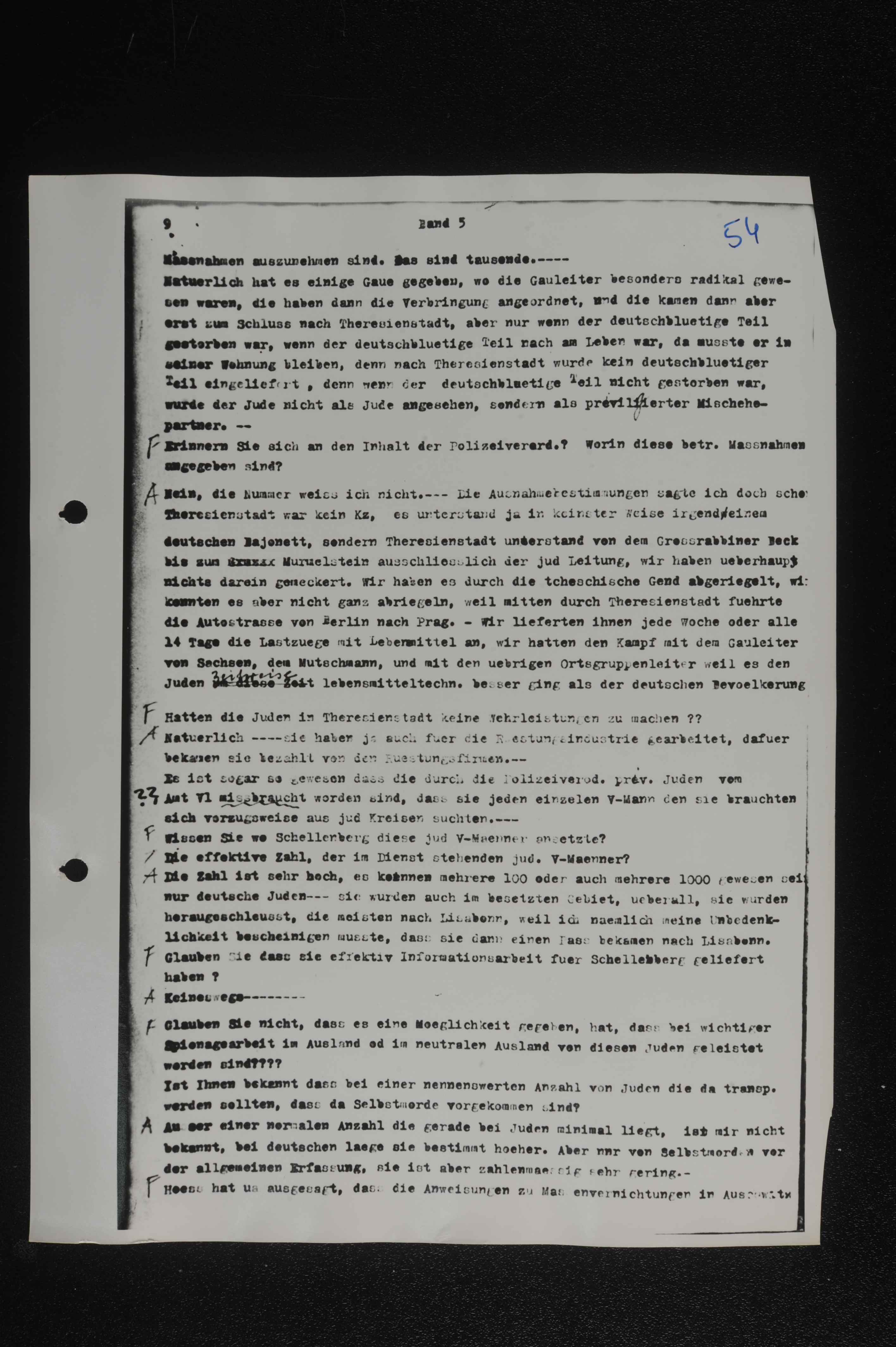
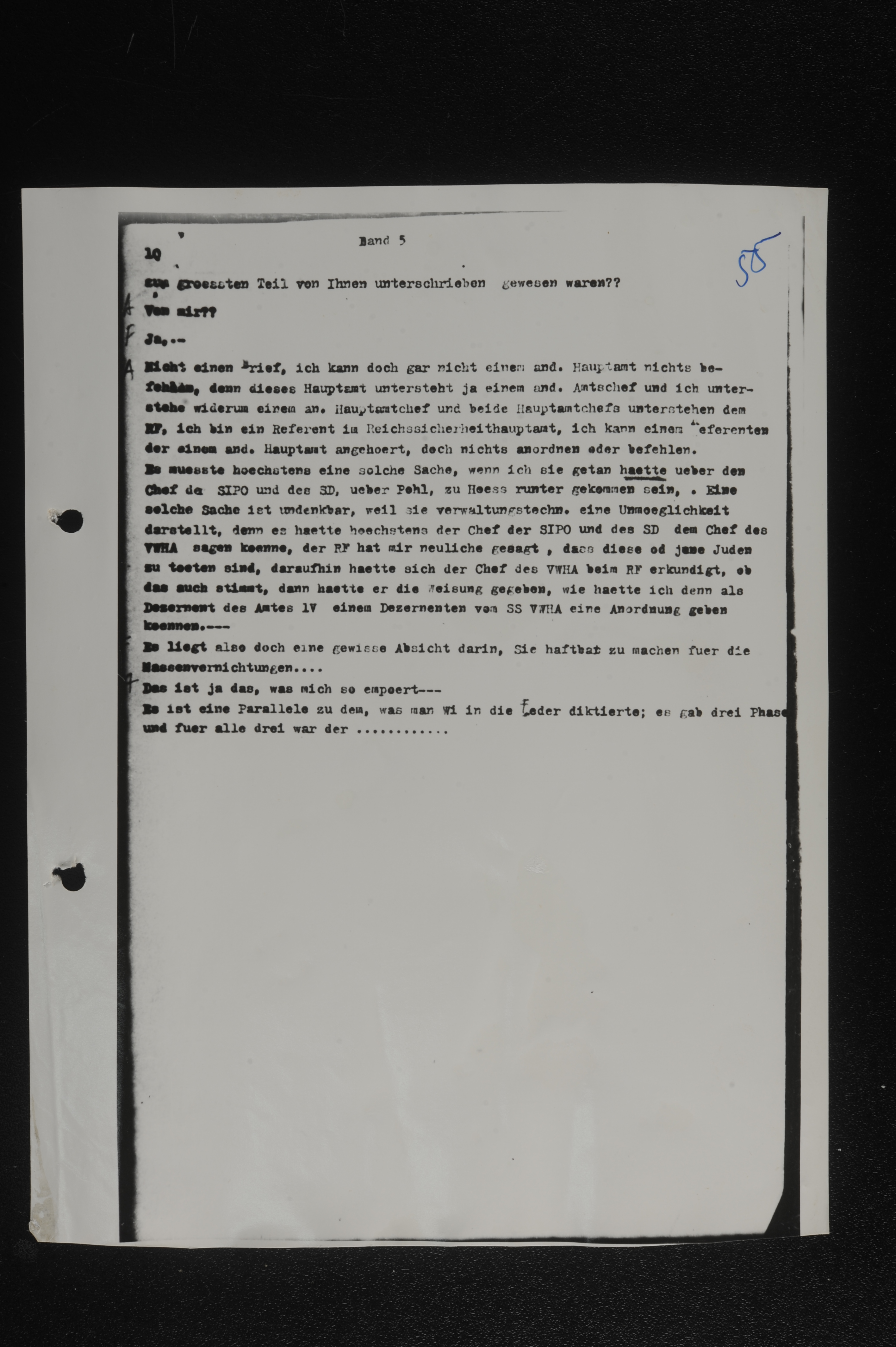
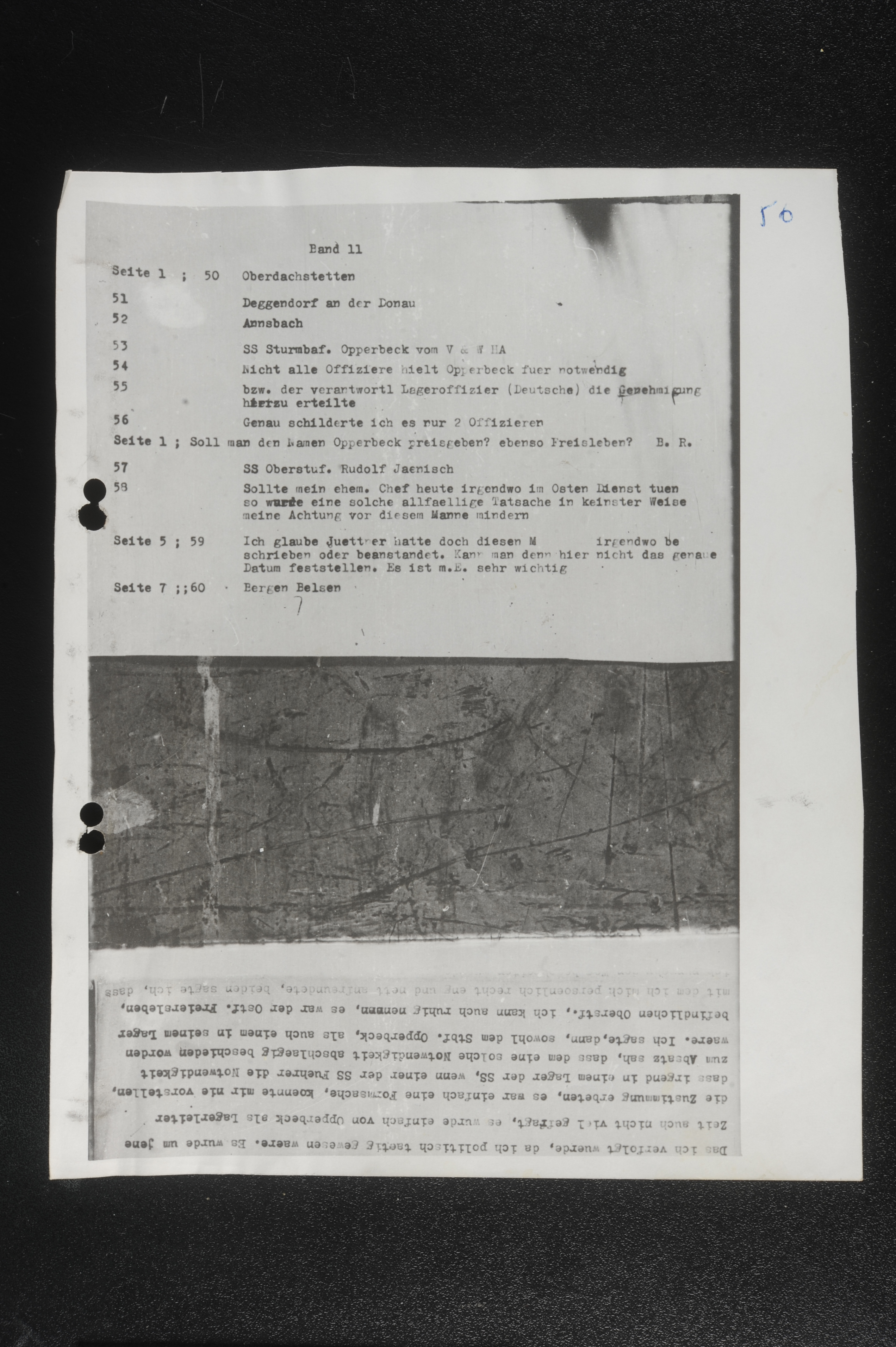
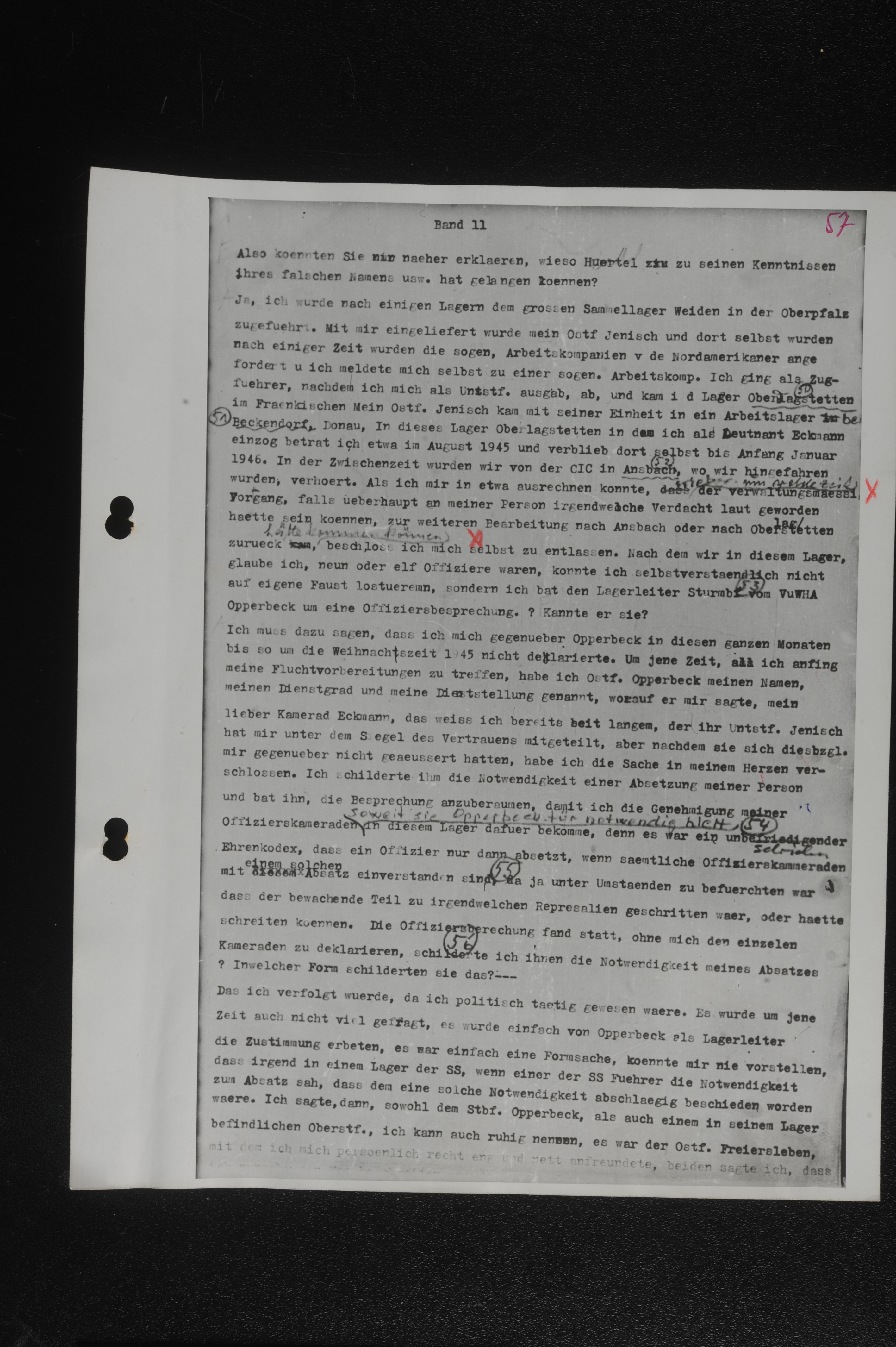
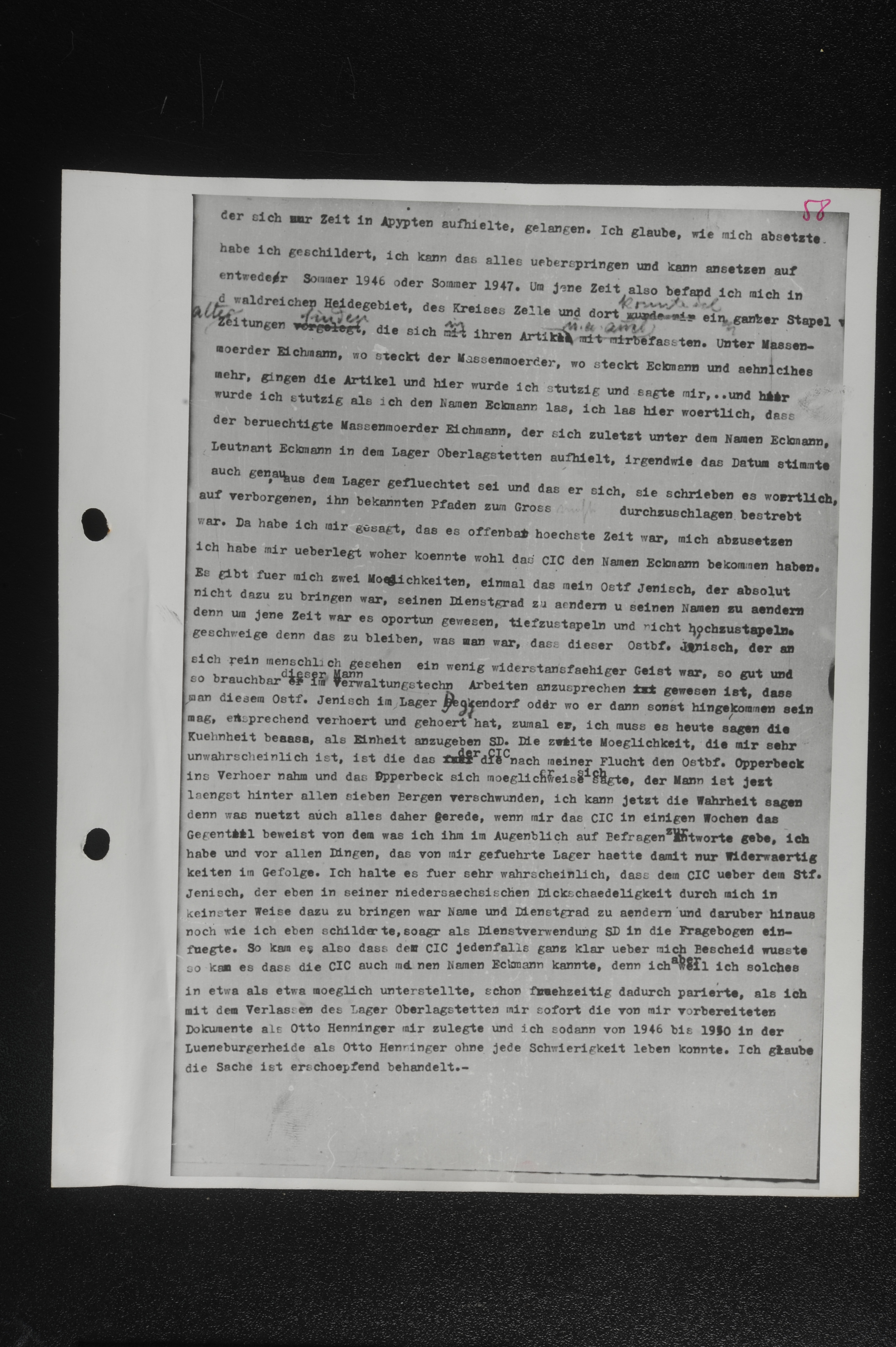
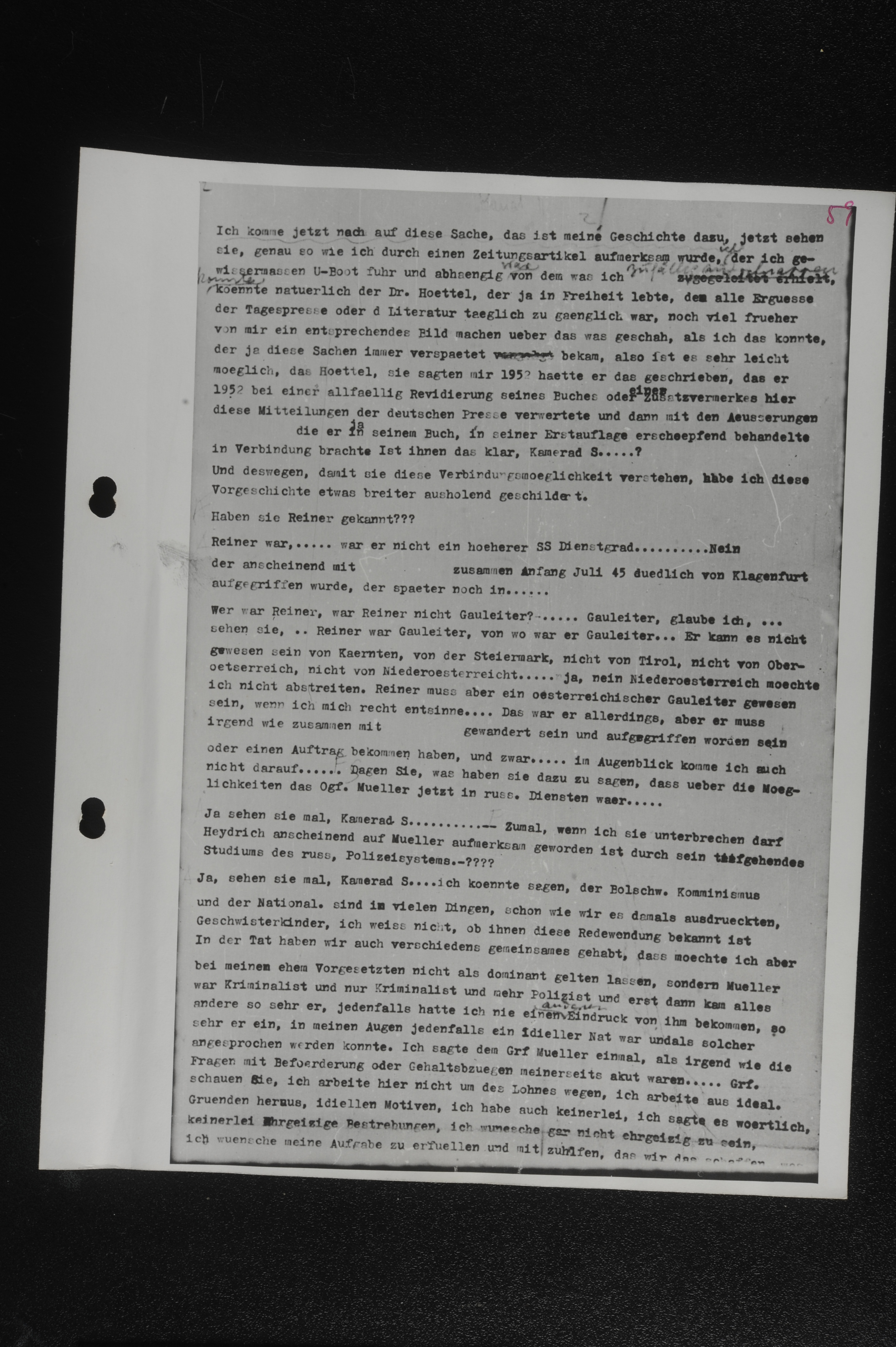
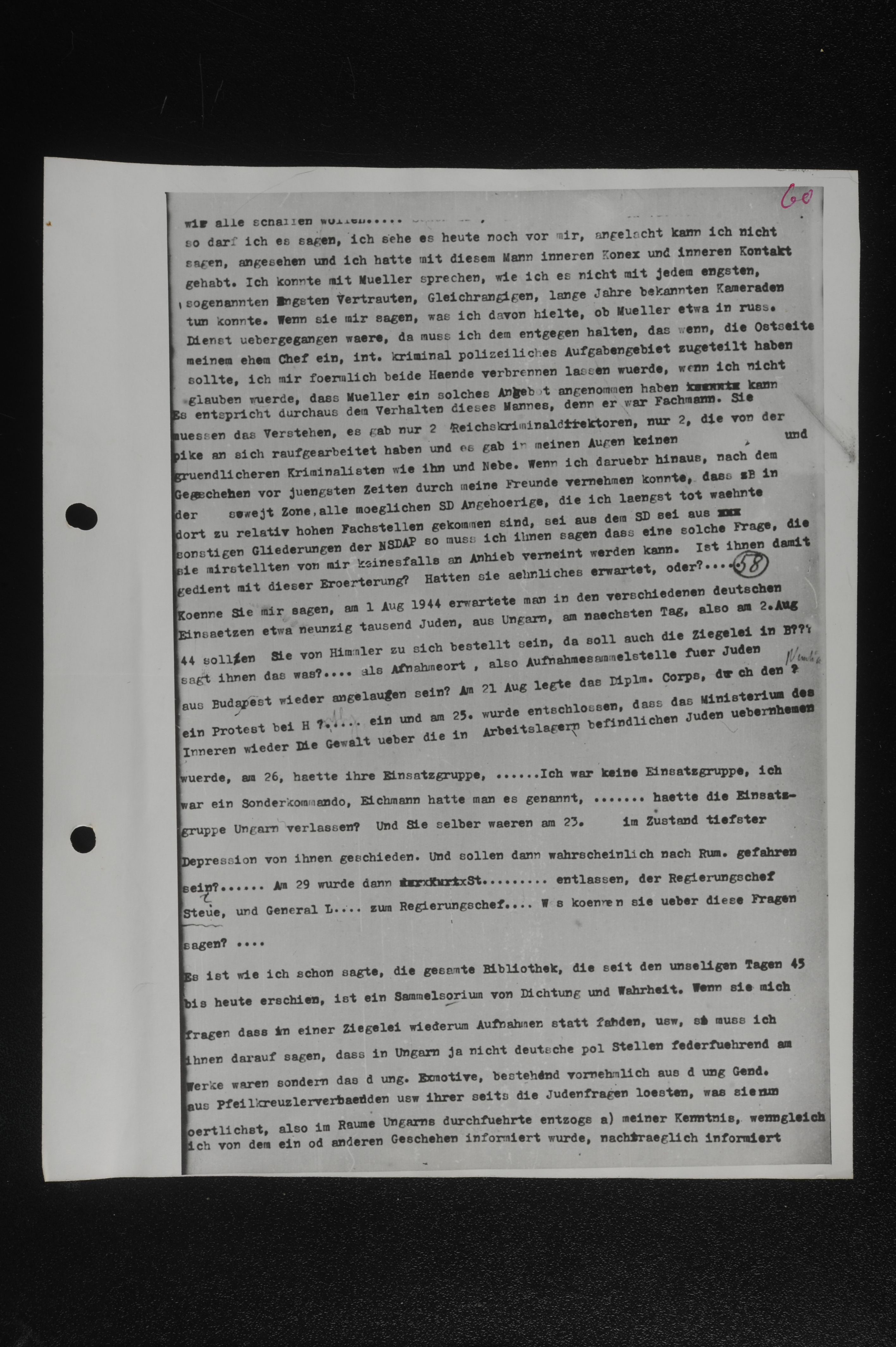
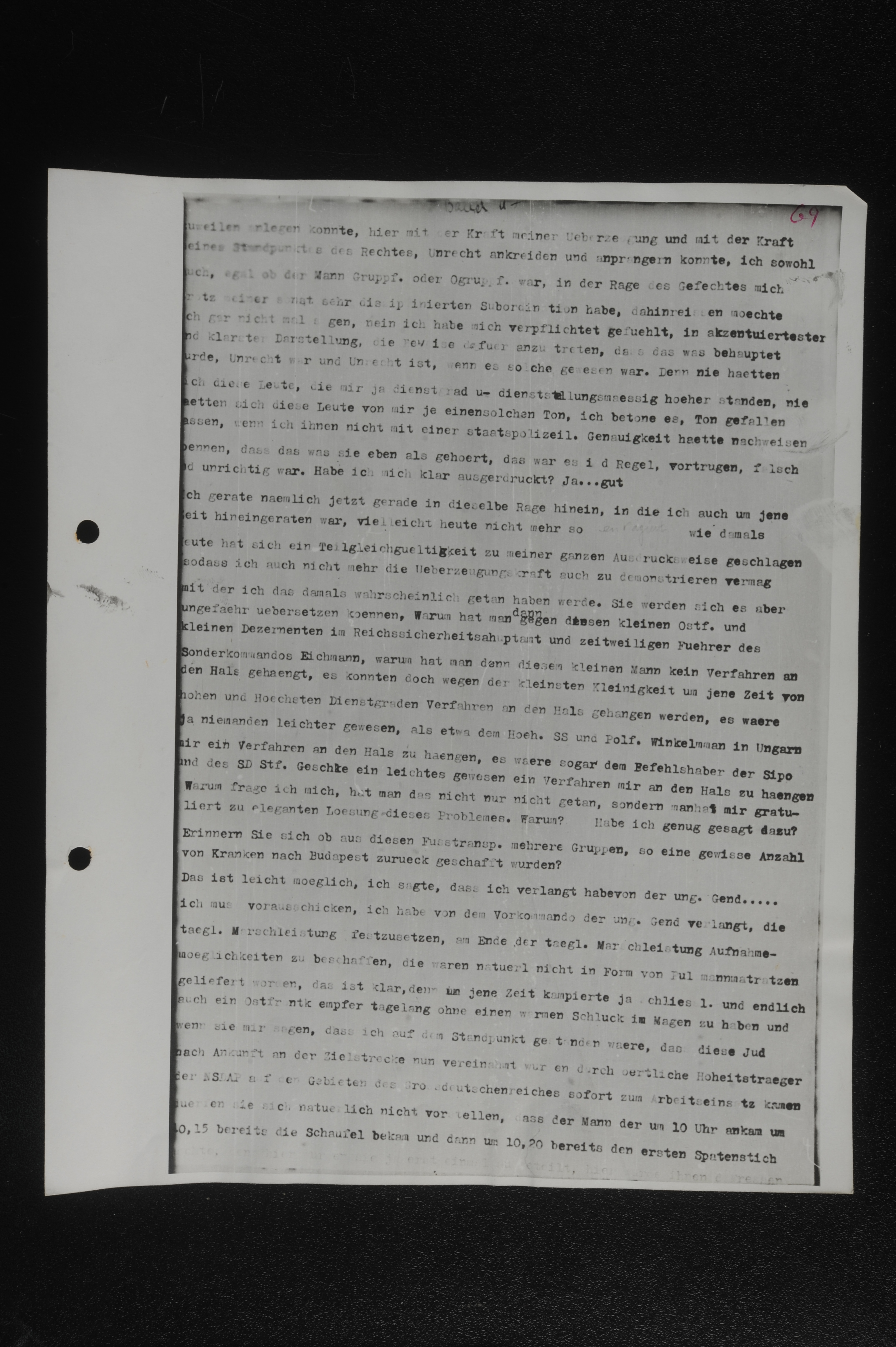
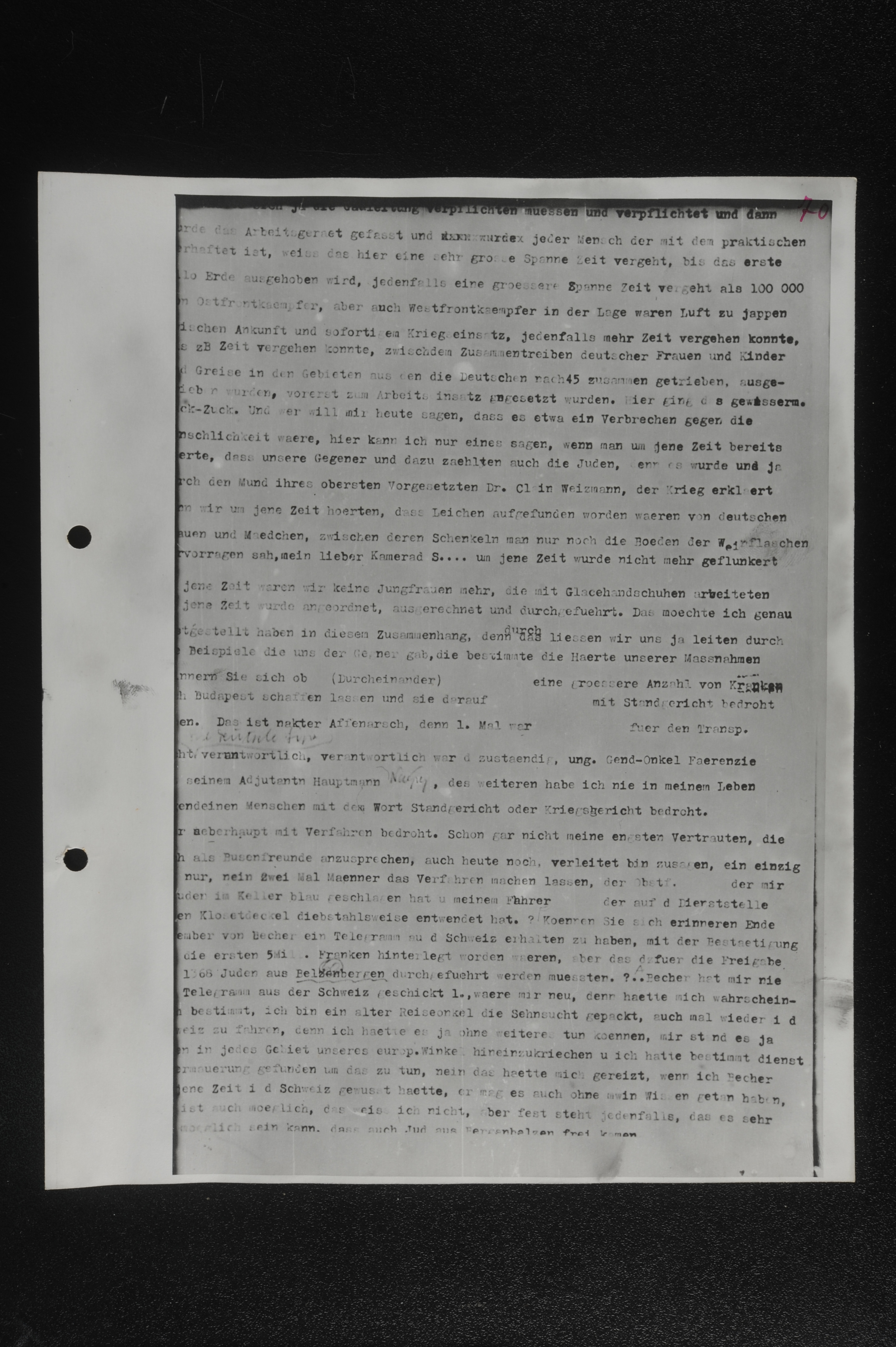
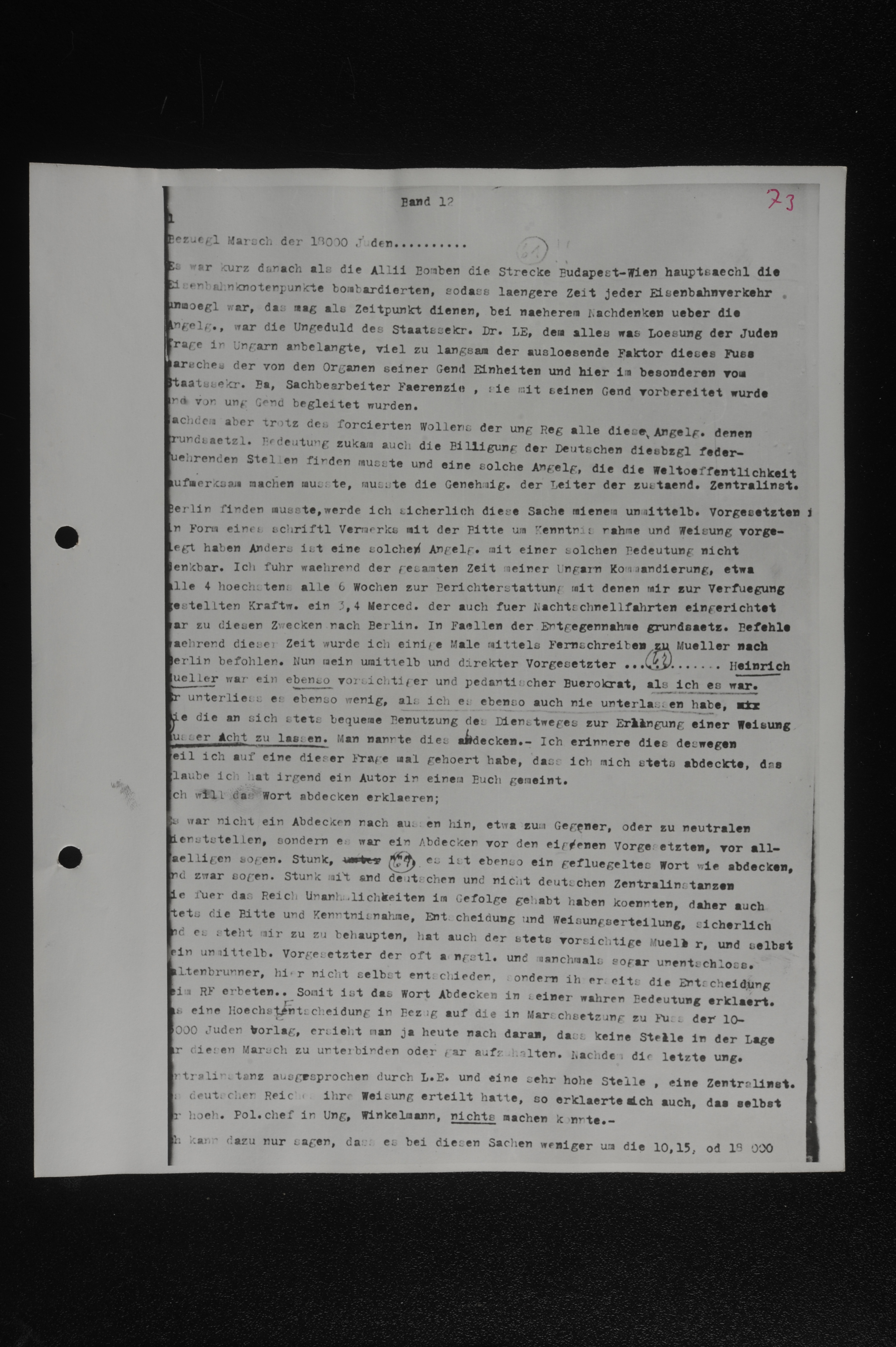
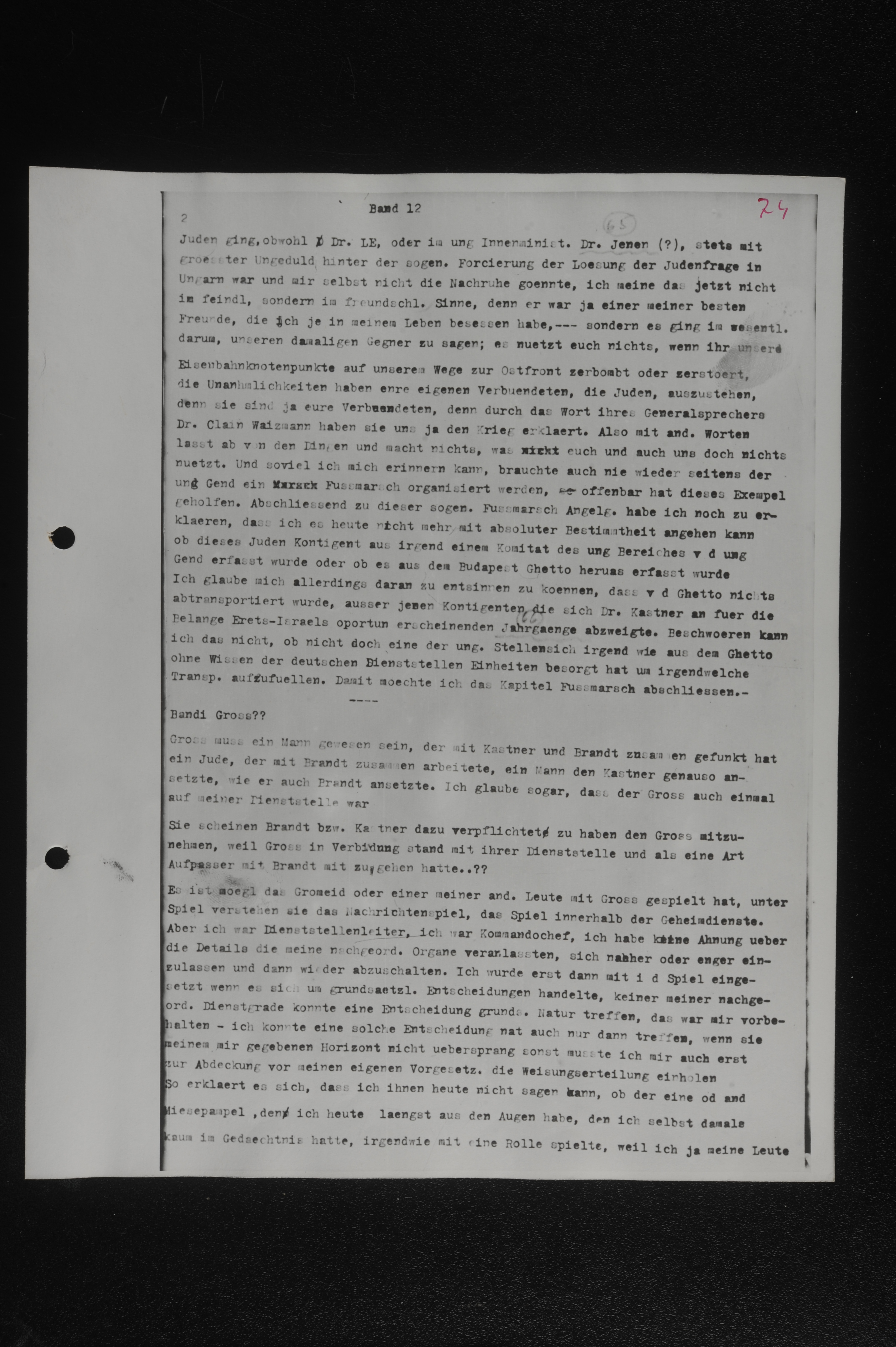
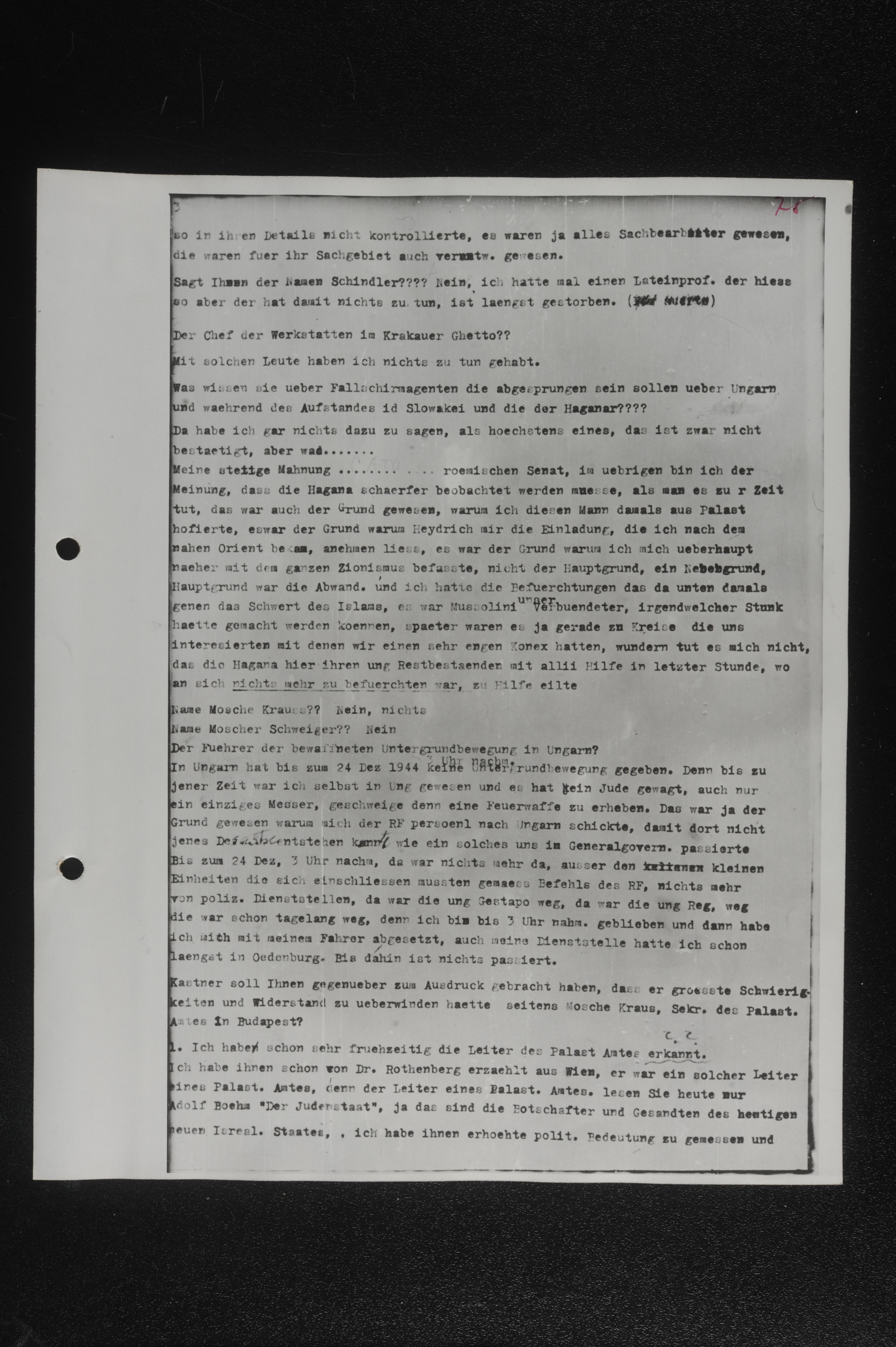
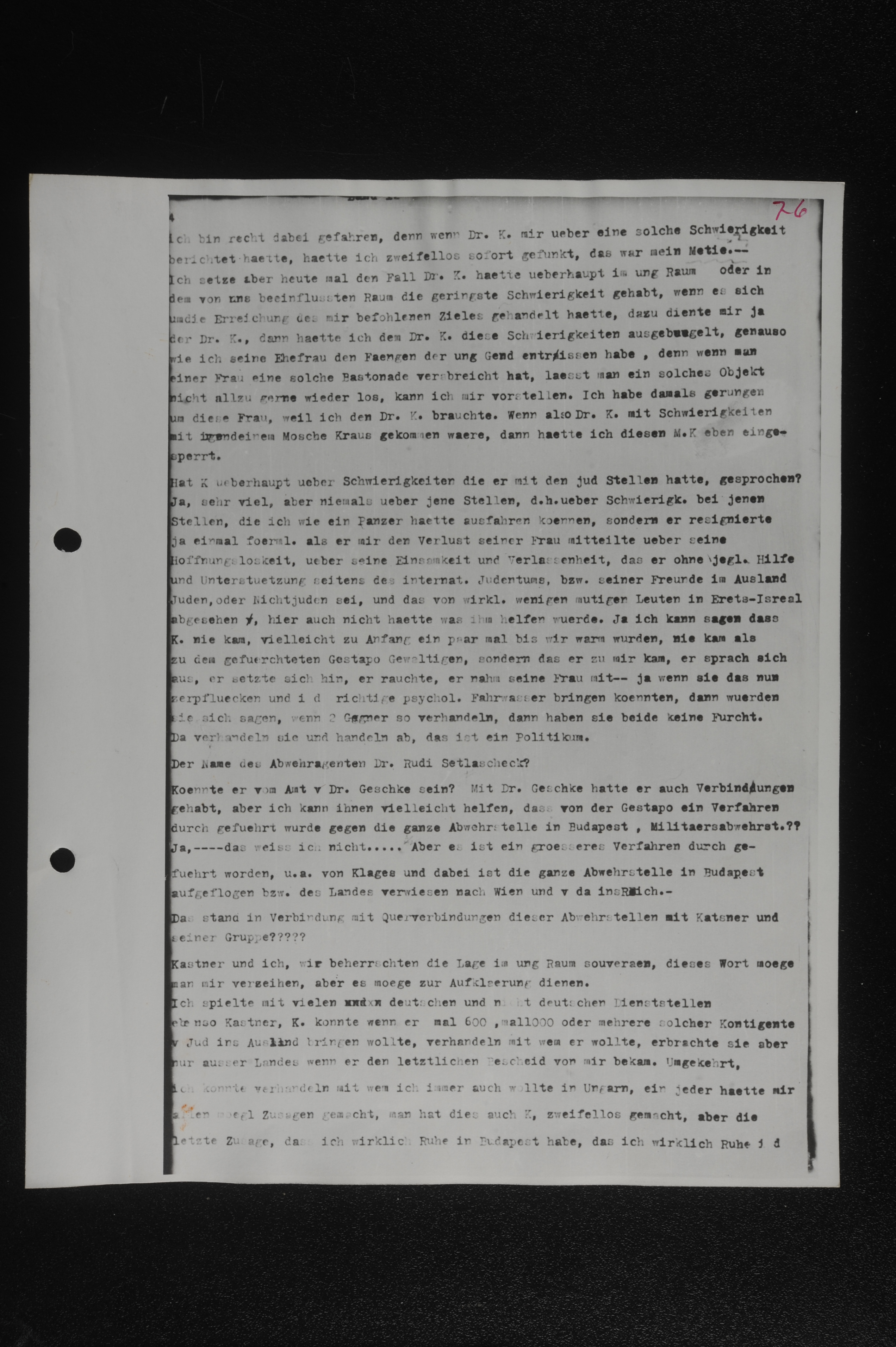
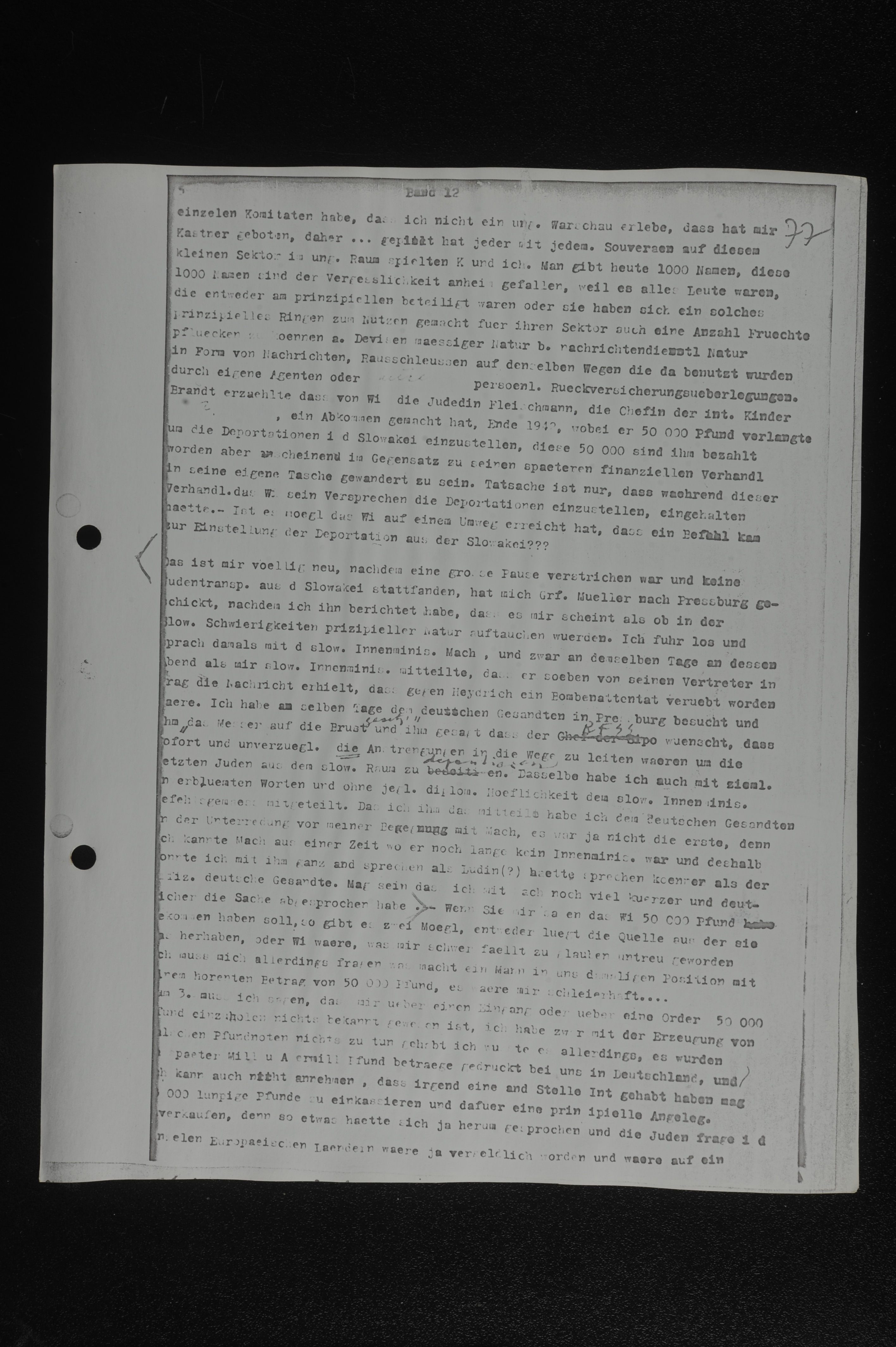
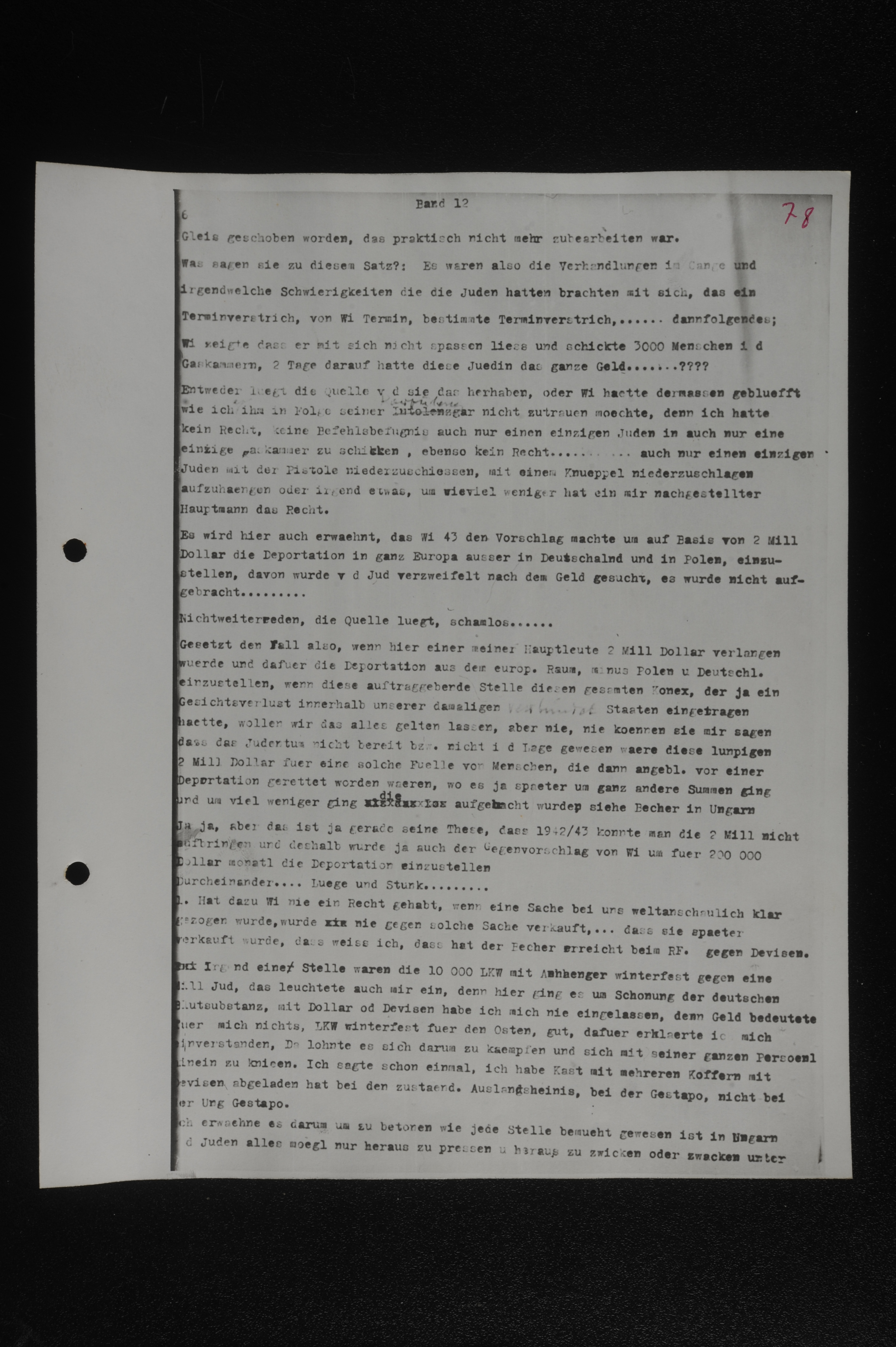
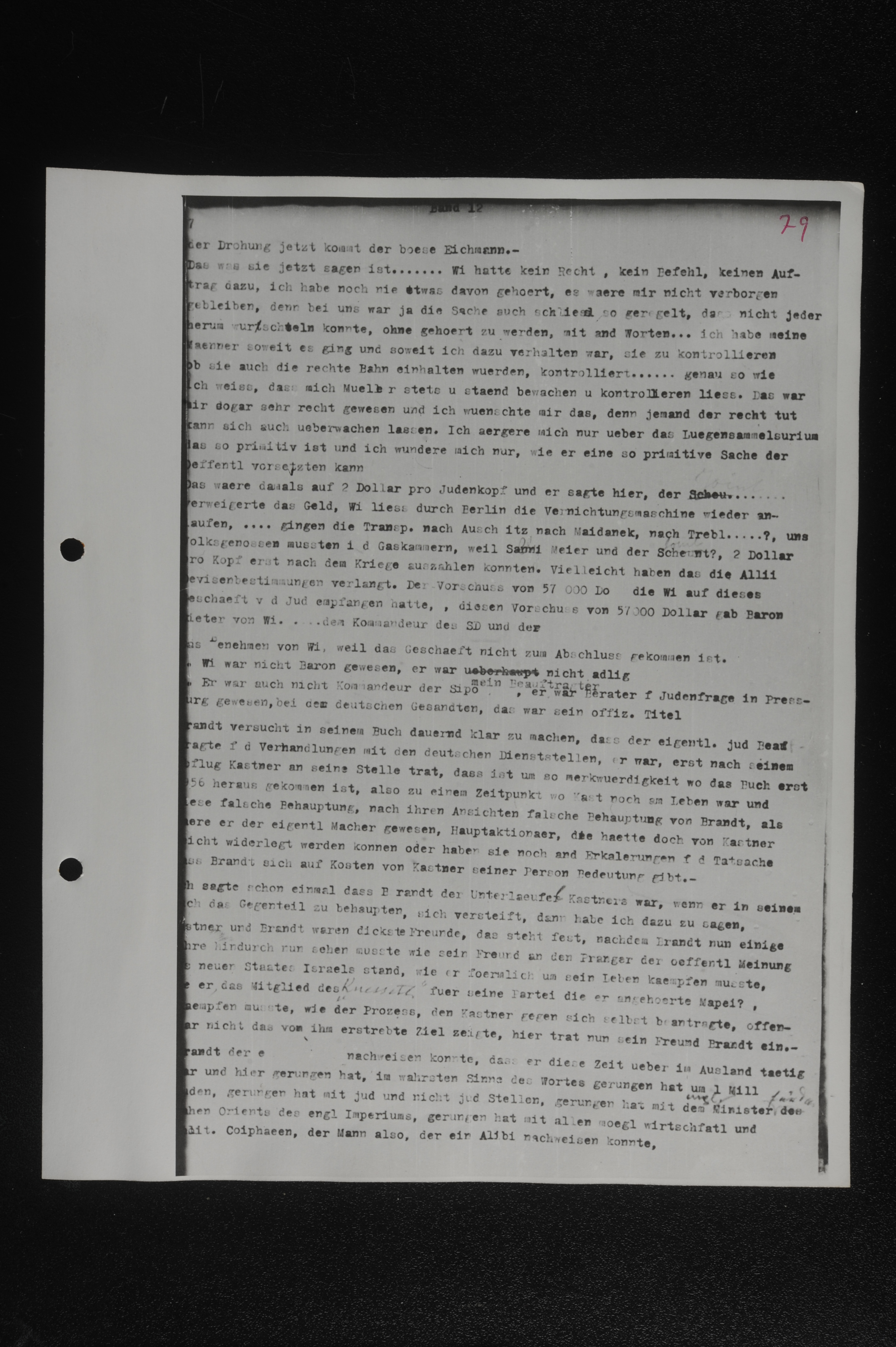
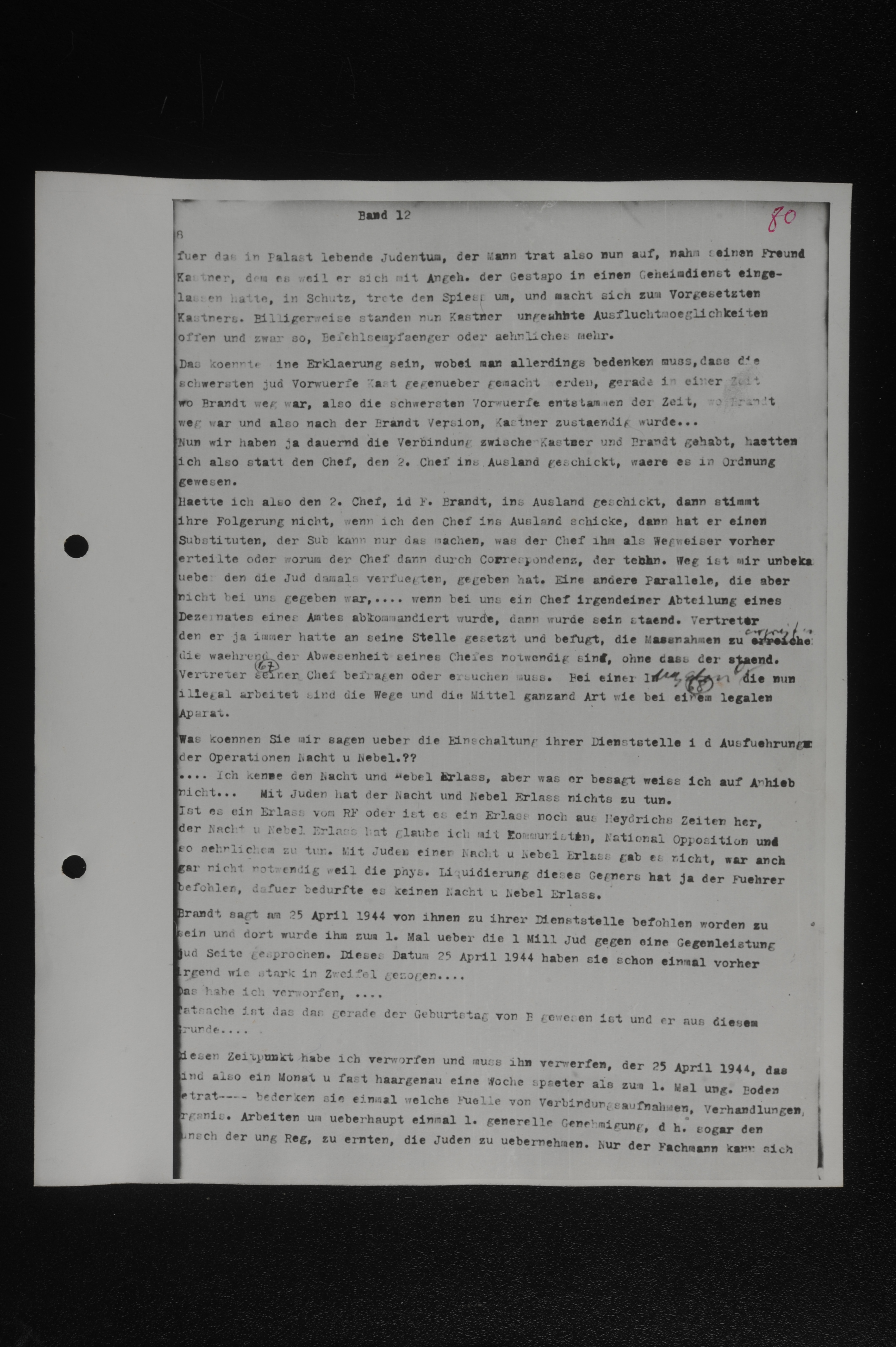
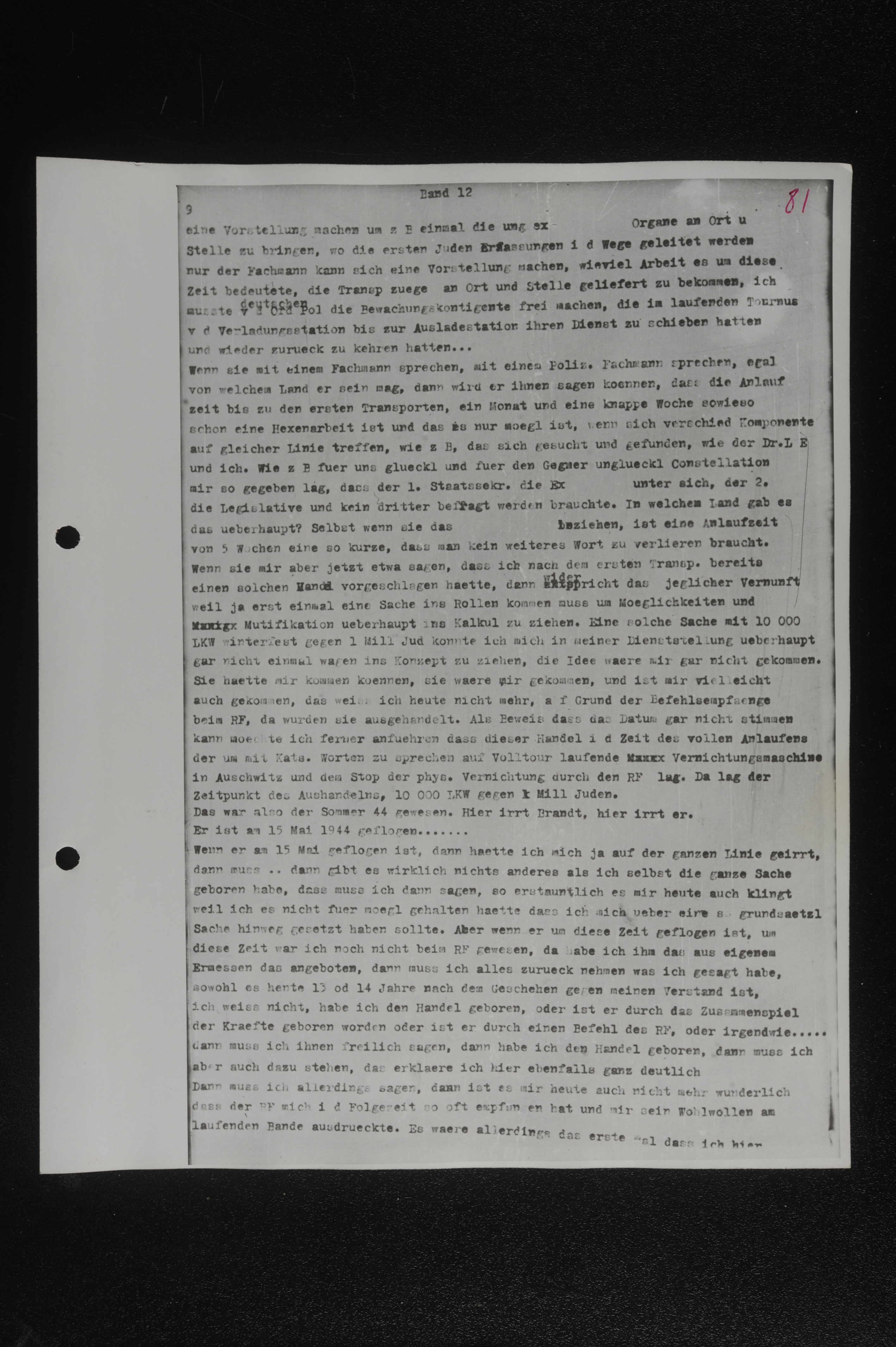
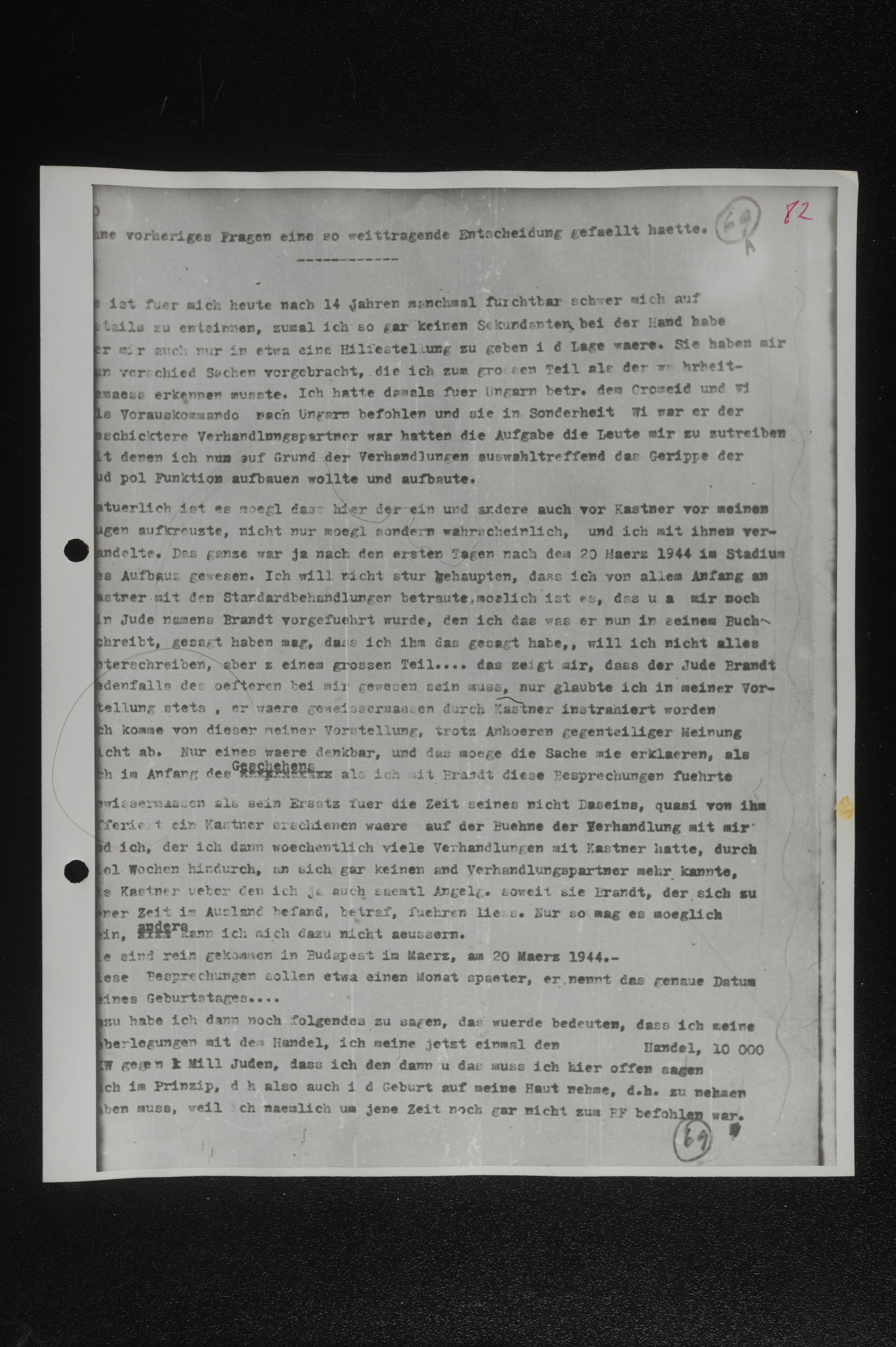
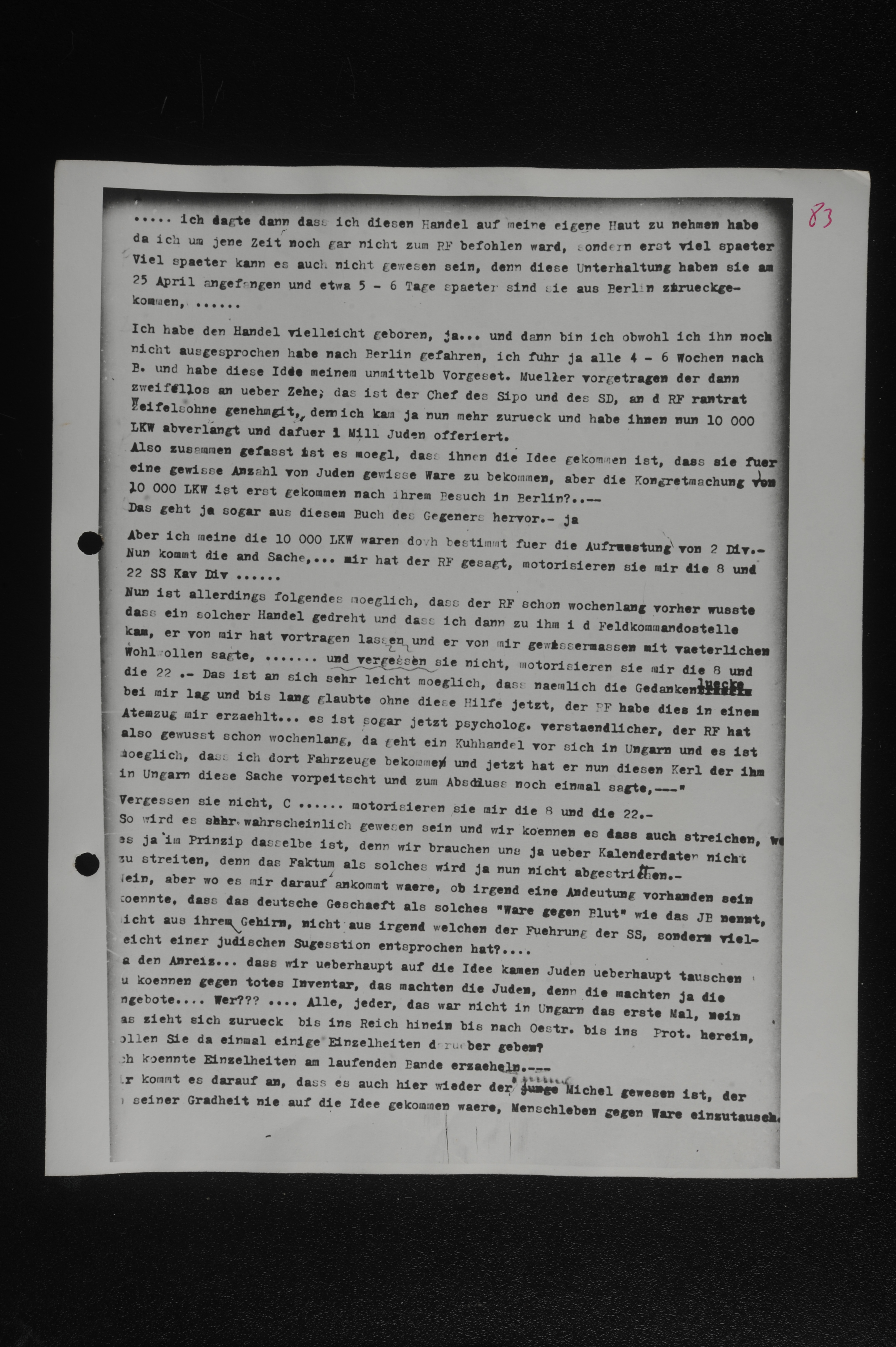
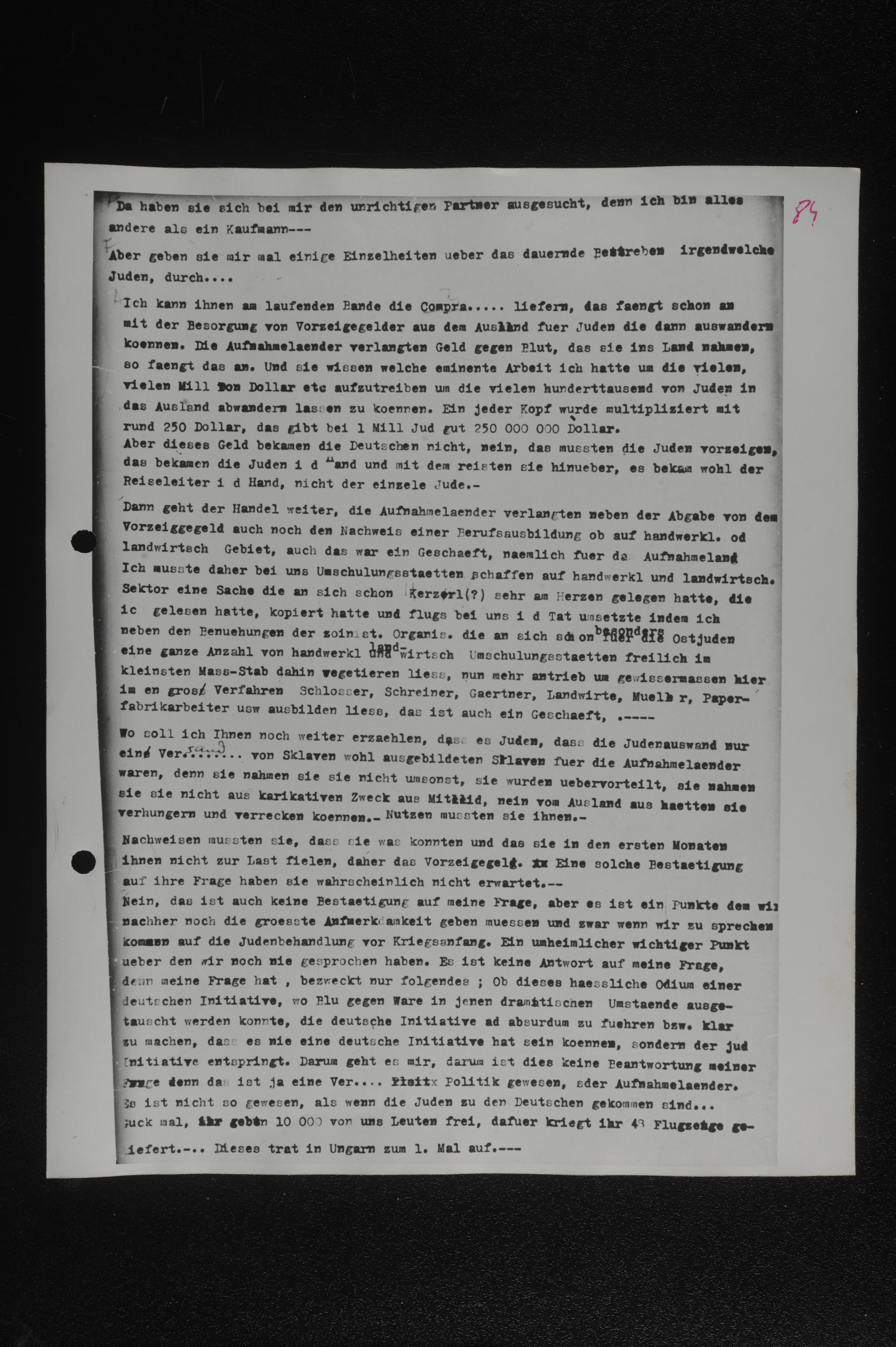
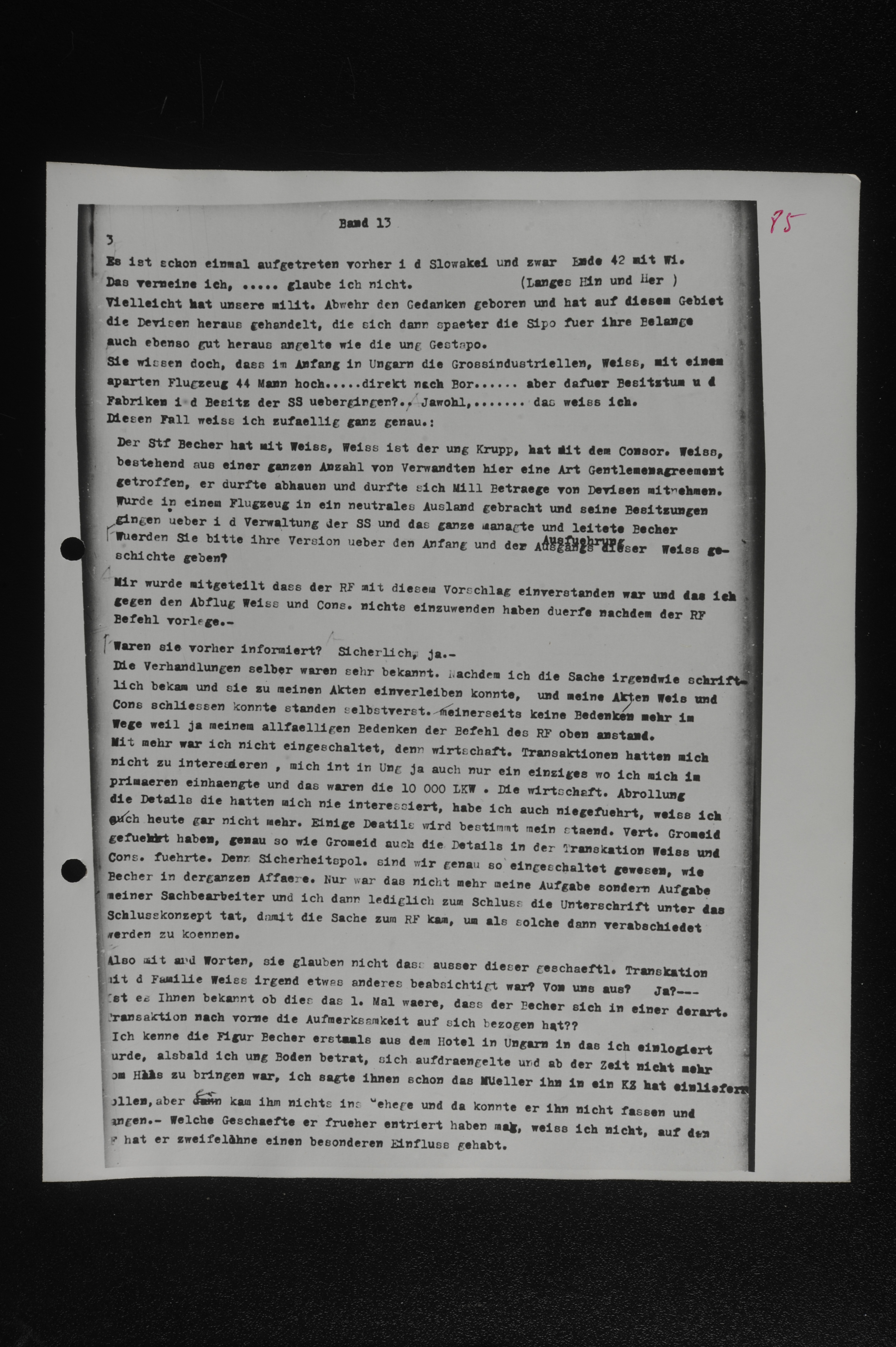
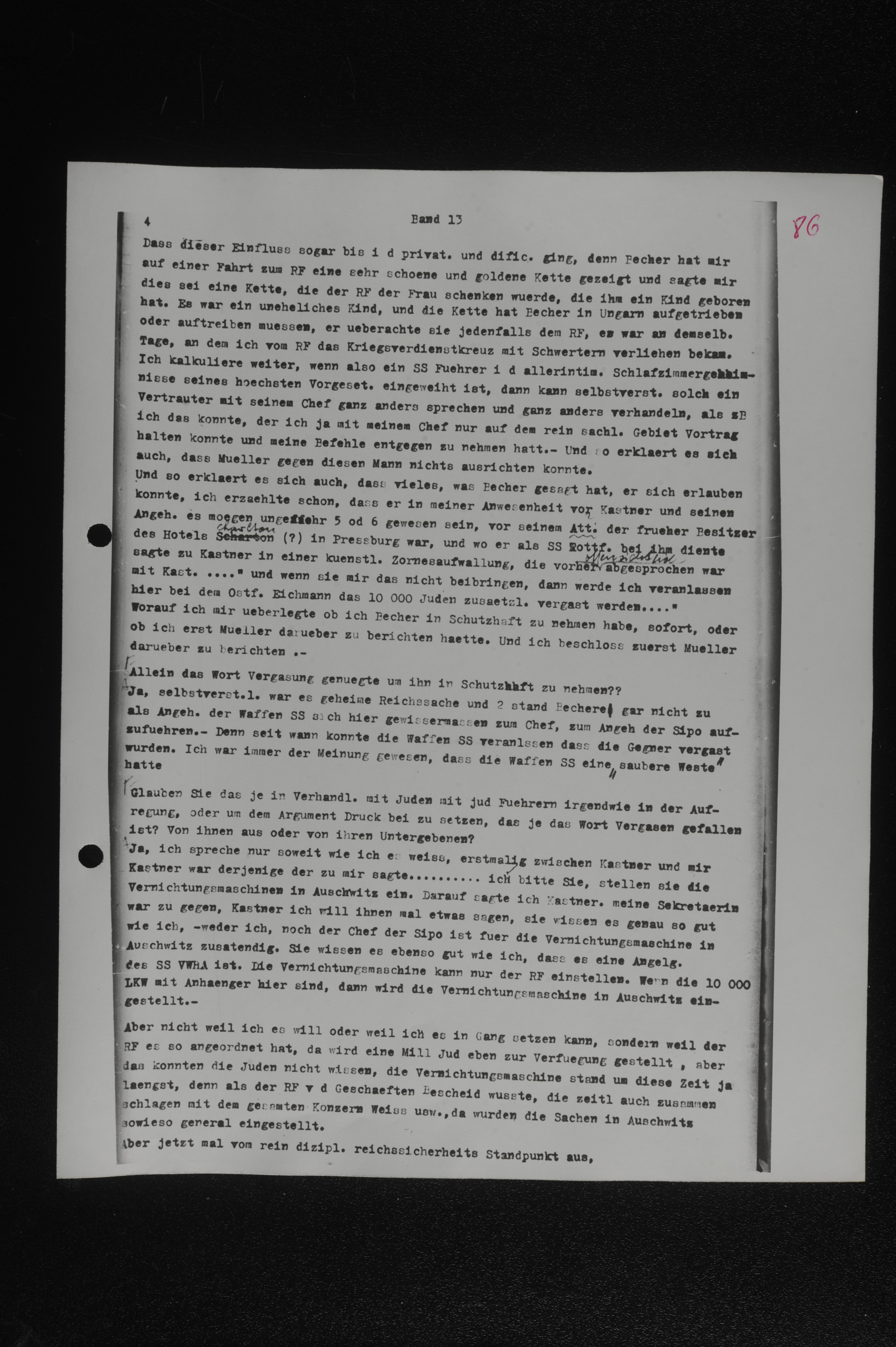
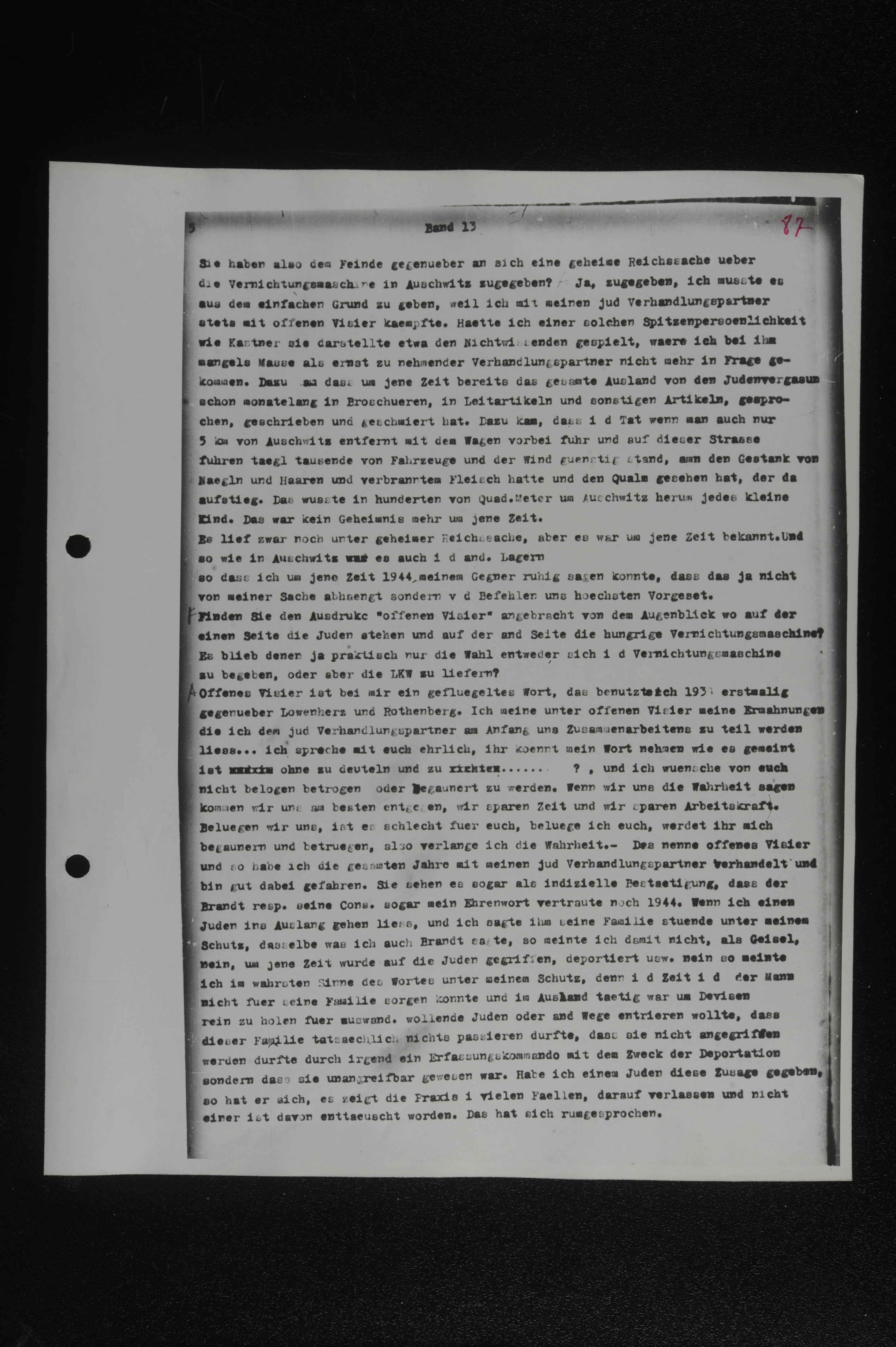
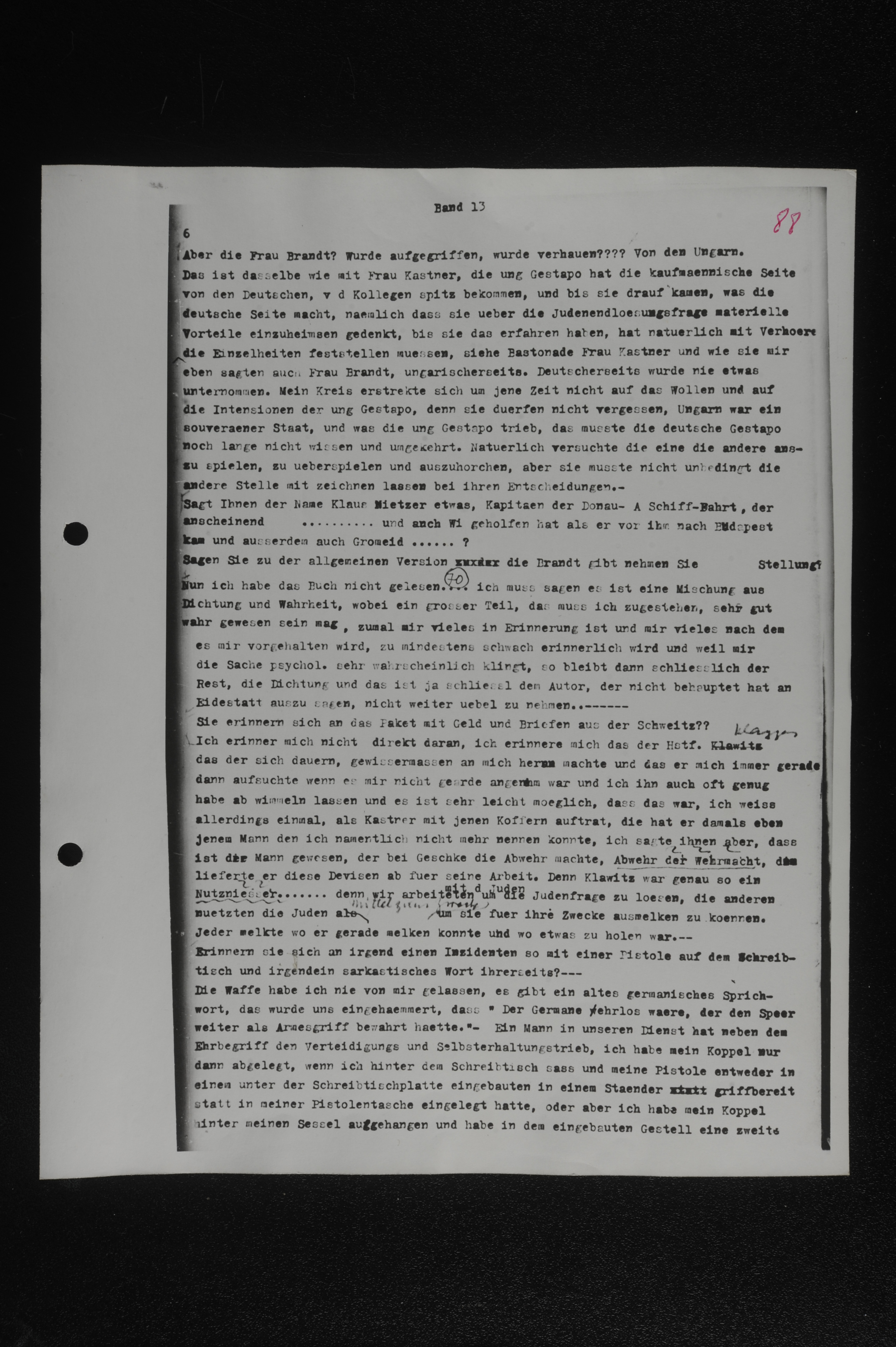
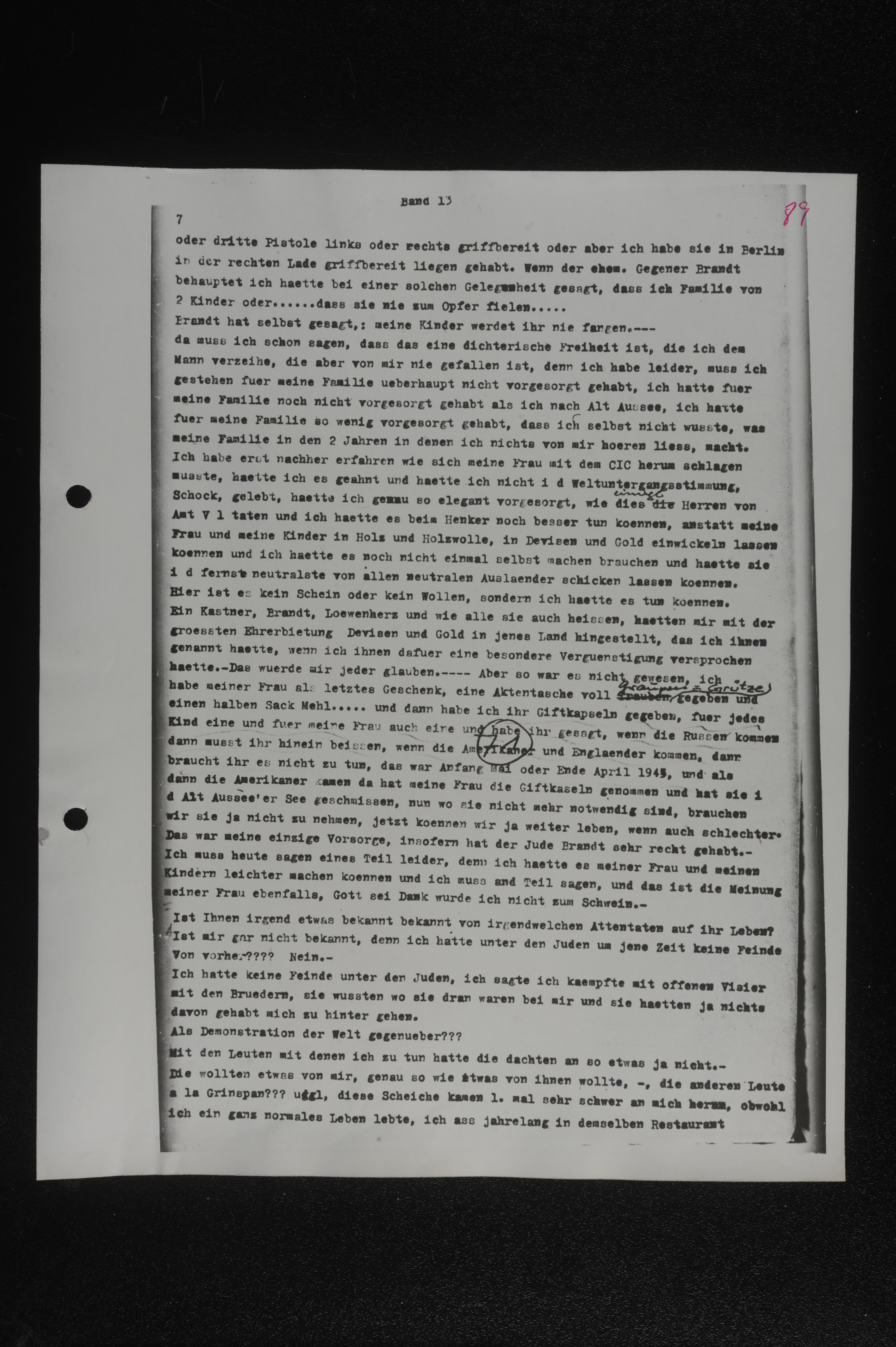
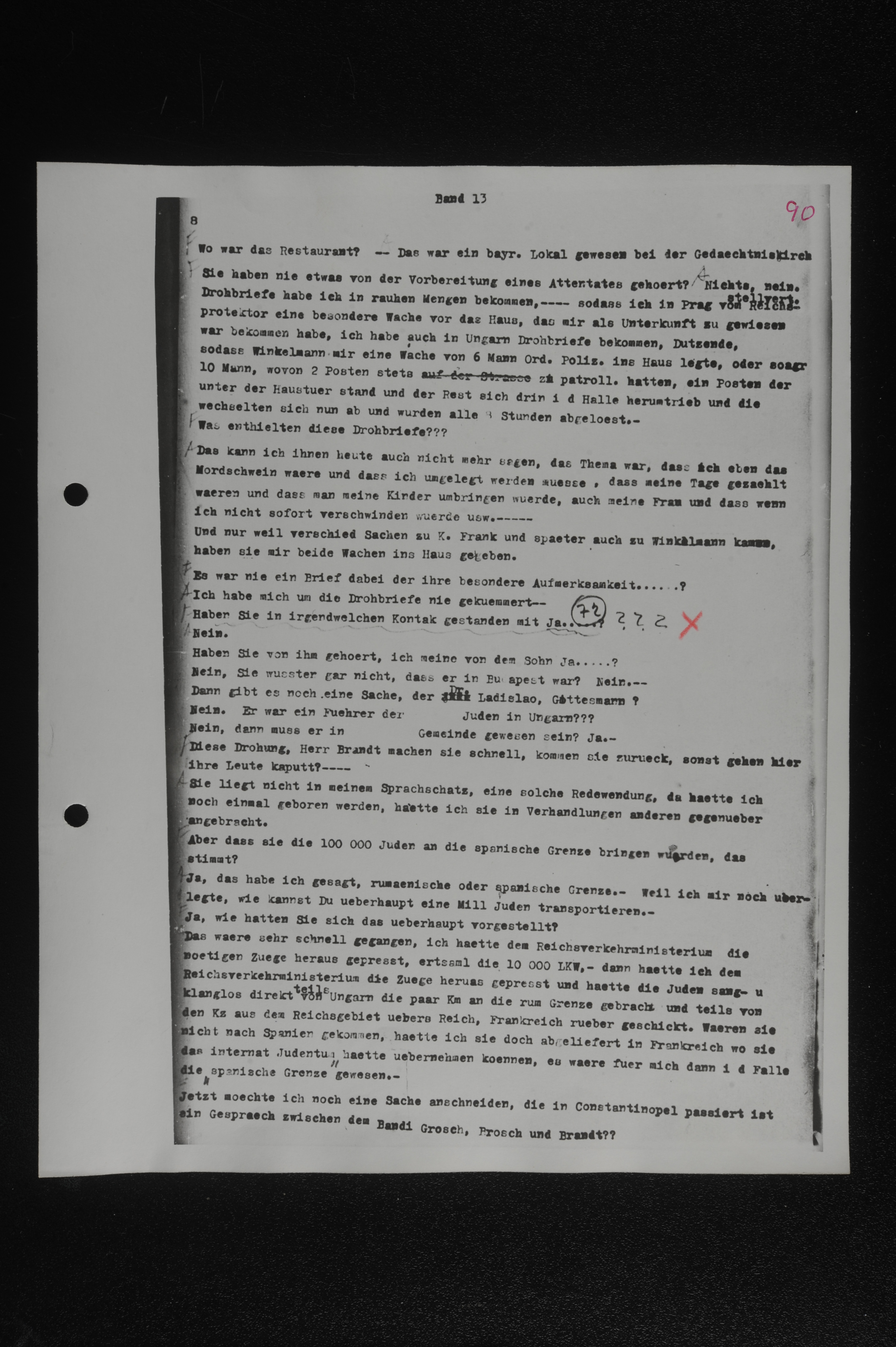
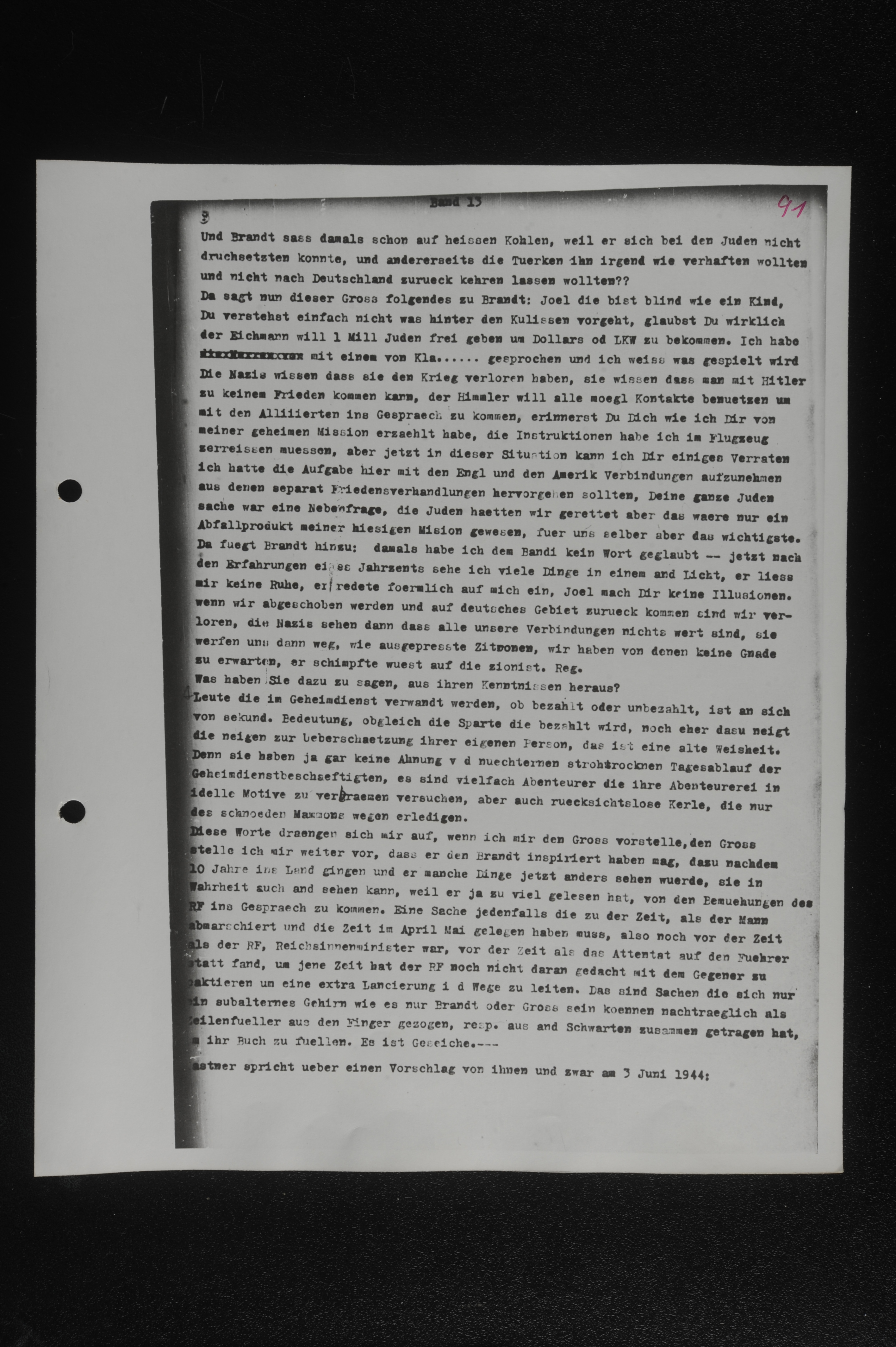
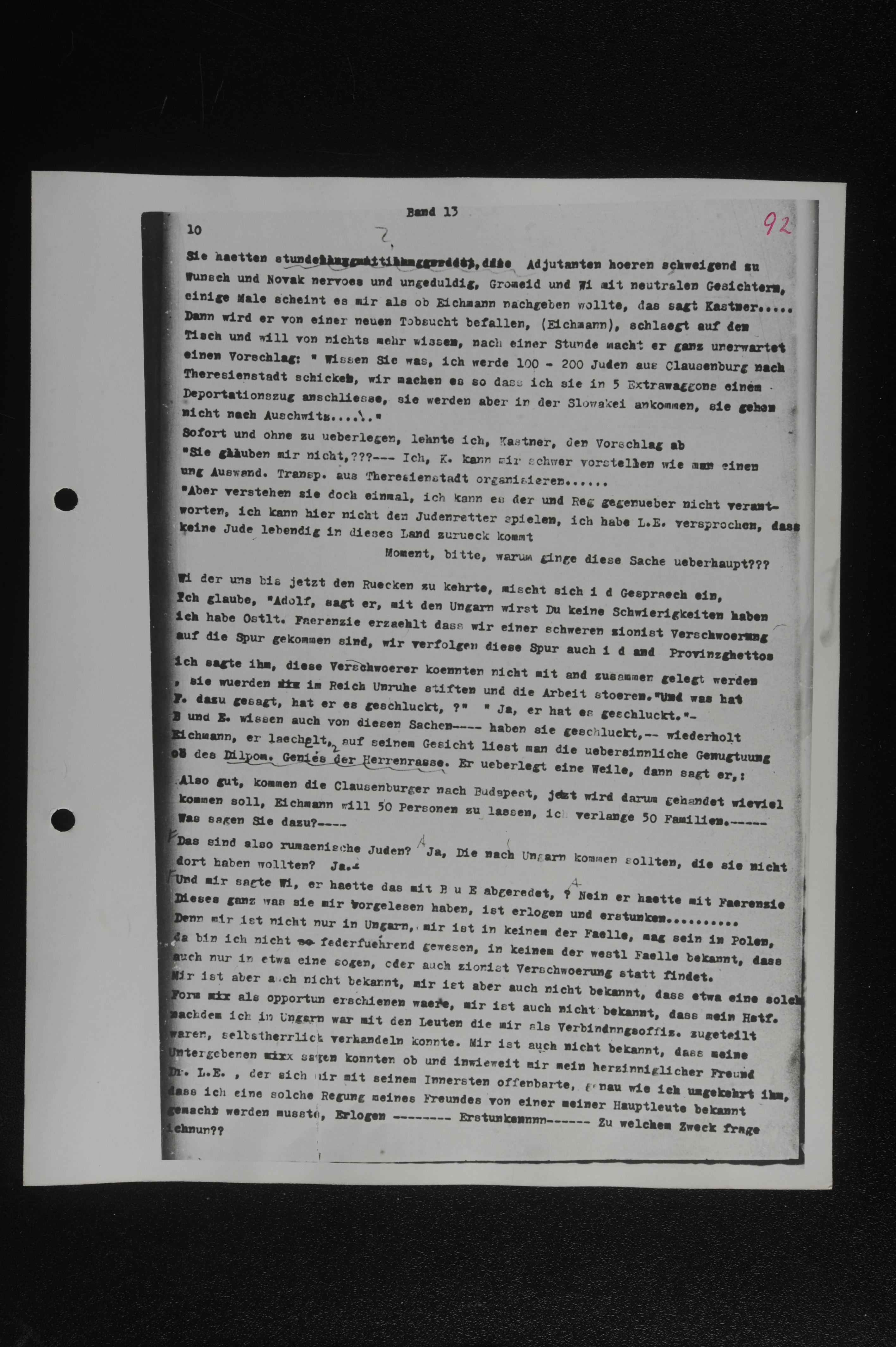
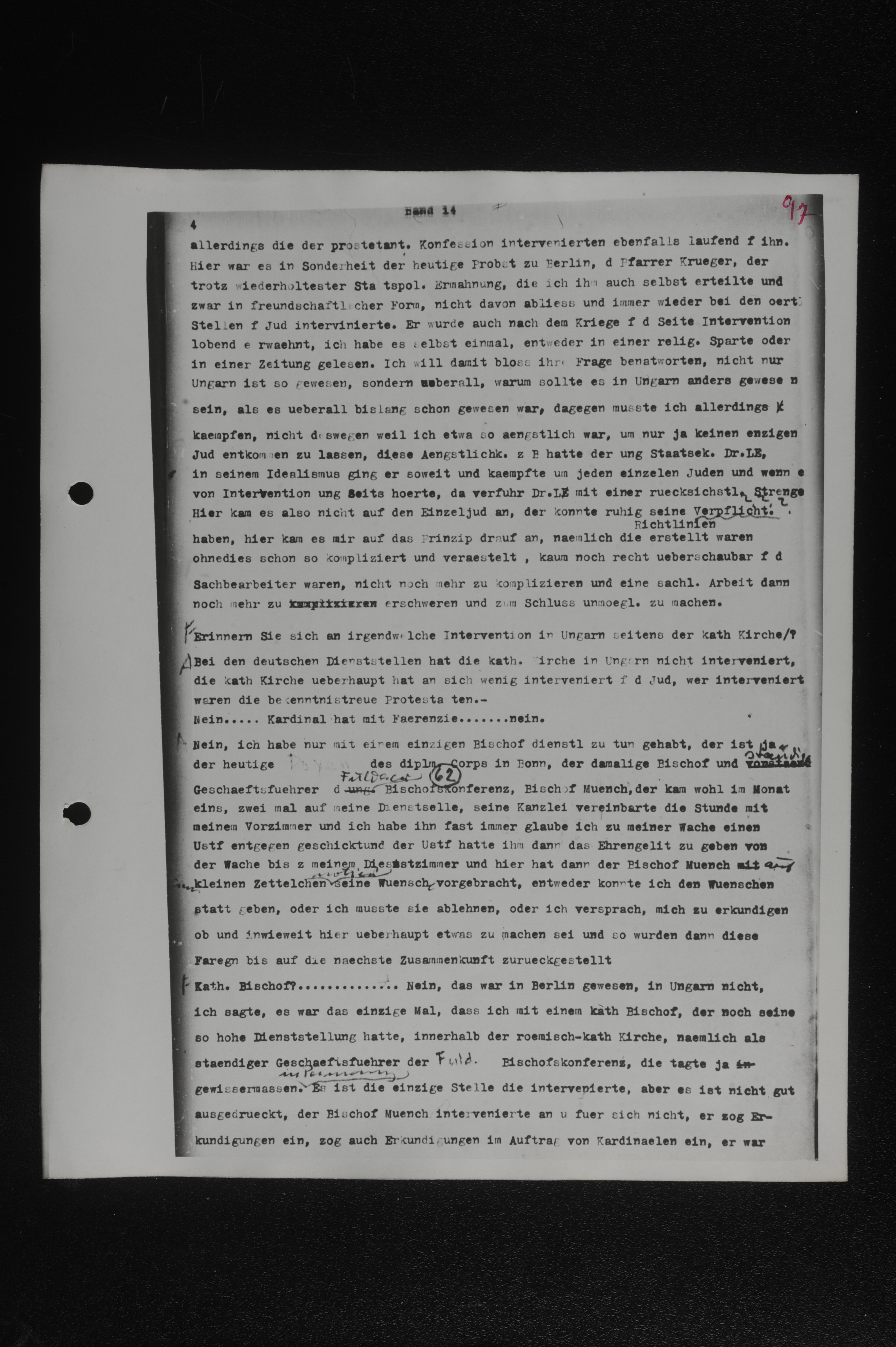
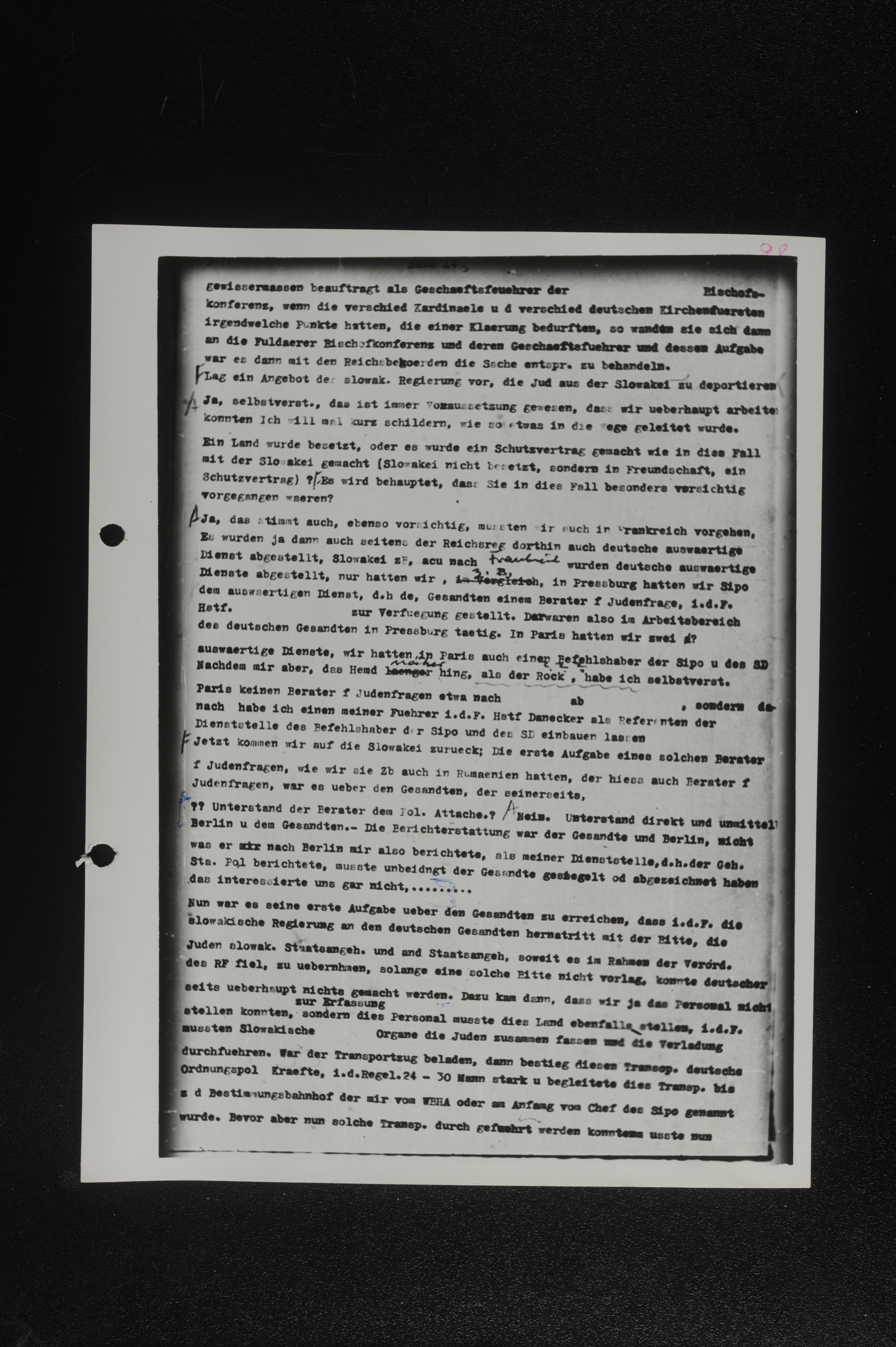
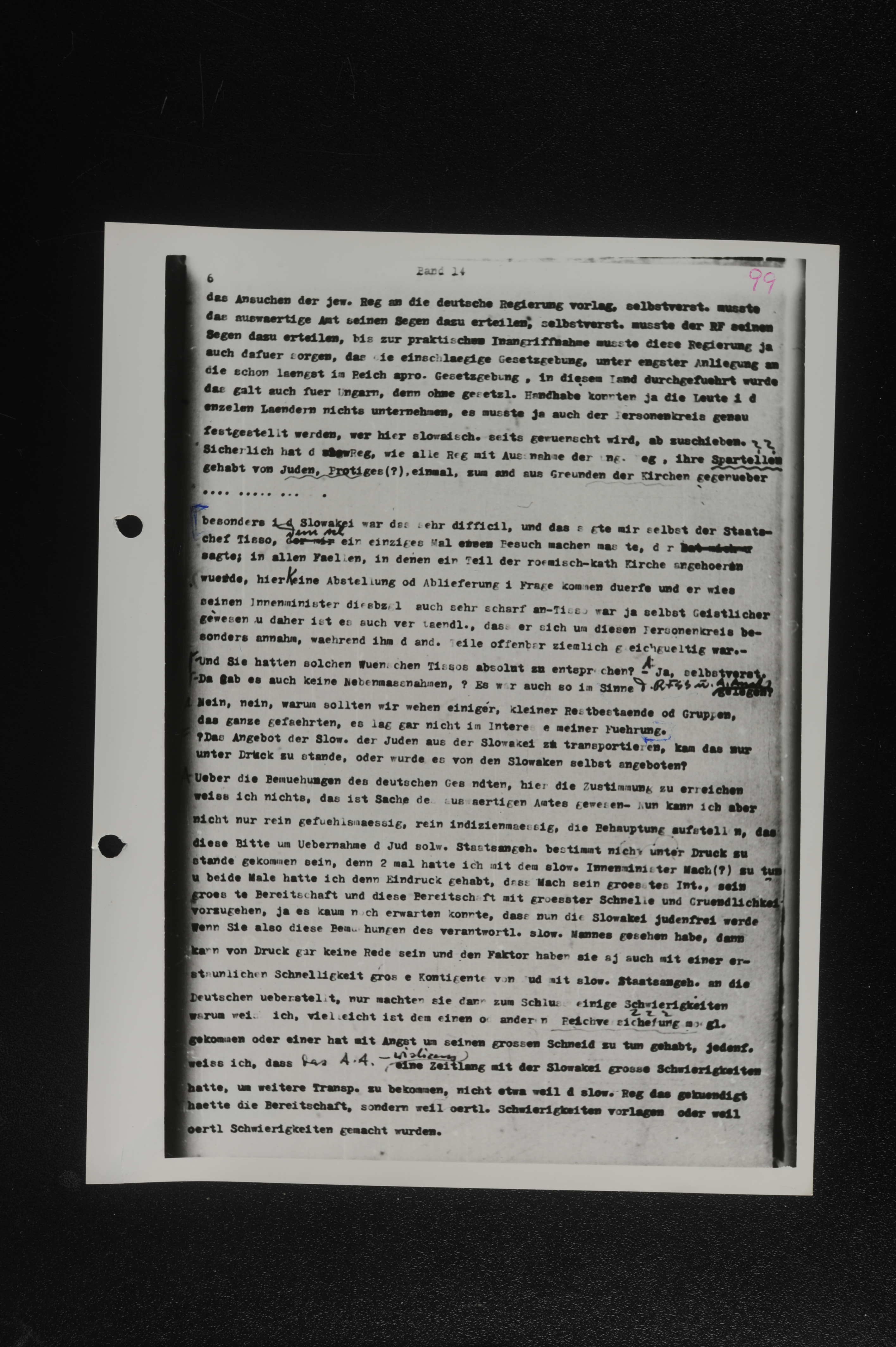
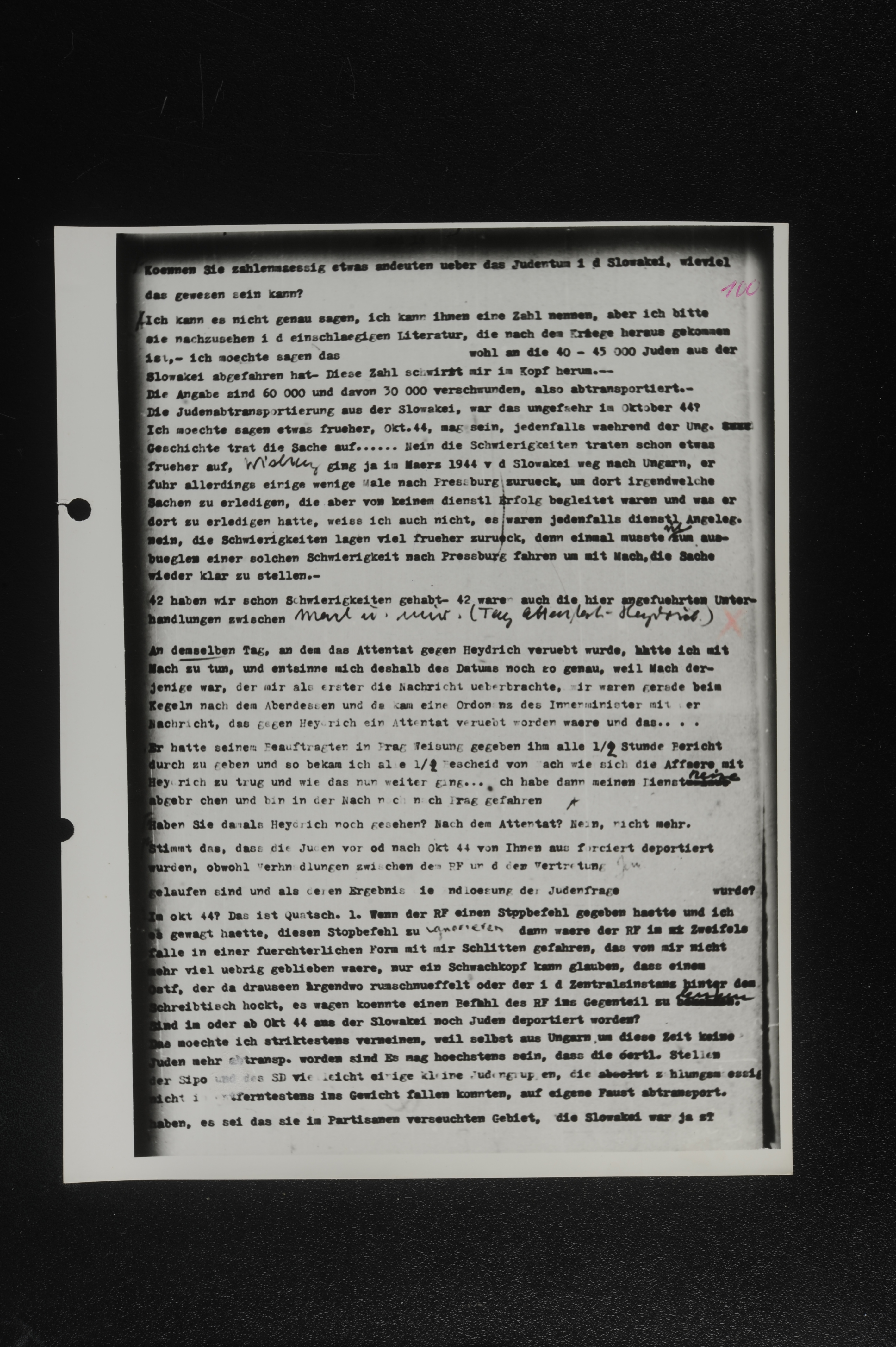
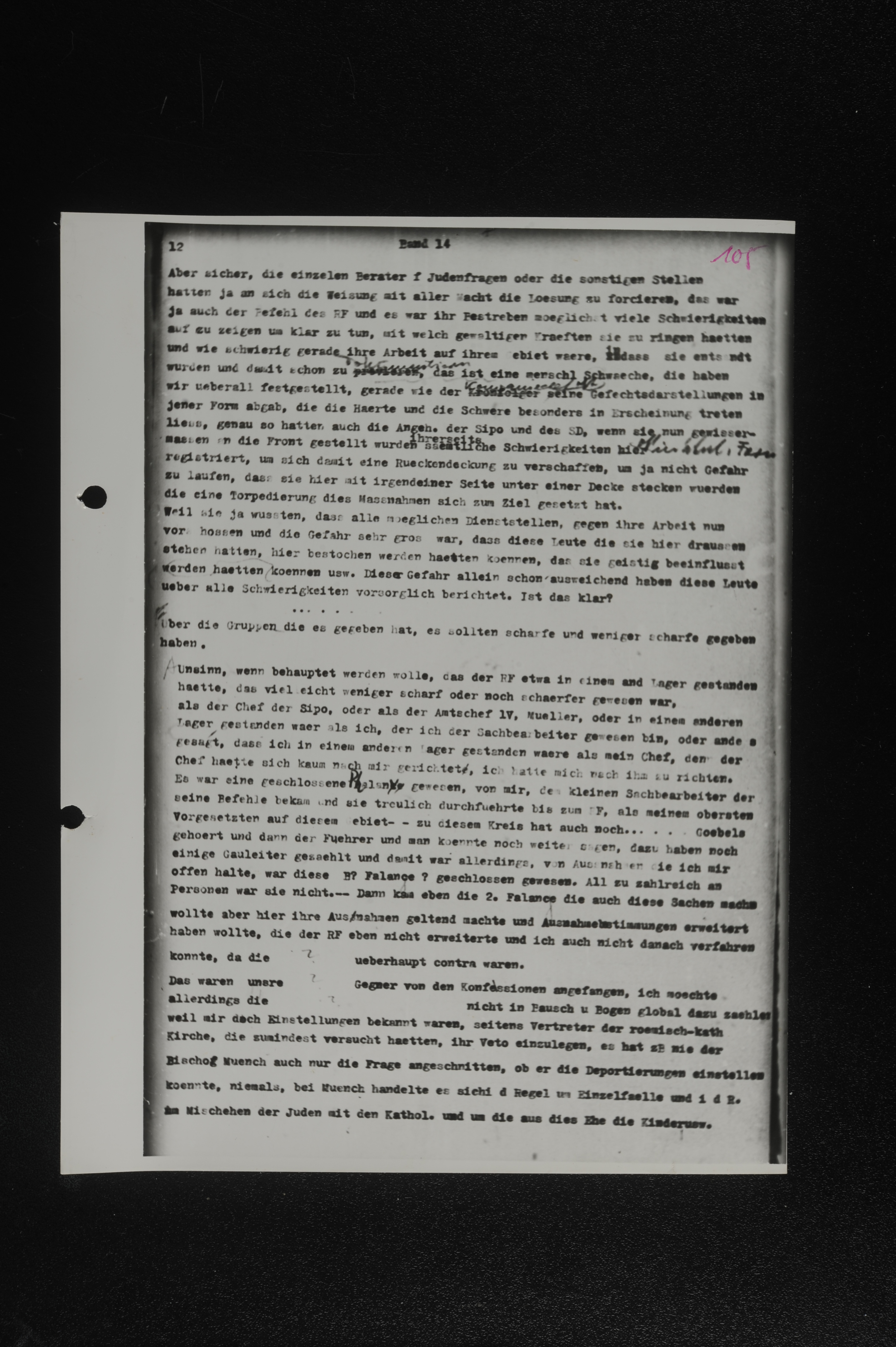
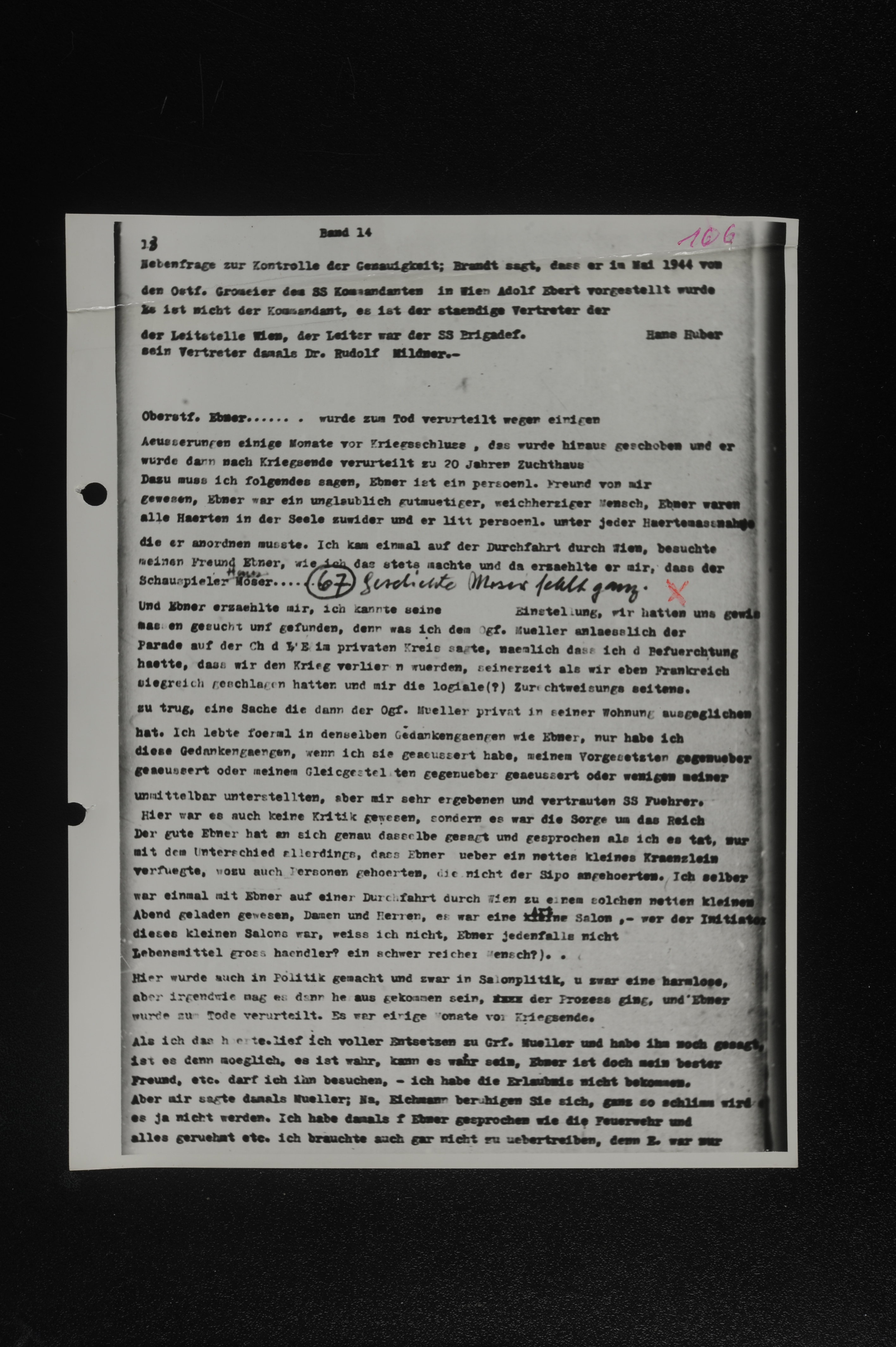
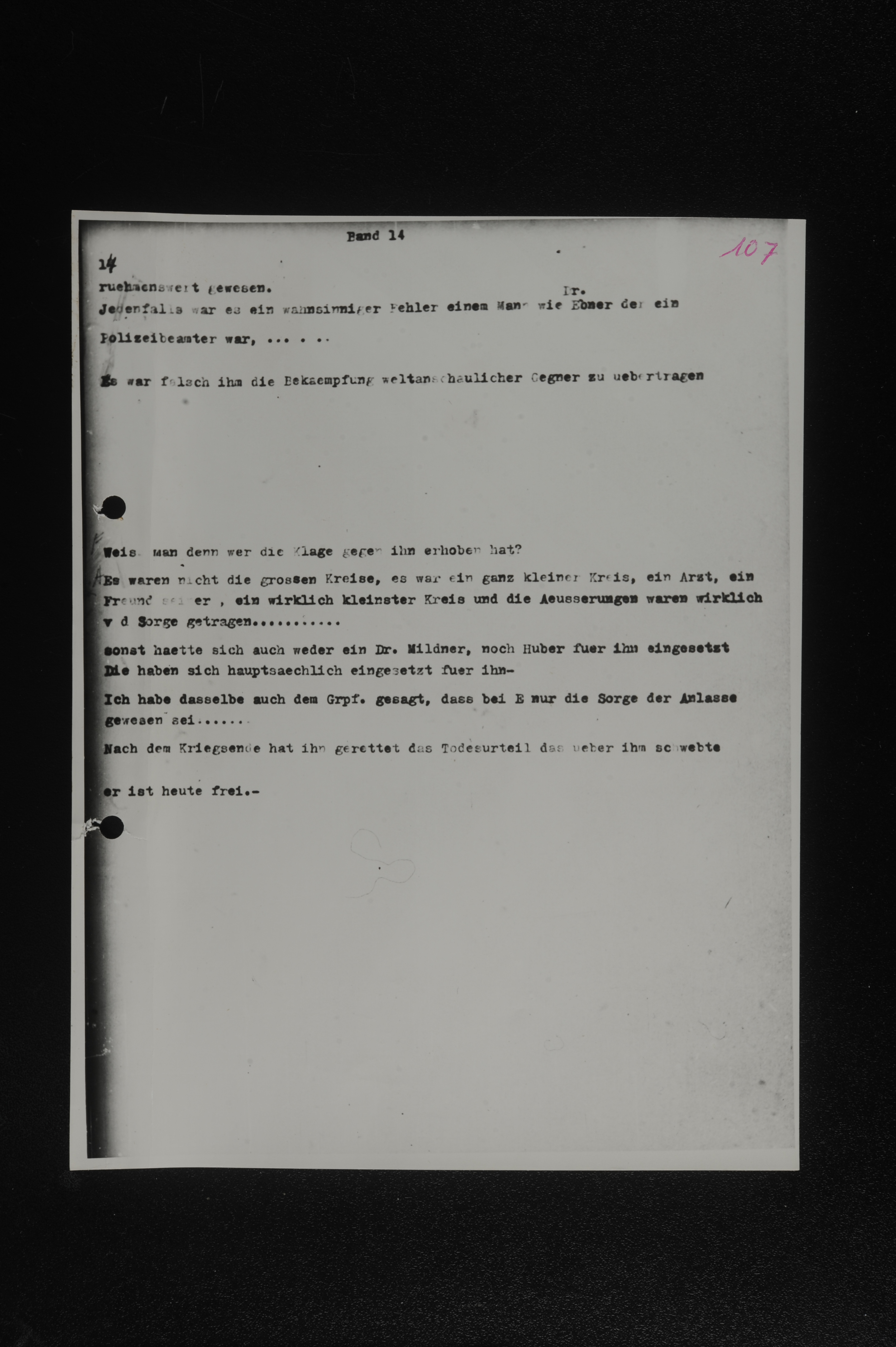
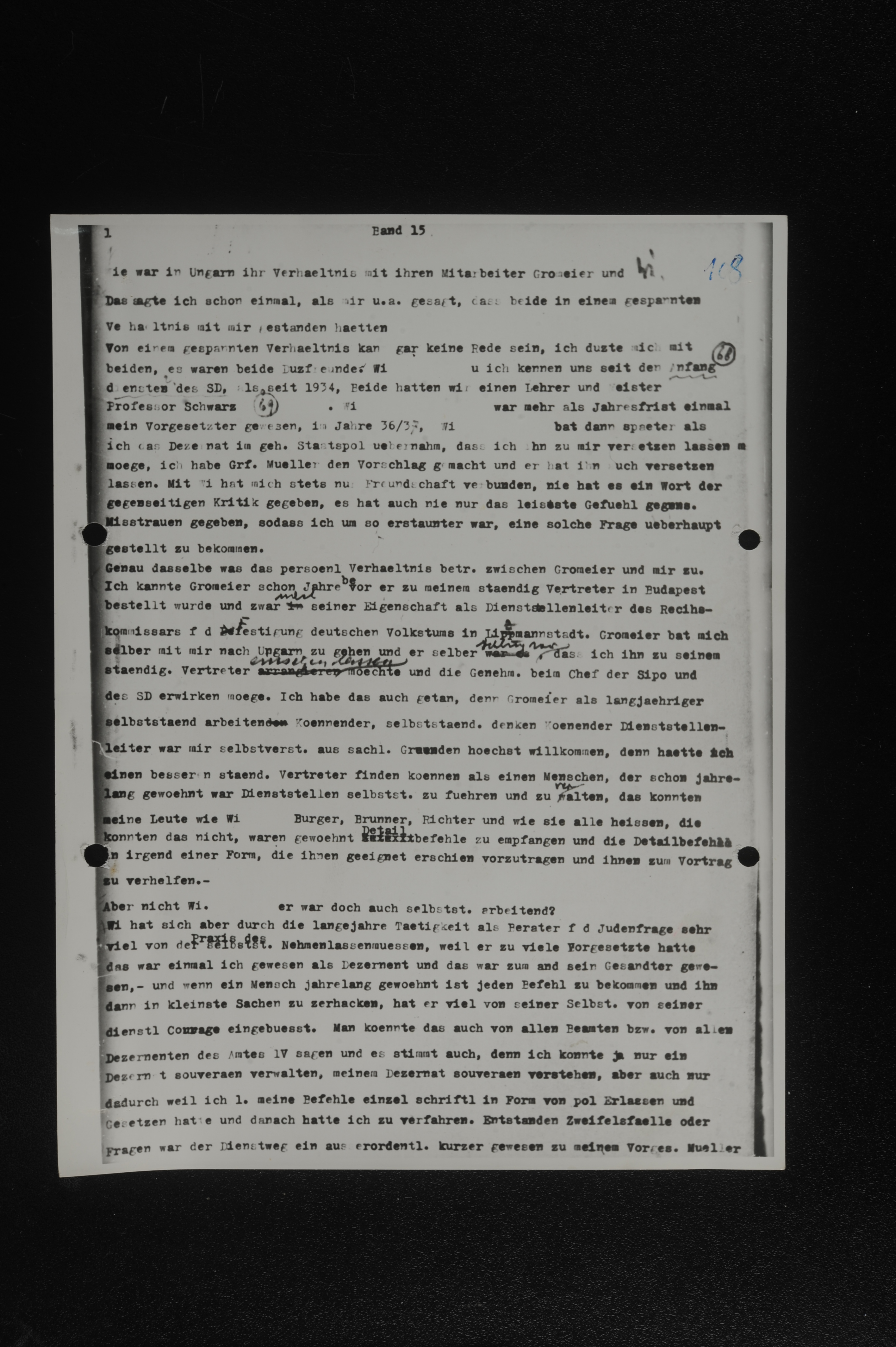
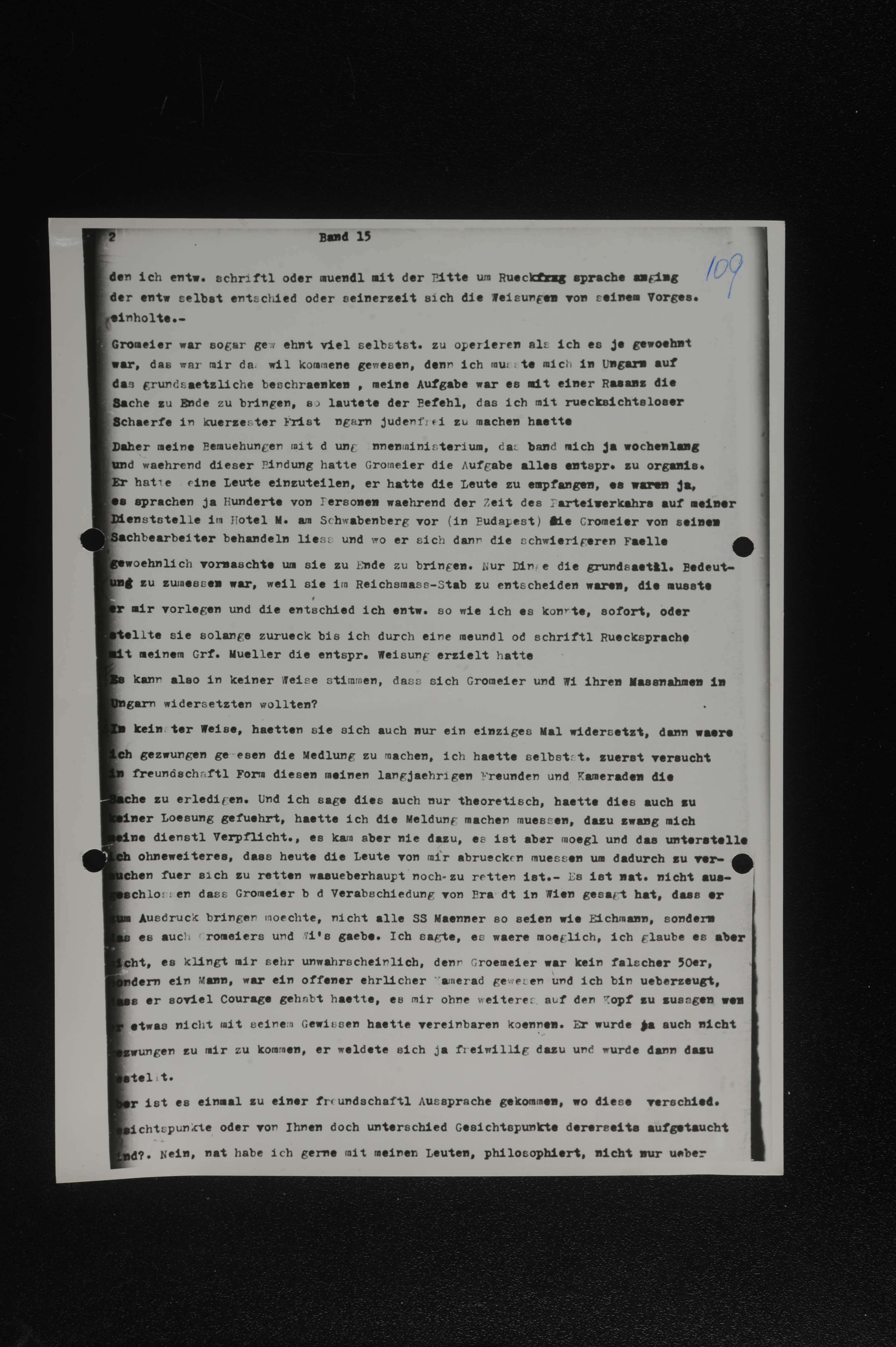
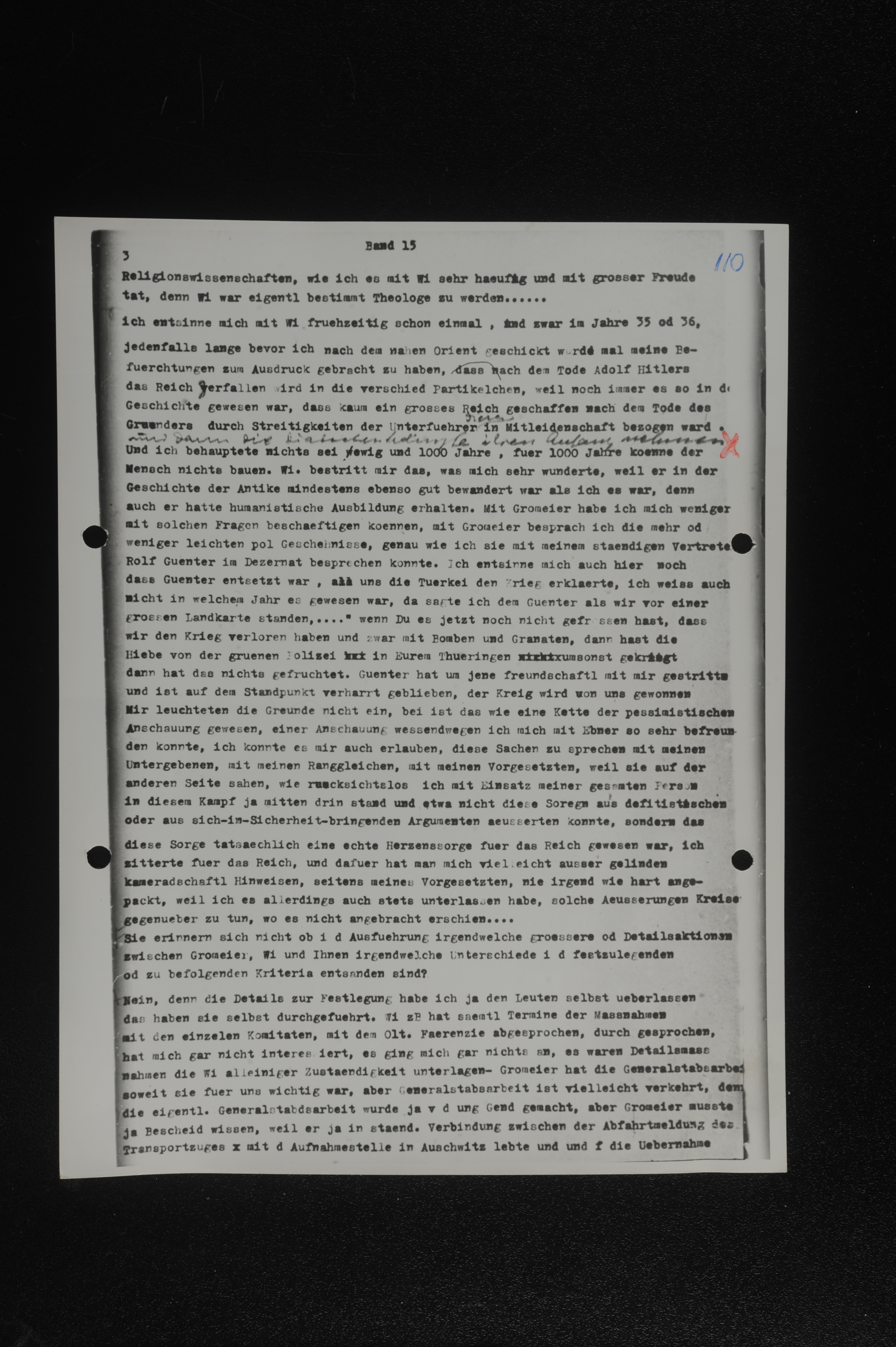
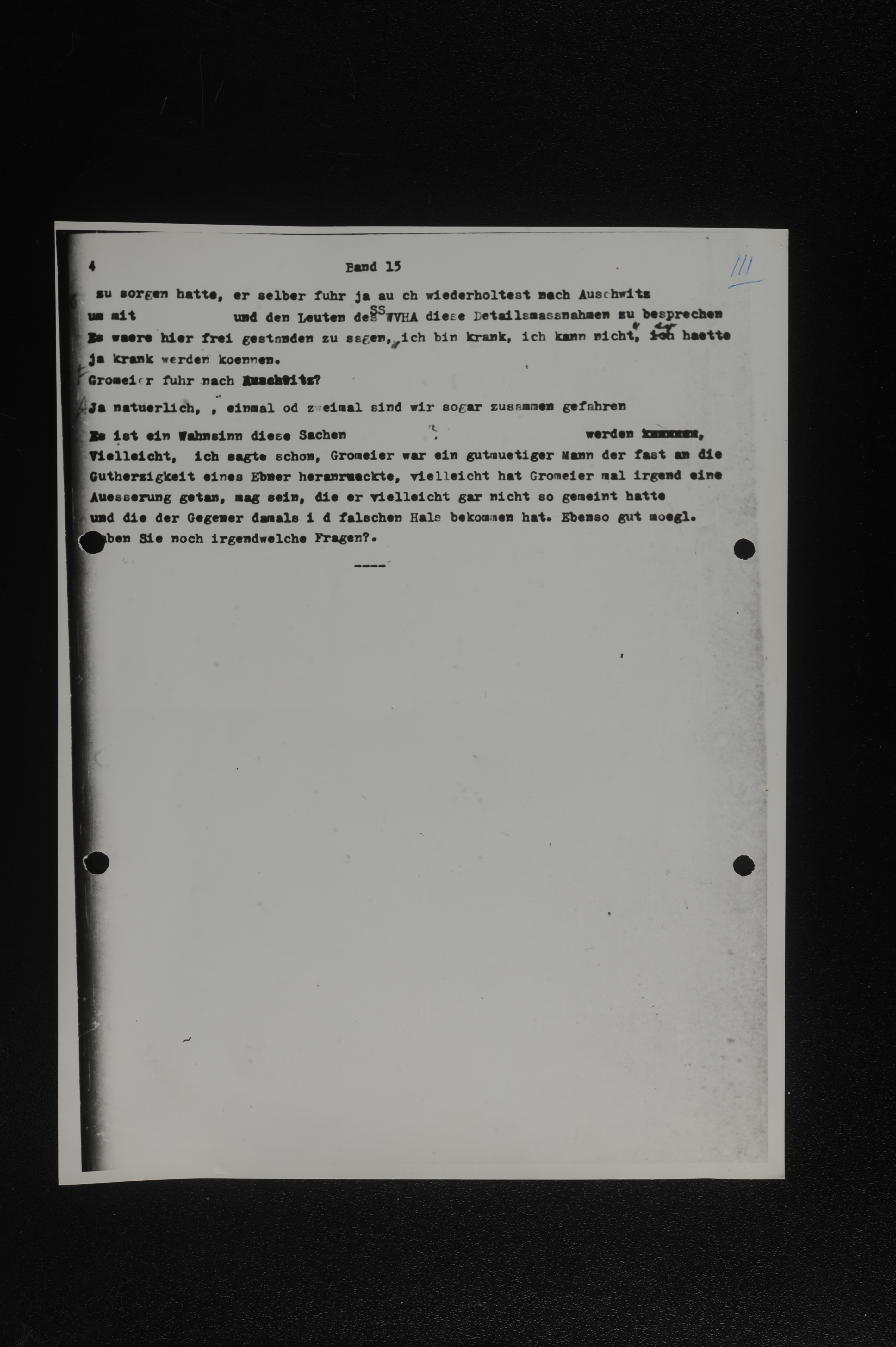
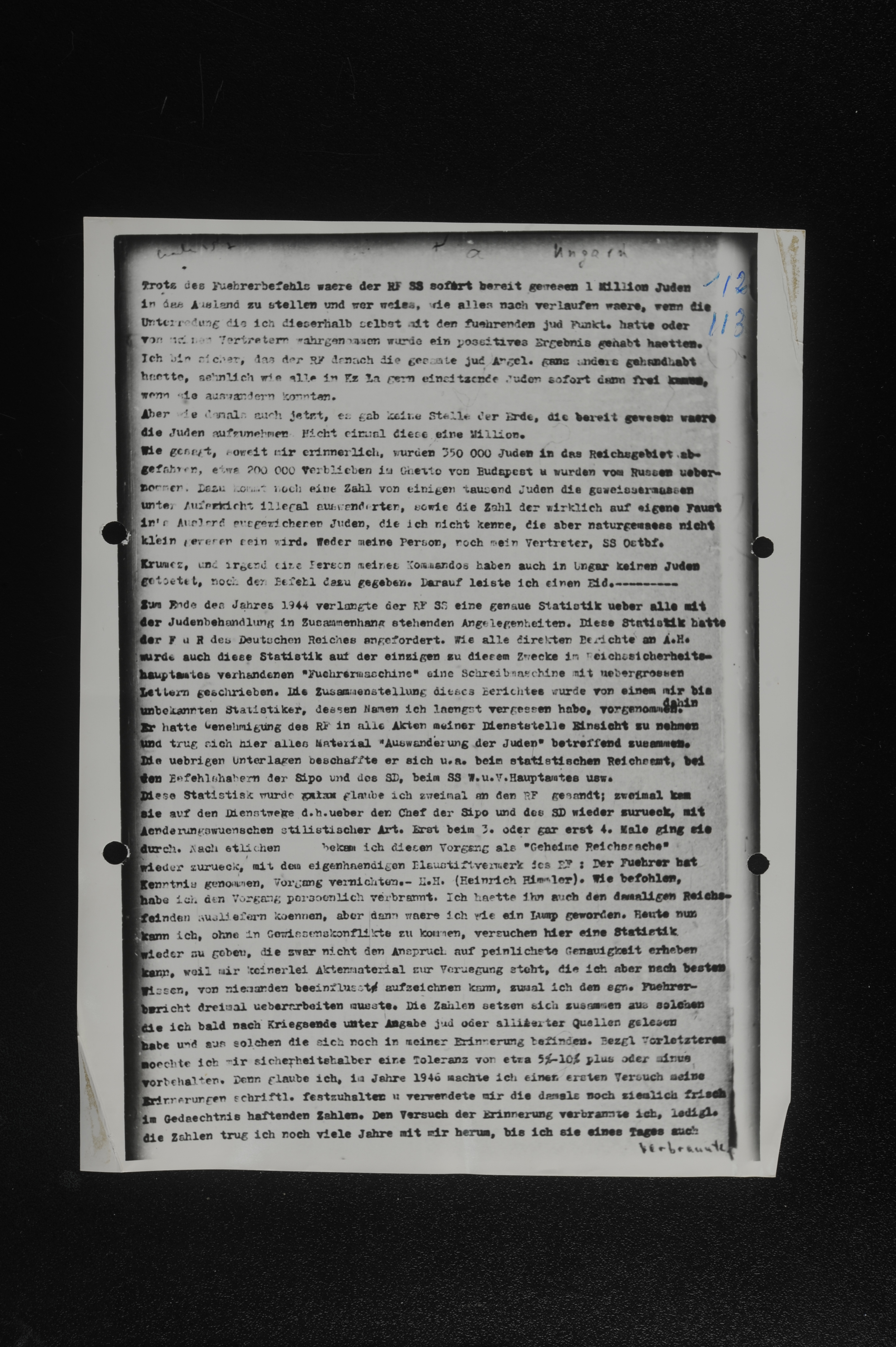
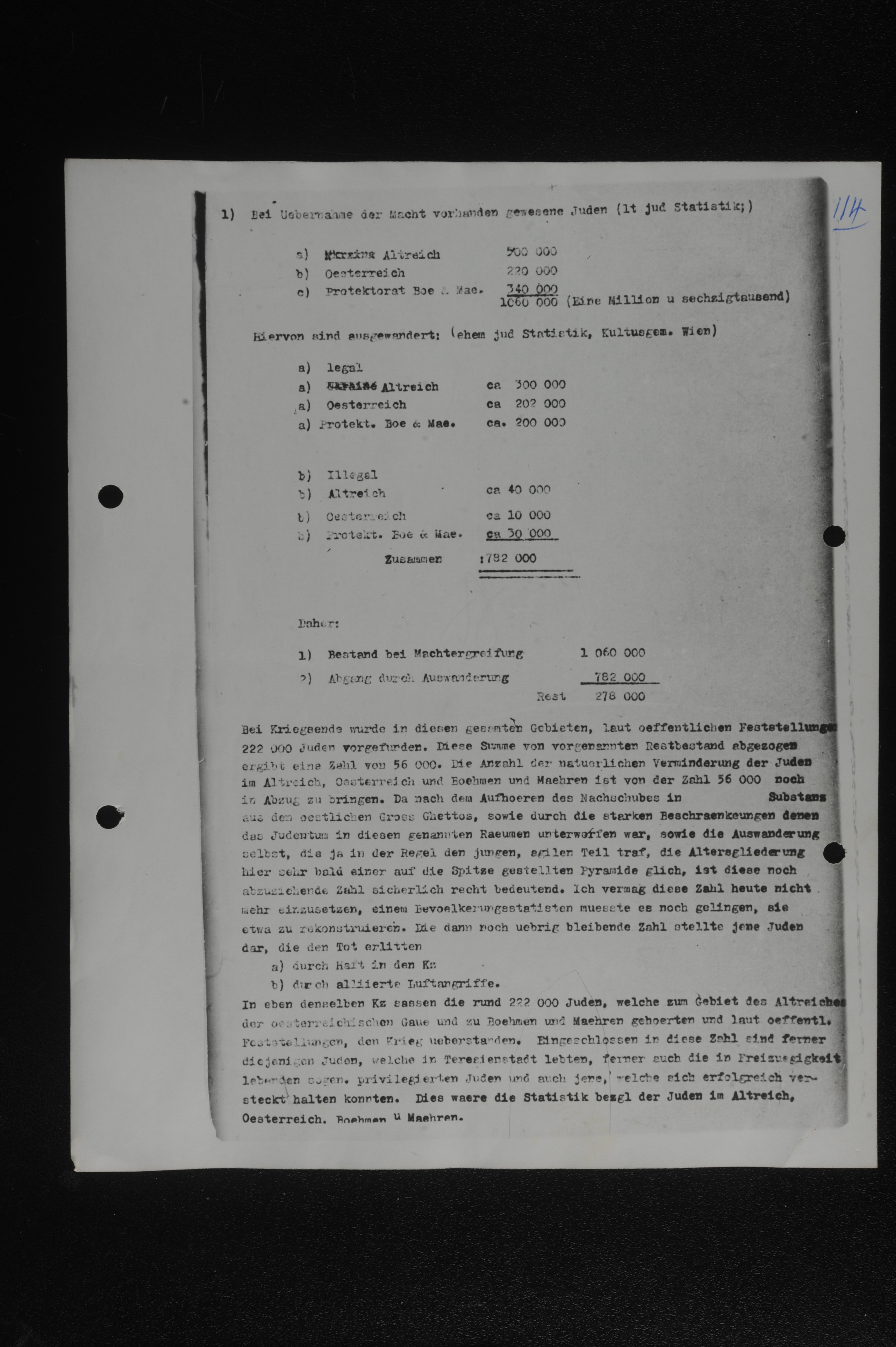
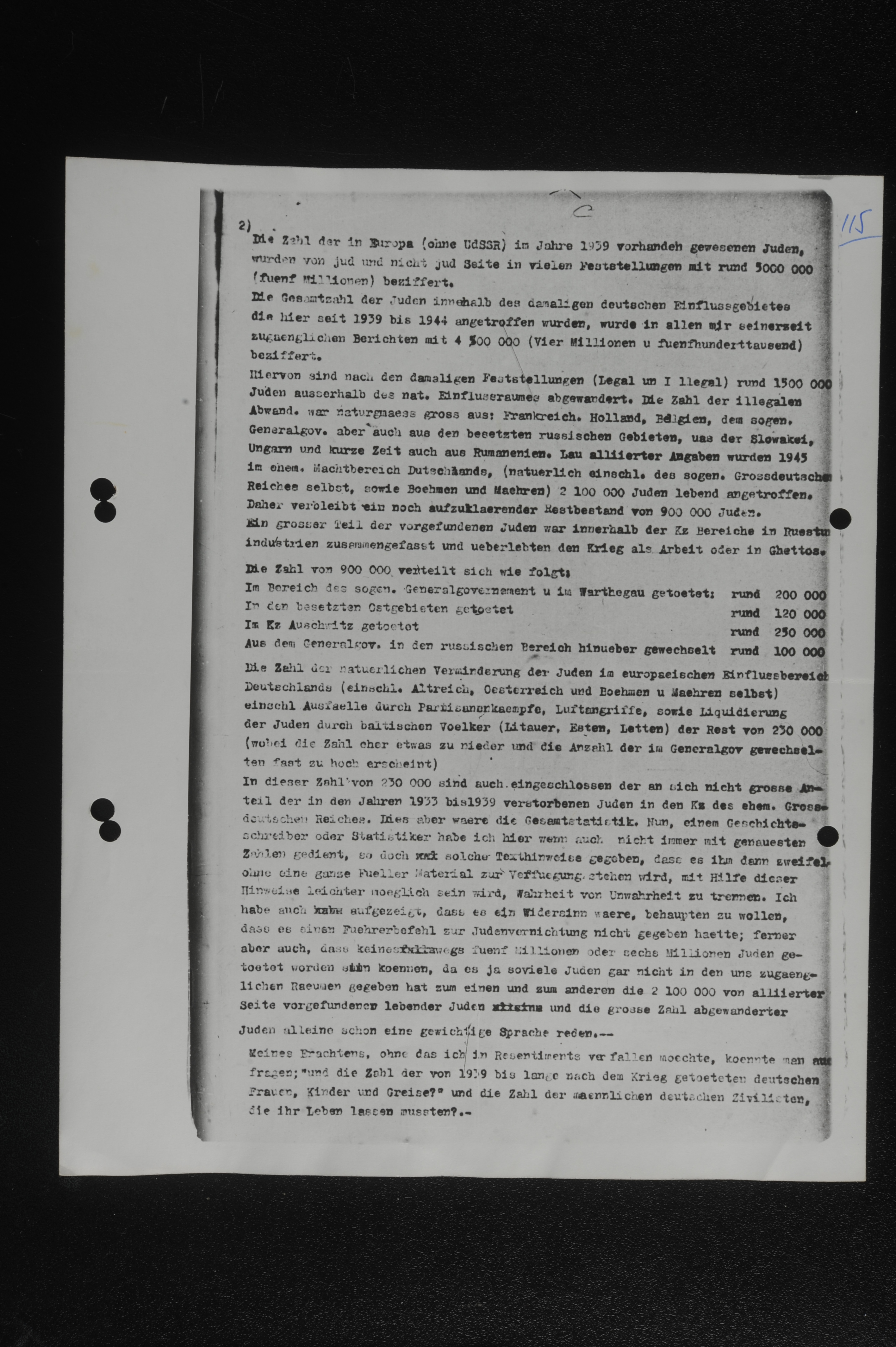
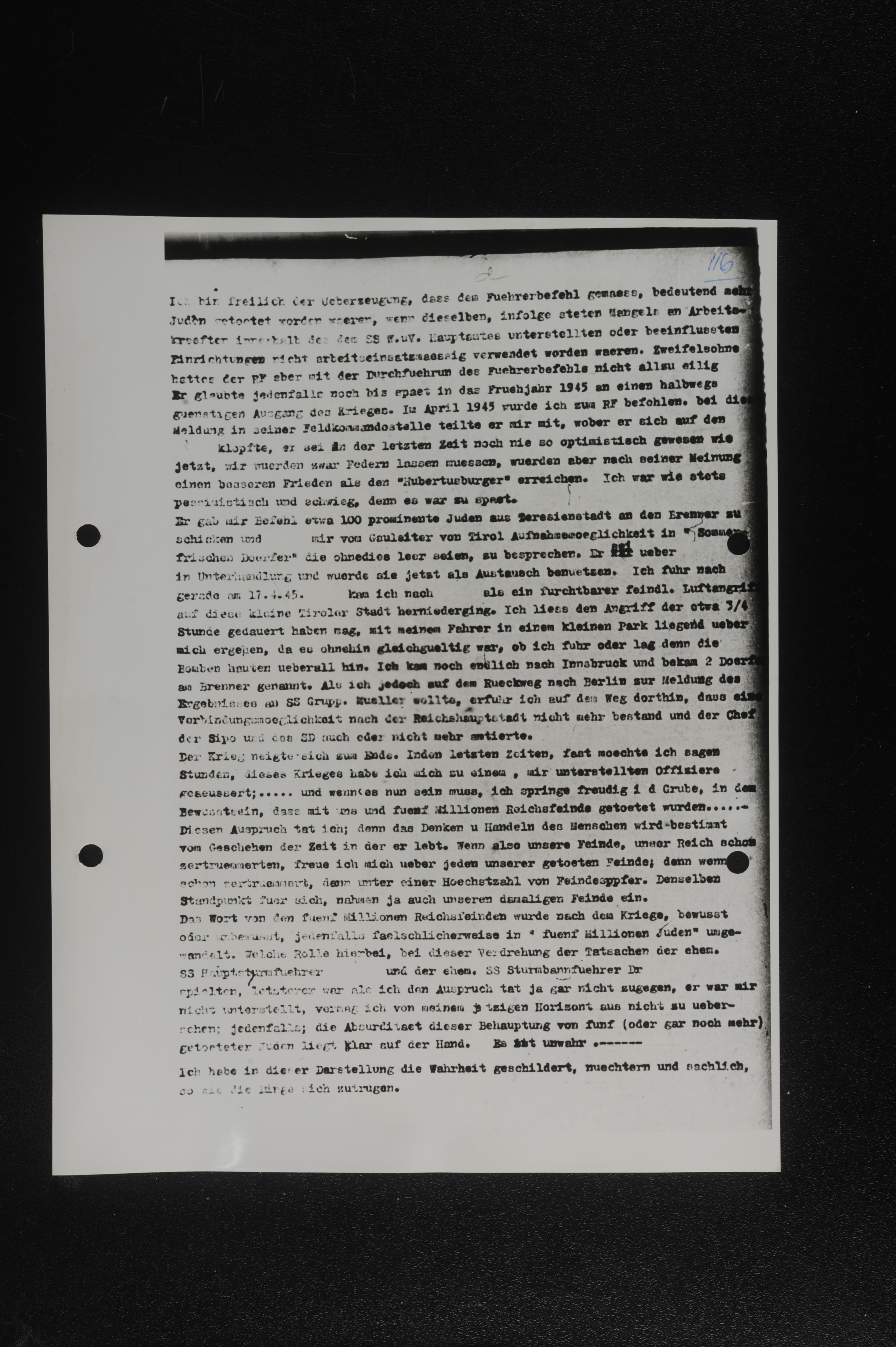
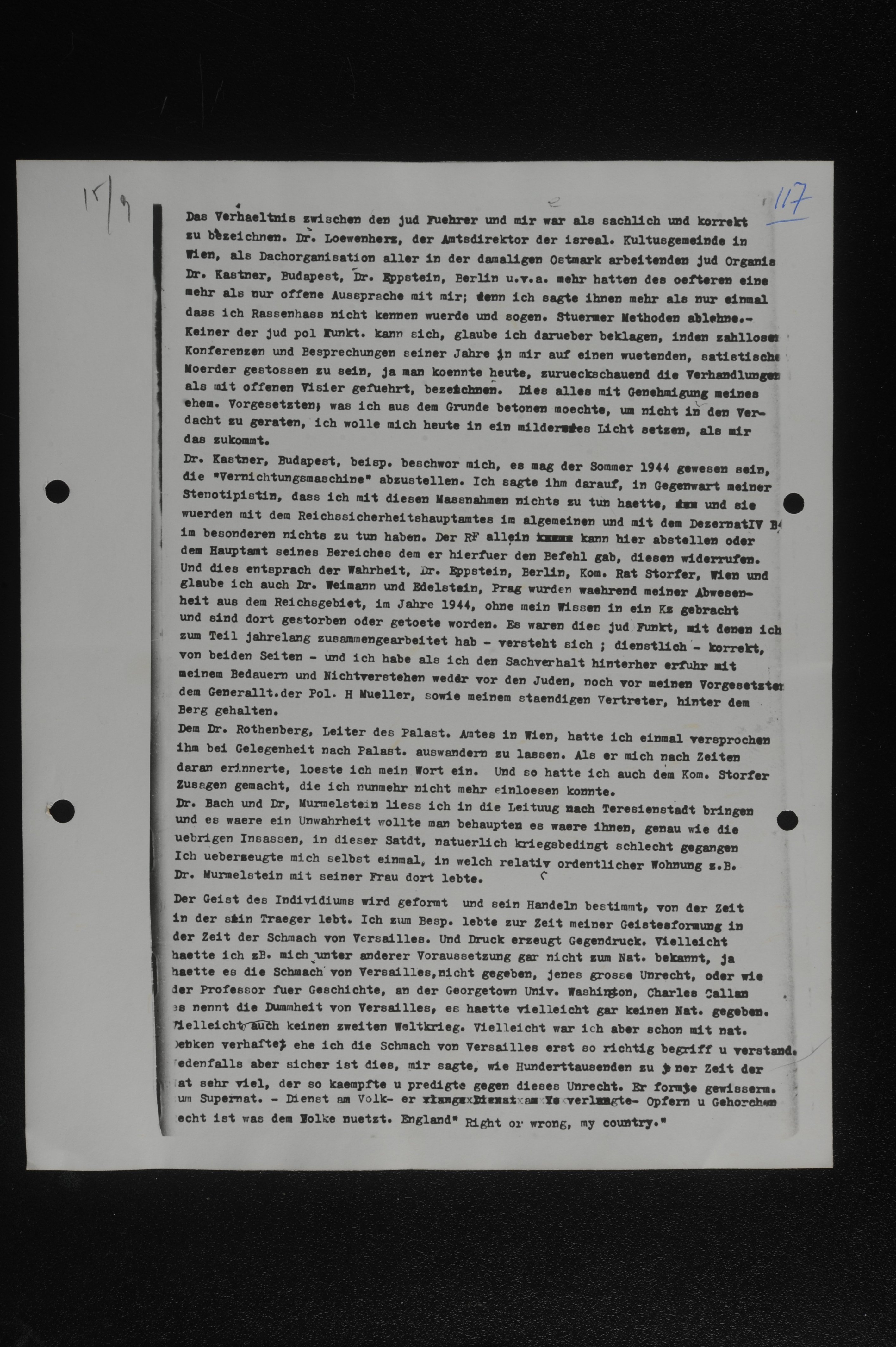
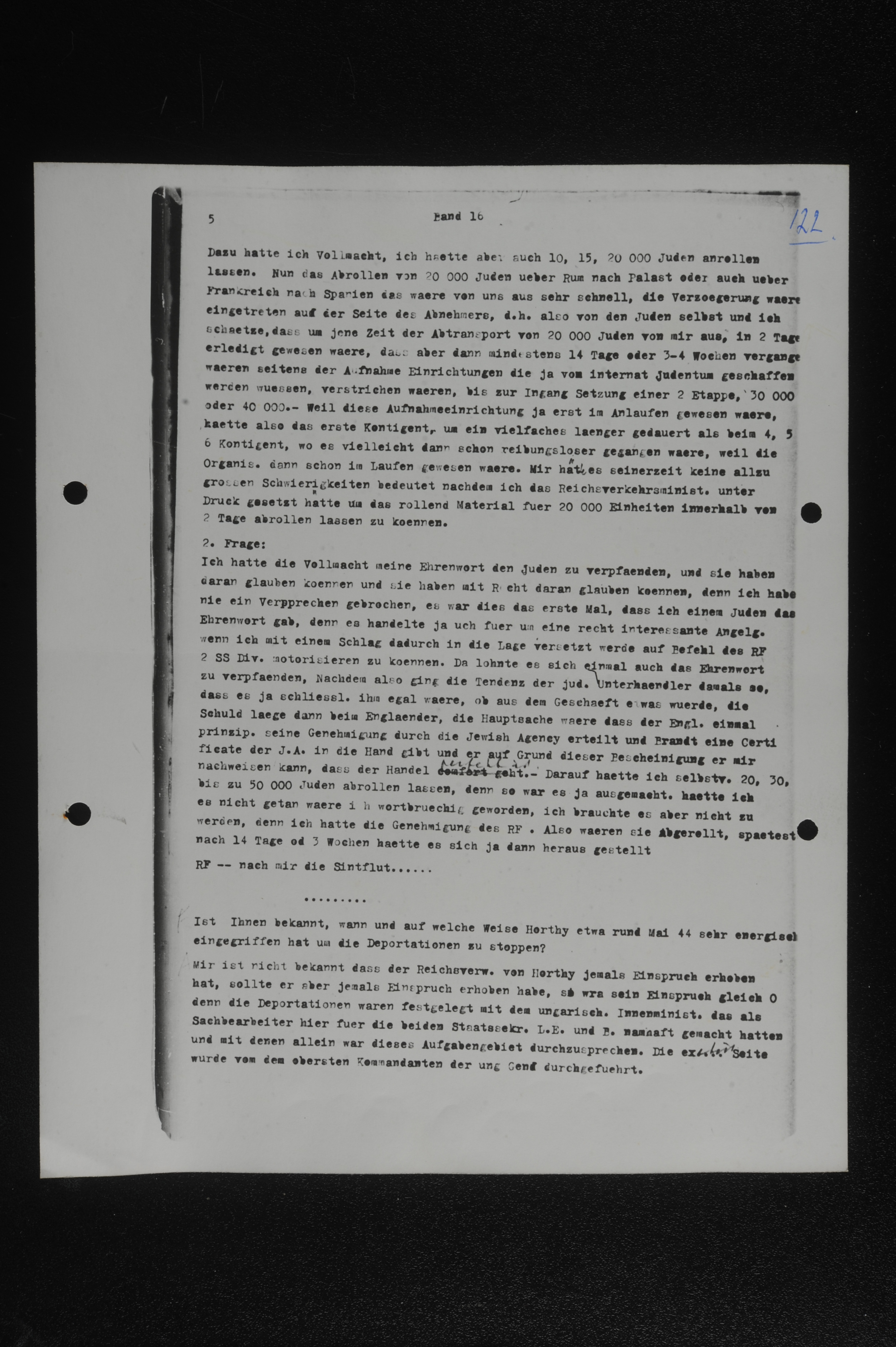
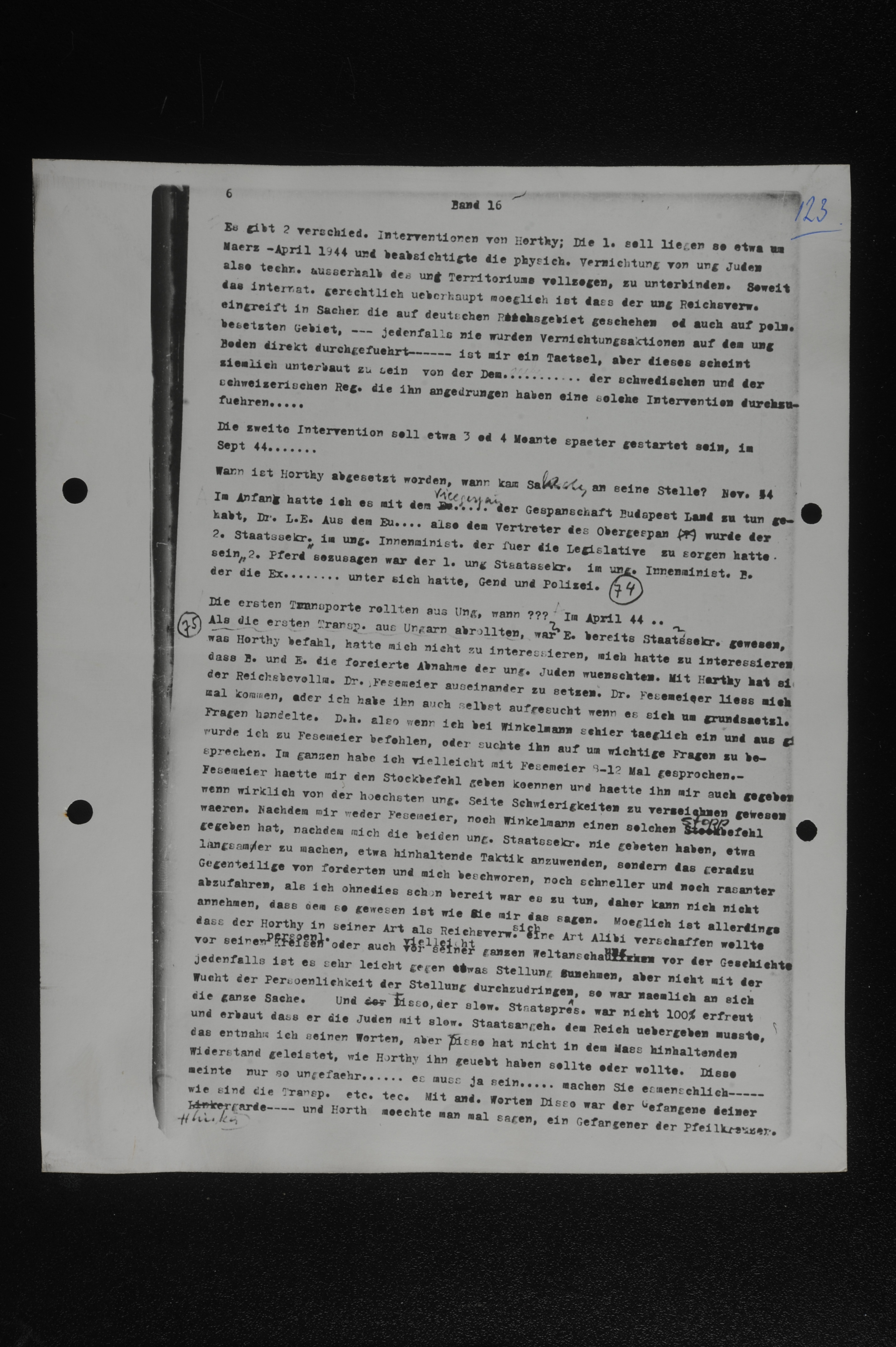
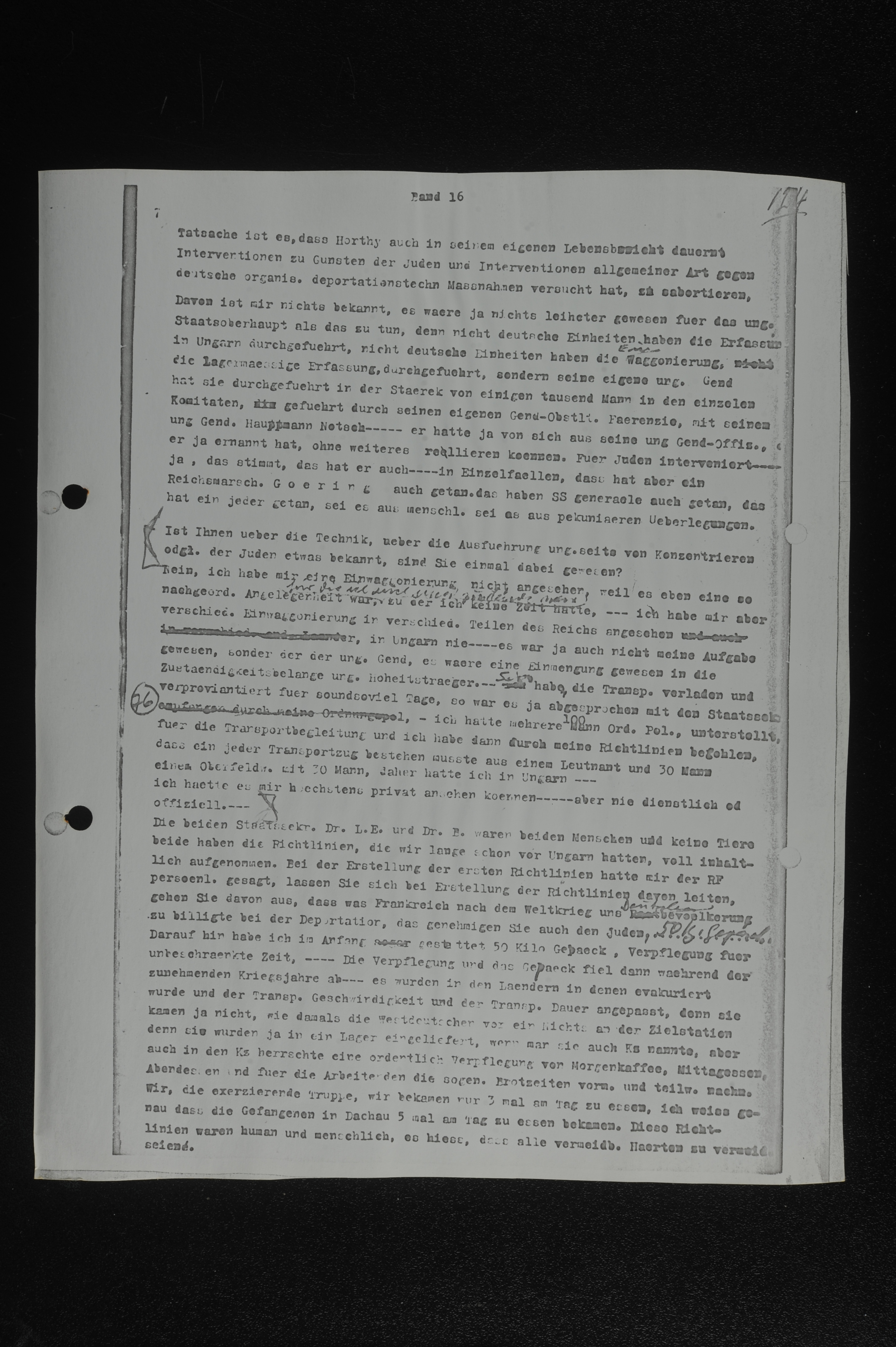
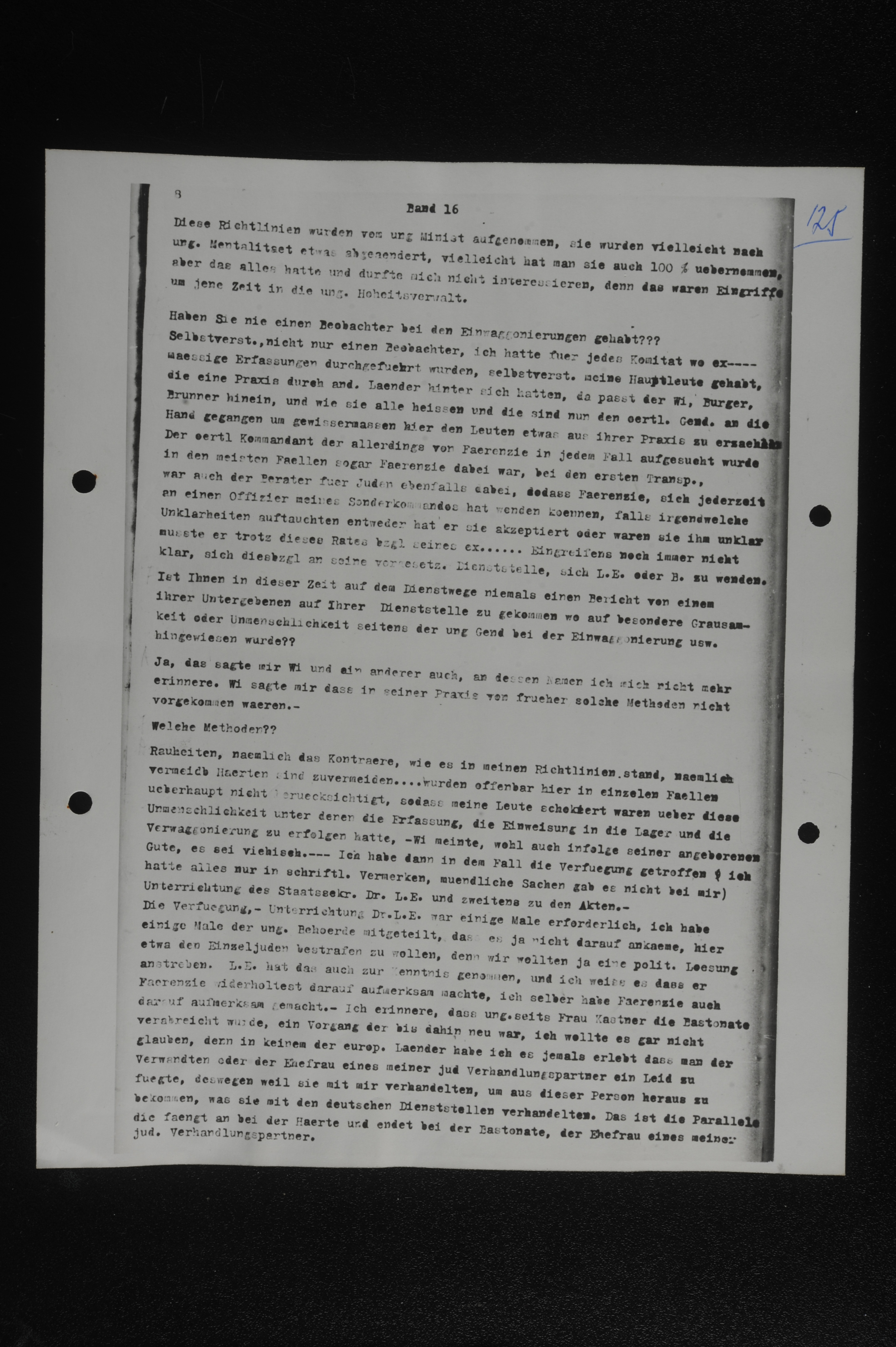
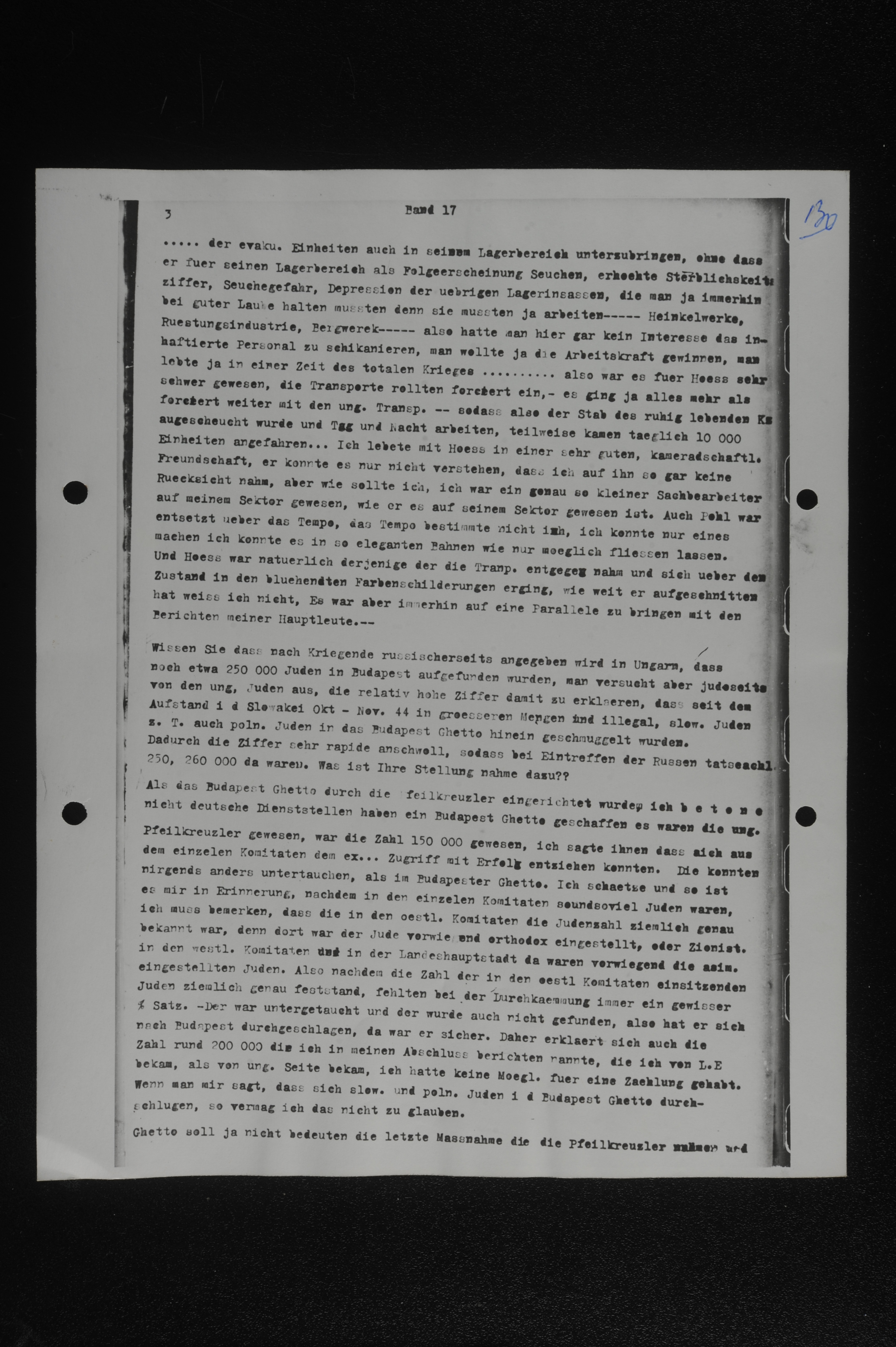
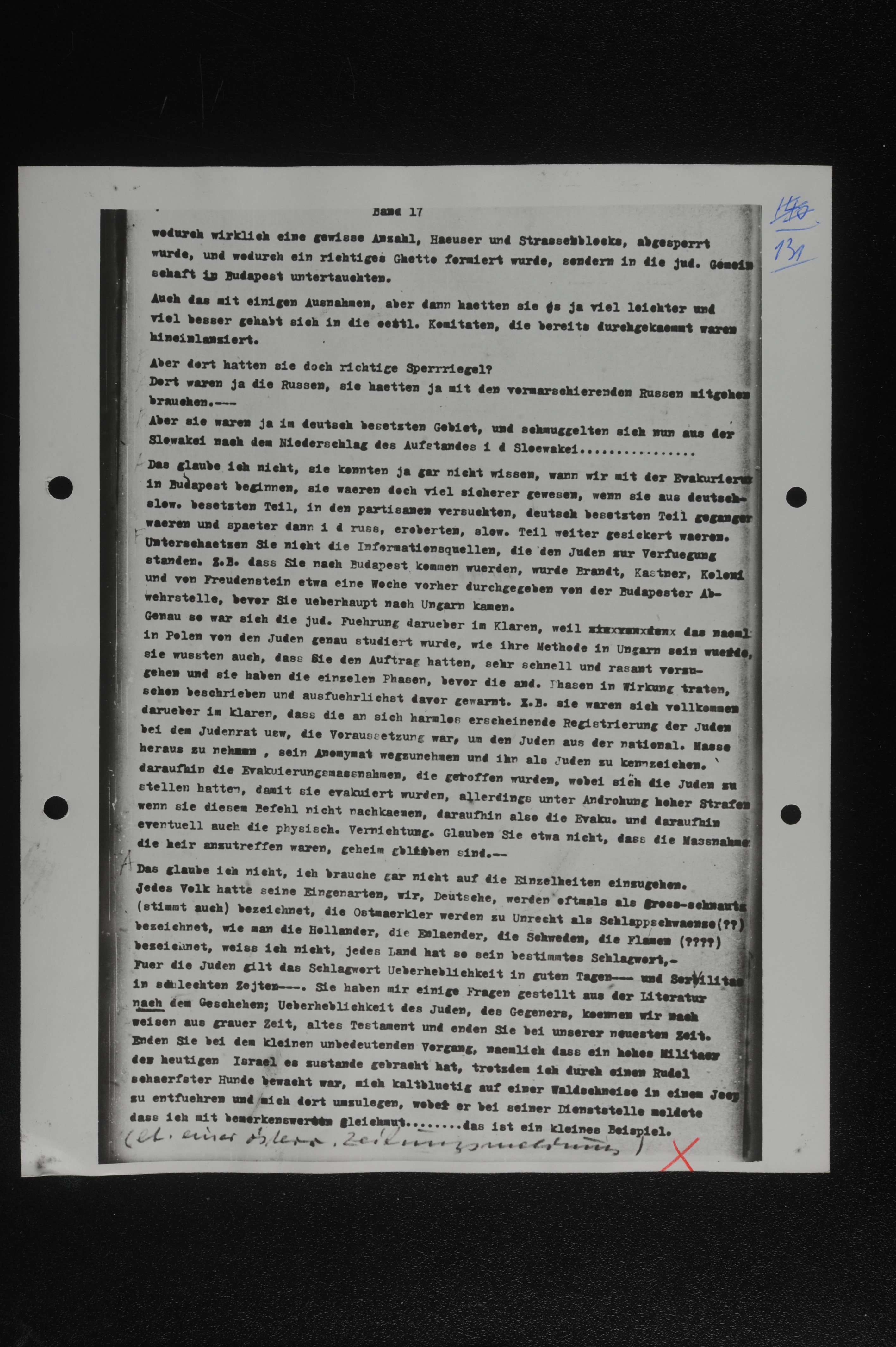
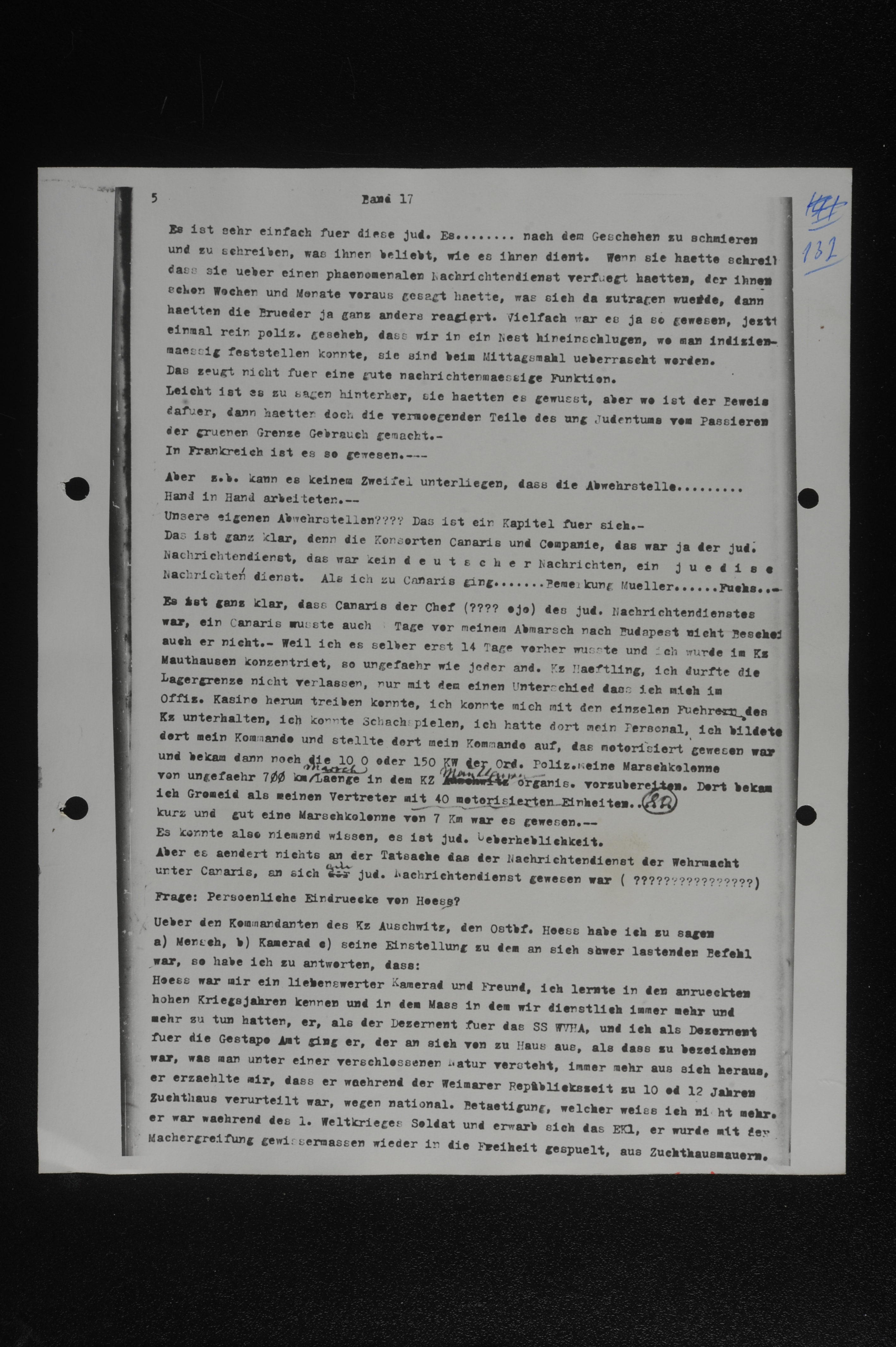
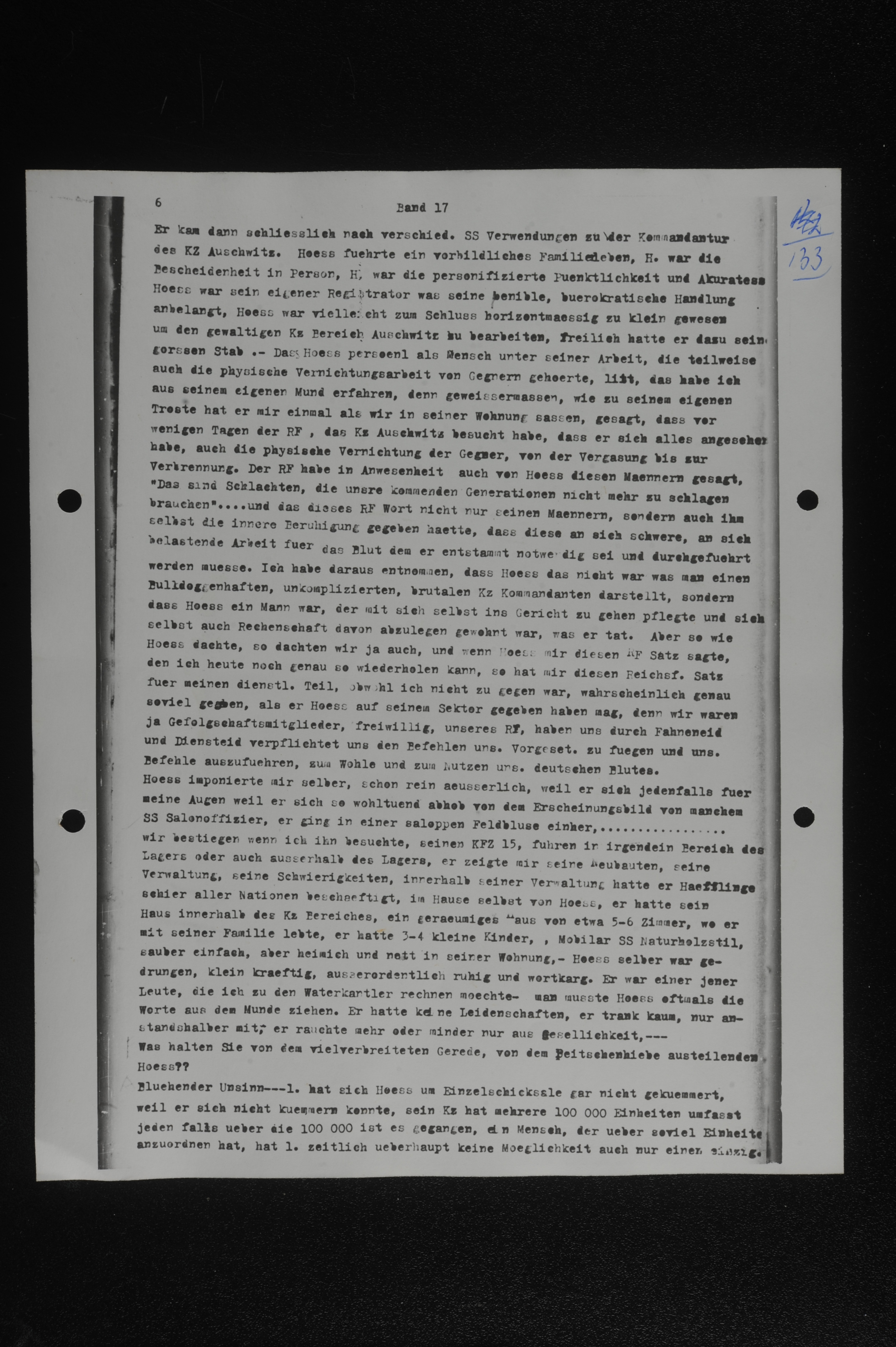
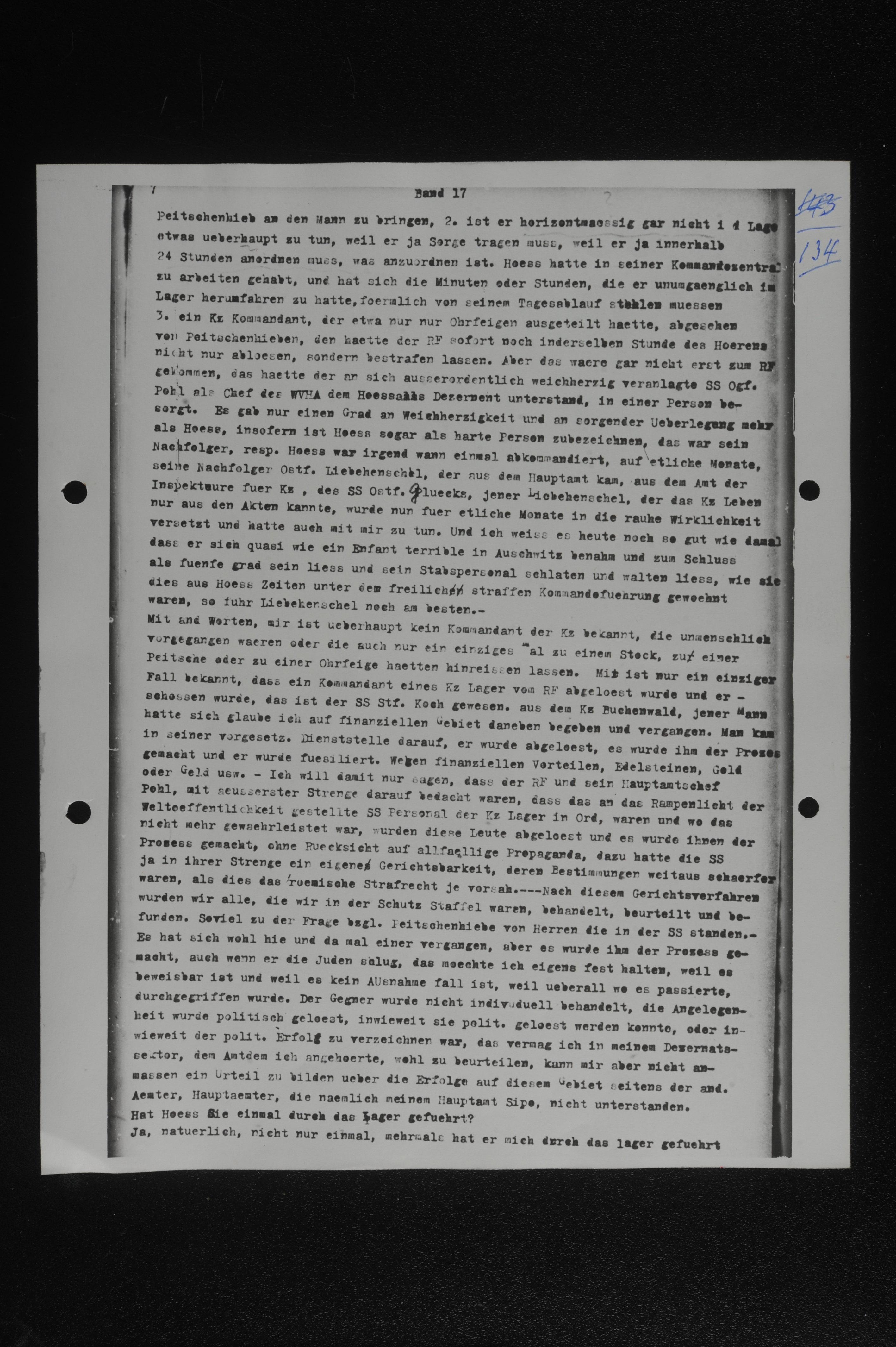
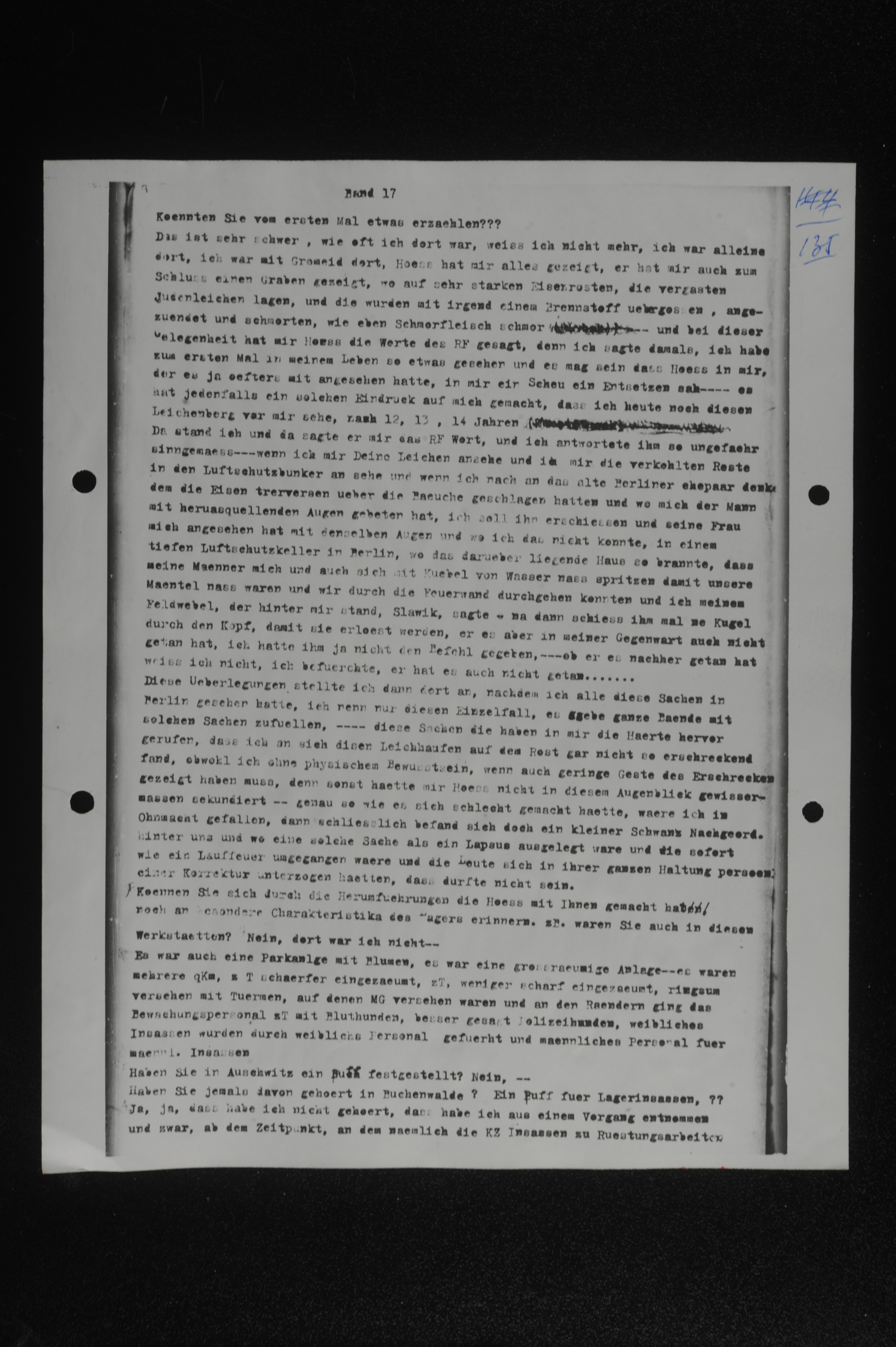
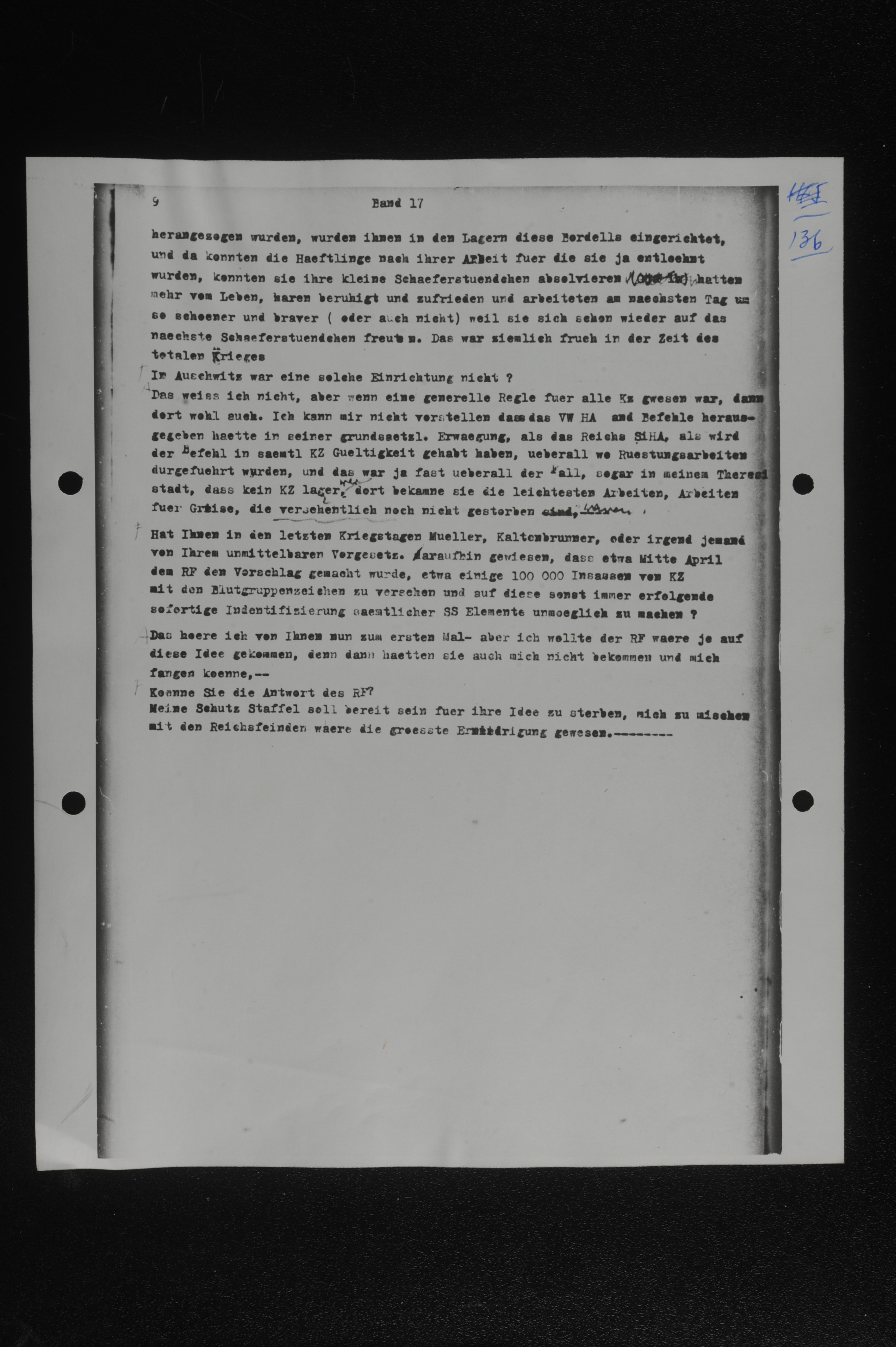
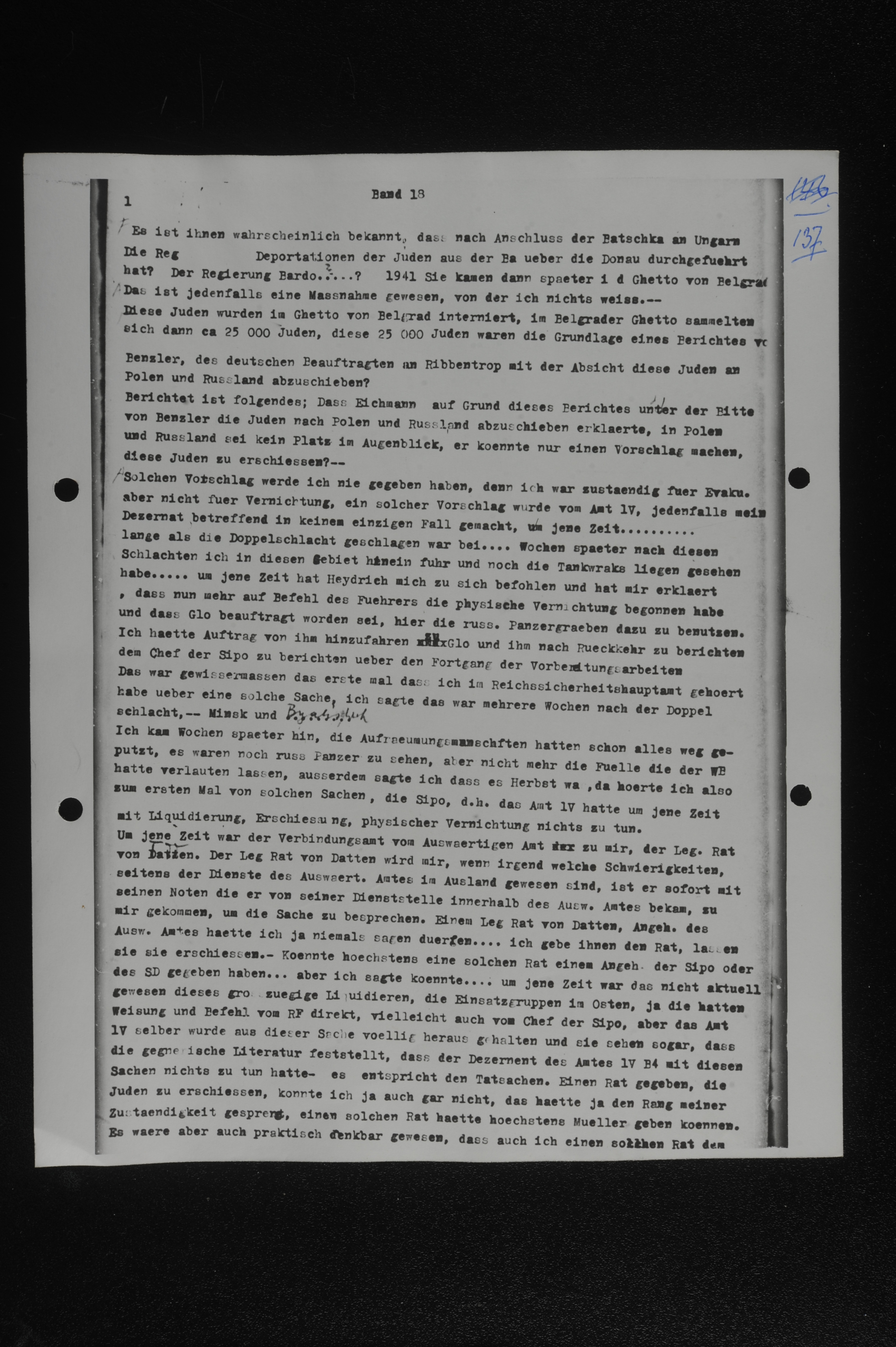
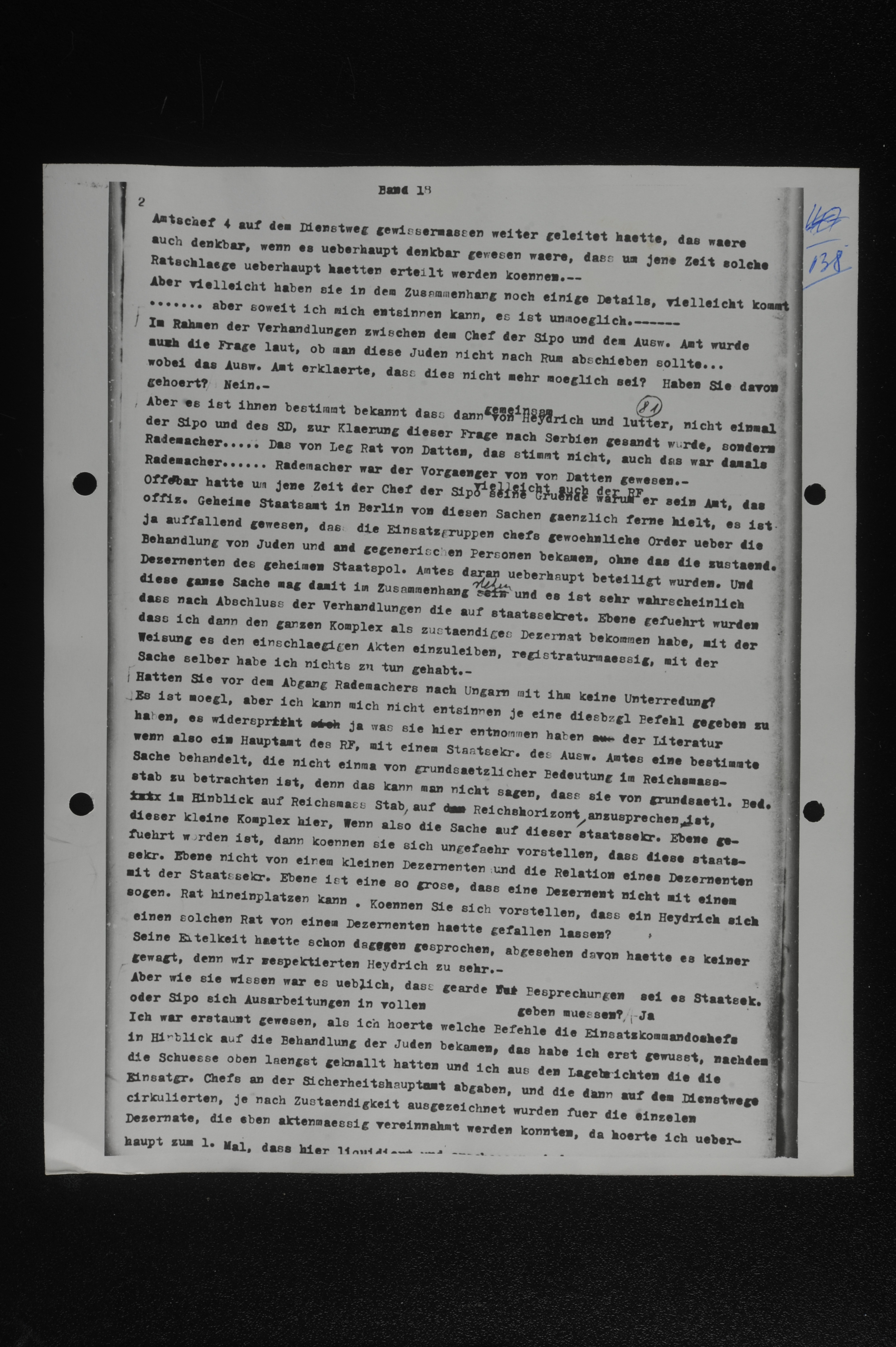
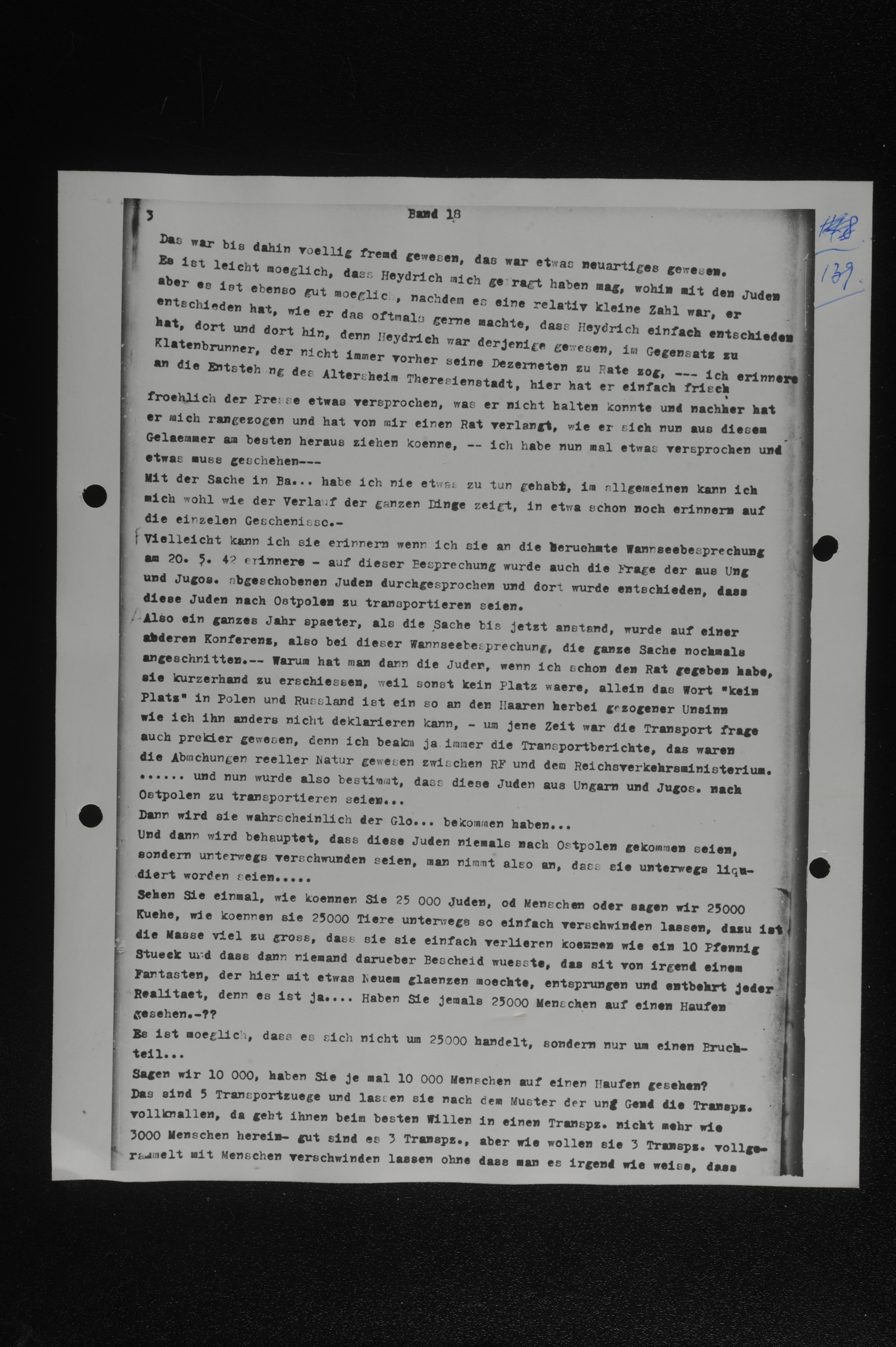
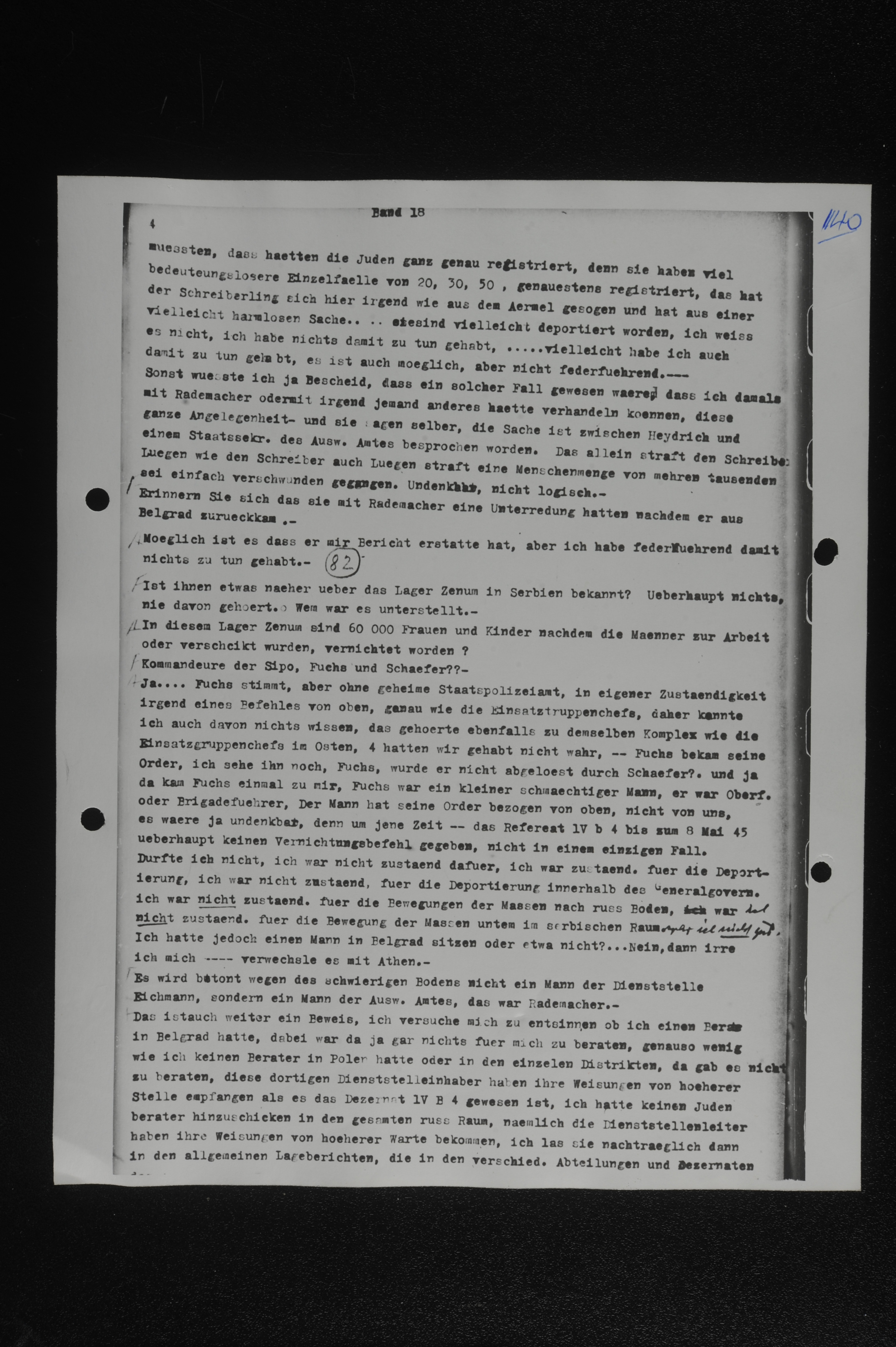
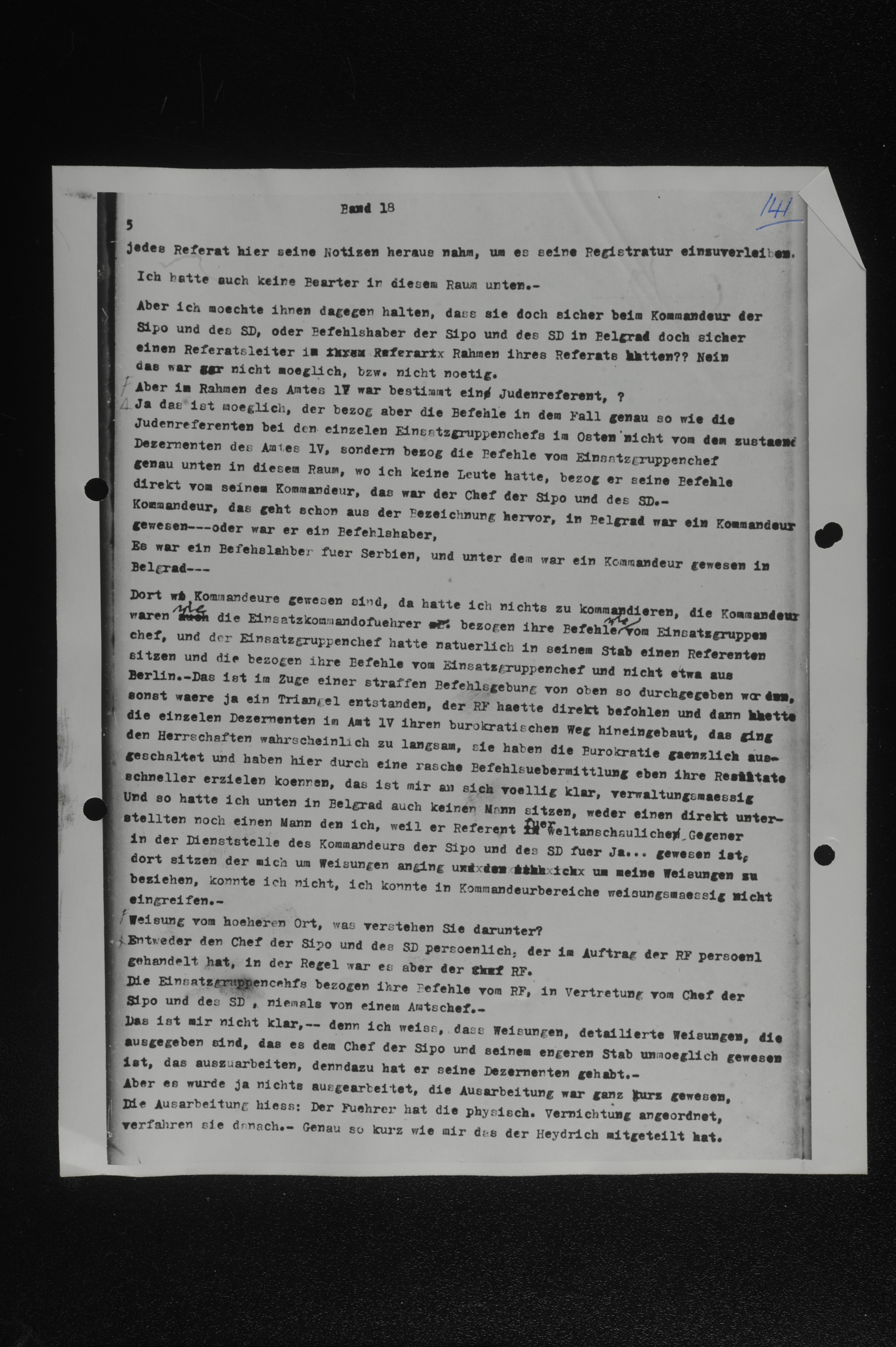
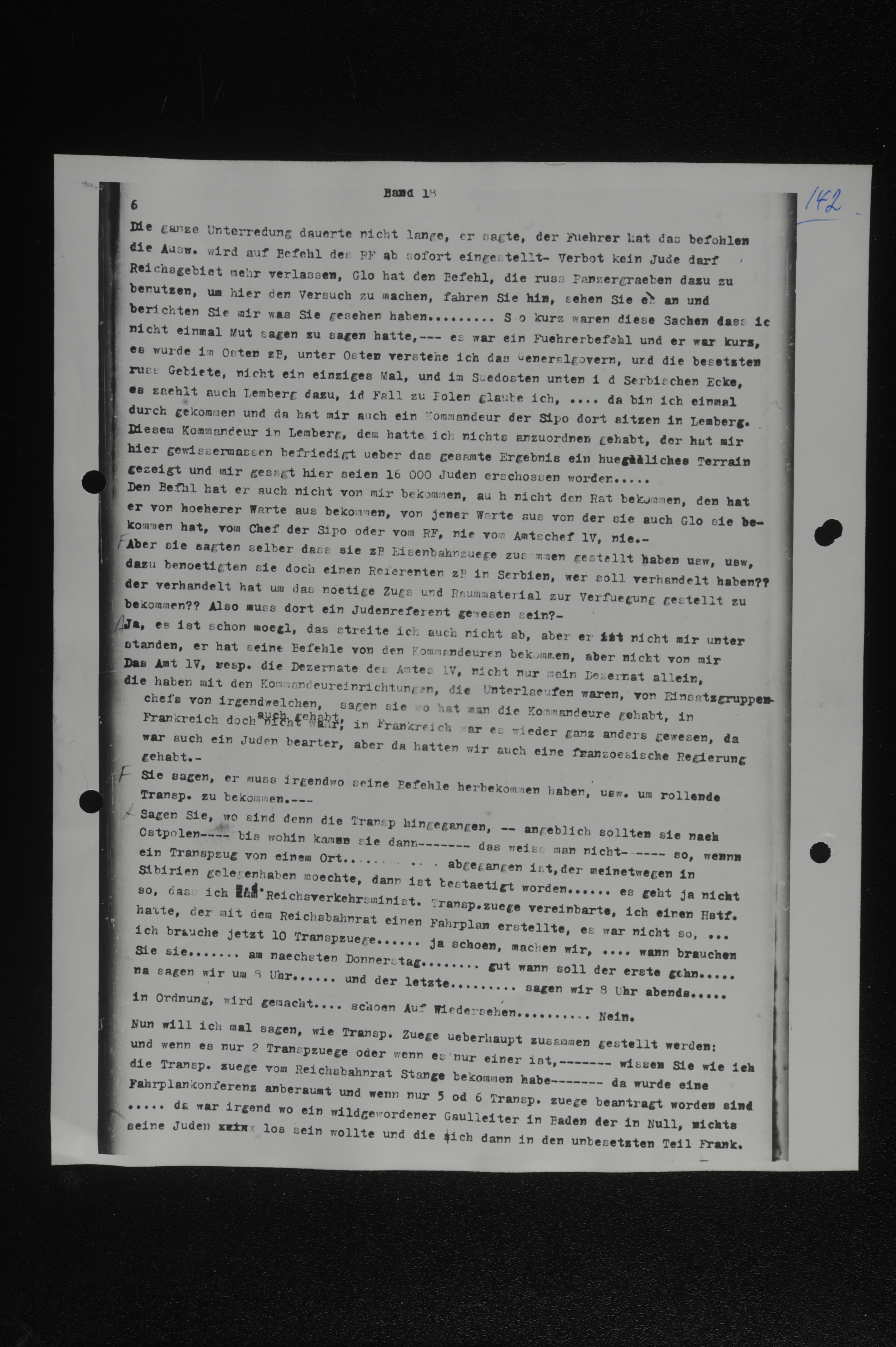
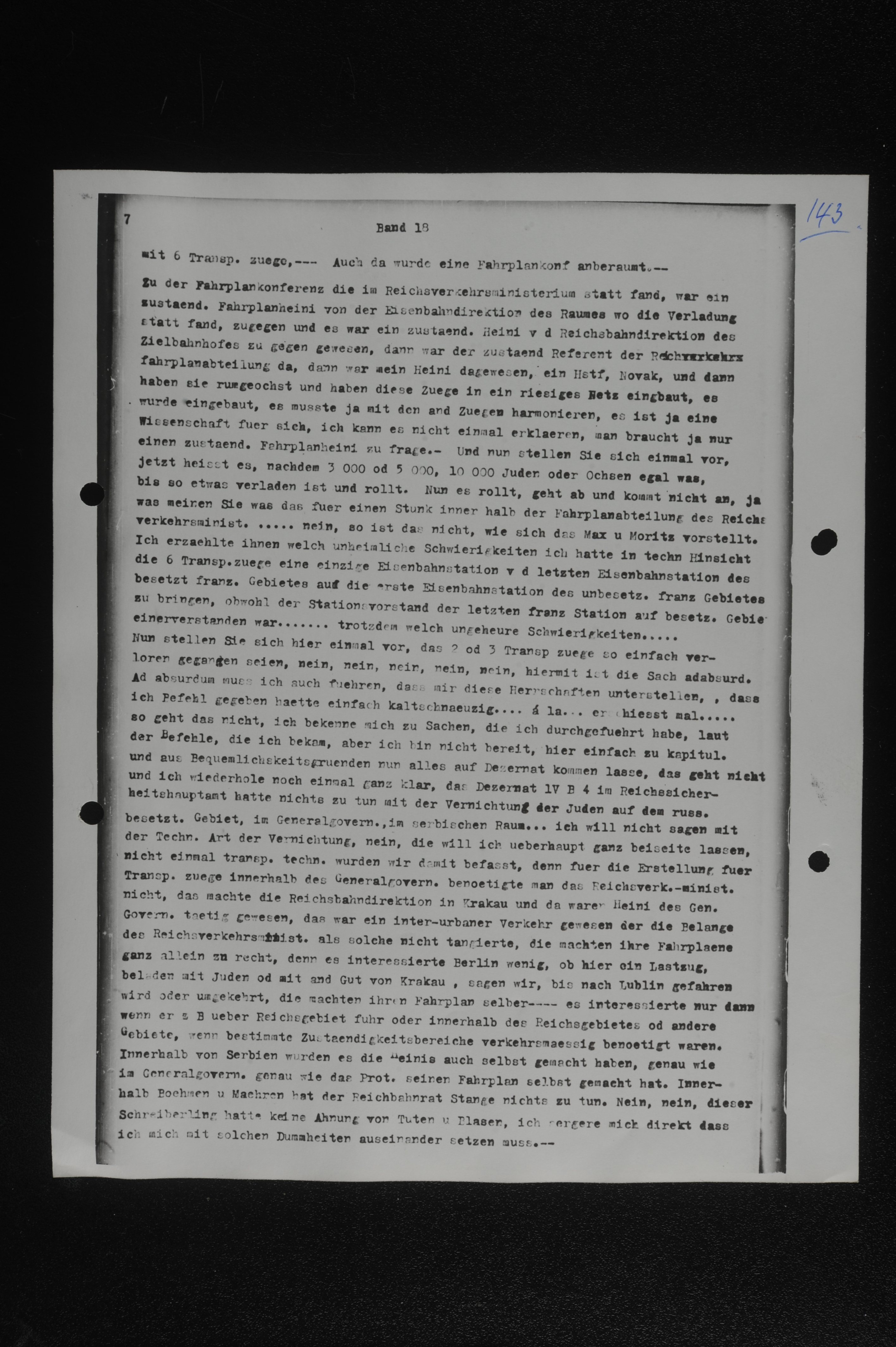
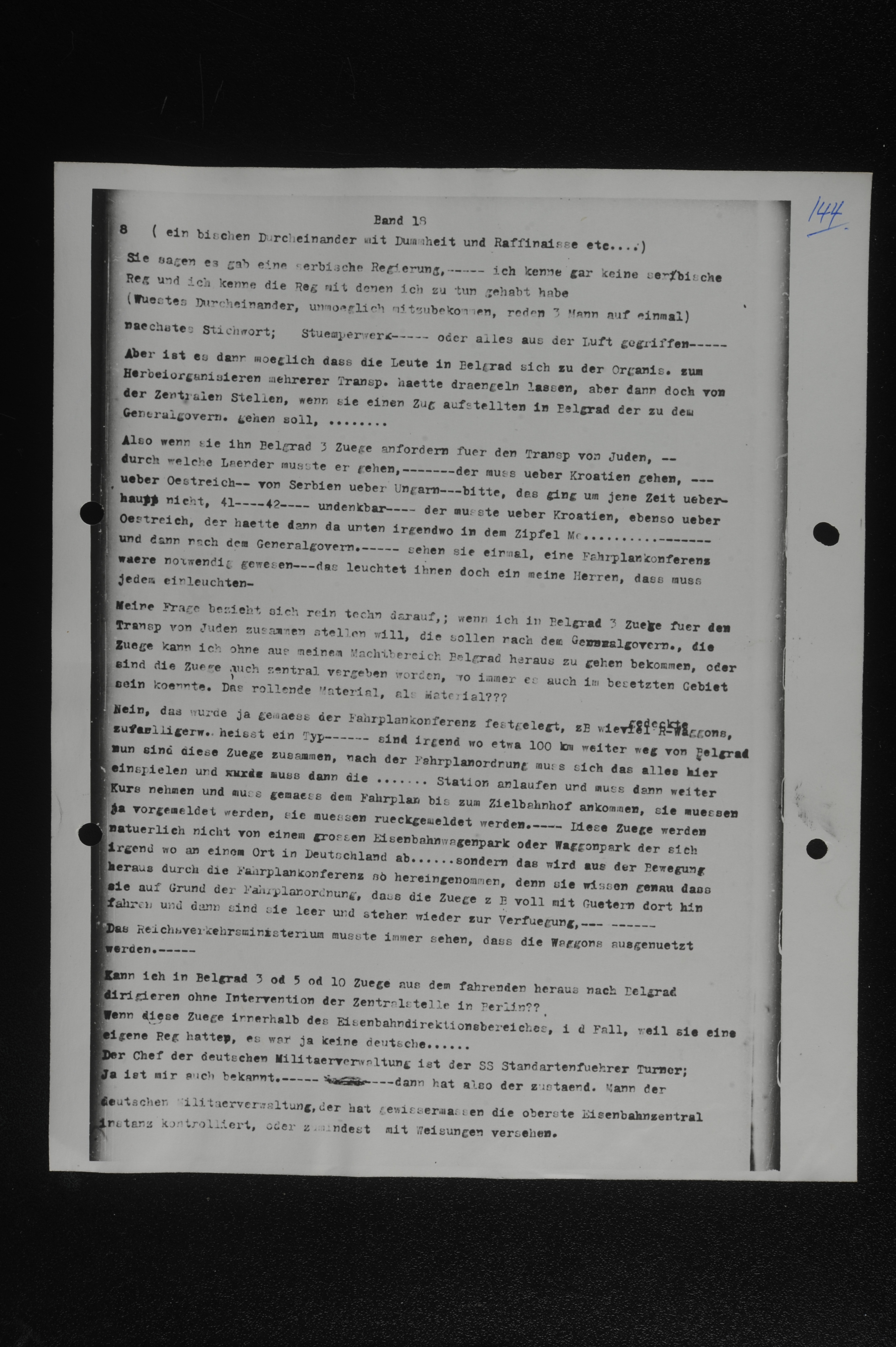
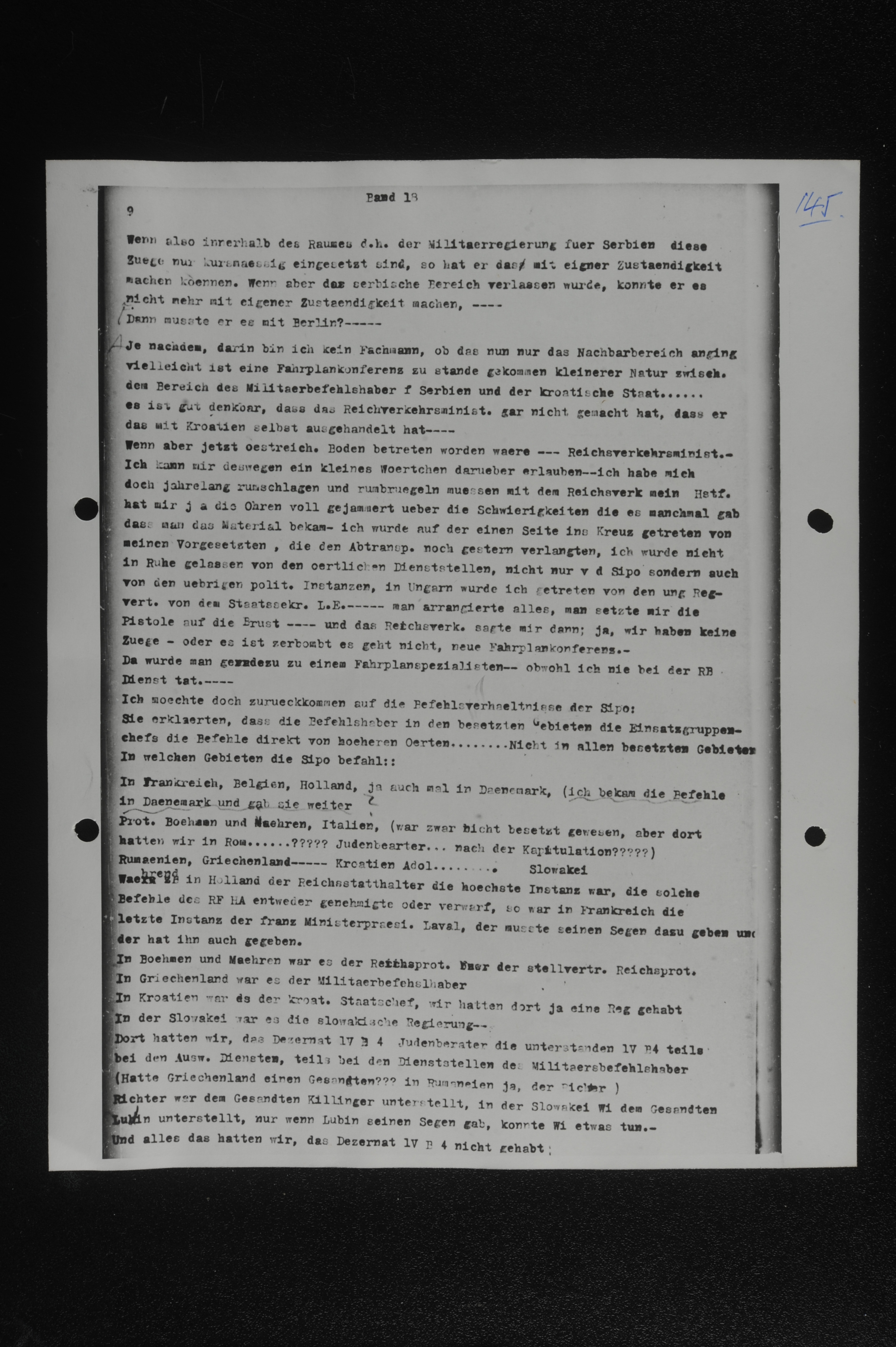
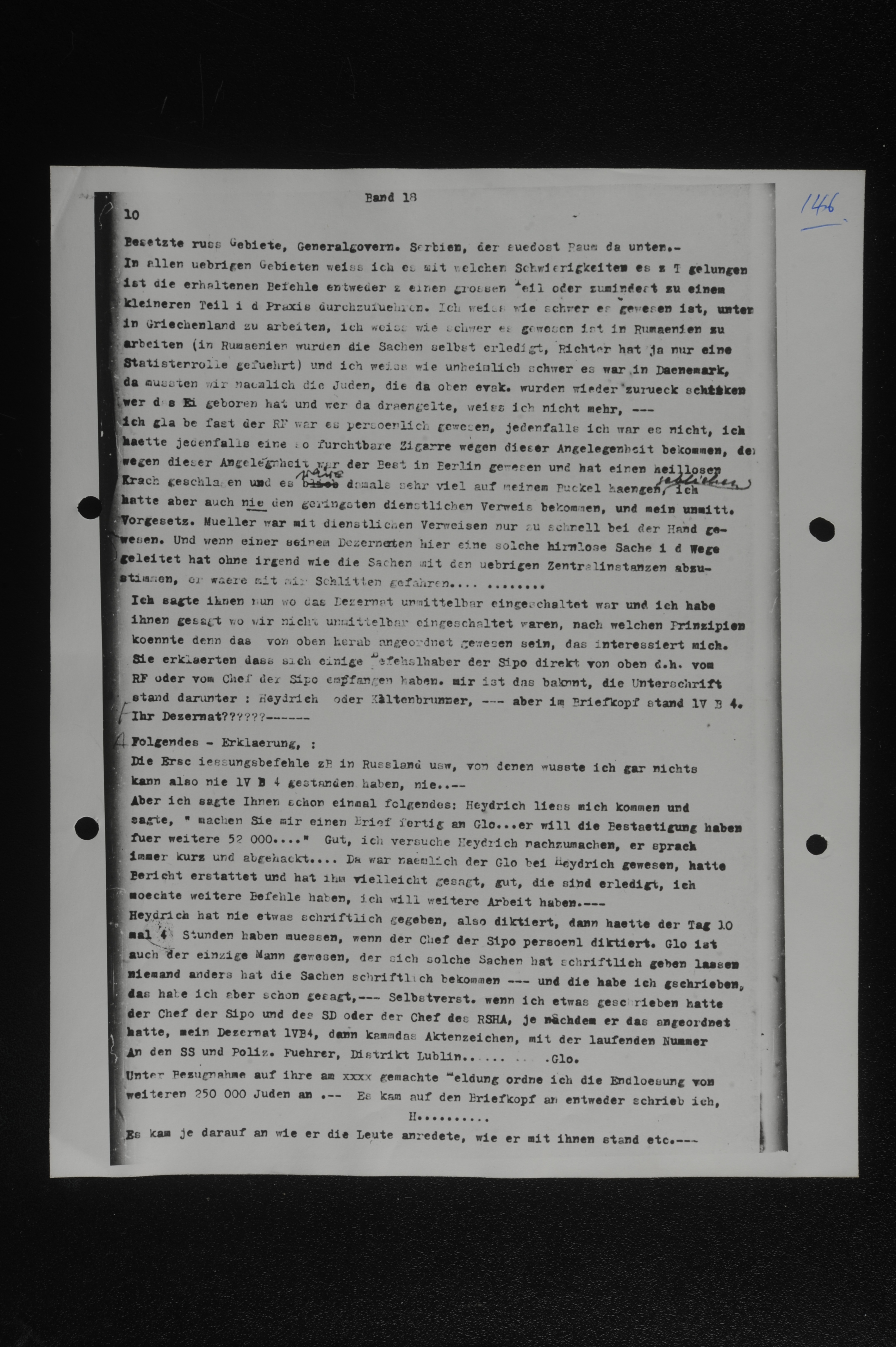
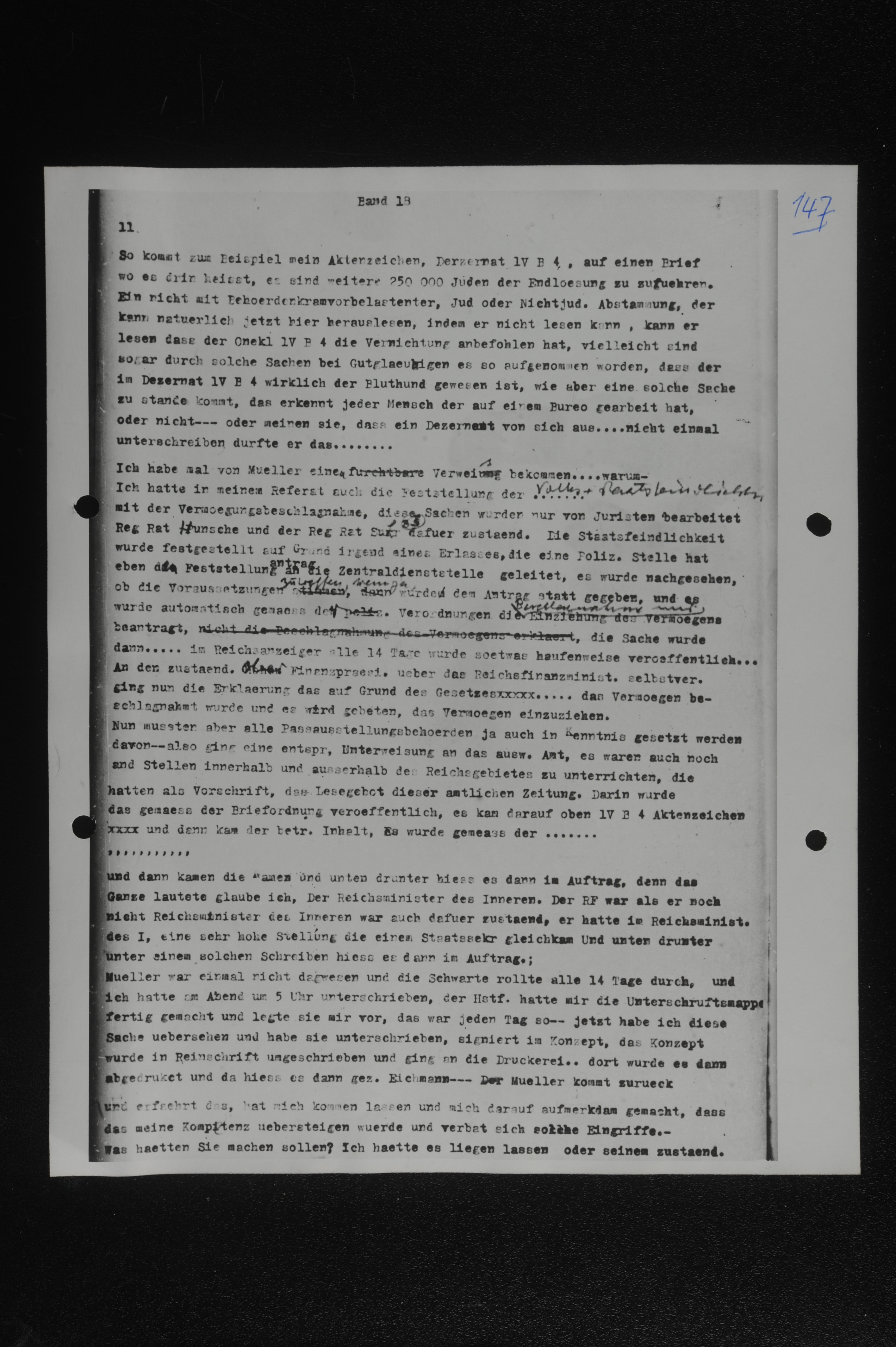
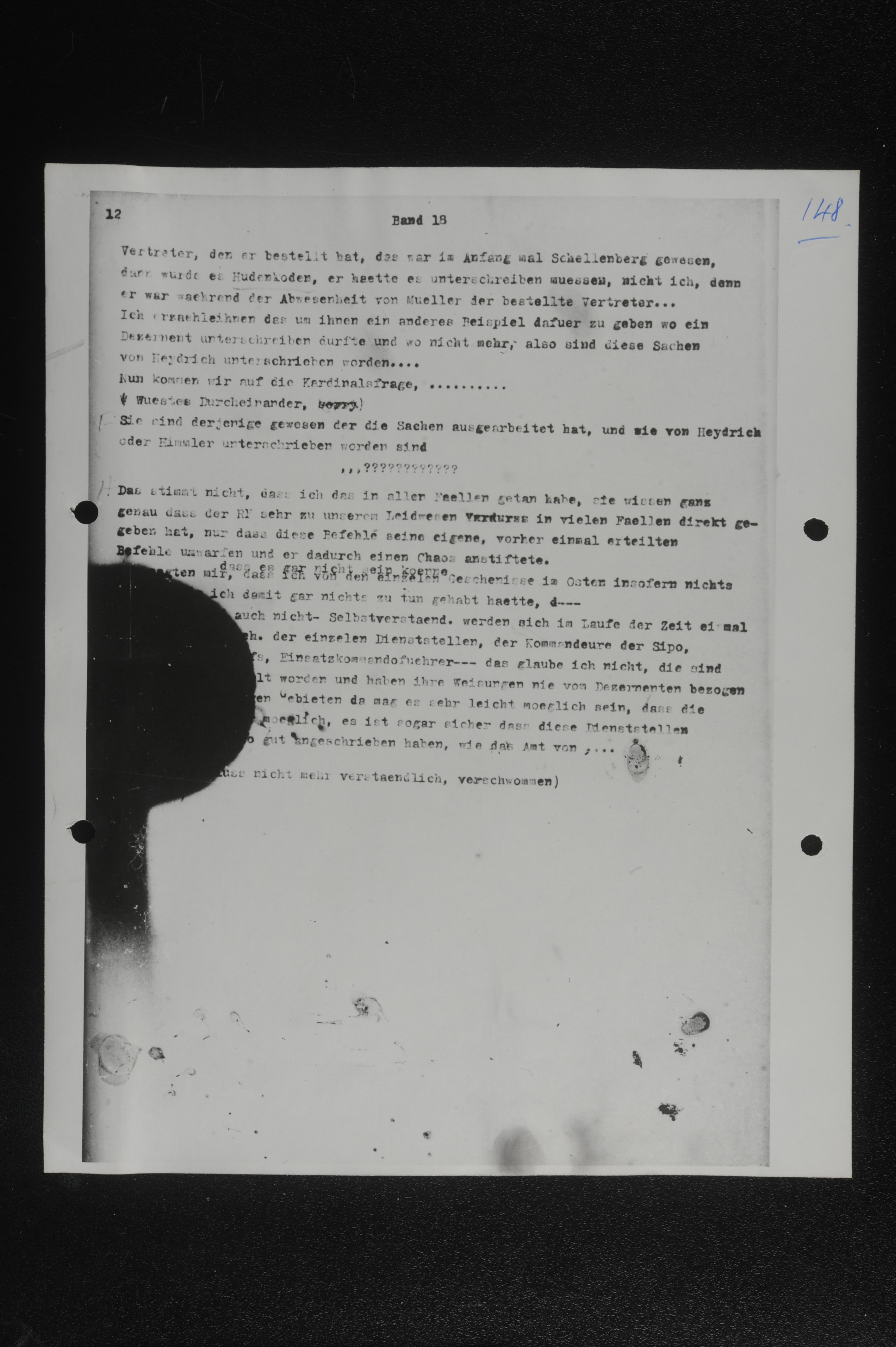
From which main thesis shall we proceed with this book?
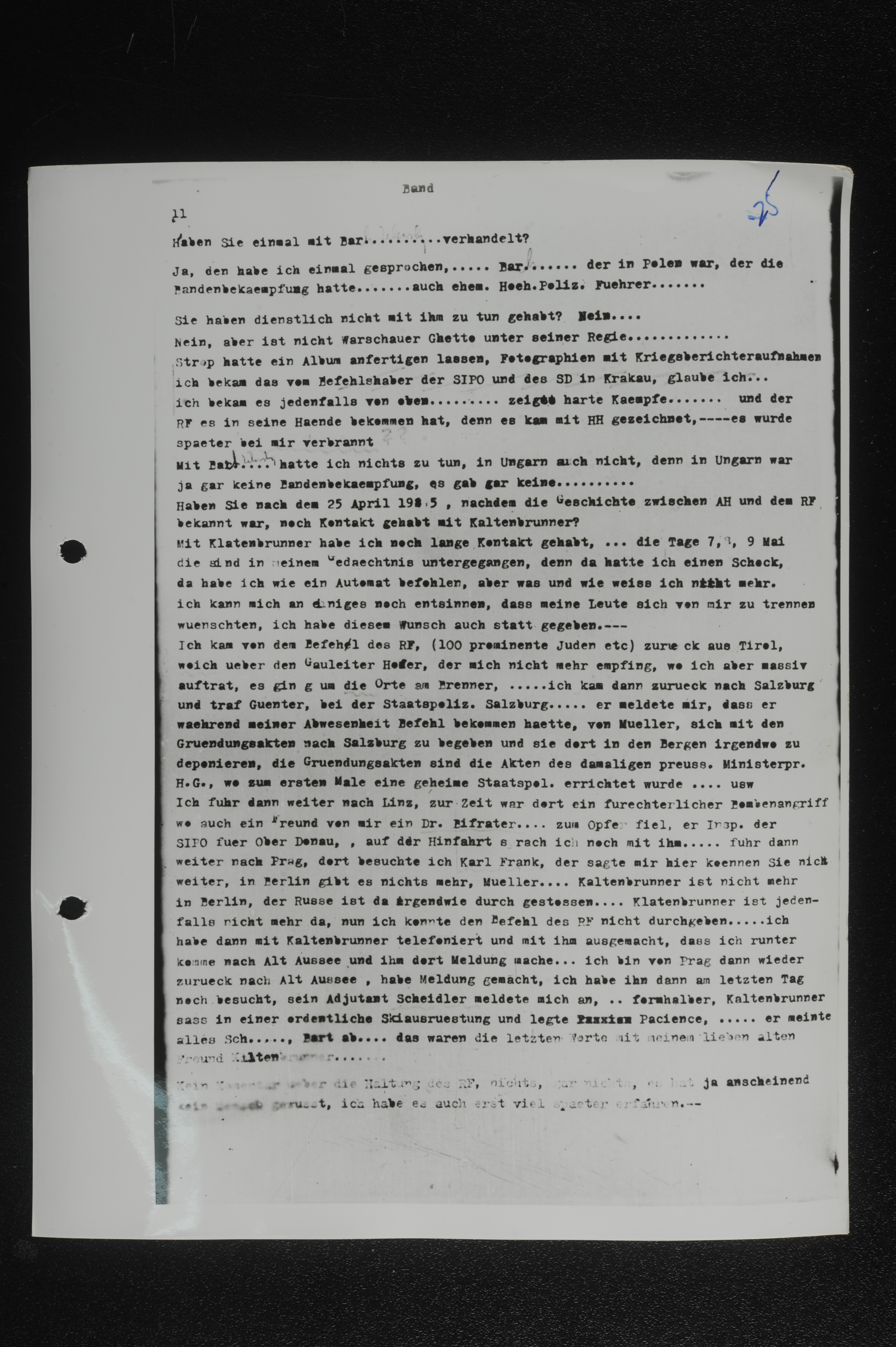
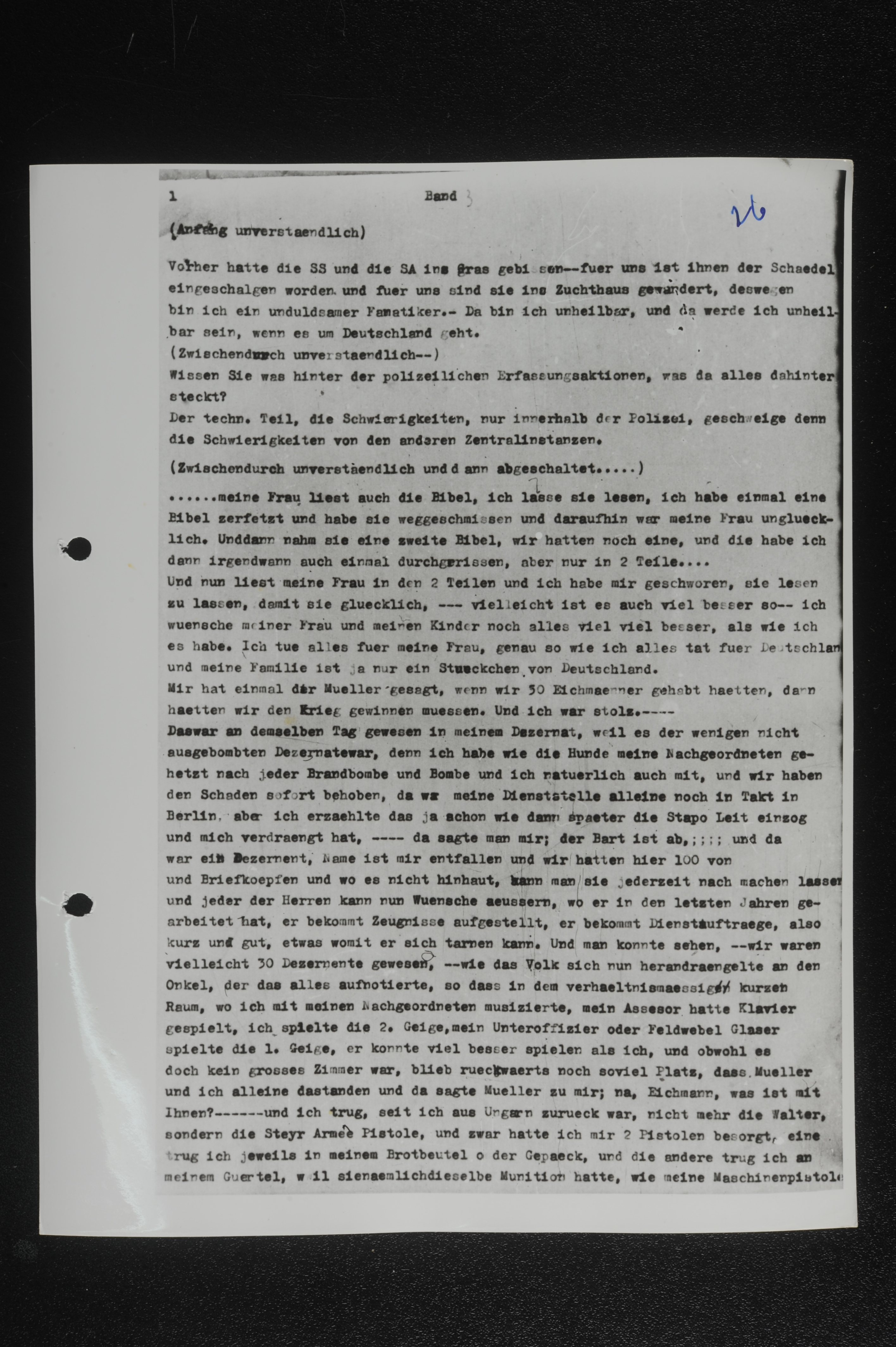
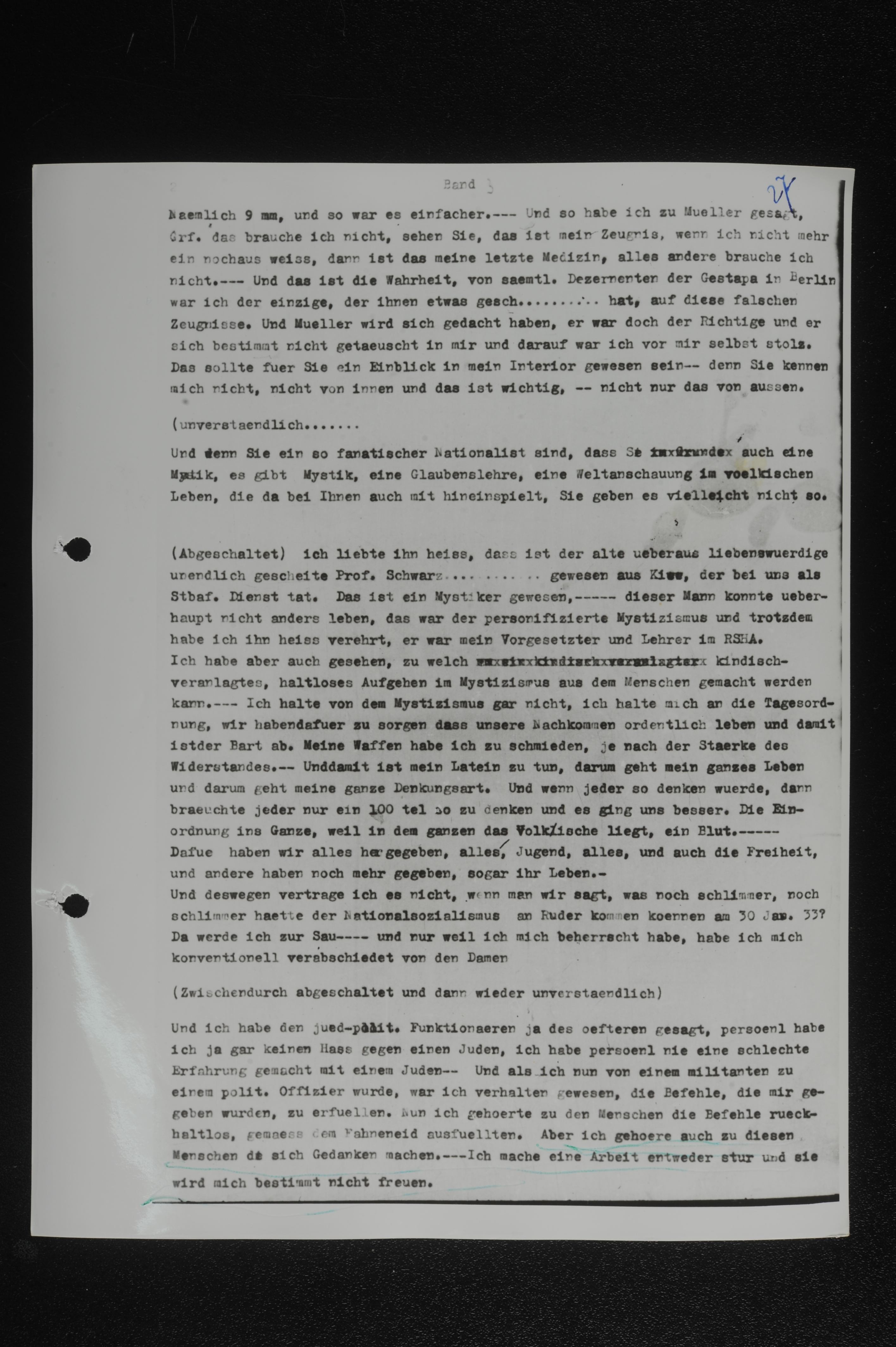
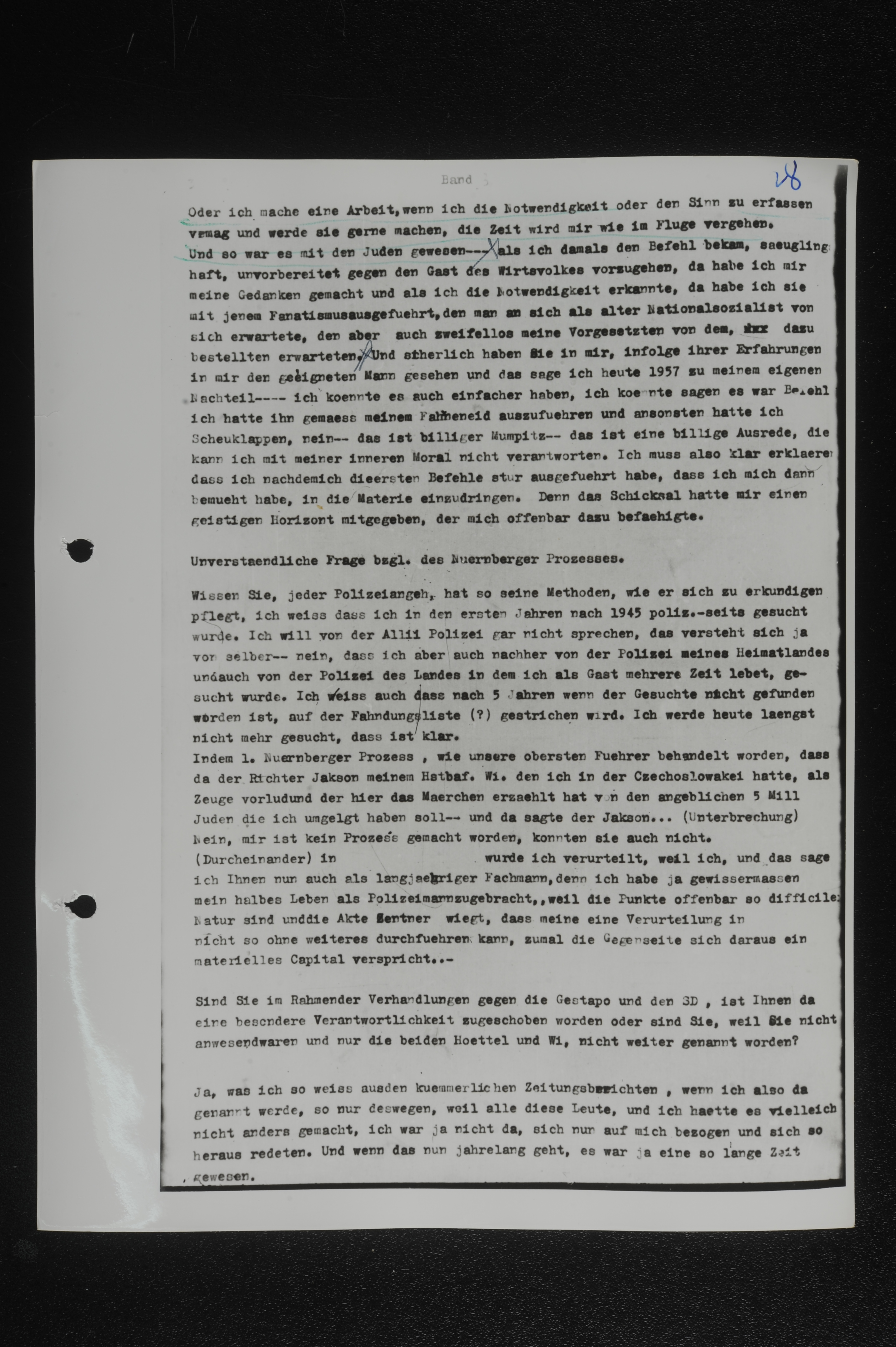
The following: various ideas, various possibilities that have occurred to me, to set them out one by one and as precisely as possible. They can then [off the sheet] serve as a kind of leitmotif. In my opinion, there is no point in trying [off the sheet] to trivialize the matter, nor in exaggerating it and speaking to please the opponent. Is there a middle way that would serve the truth at the same time [off the sheet]? In the end, it is all about examining the truth and, insofar as the [off the sheet] of the objective … it is ultimately about examining the truth, about investigating the truth.
I believe one possibility would be to portray the German [off the sheet] people before and during the war as a people [off the sheet] that had achieved its unity through Bismarck scarcely 50 years earlier, with a temporal difference… In the First World War it saw all the opposing forces united against it; through the unspeakable hardship after the First World War, the Jews were undoubtedly the beneficiaries of the German people's hardship.
One need only recall the mortgage stories and the expulsion stories of the farmers in the north of the country, which slowly but surely formed an annihilation campaign [overtyped] of the (handwritten) small and upper middle class, all of whom became victims of Jewish interest-rate policy. The reason the interest-rate question found such a wide response in the NSDAP program. Precisely in the postwar [off the sheet] period of the First World War, a political and economic regression took place, through which many efforts toward unity, painstakingly established through Bismarck (handwritten), were largely reversed …
This people [off the sheet], after the seizure of power in '33, had one leg on the path toward the development of a … realization of the national program [abbreviated], and the other on the path to war. Through the development of the war, this people was suddenly (handwritten) called to leadership tasks for which it lacked experience, and for which that complex of experience values that gradually [off the sheet] condenses into a certain technique was lacking. It isn't learned in crash courses; it is the result and sediment of many generations, of the bitter experiences of generations.
The German people, without this complex of experience, was placed before a leadership task for which experience and forces were utterly lacking. As German [off the sheet] influence spread across Europe through military development, and [off the sheet] as Jewish legislation had been proclaimed in Germany since 1936, there were still so many disturbing gaps in the practical execution of that legislation. On the other hand, in the modern Reich, which the Third Reich was, a problem had to be solved while observing laws and regulations and a certain distribution of power within the state.
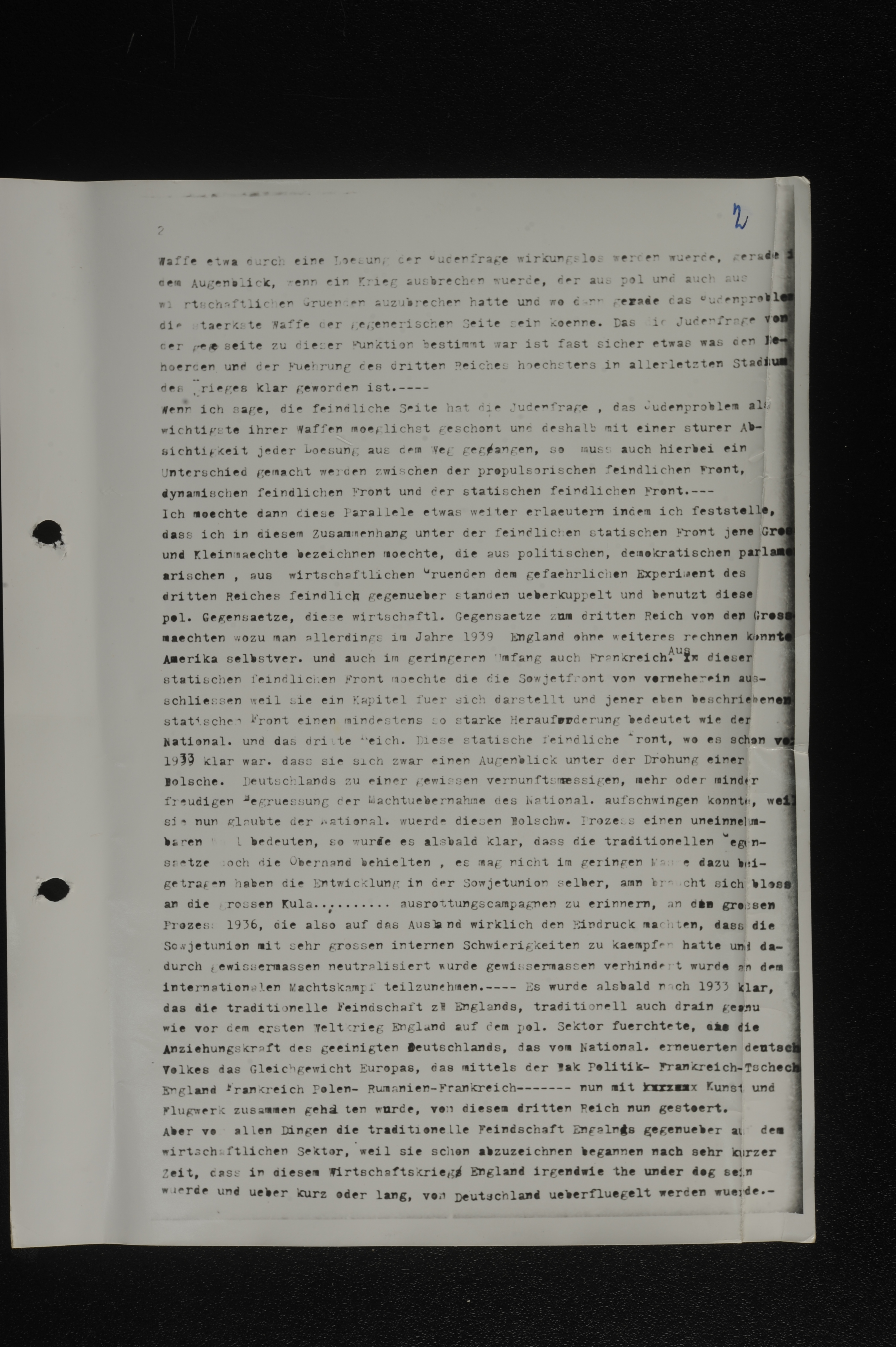
All this led to great difficulties within Germany. Even Germany's efforts [off the sheet] to solve the Jewish problem within Germany [off the sheet] through emigration, by involving foreign countries, produced no tangible results. In hindsight [off the sheet], it becomes very clear that foreign countries, which [off the sheet] later became enemy countries, had from the outset kept this whole Jewish question [overtyped] as a weapon in reserve and had sought by every means to prevent this
Open page image and German