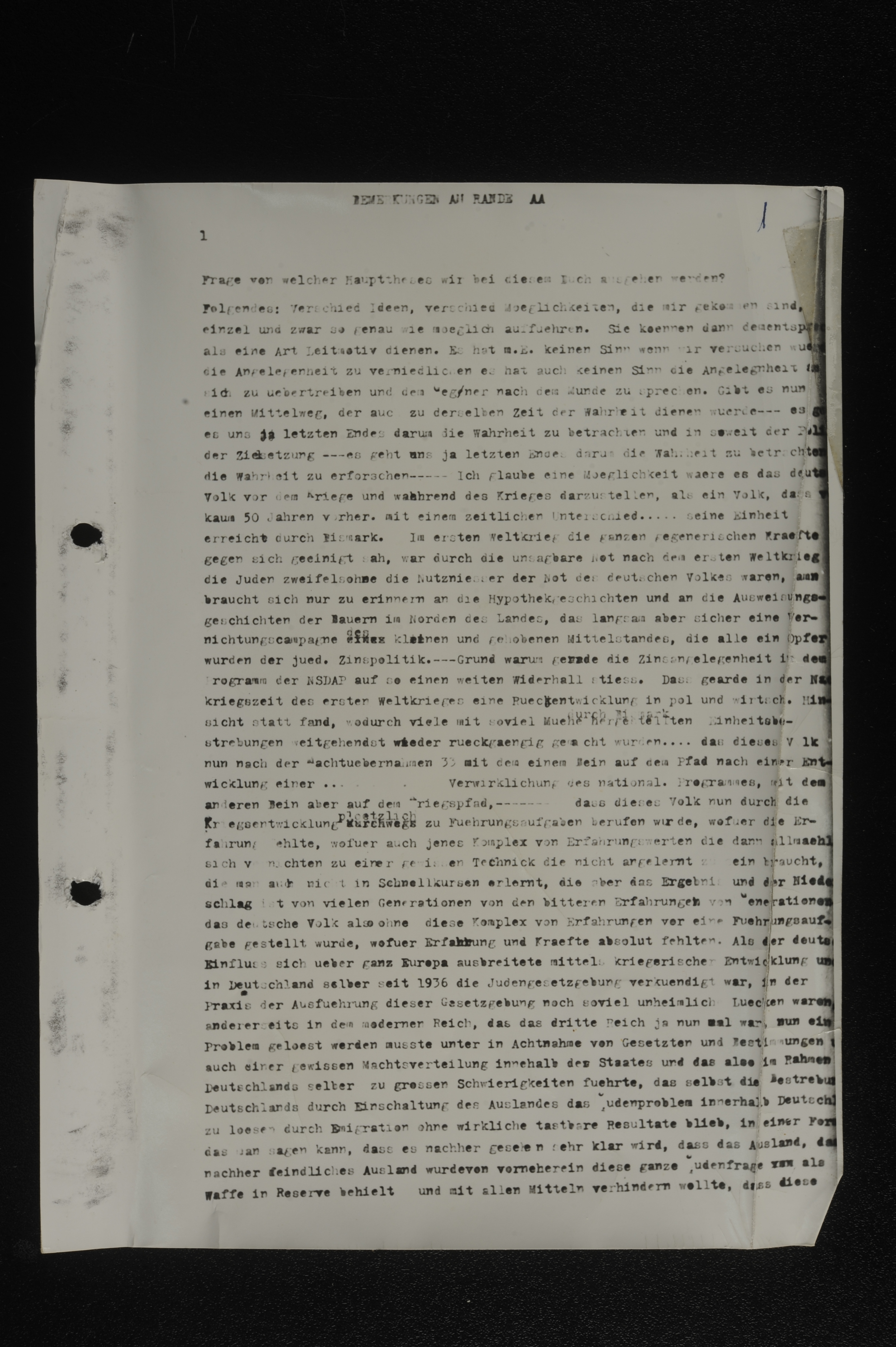
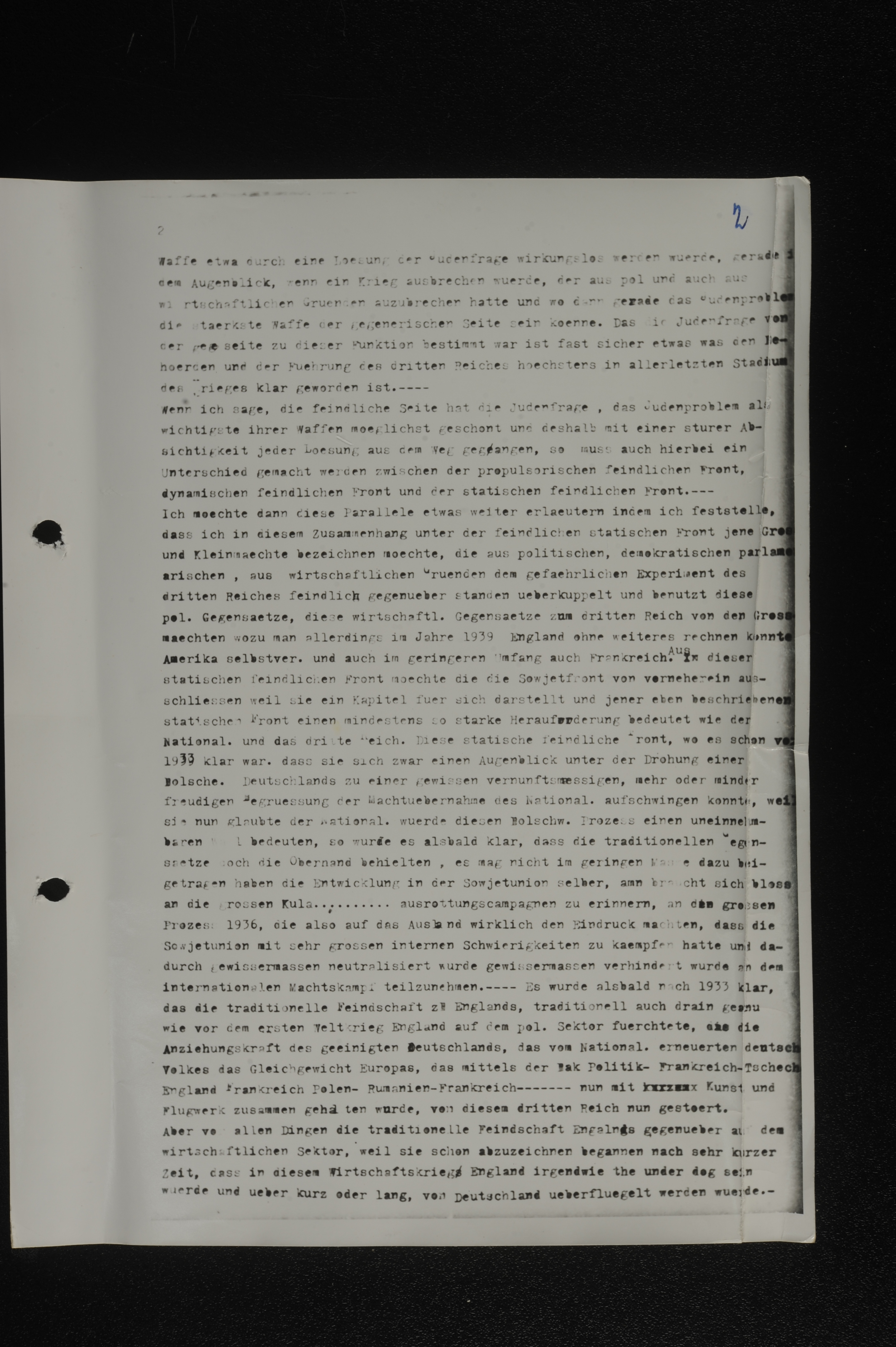
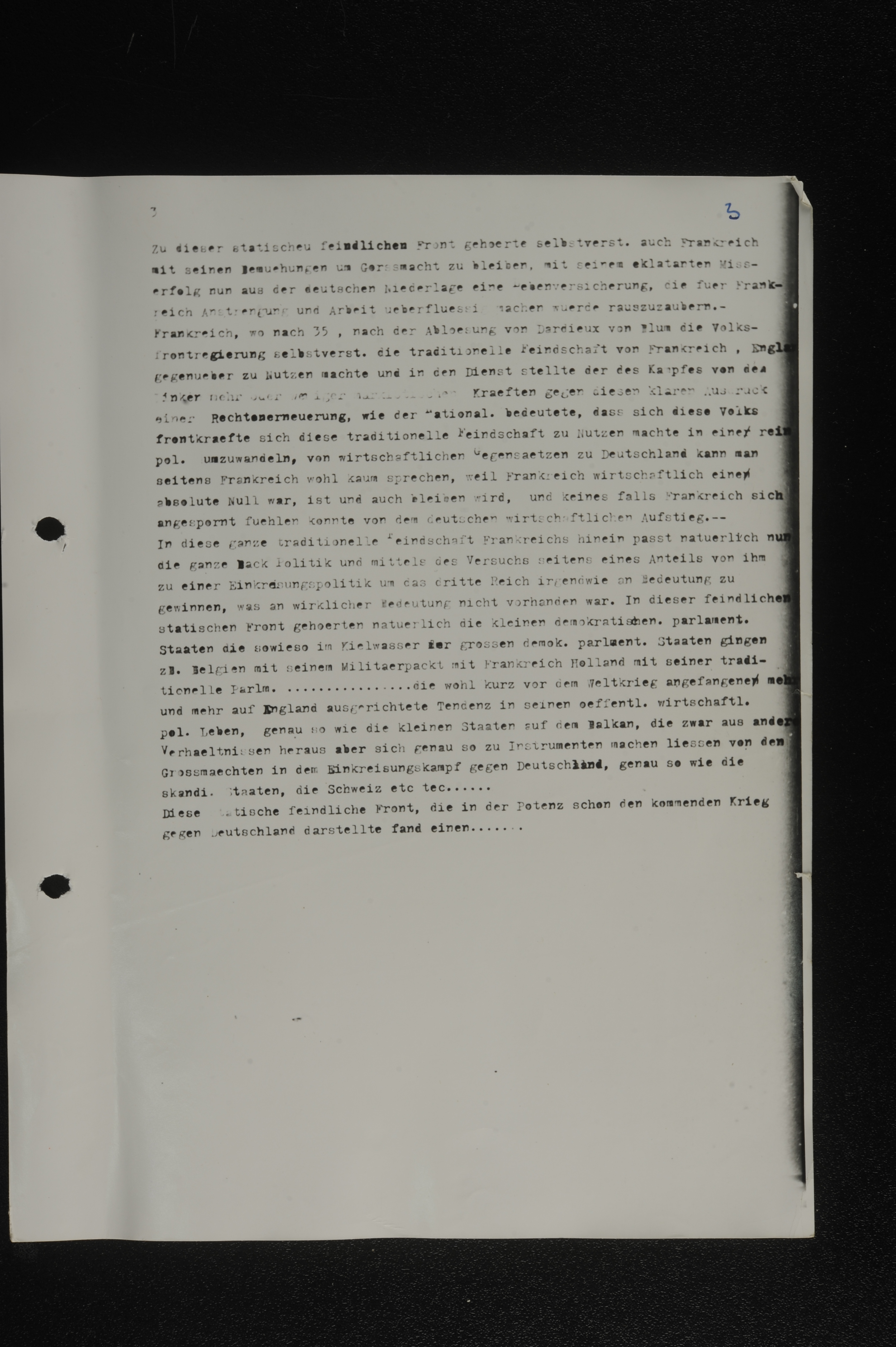
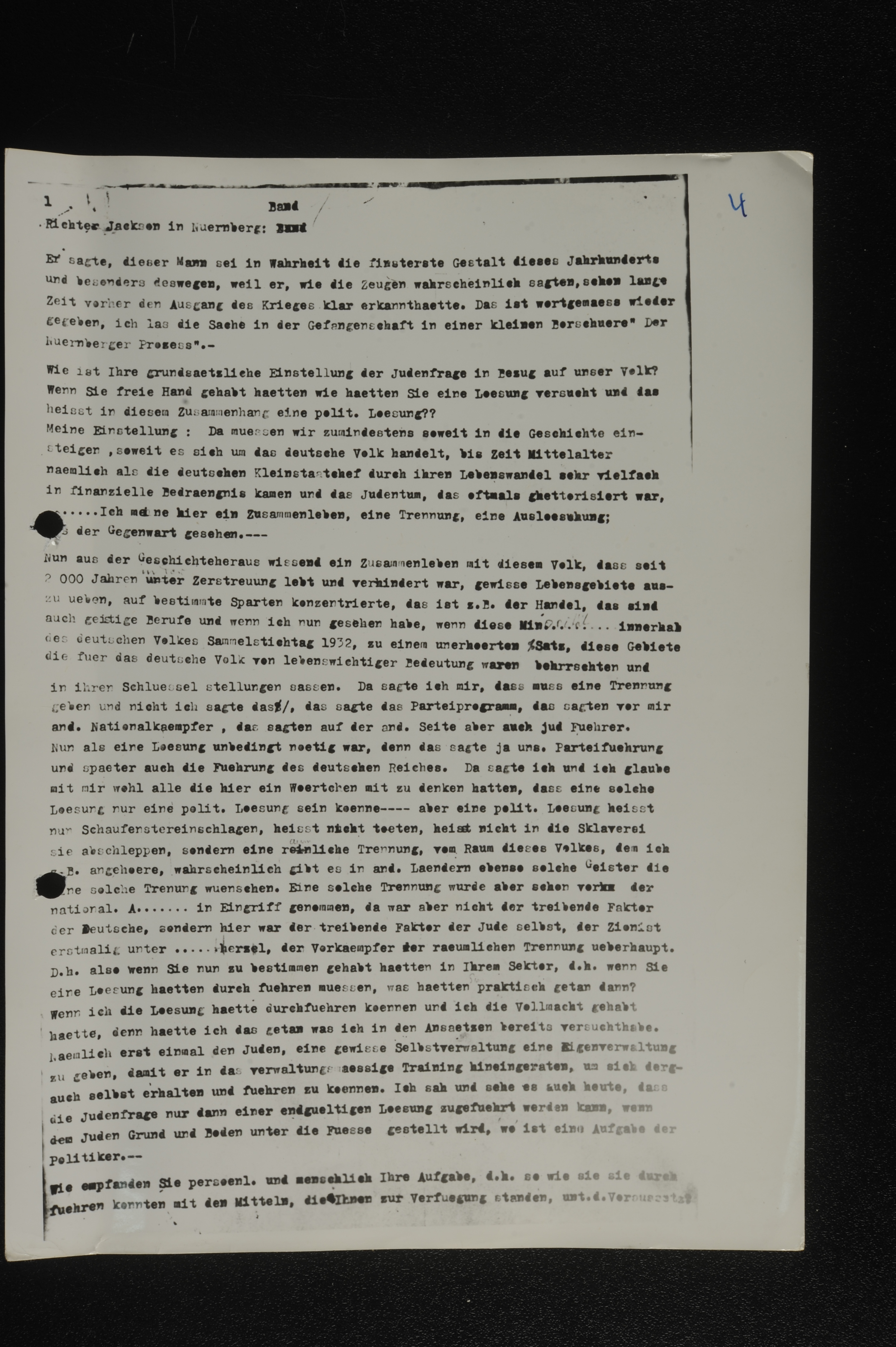
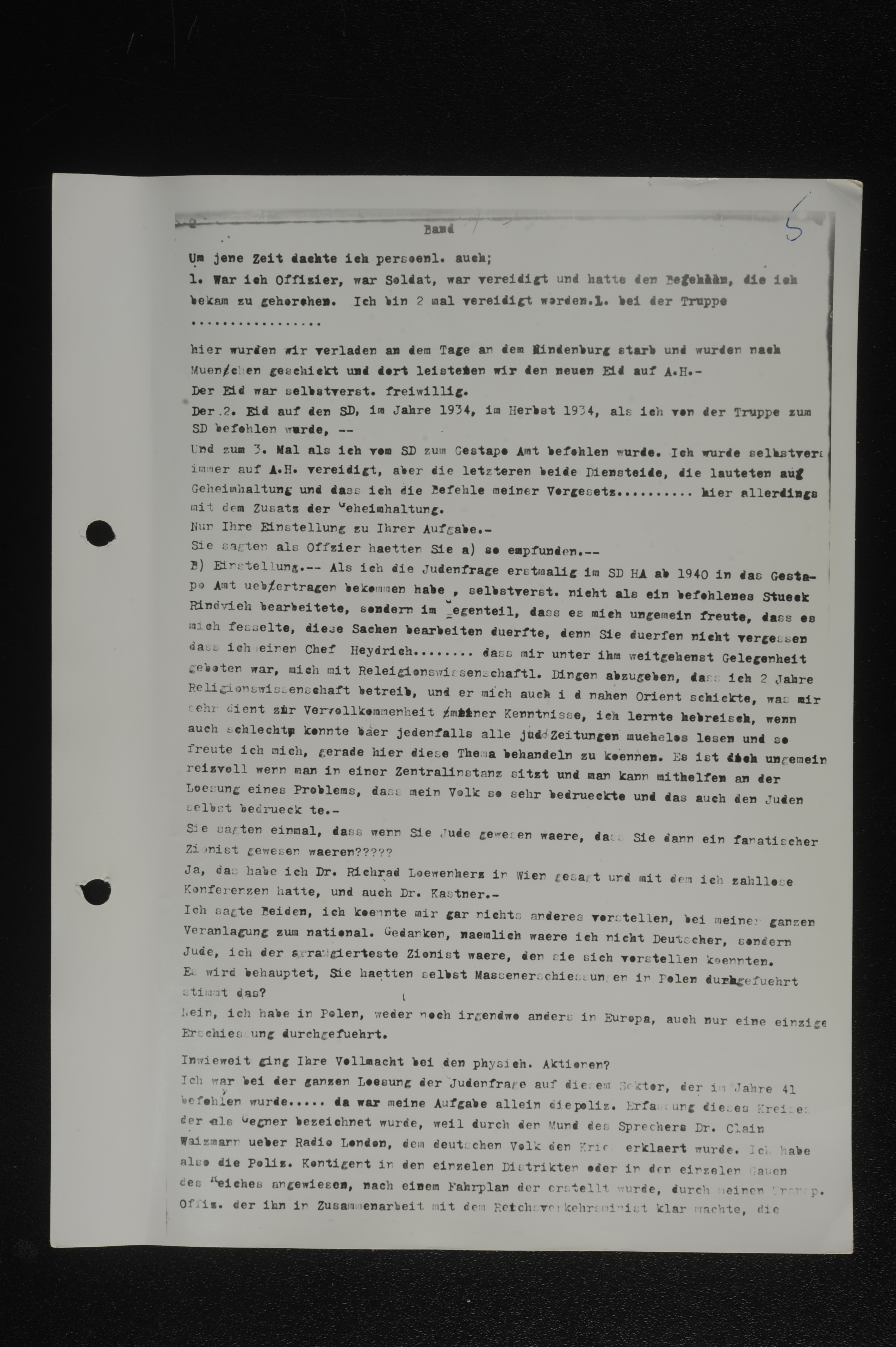
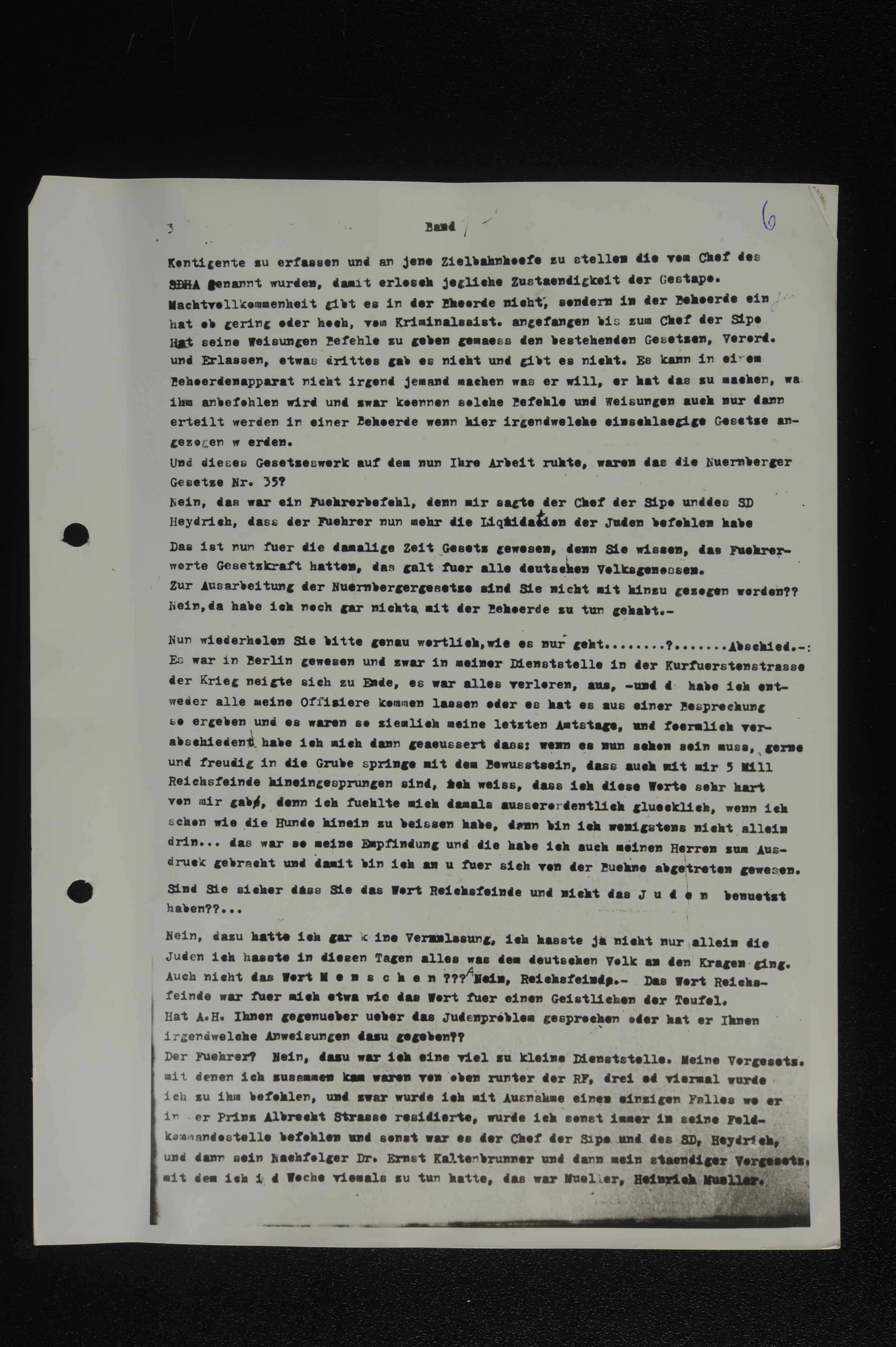
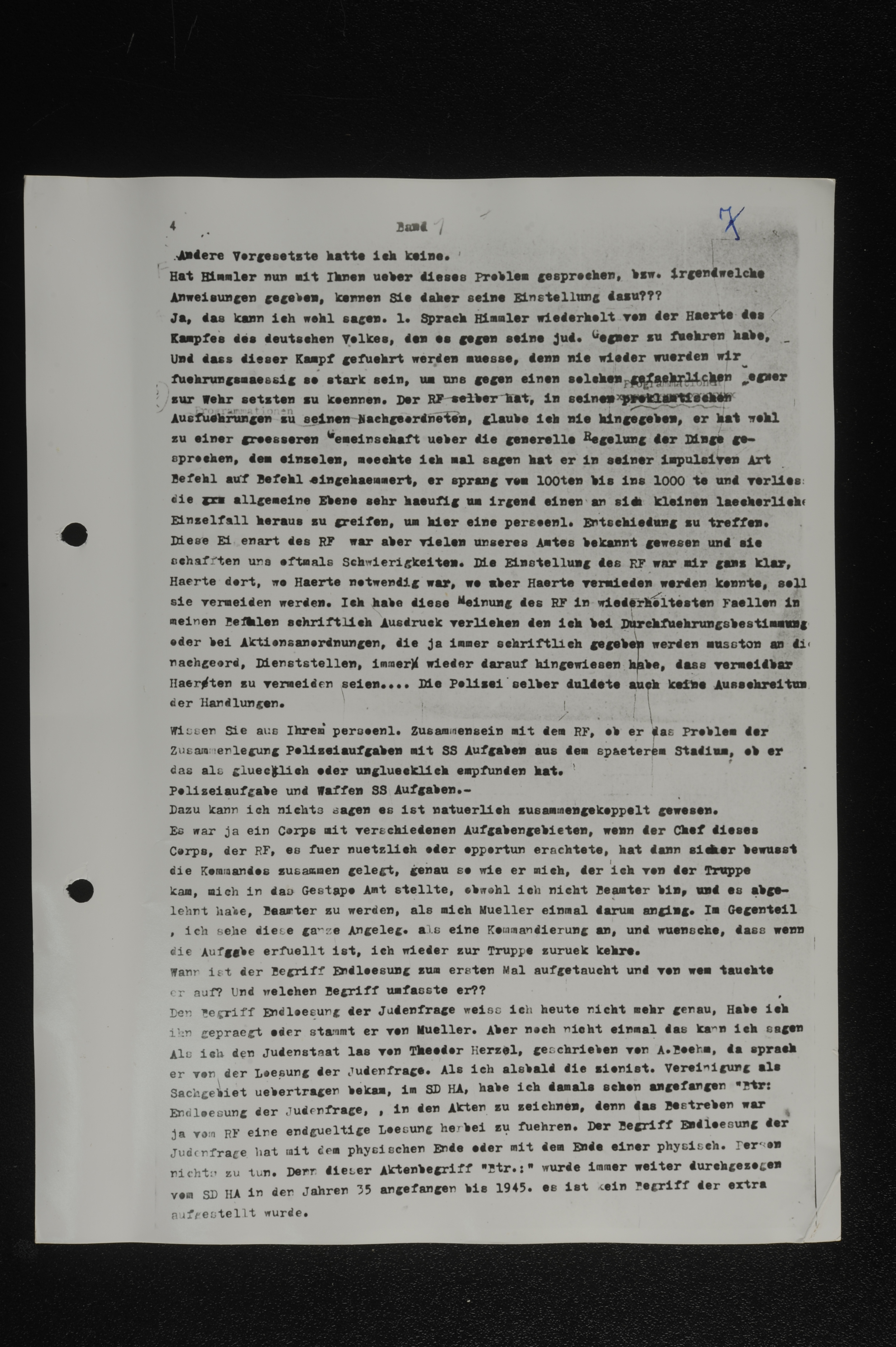
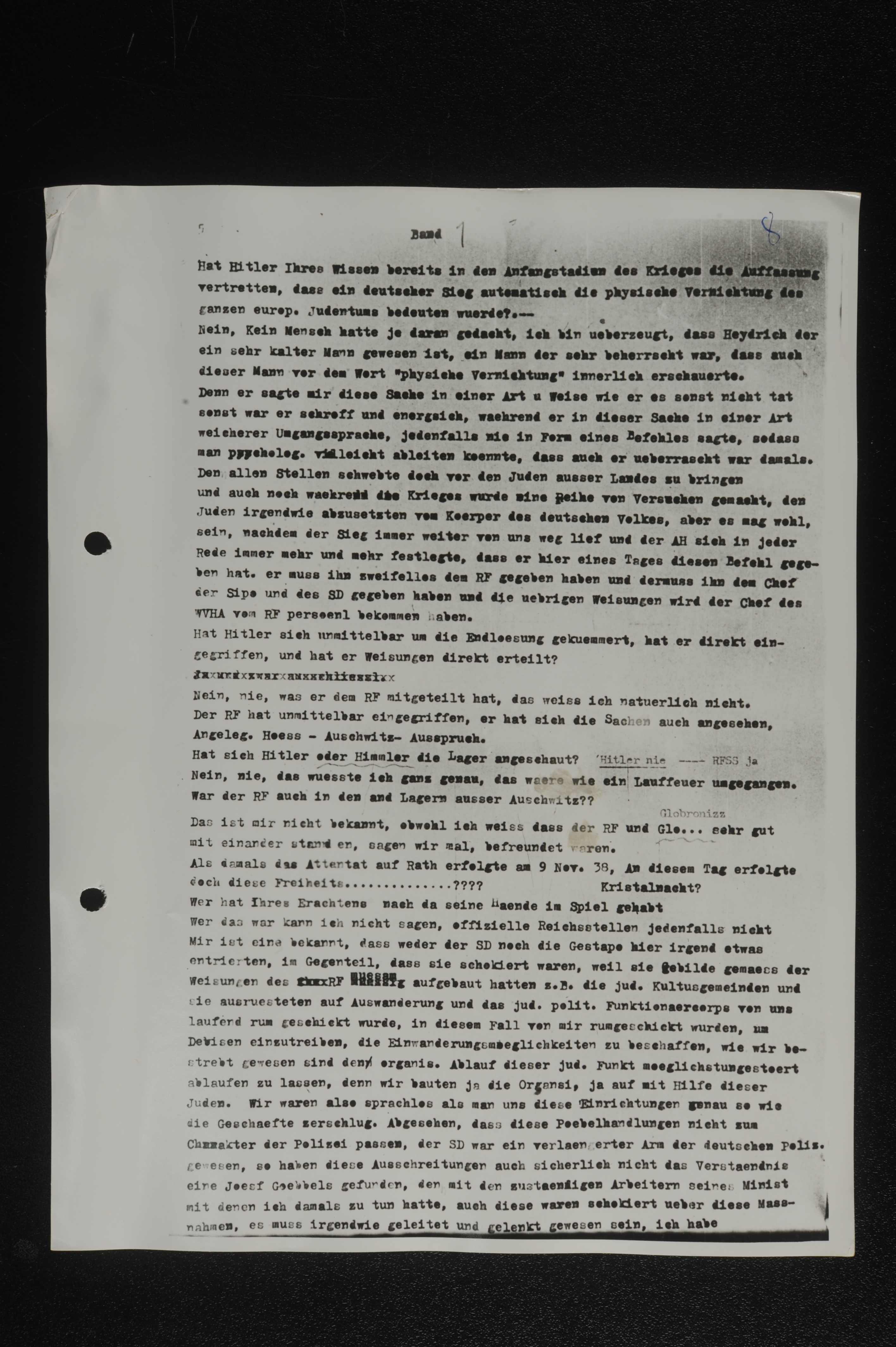
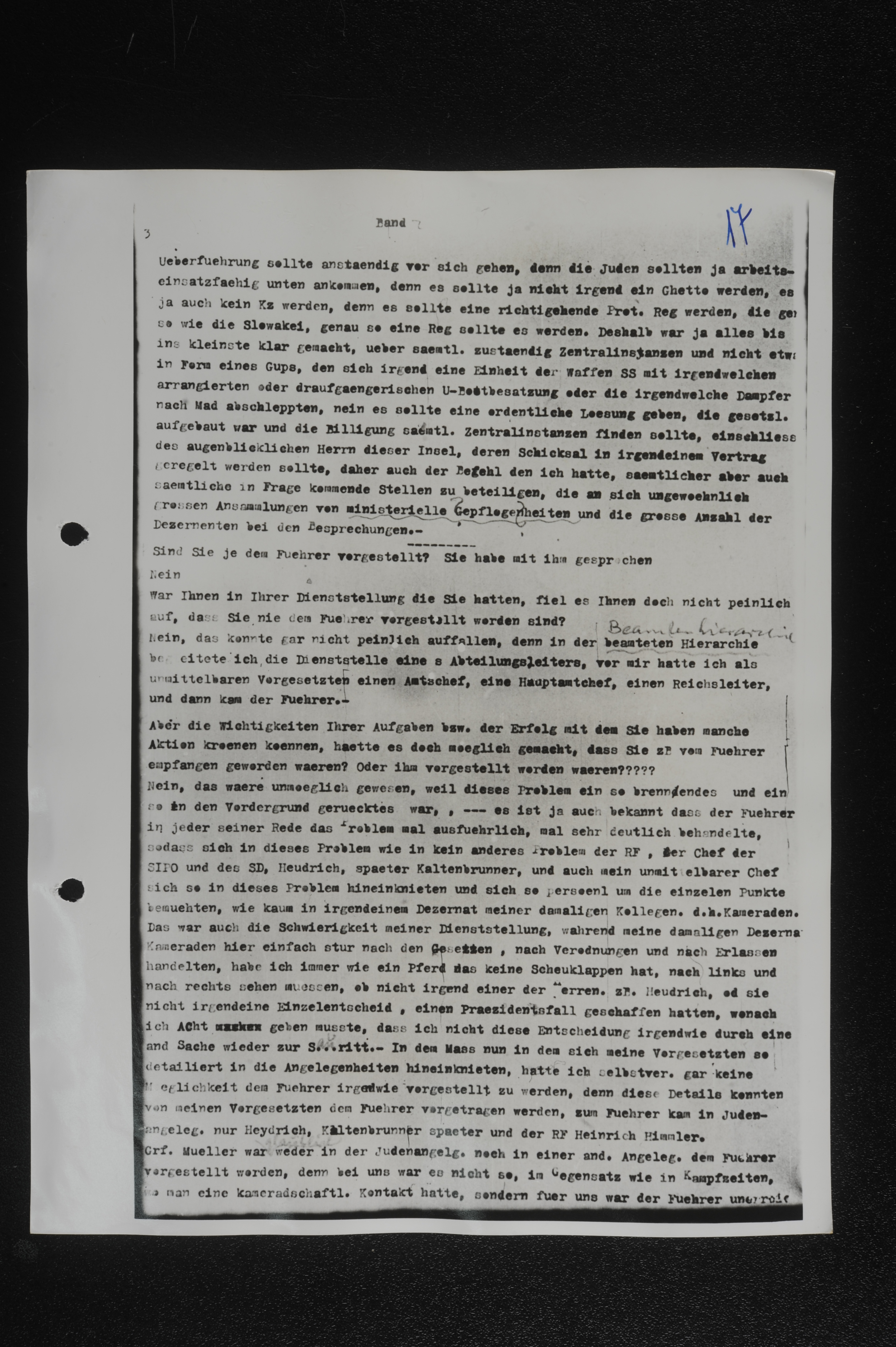
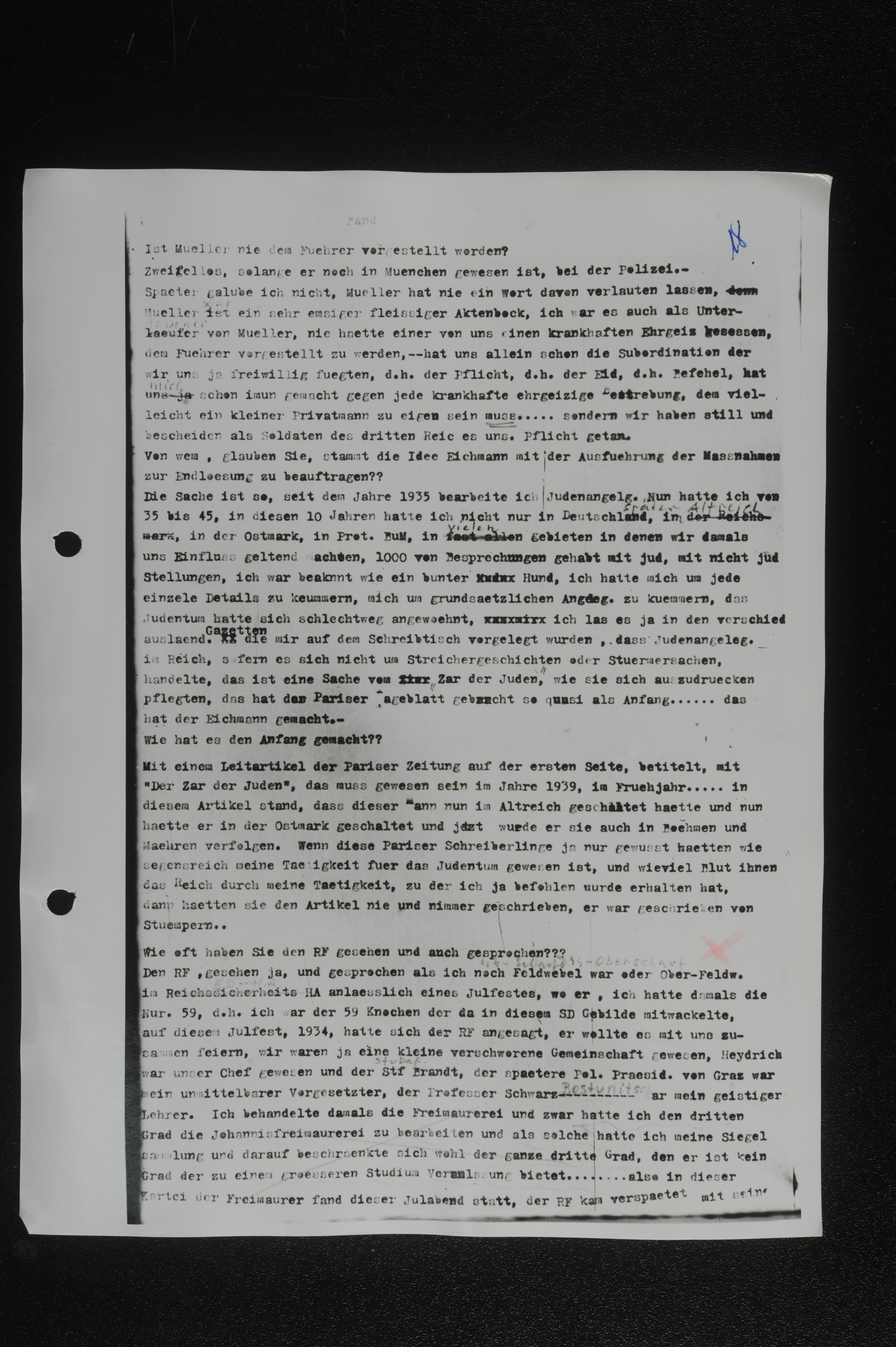
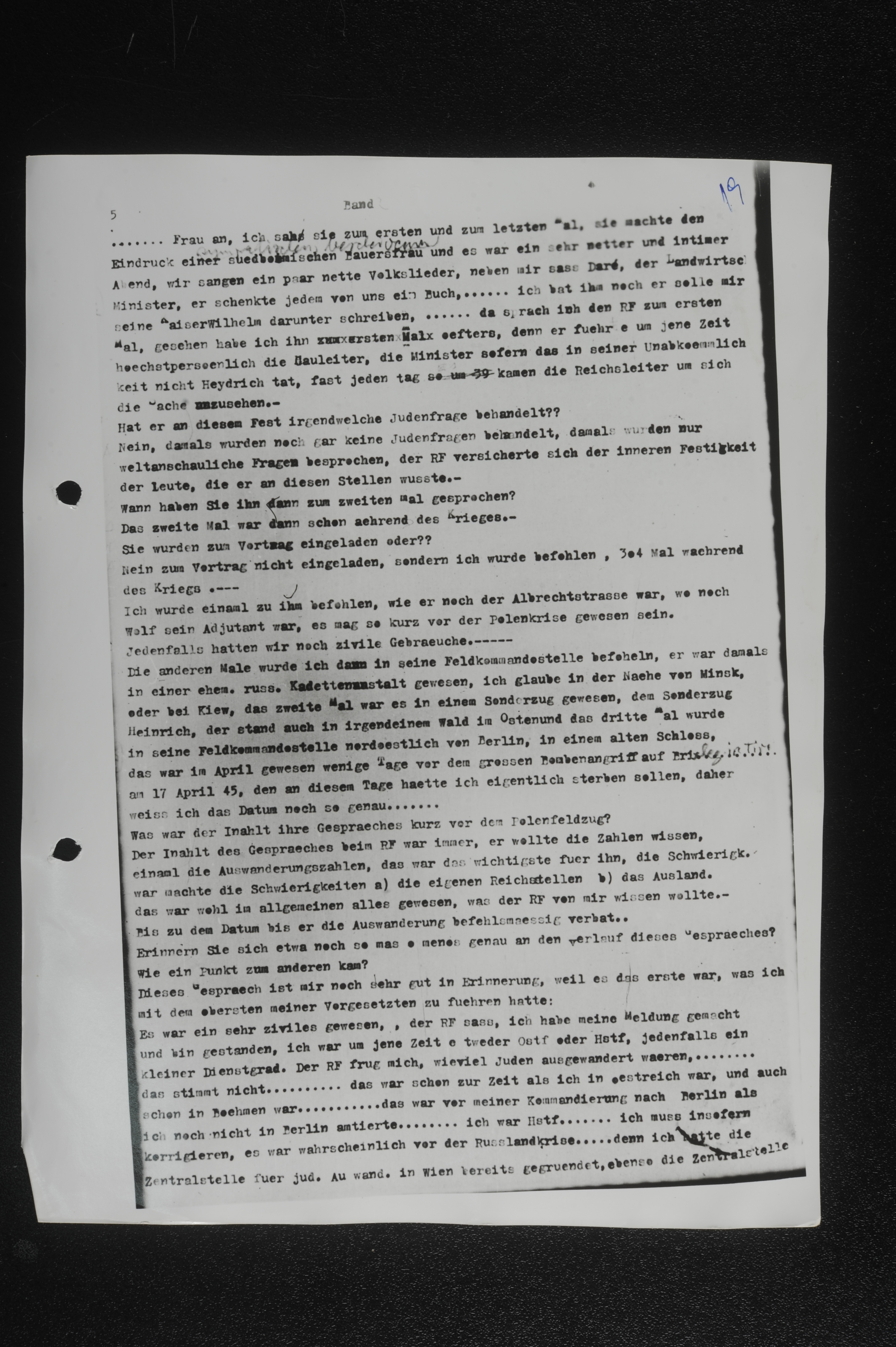
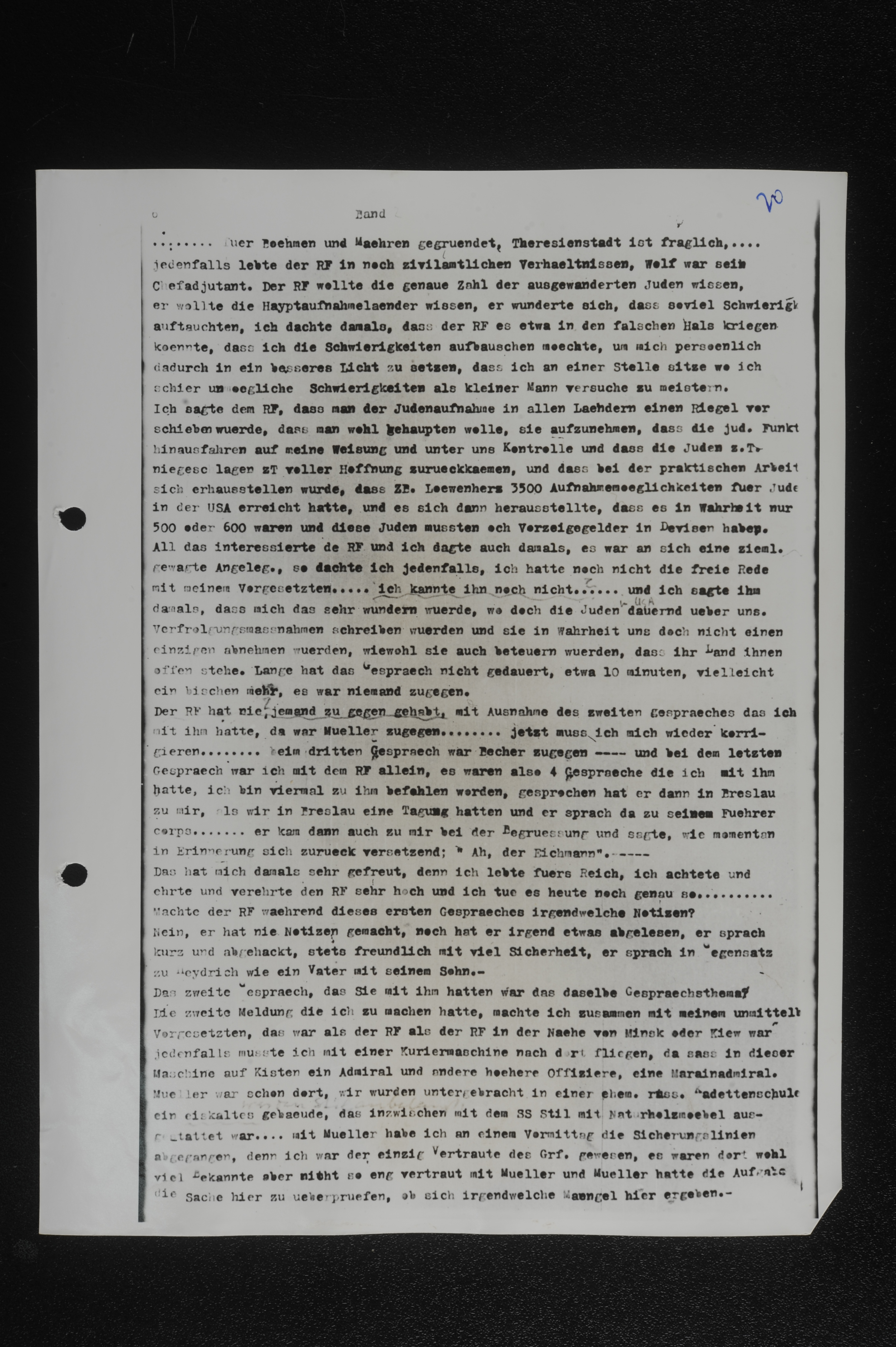
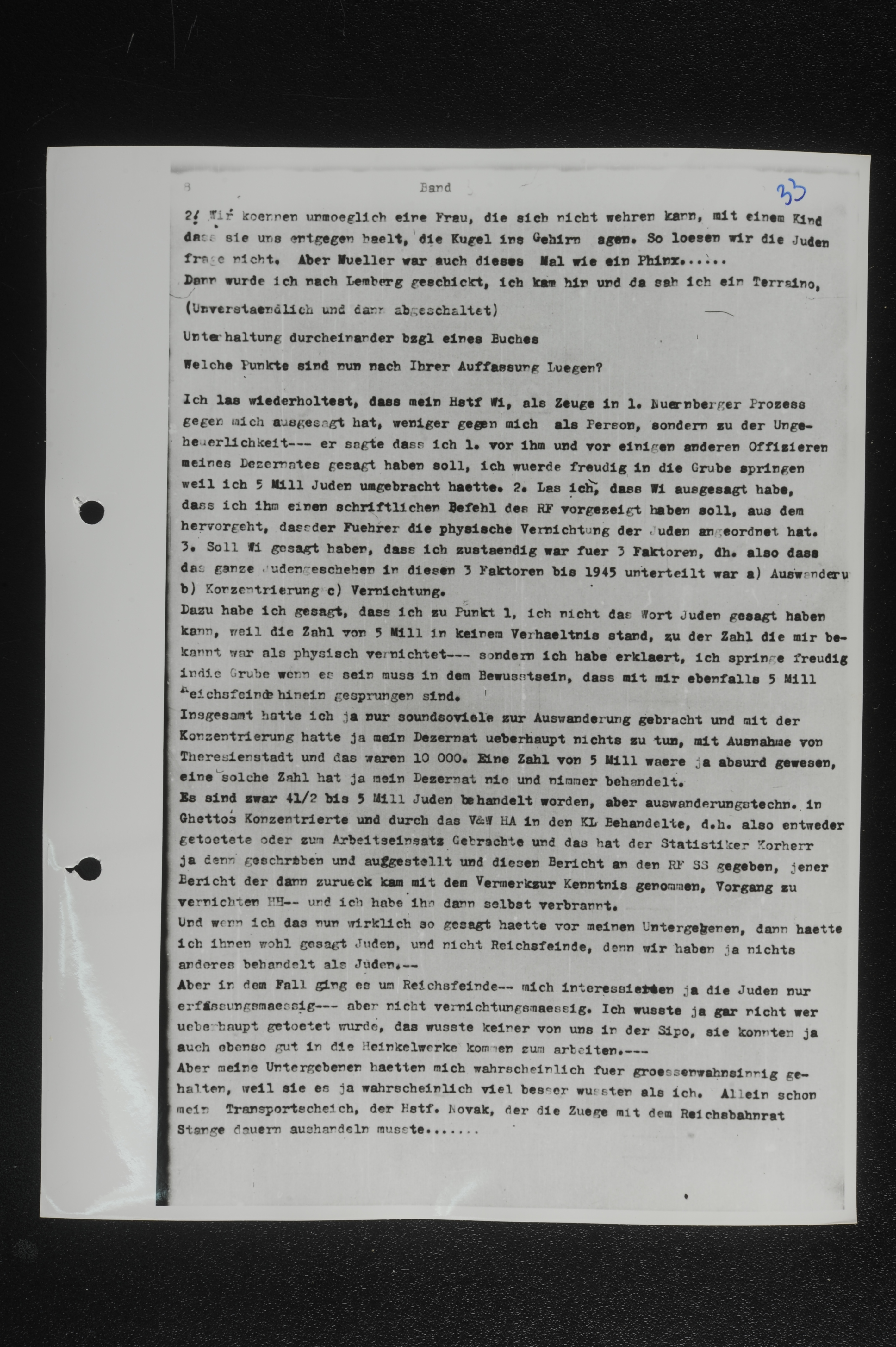
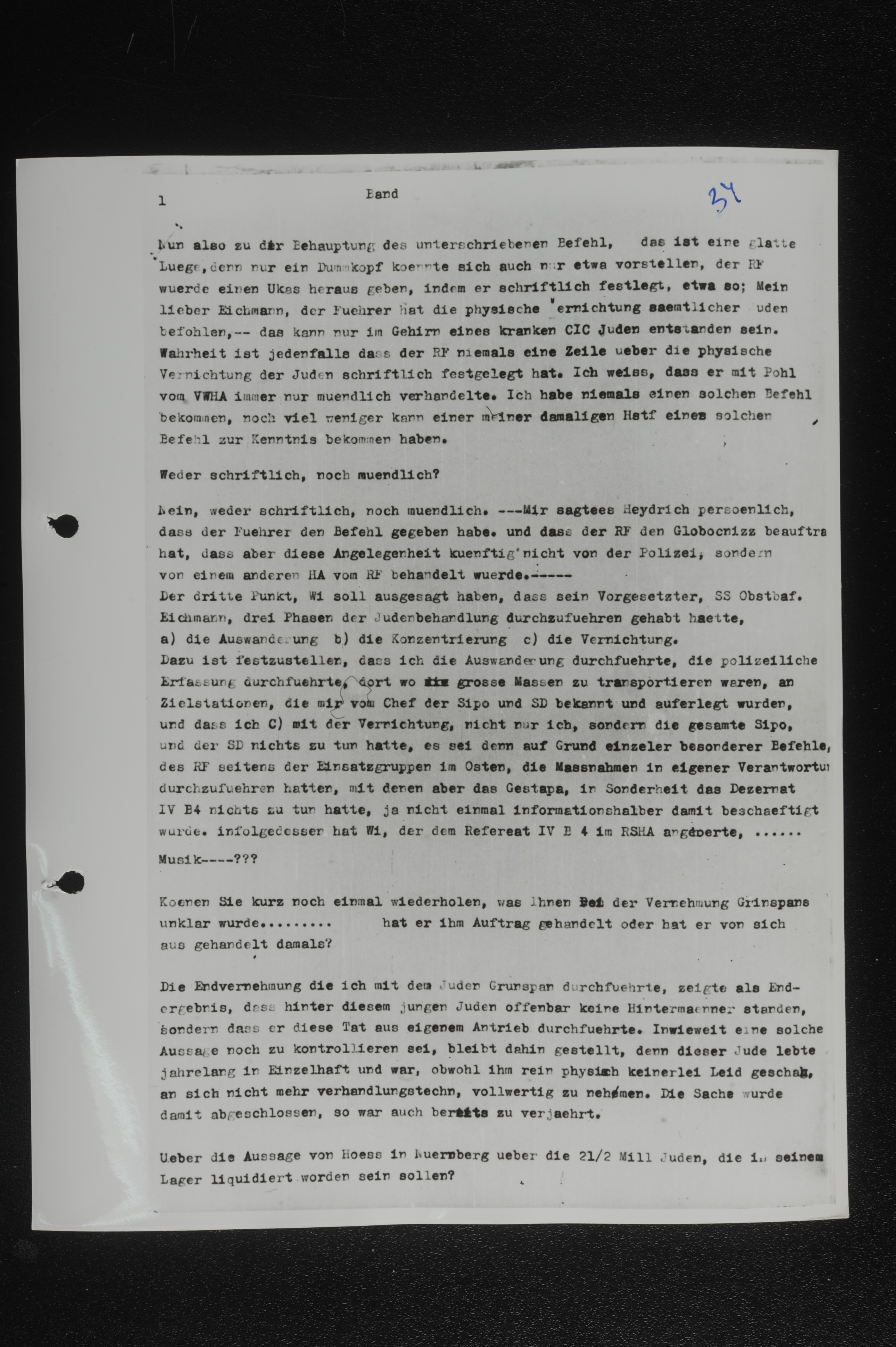
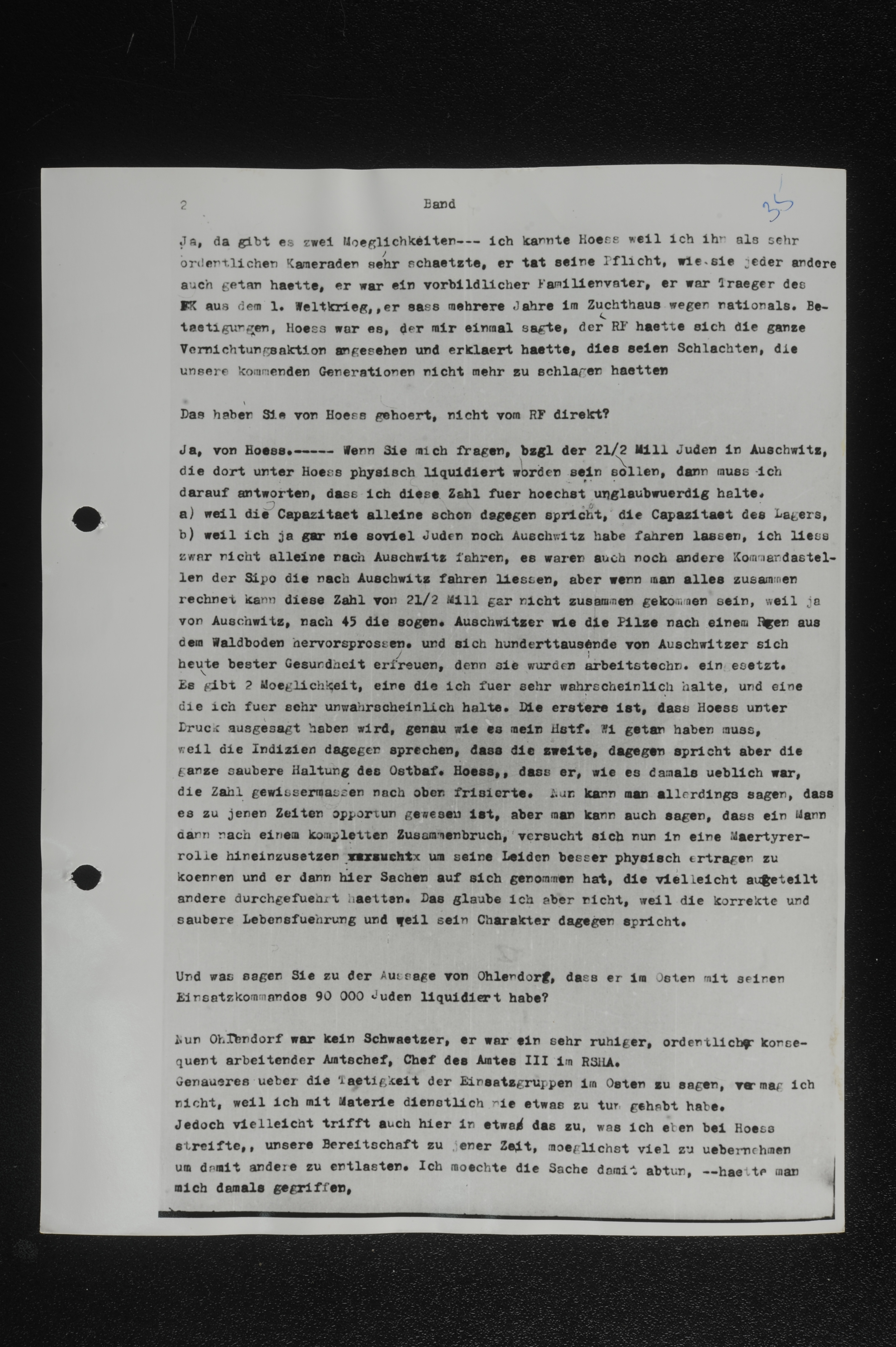
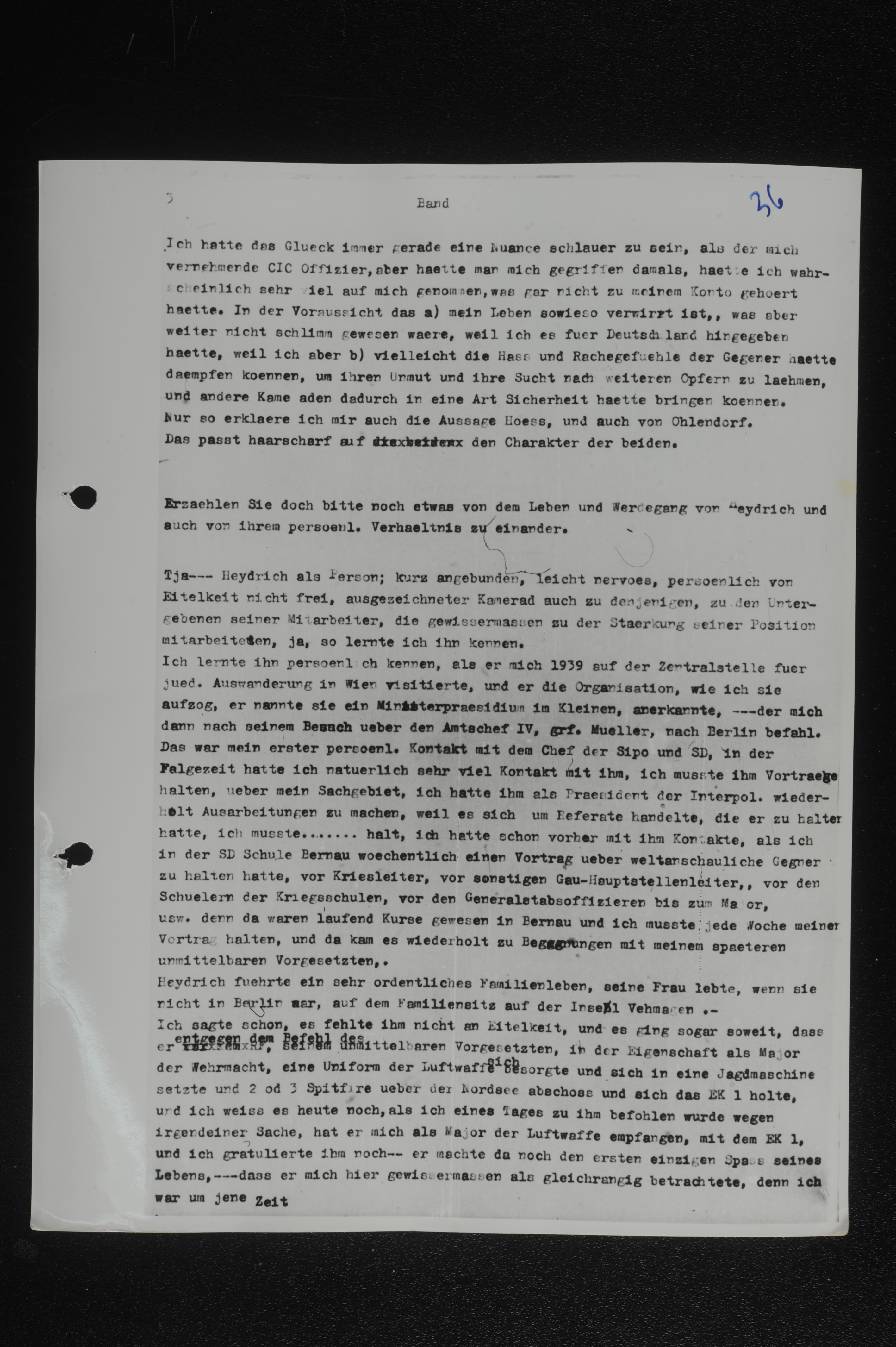
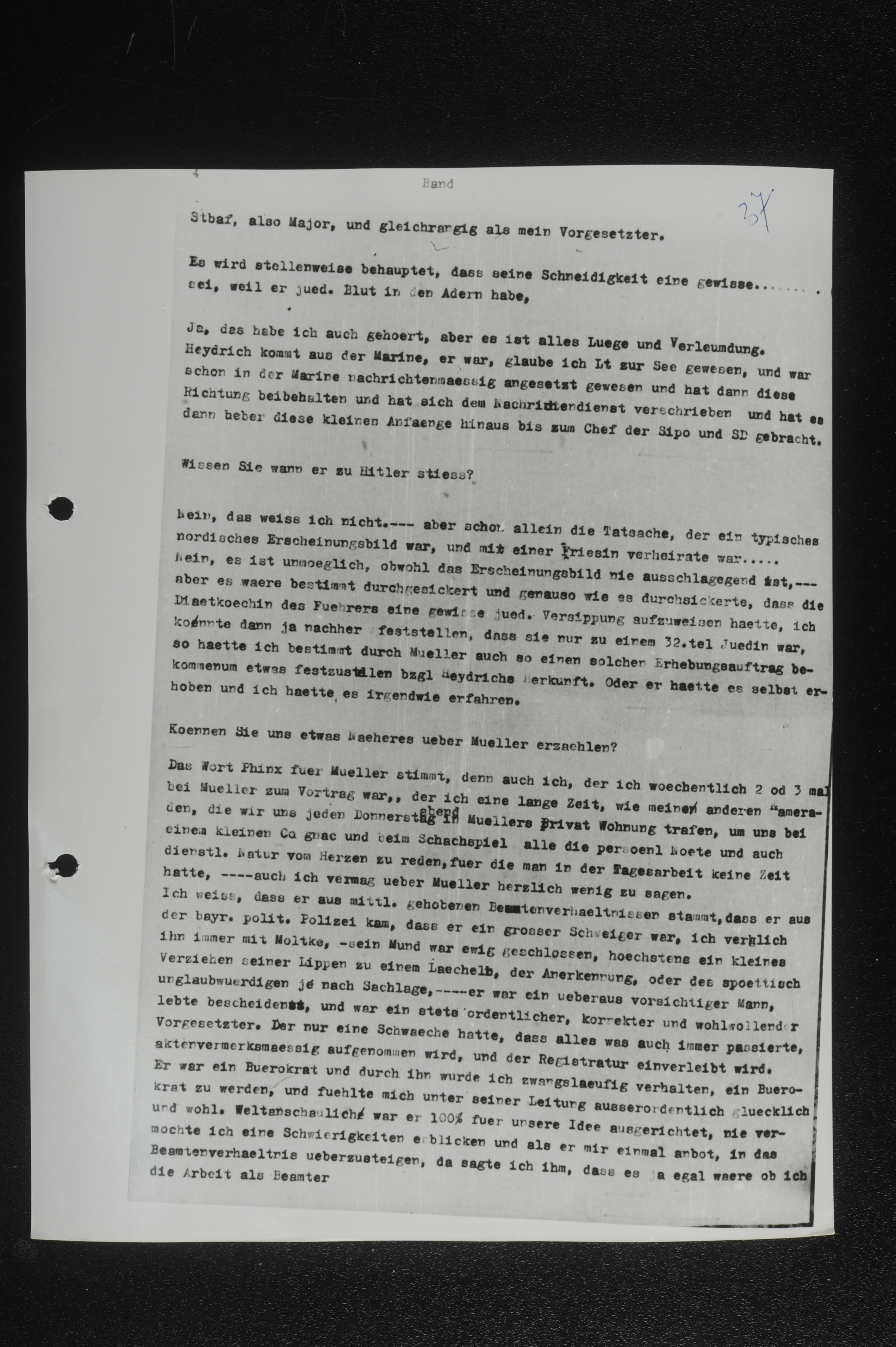
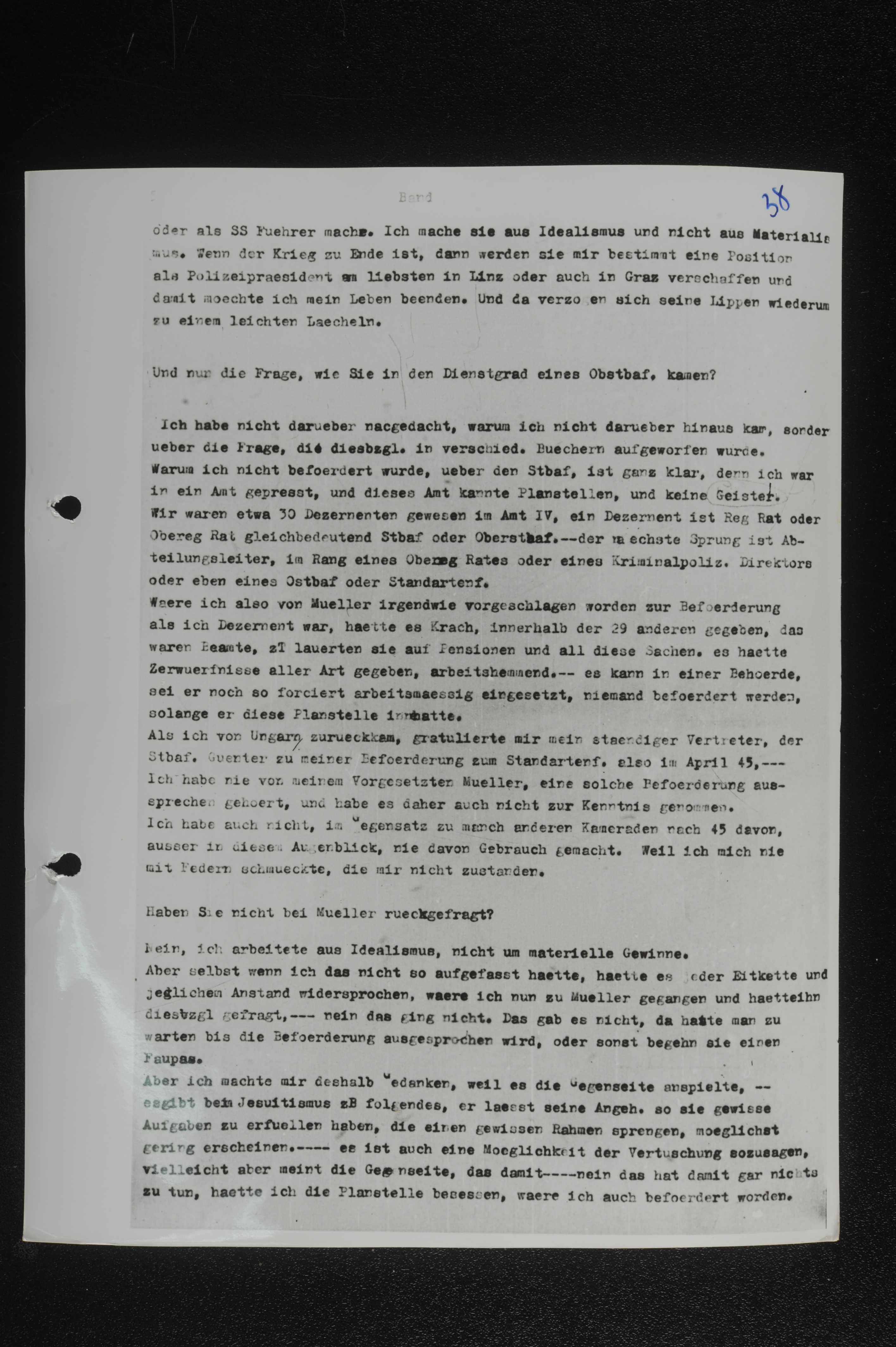
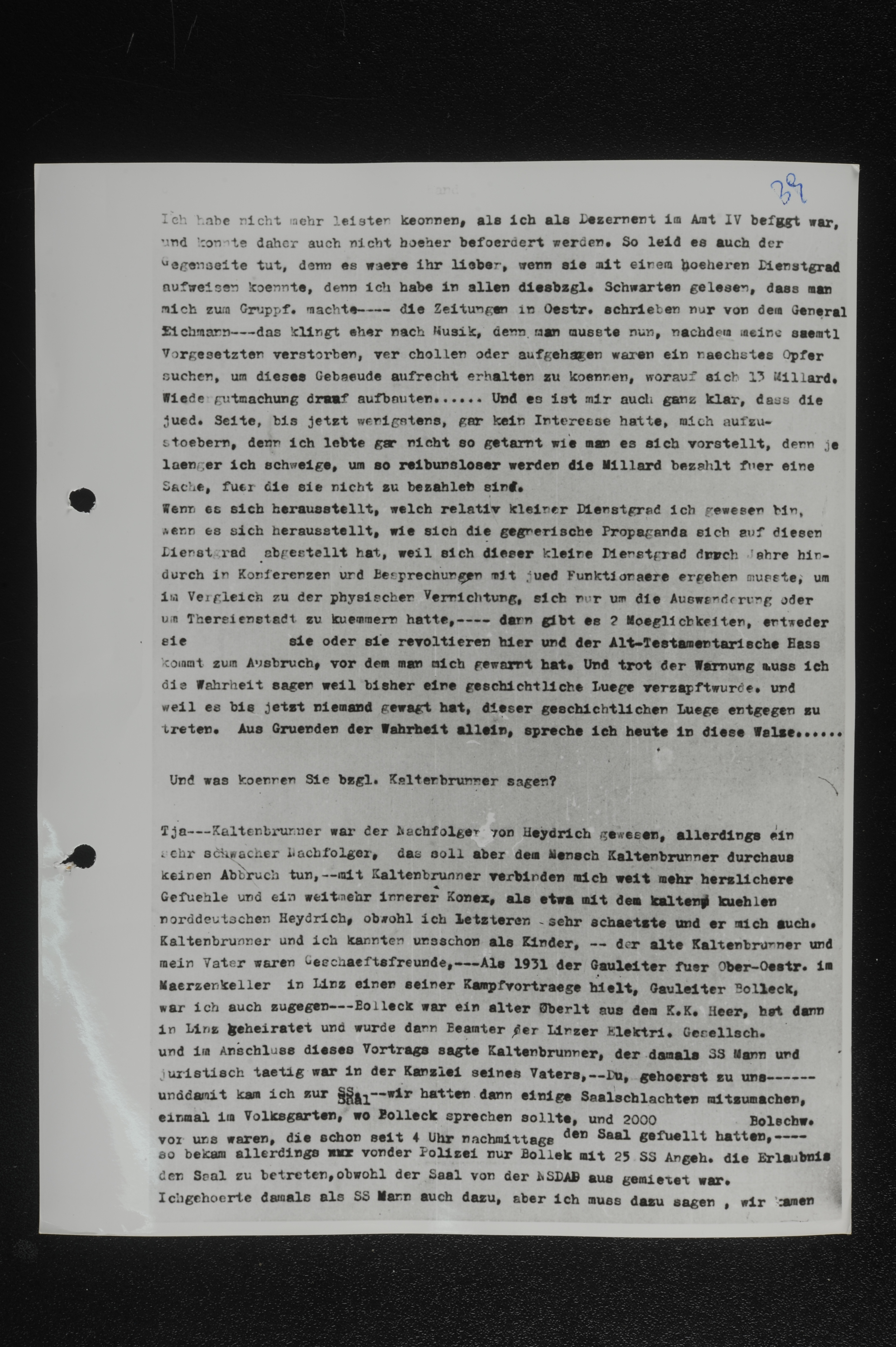
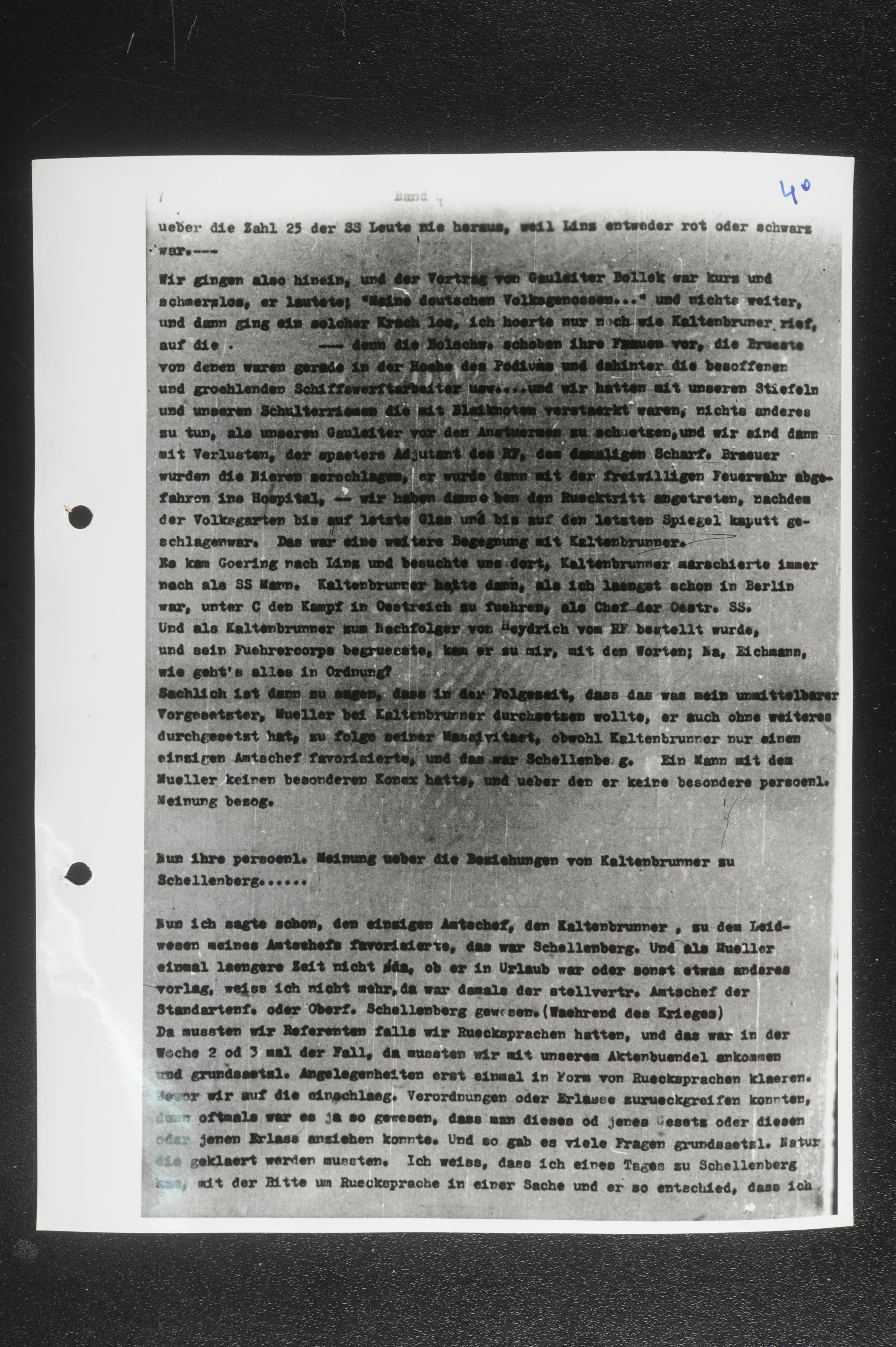
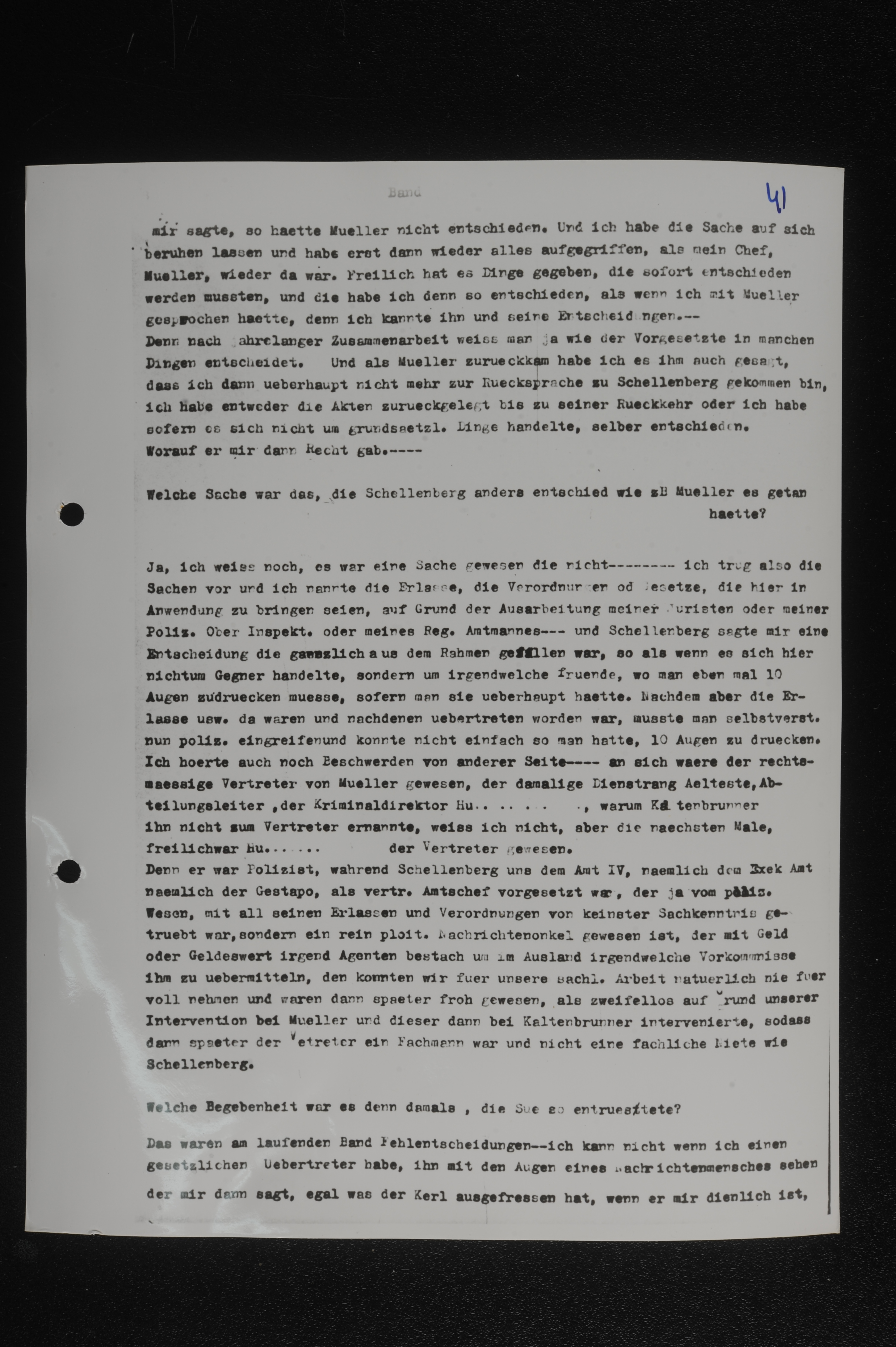
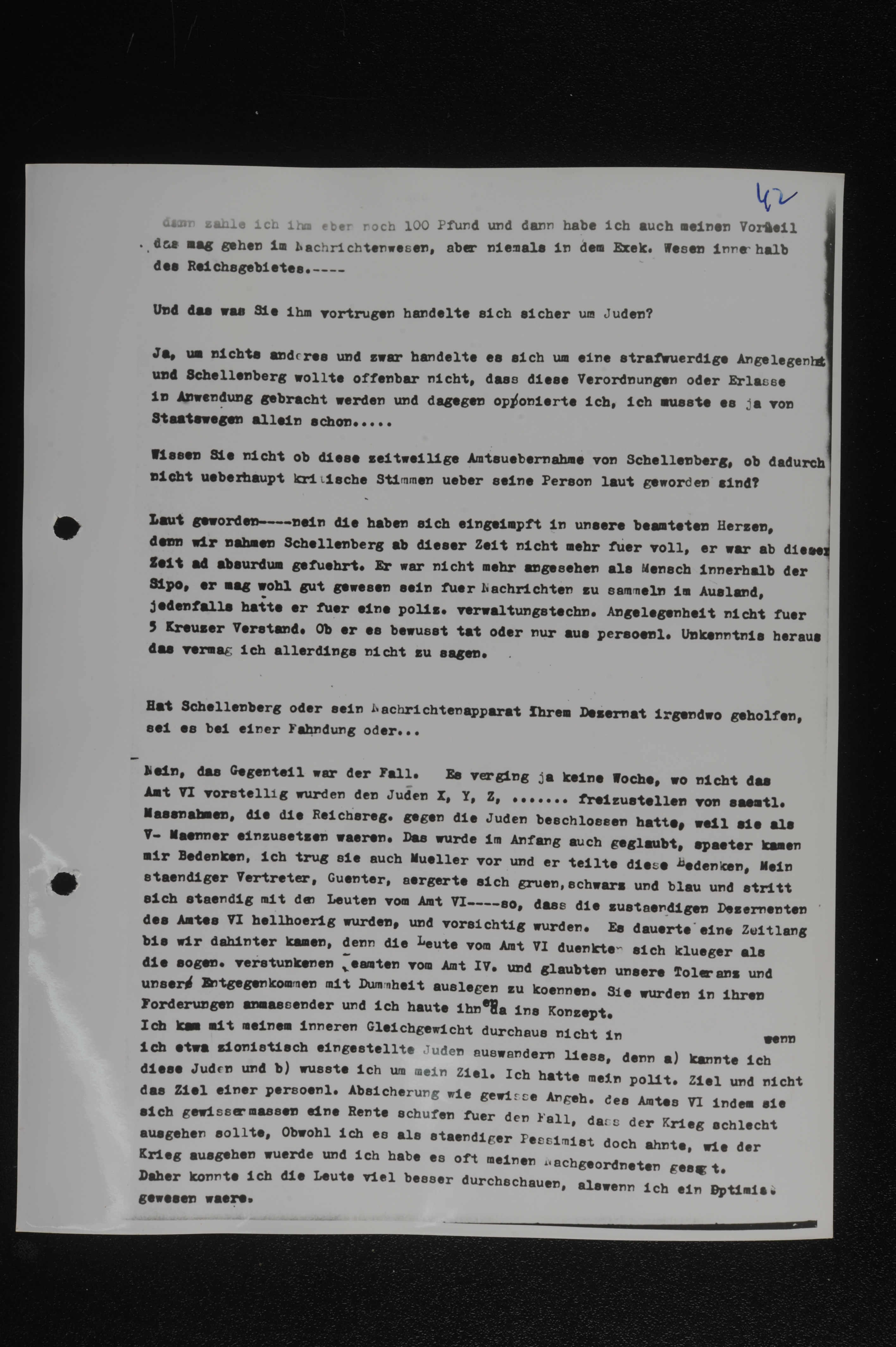
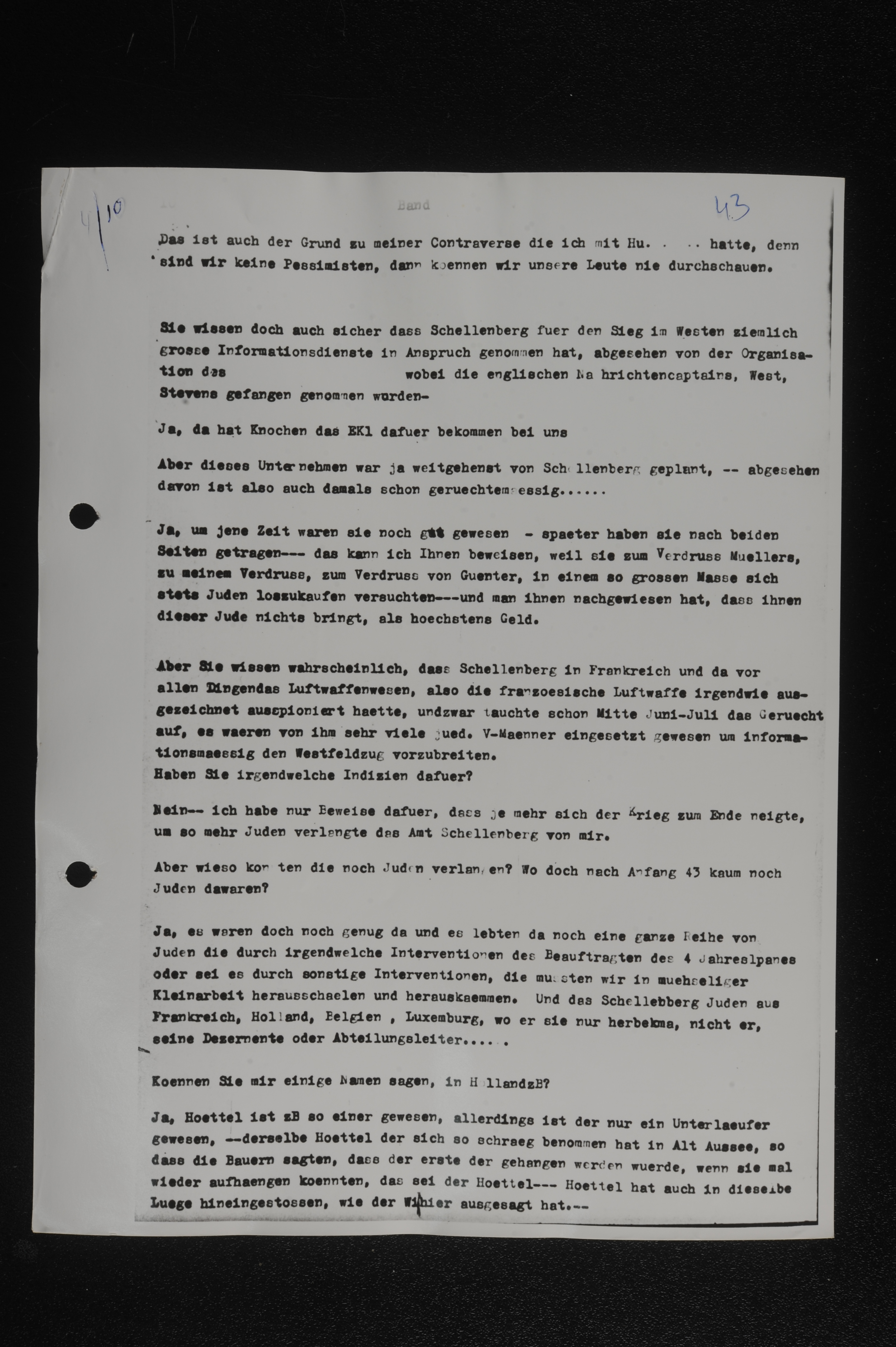
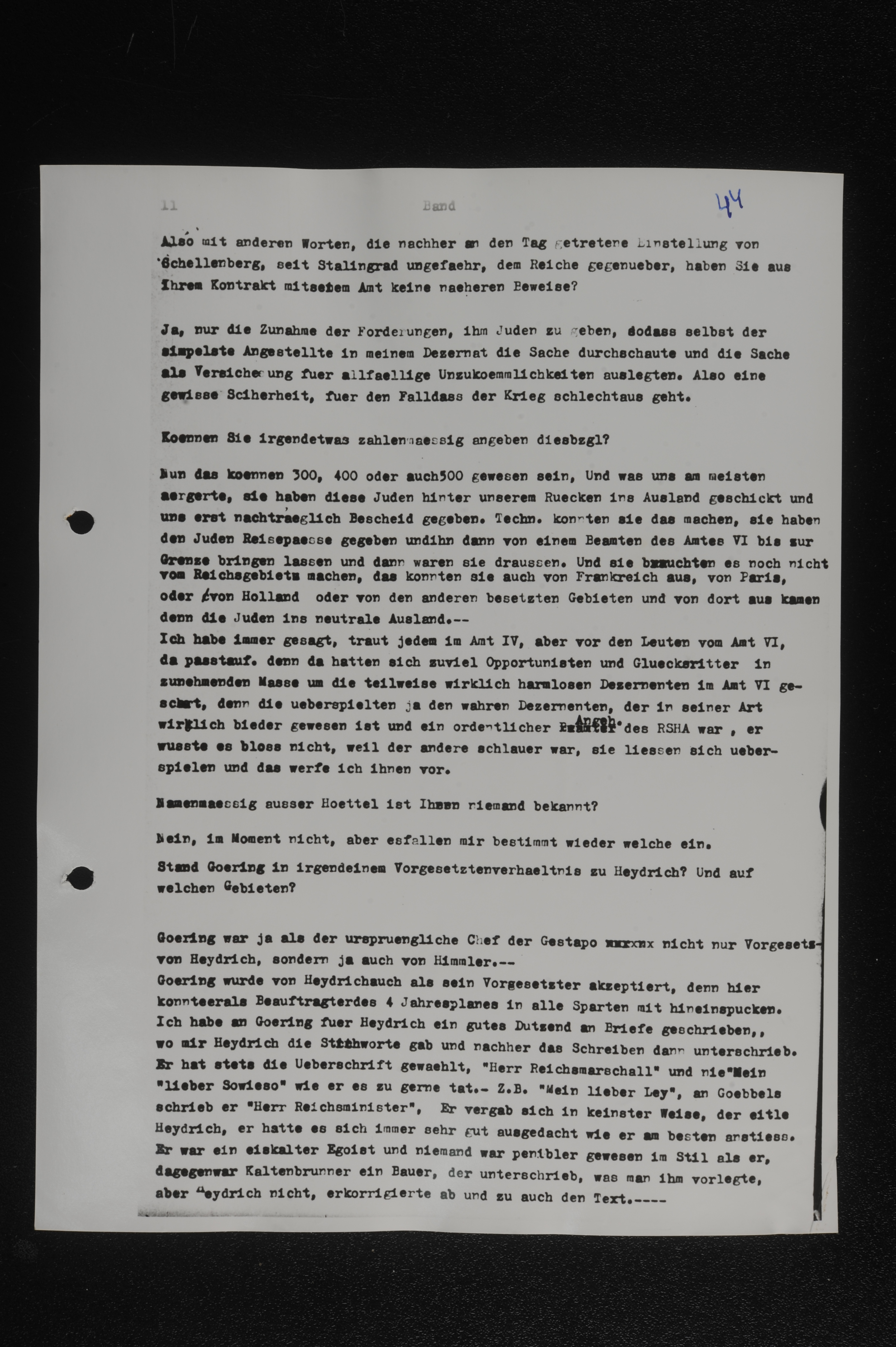
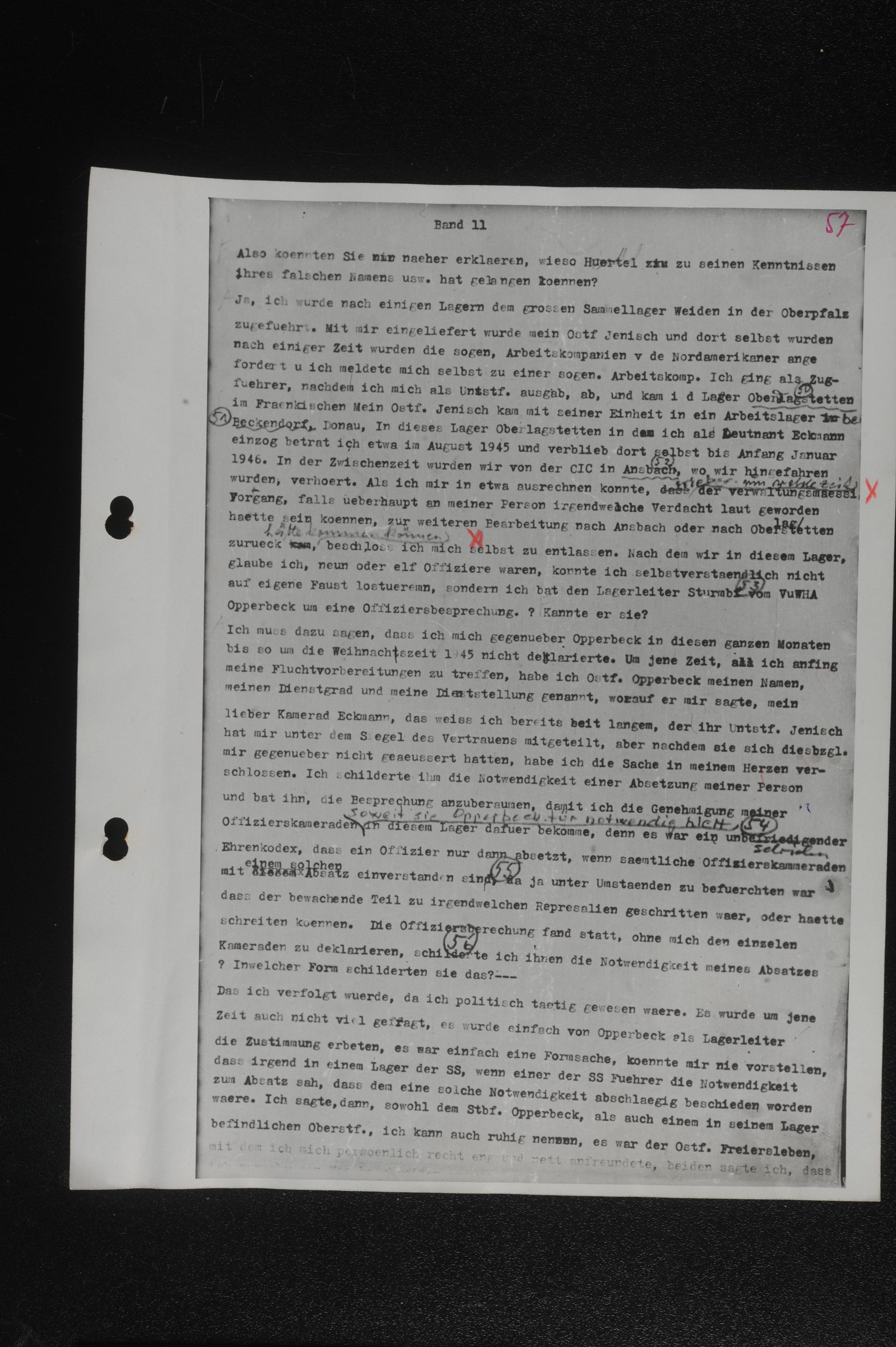
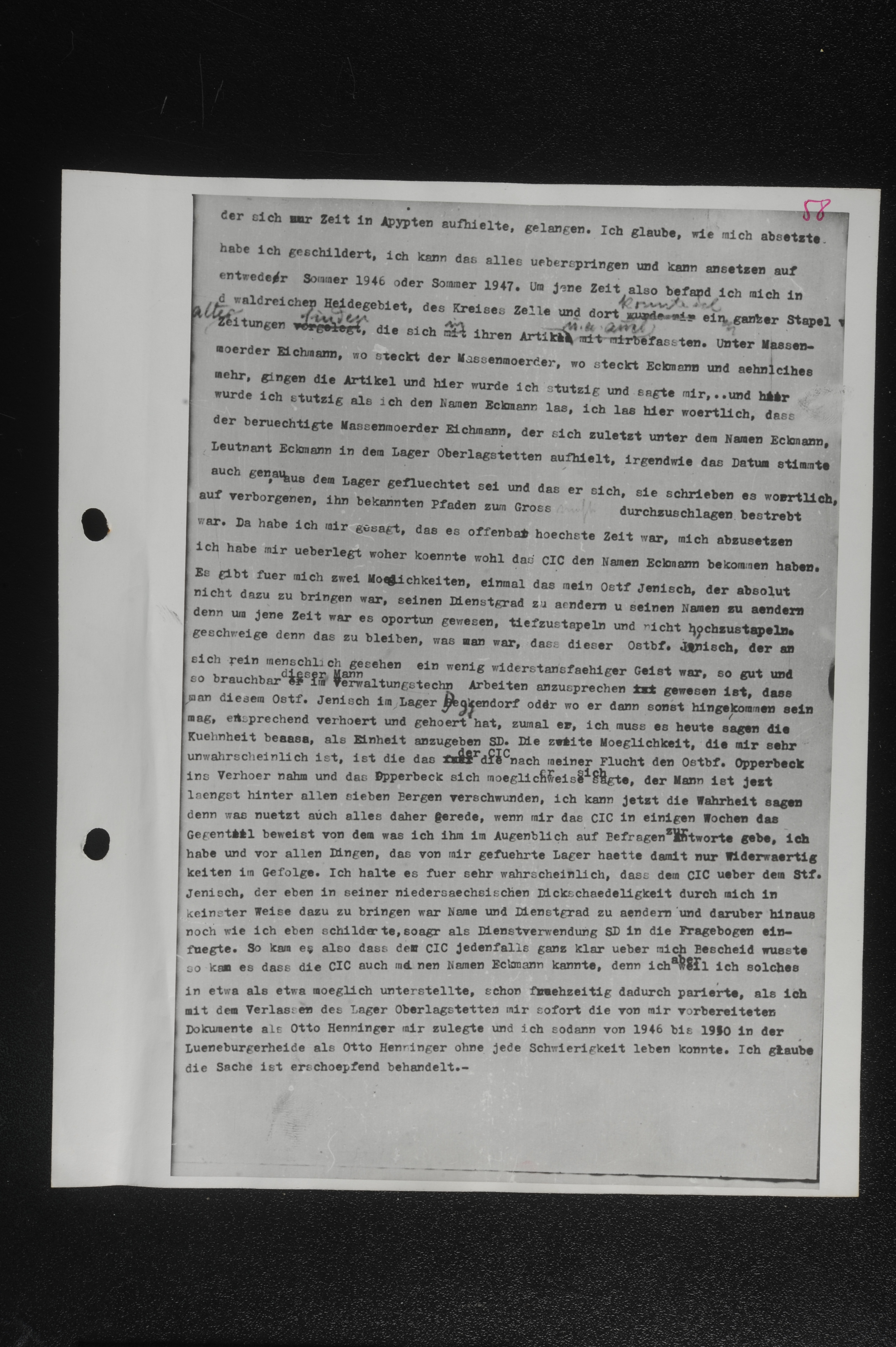
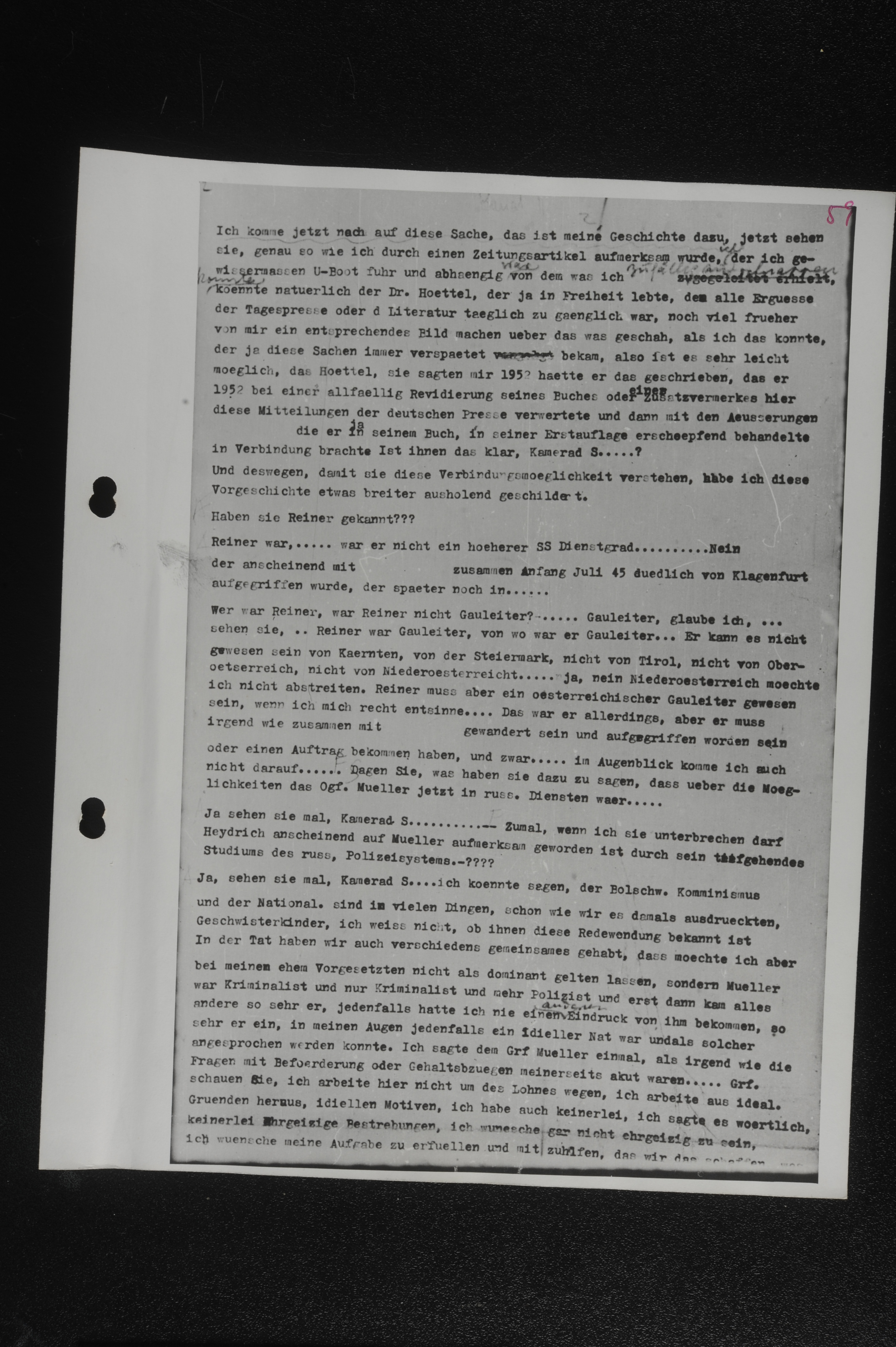
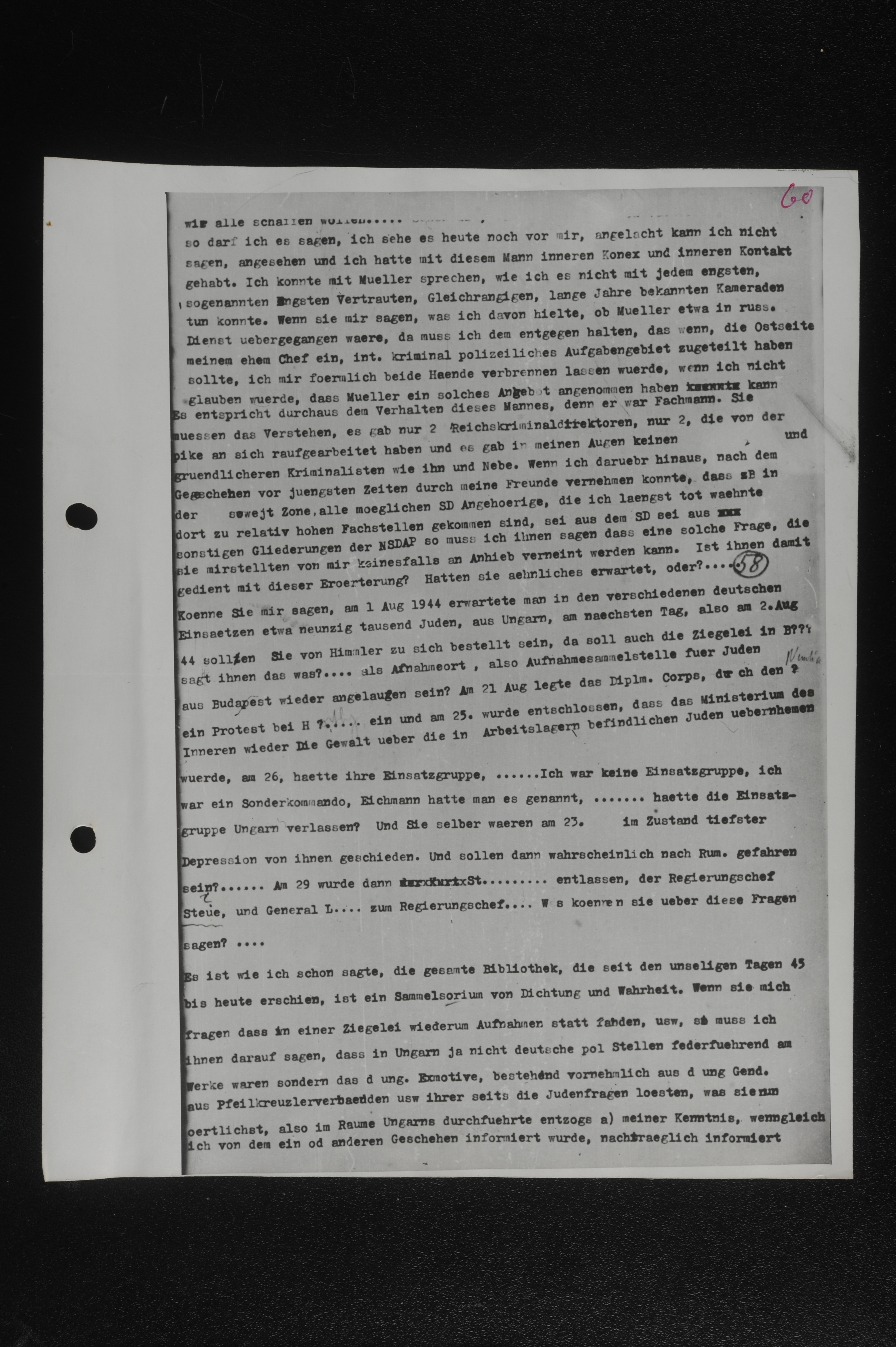
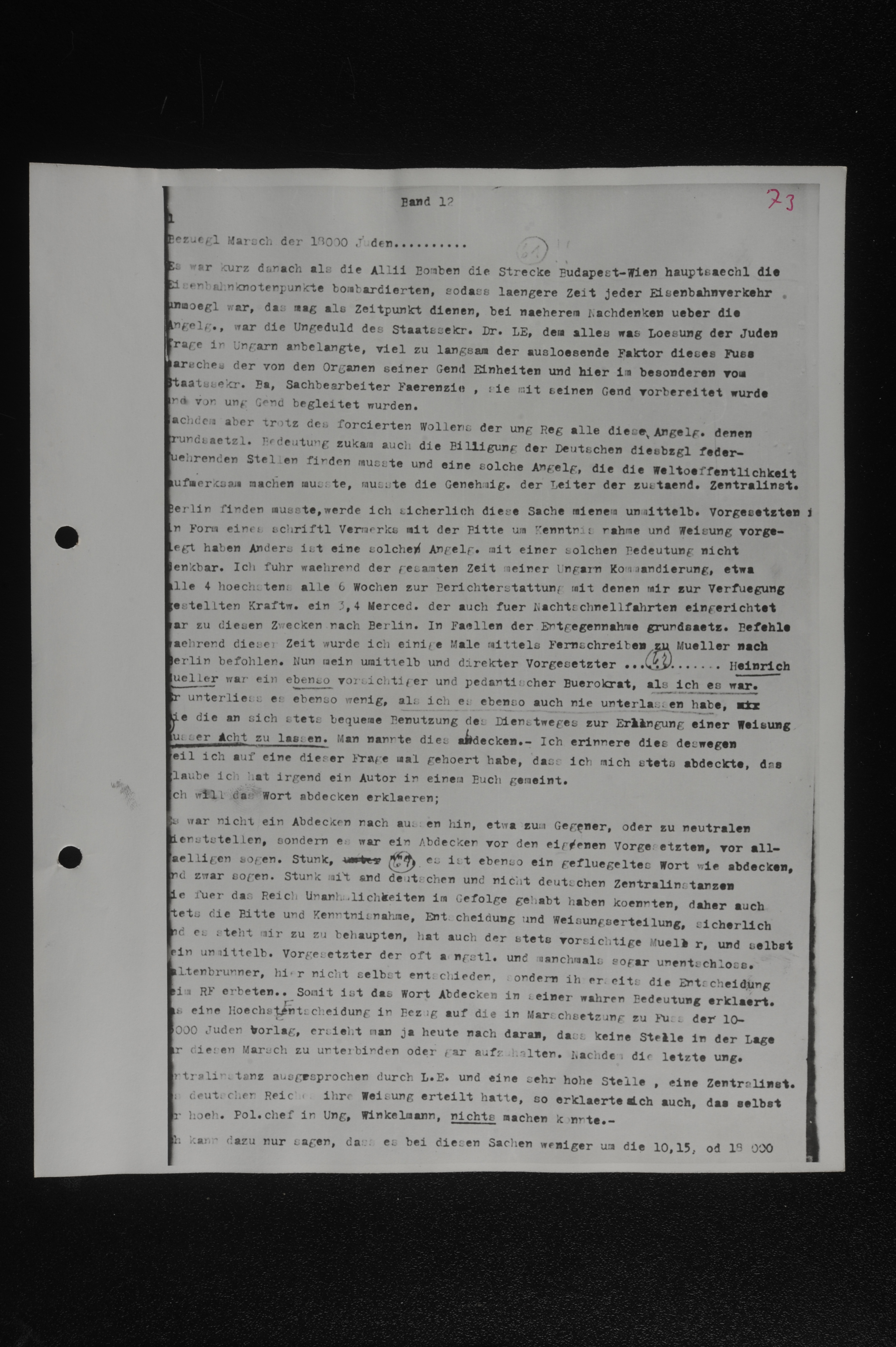
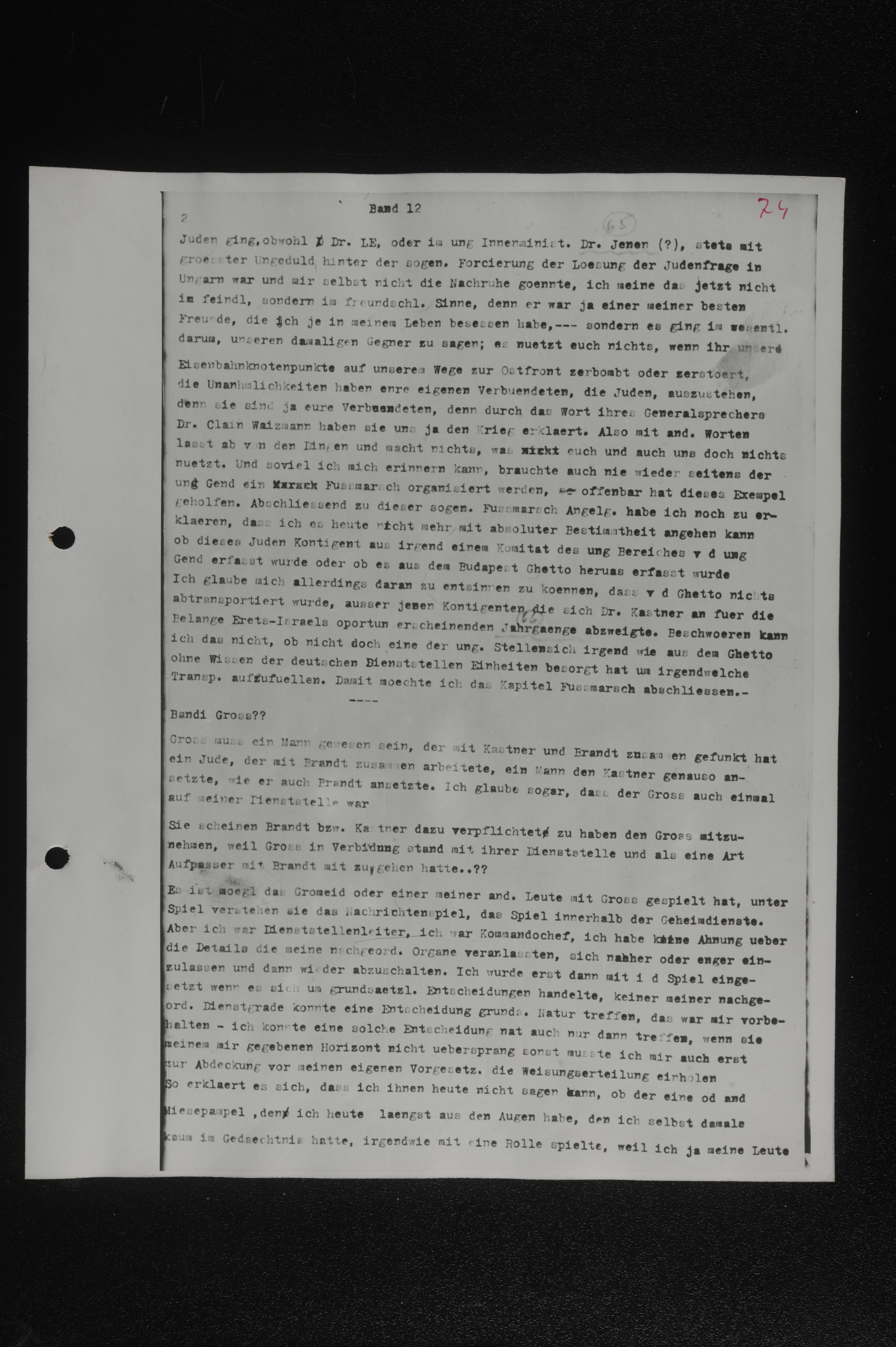
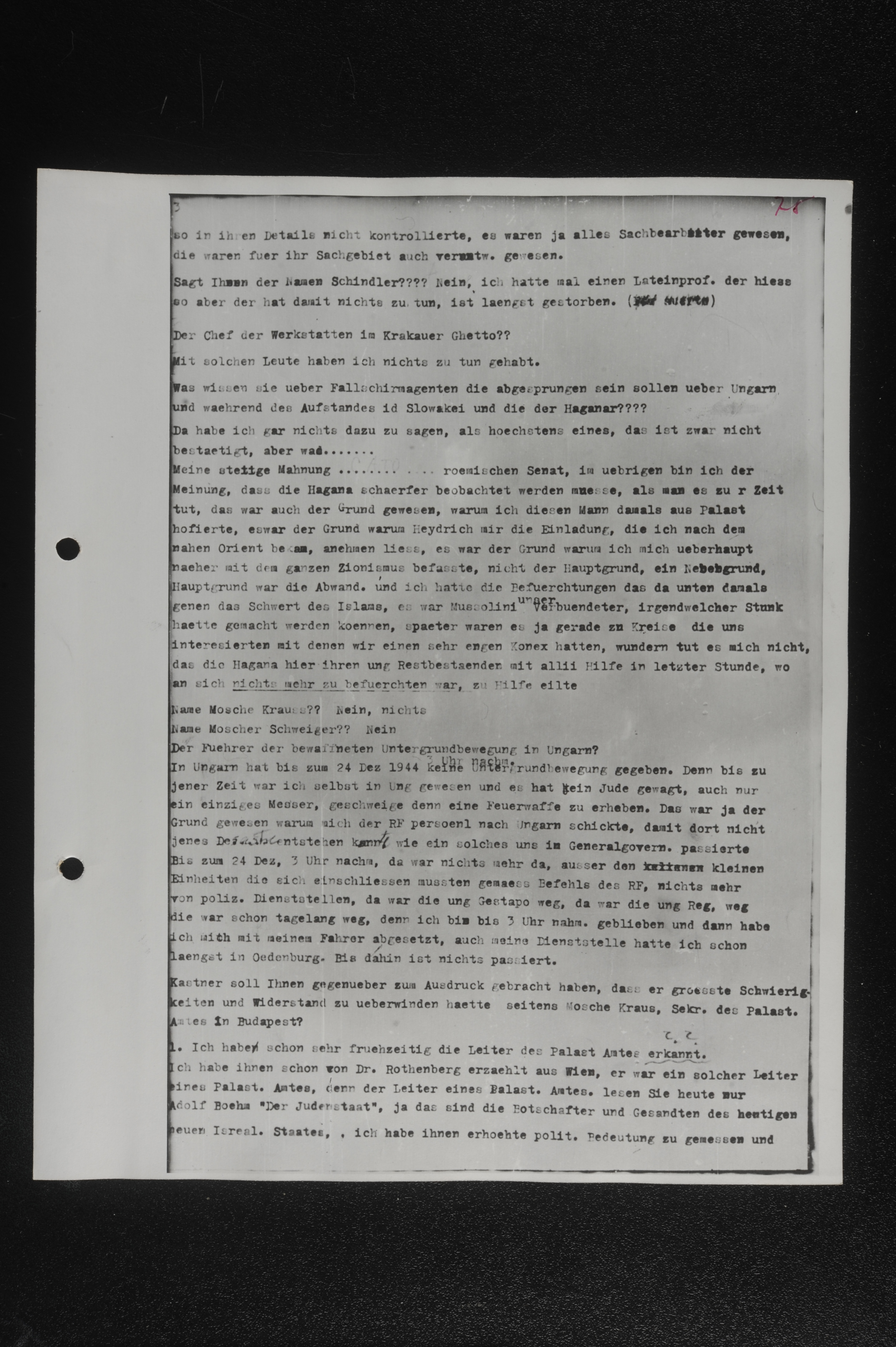
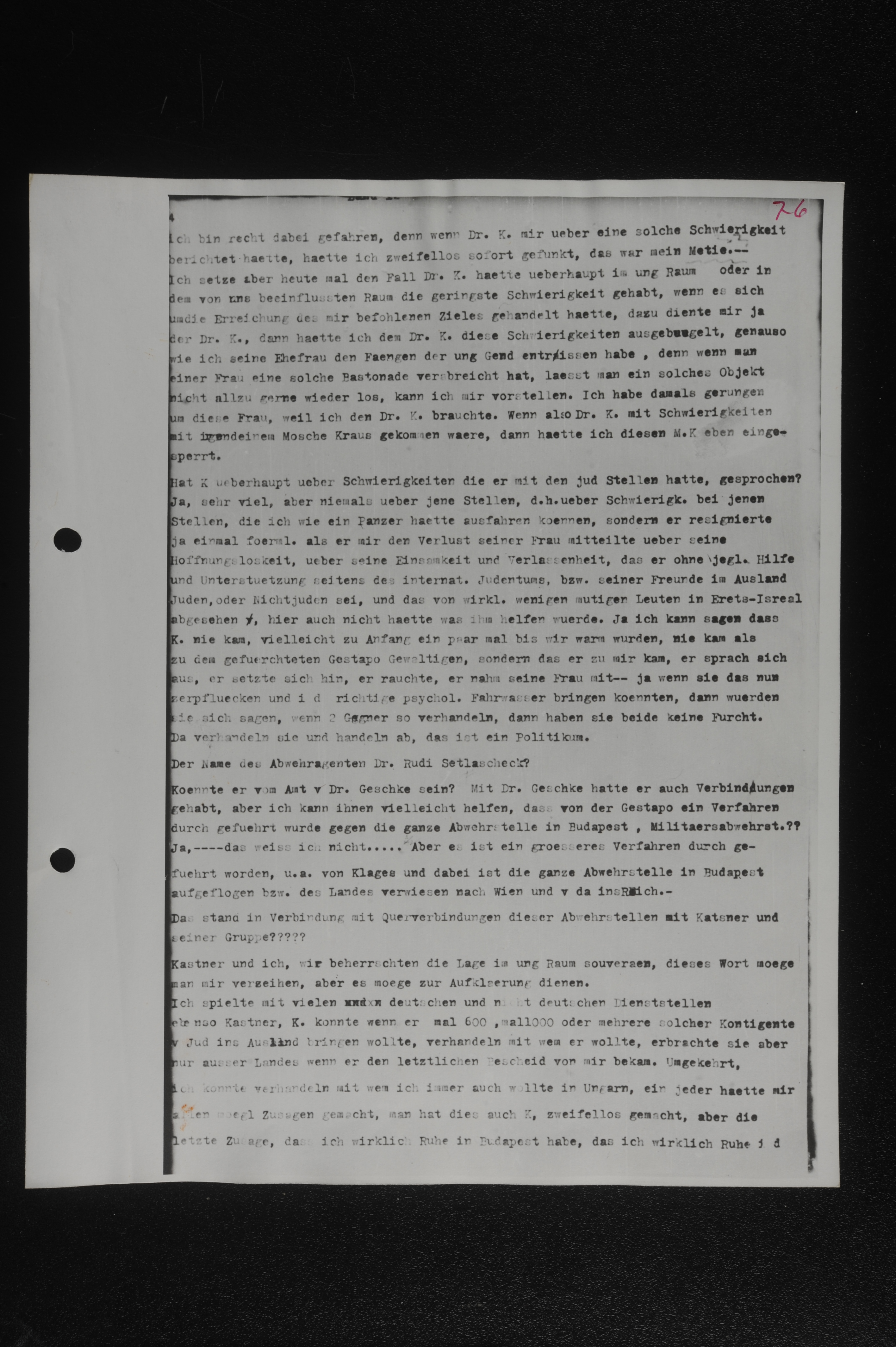
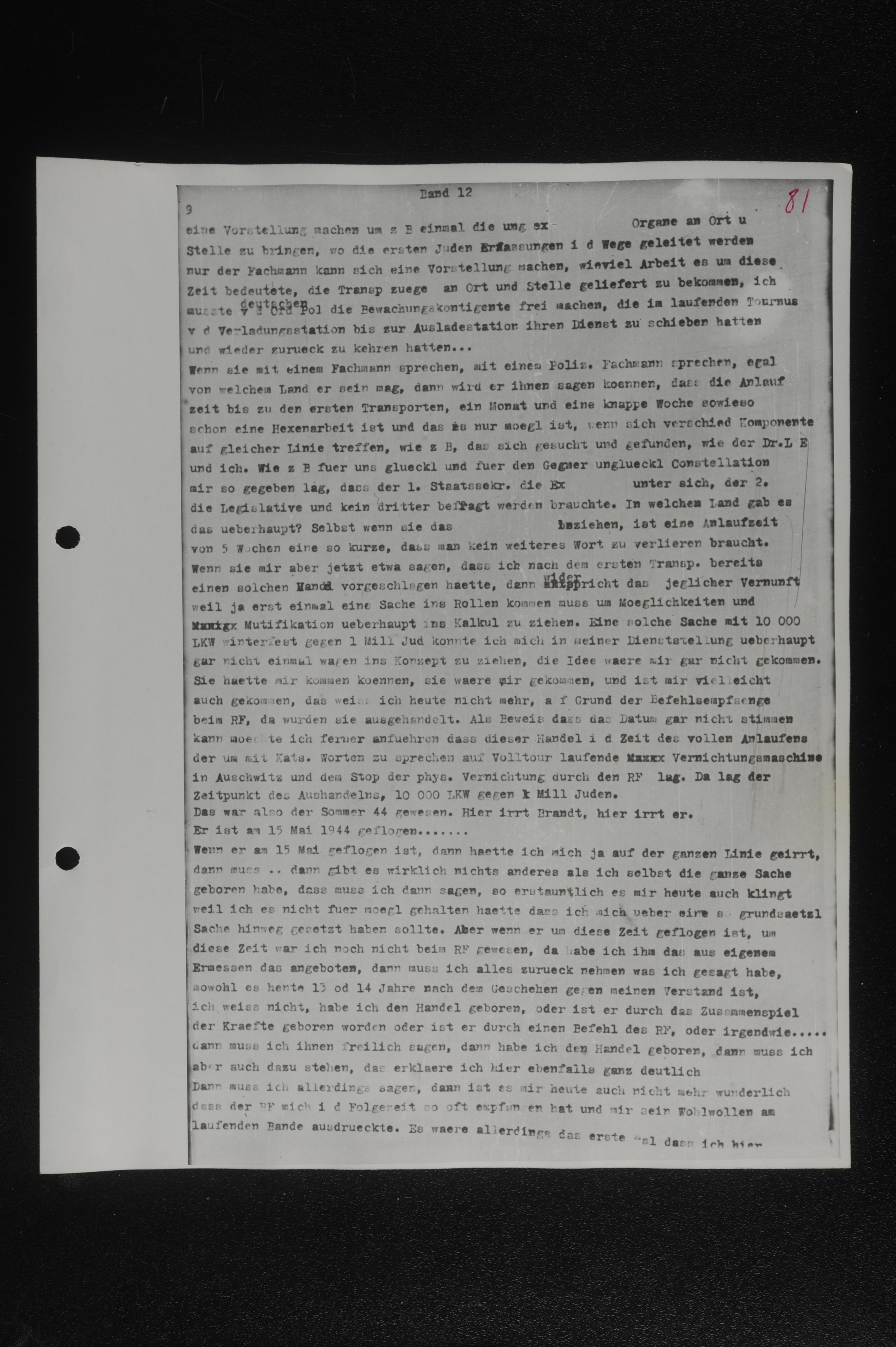
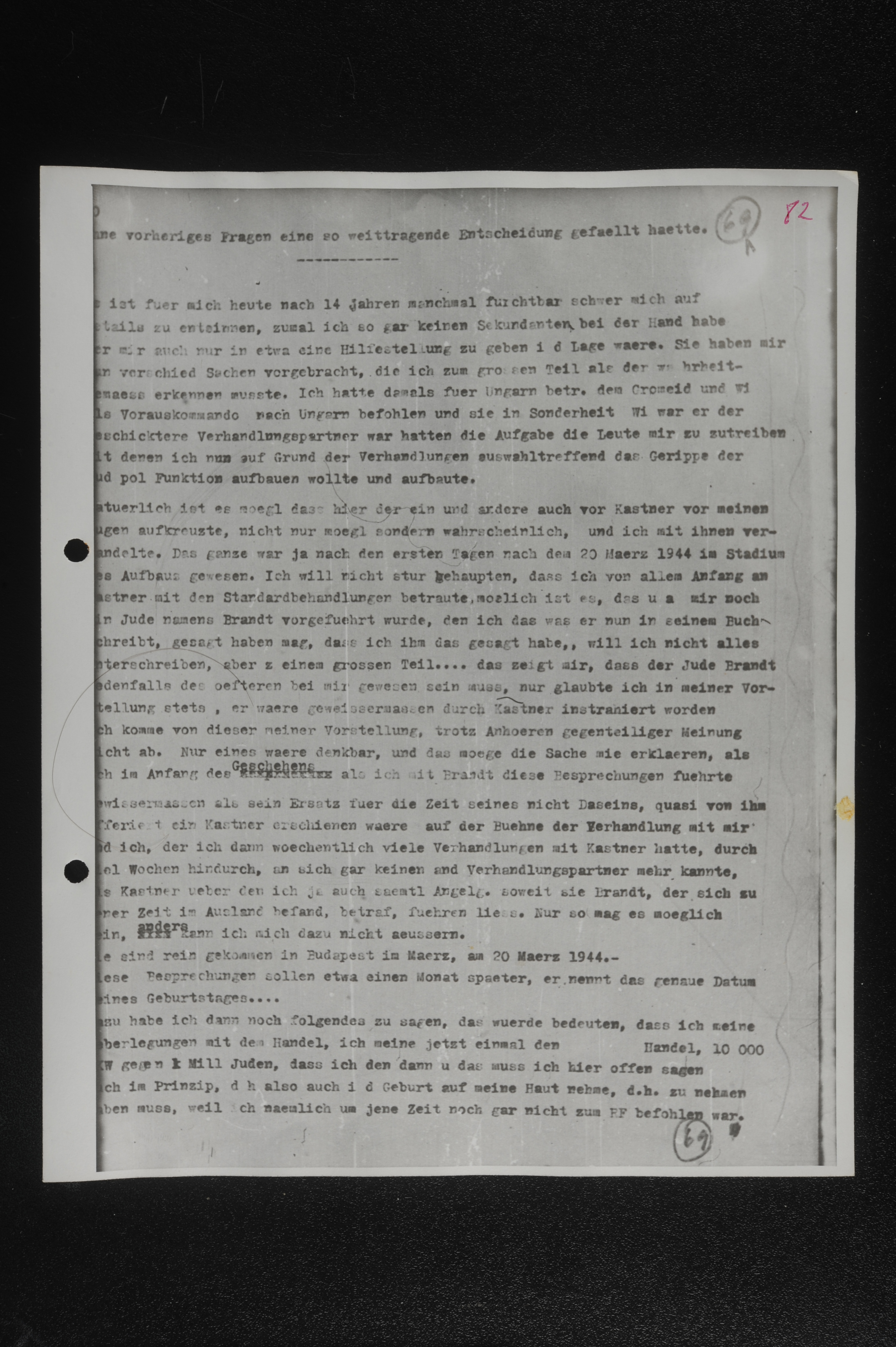
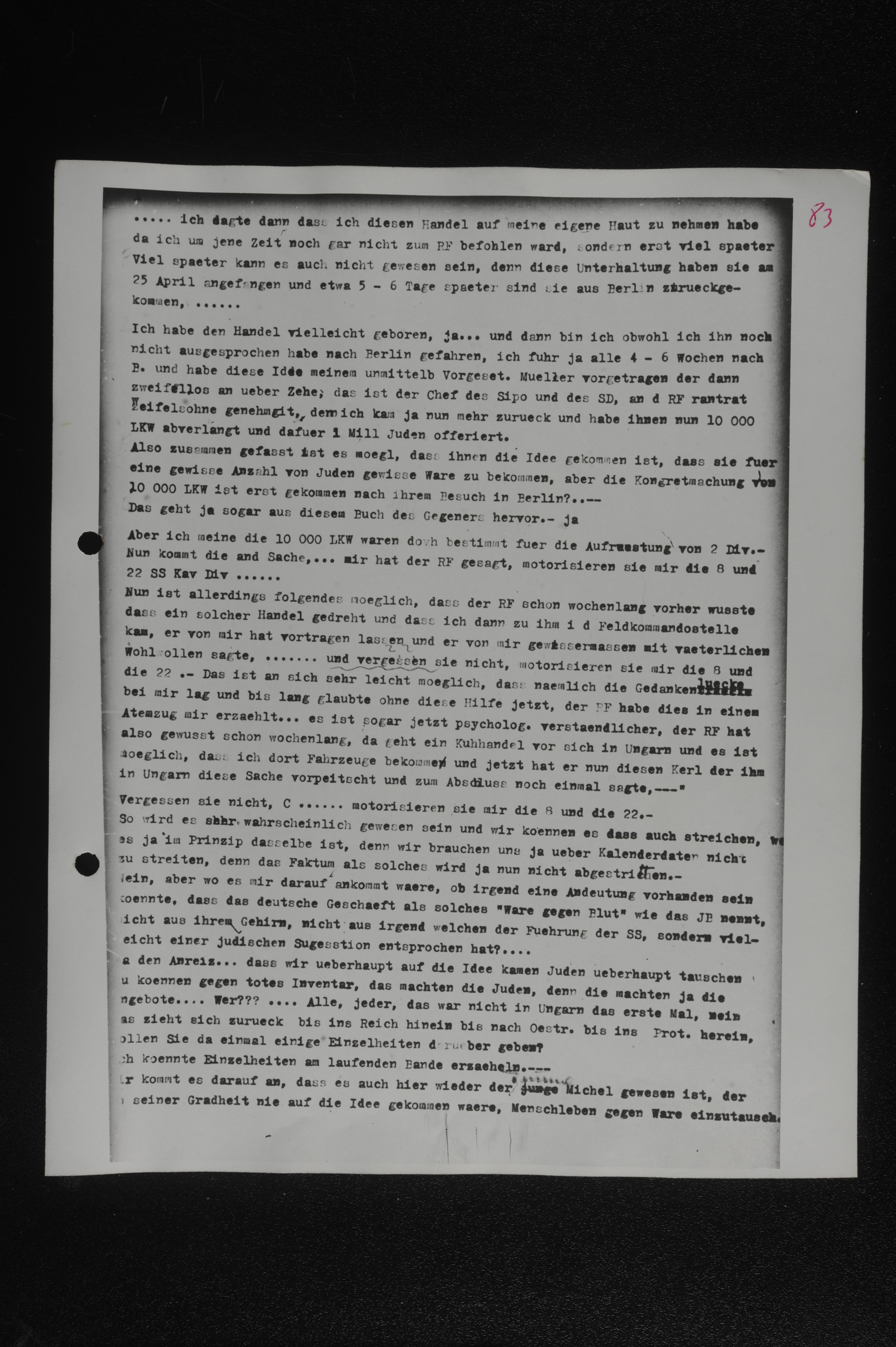
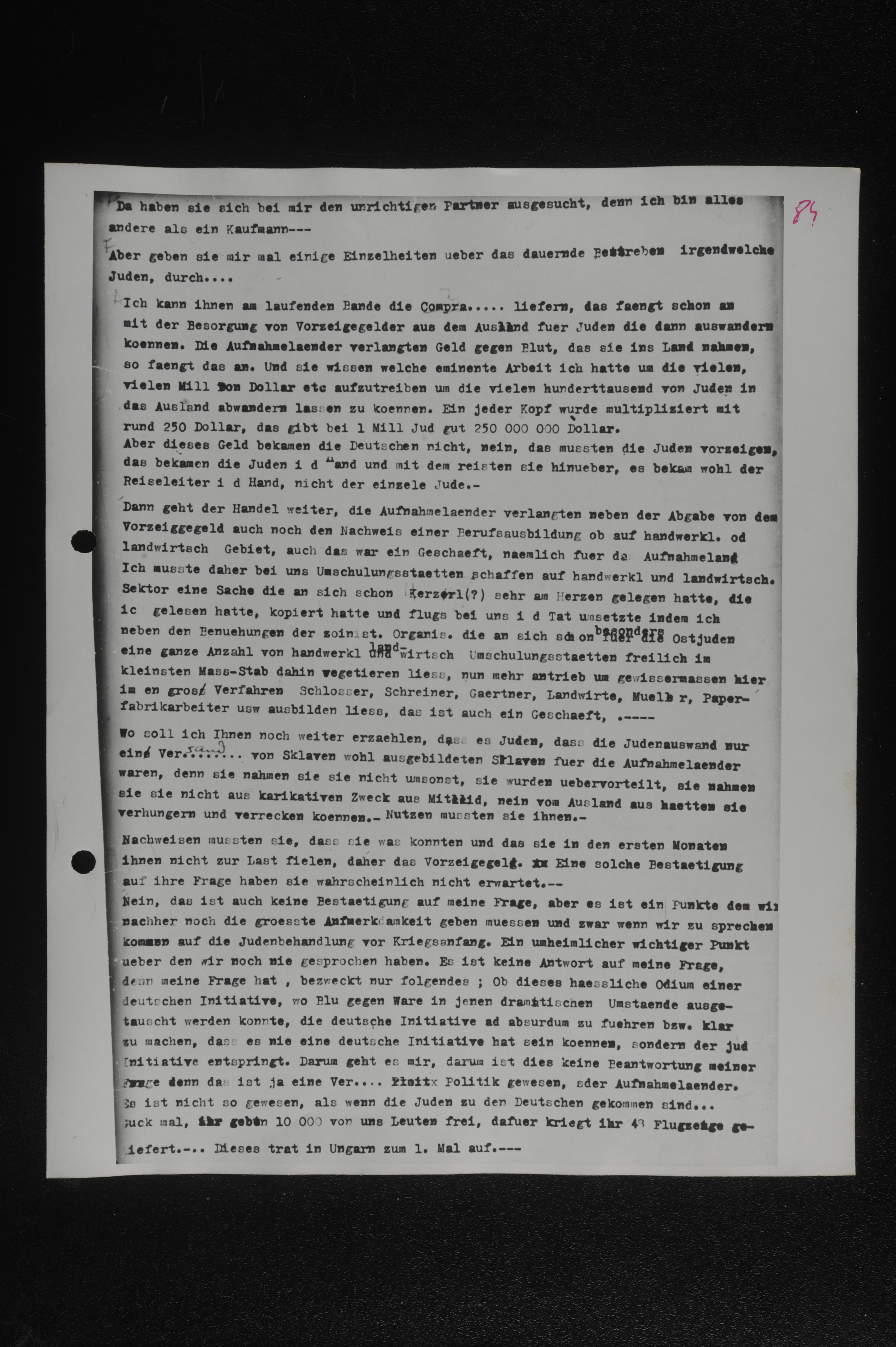
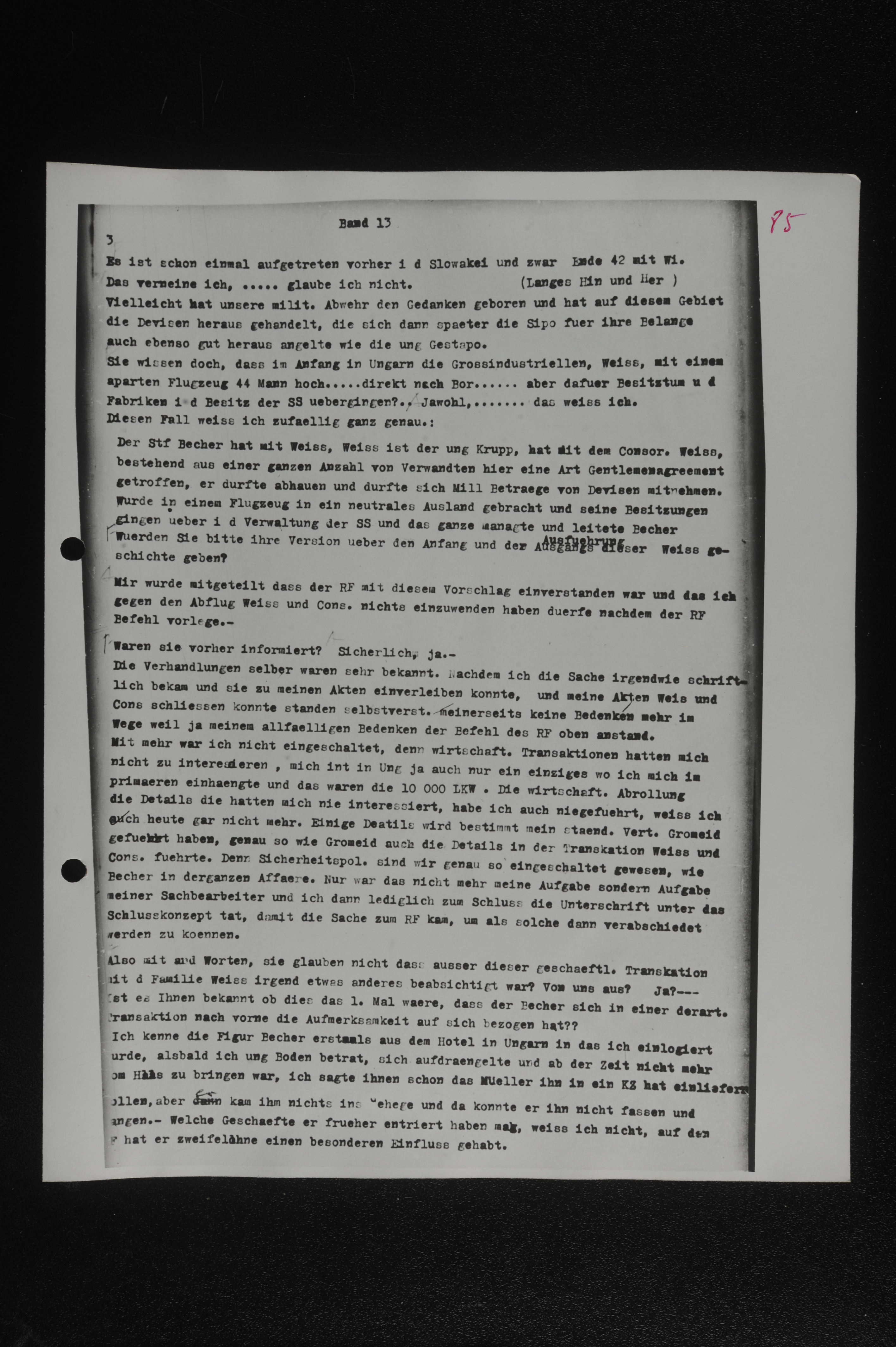
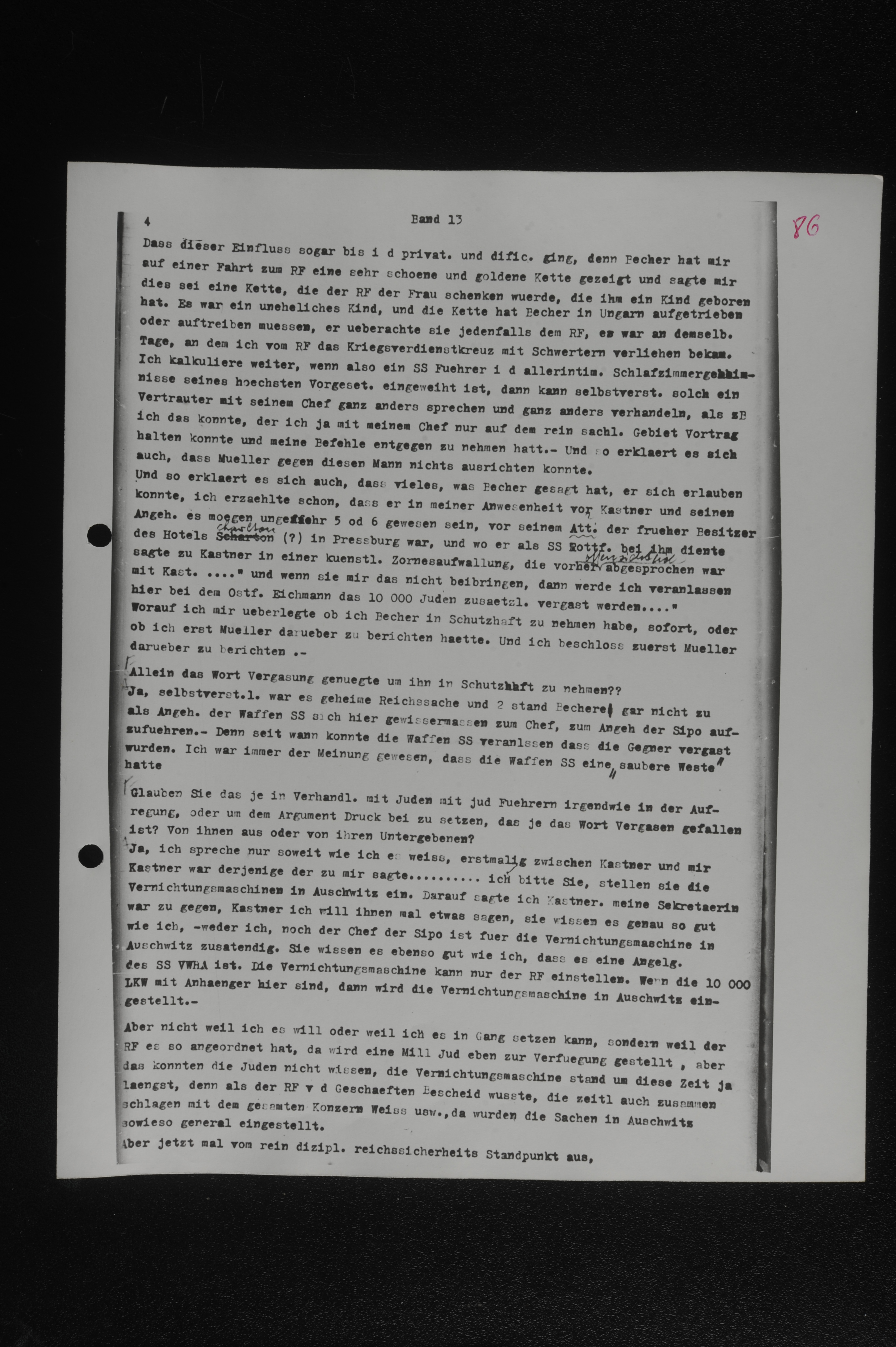
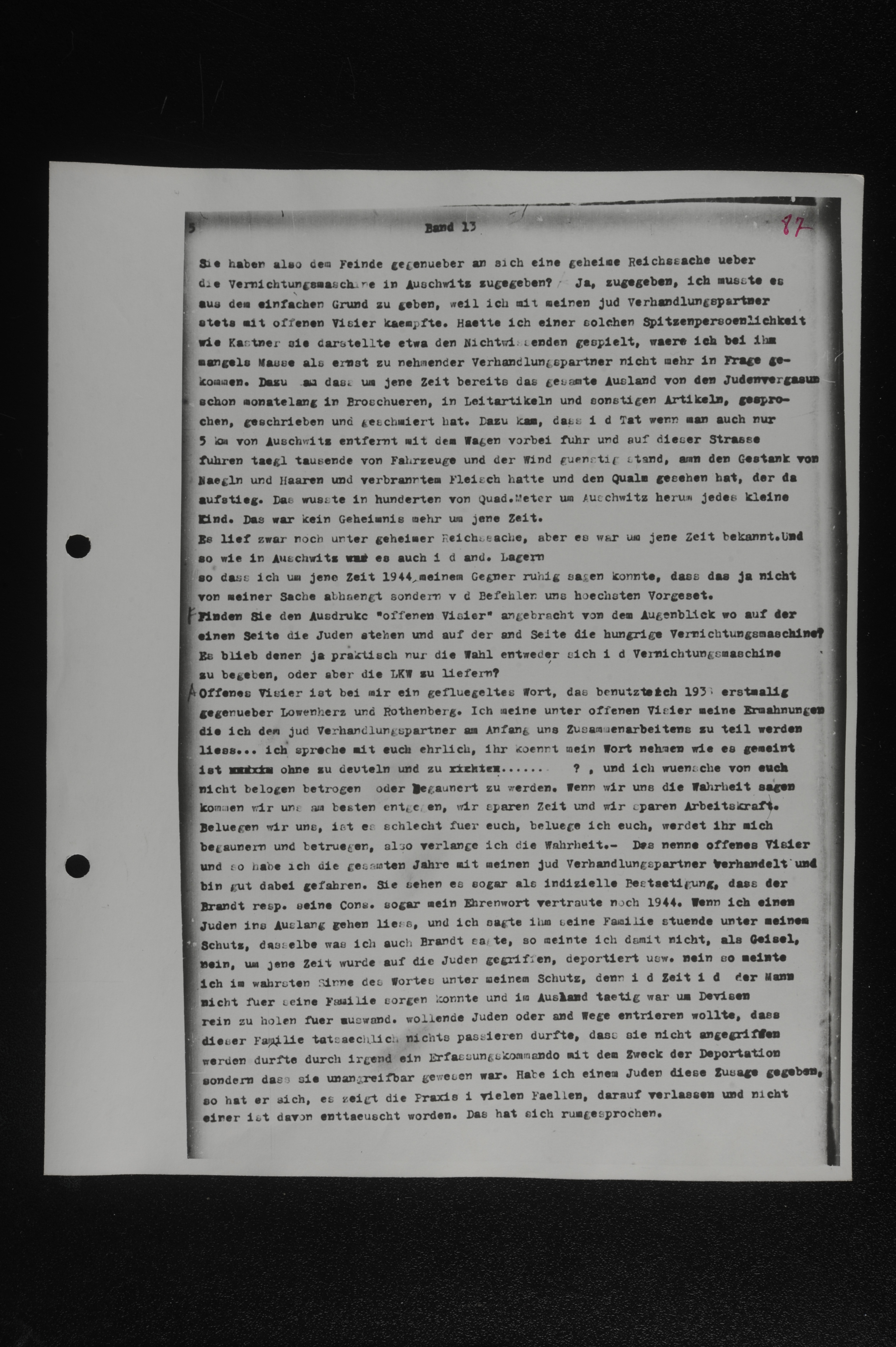
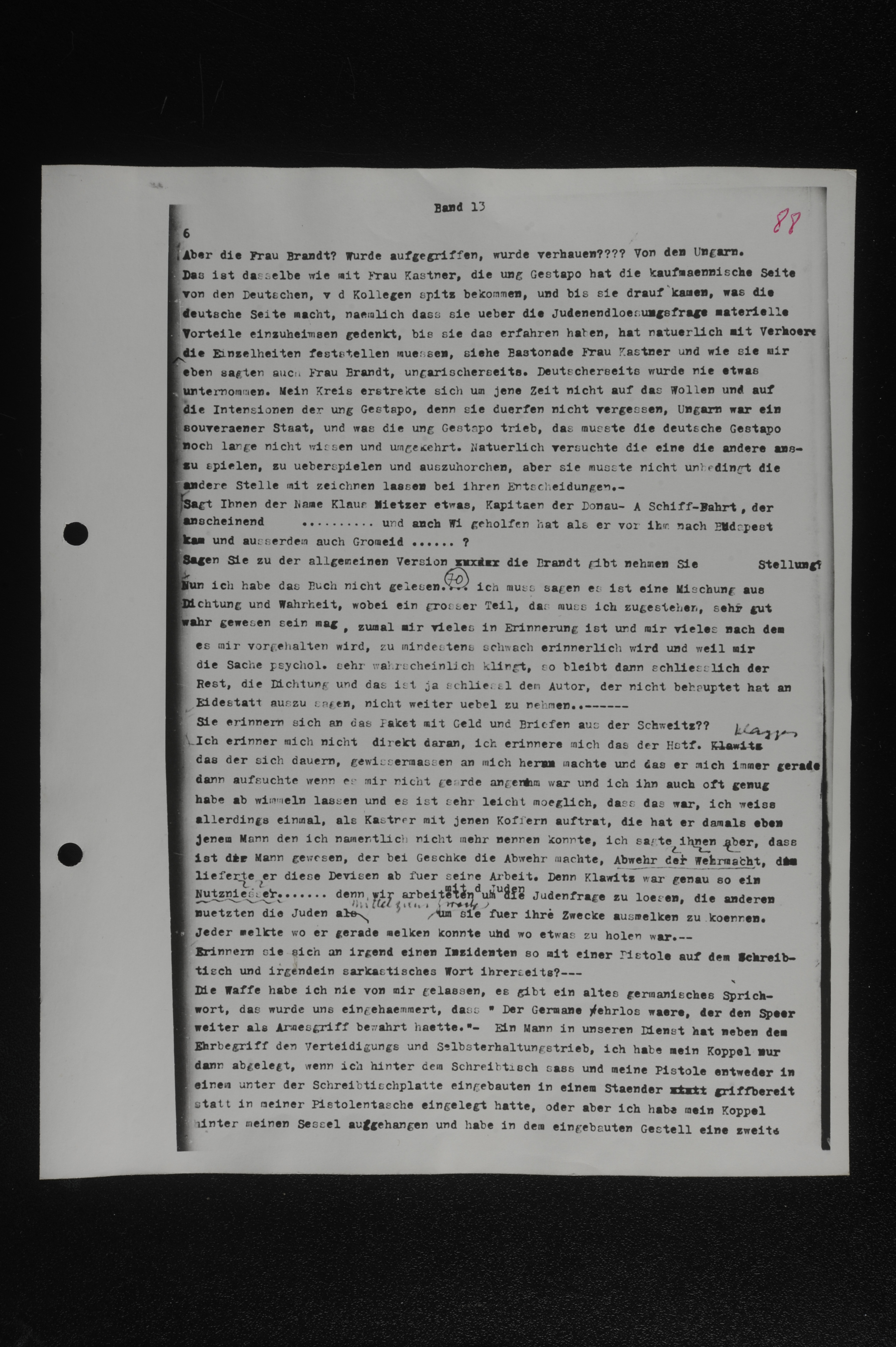
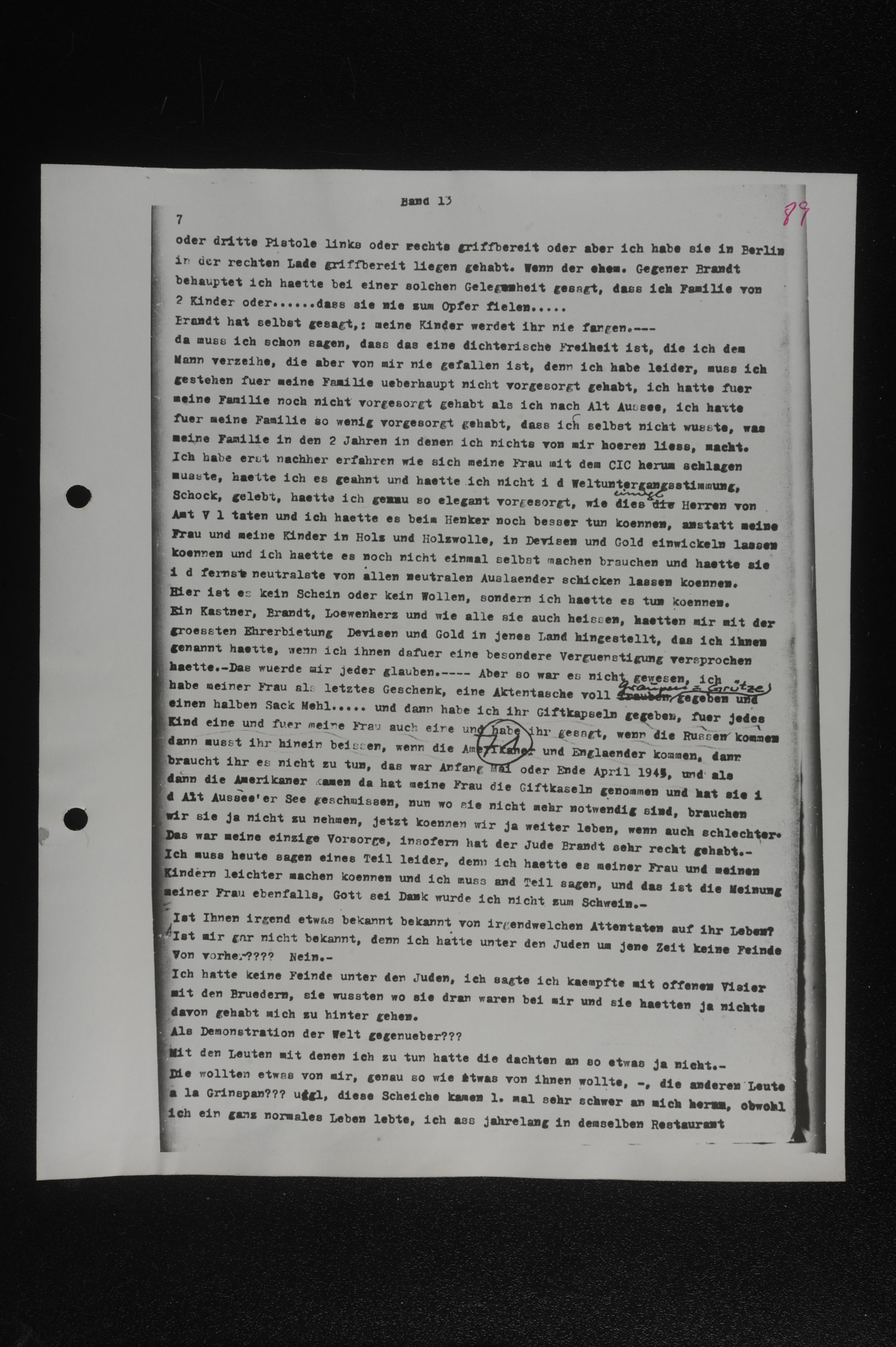
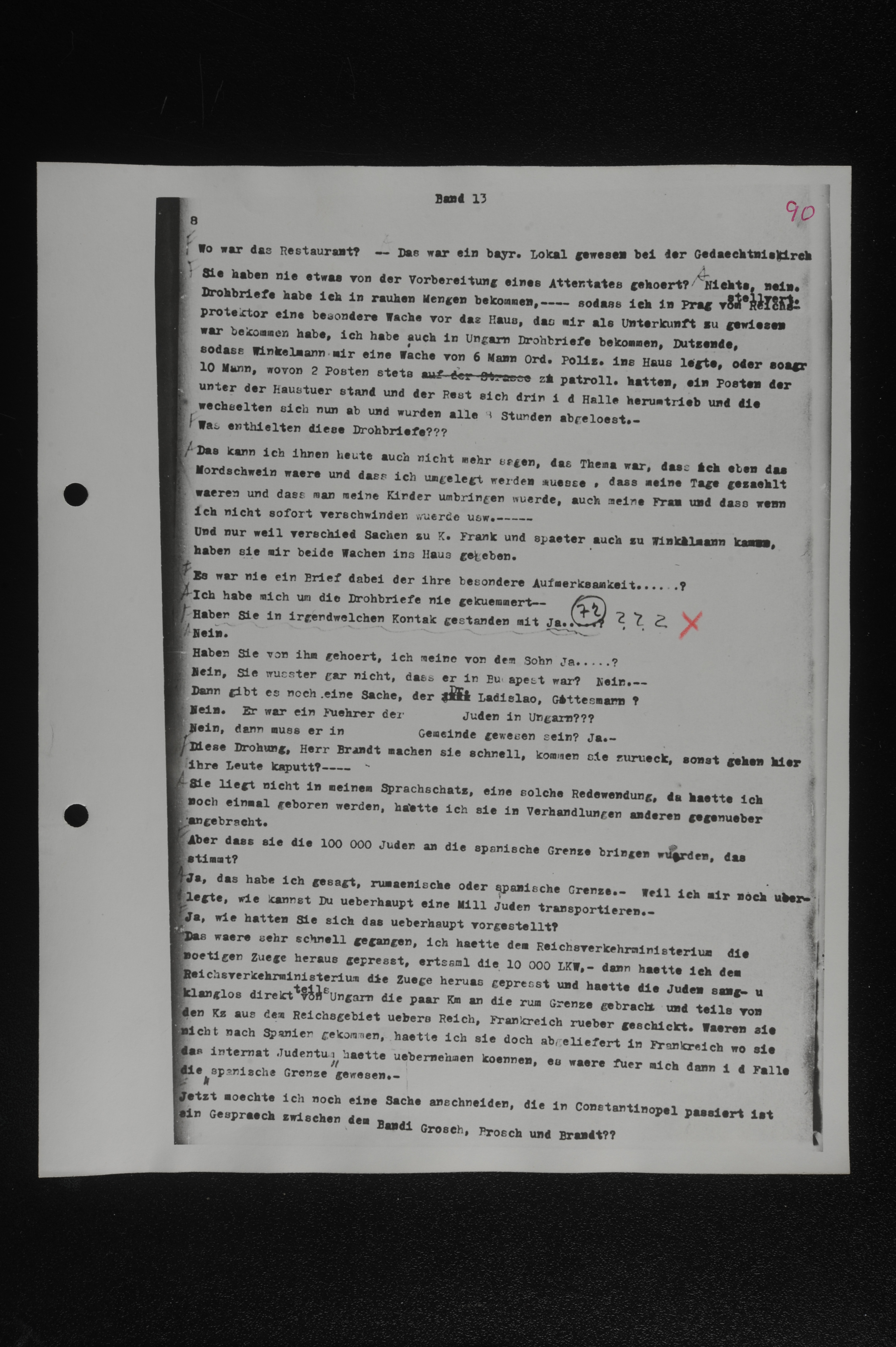
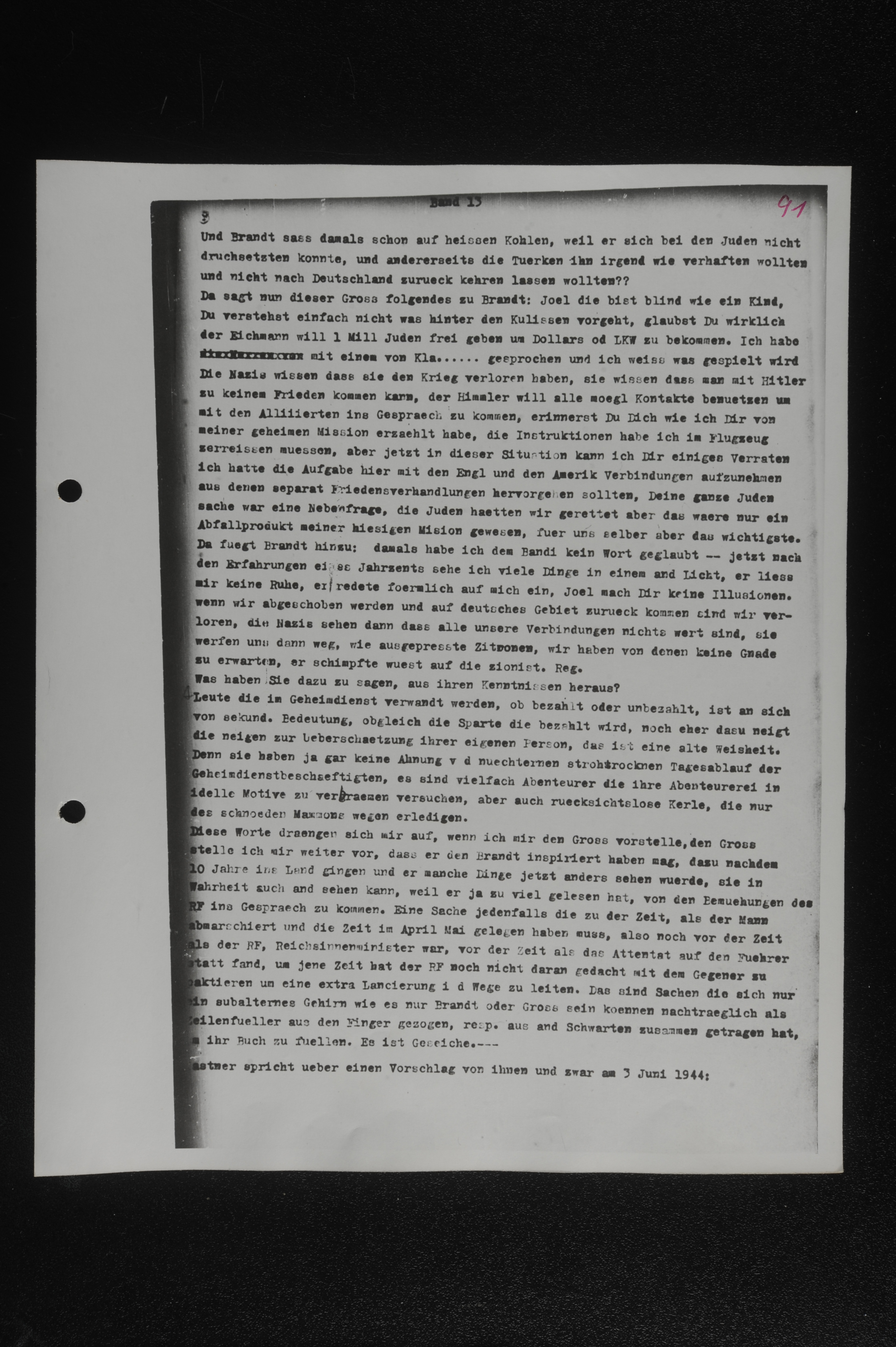
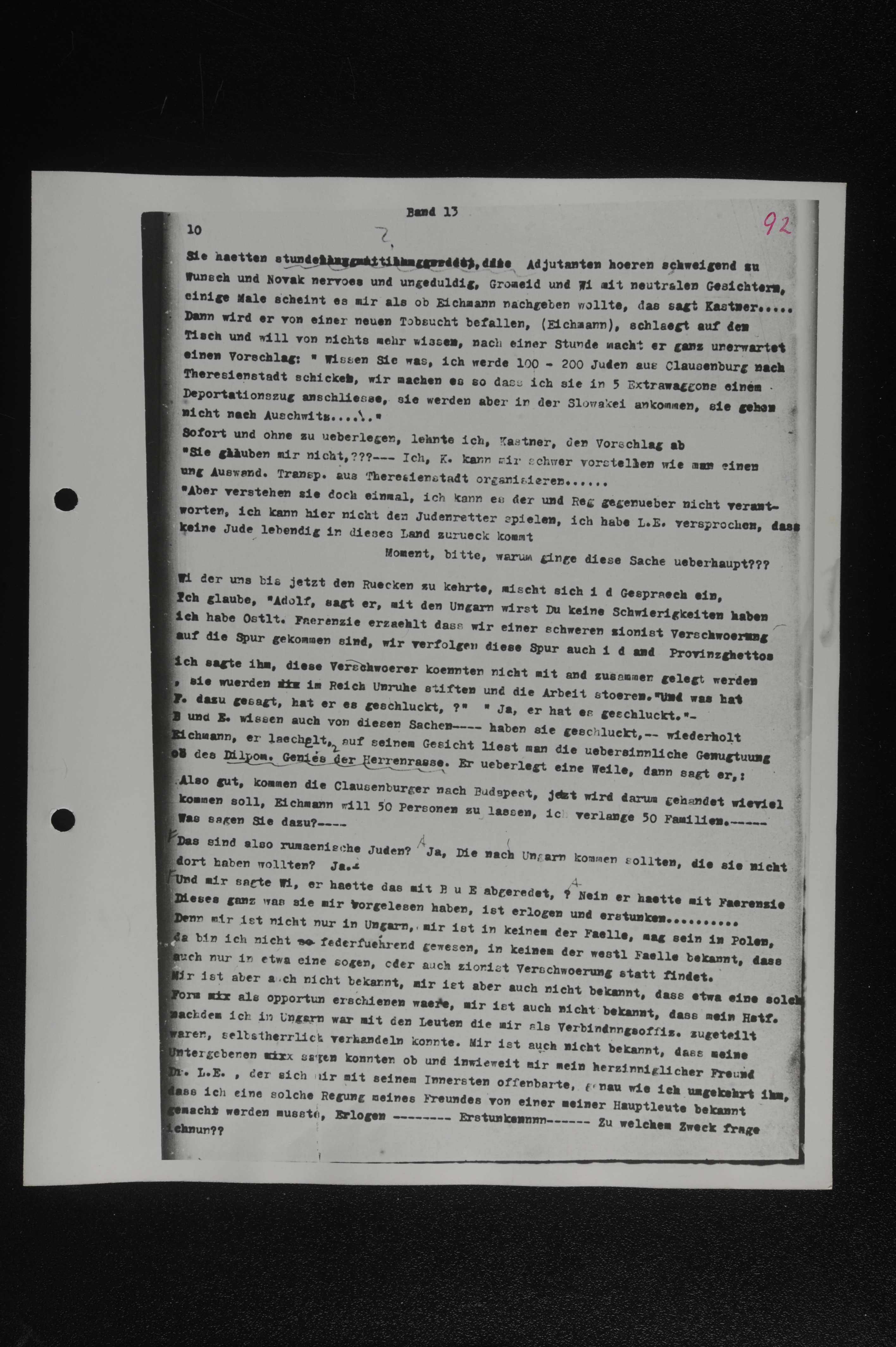
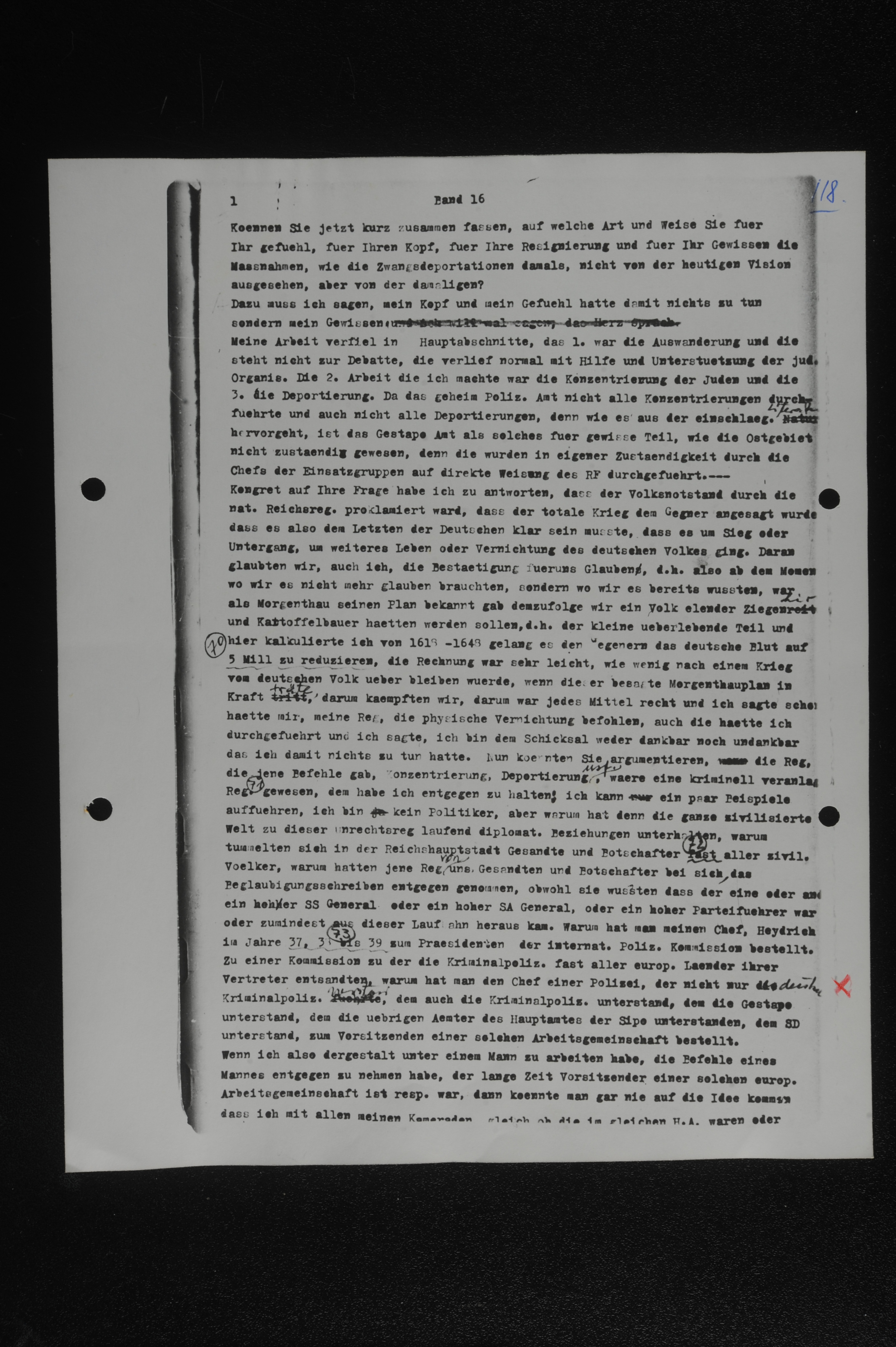
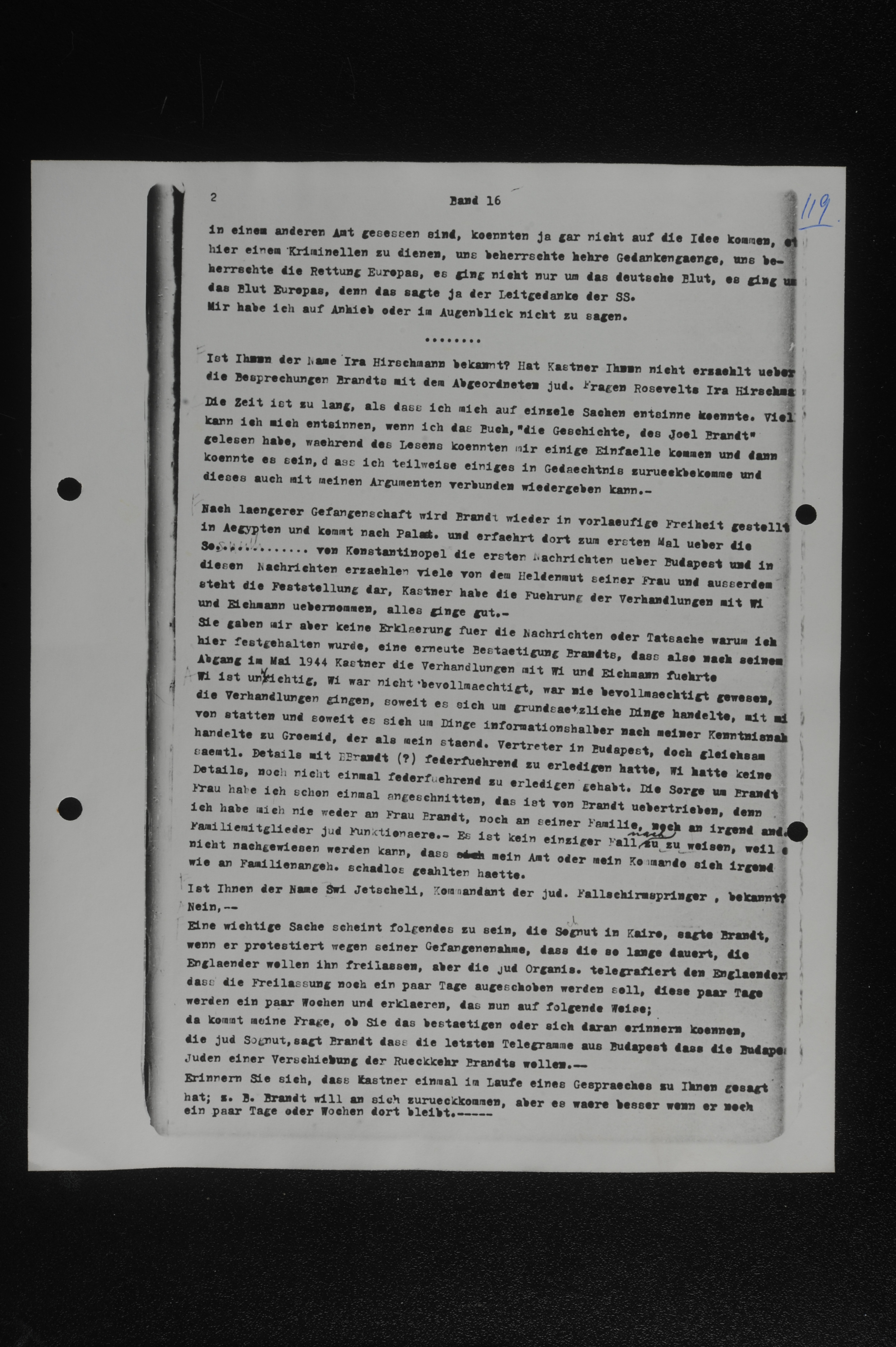
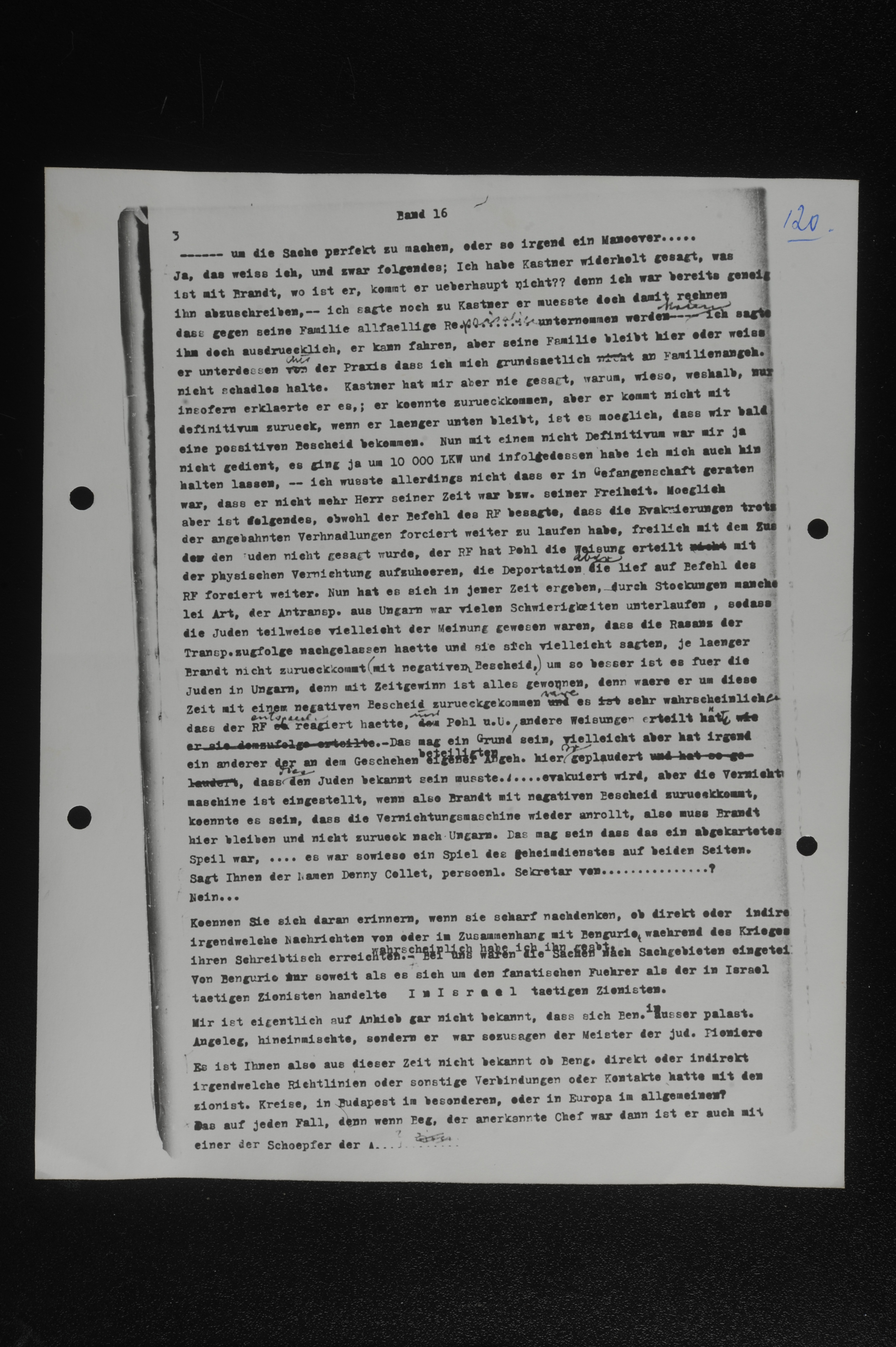
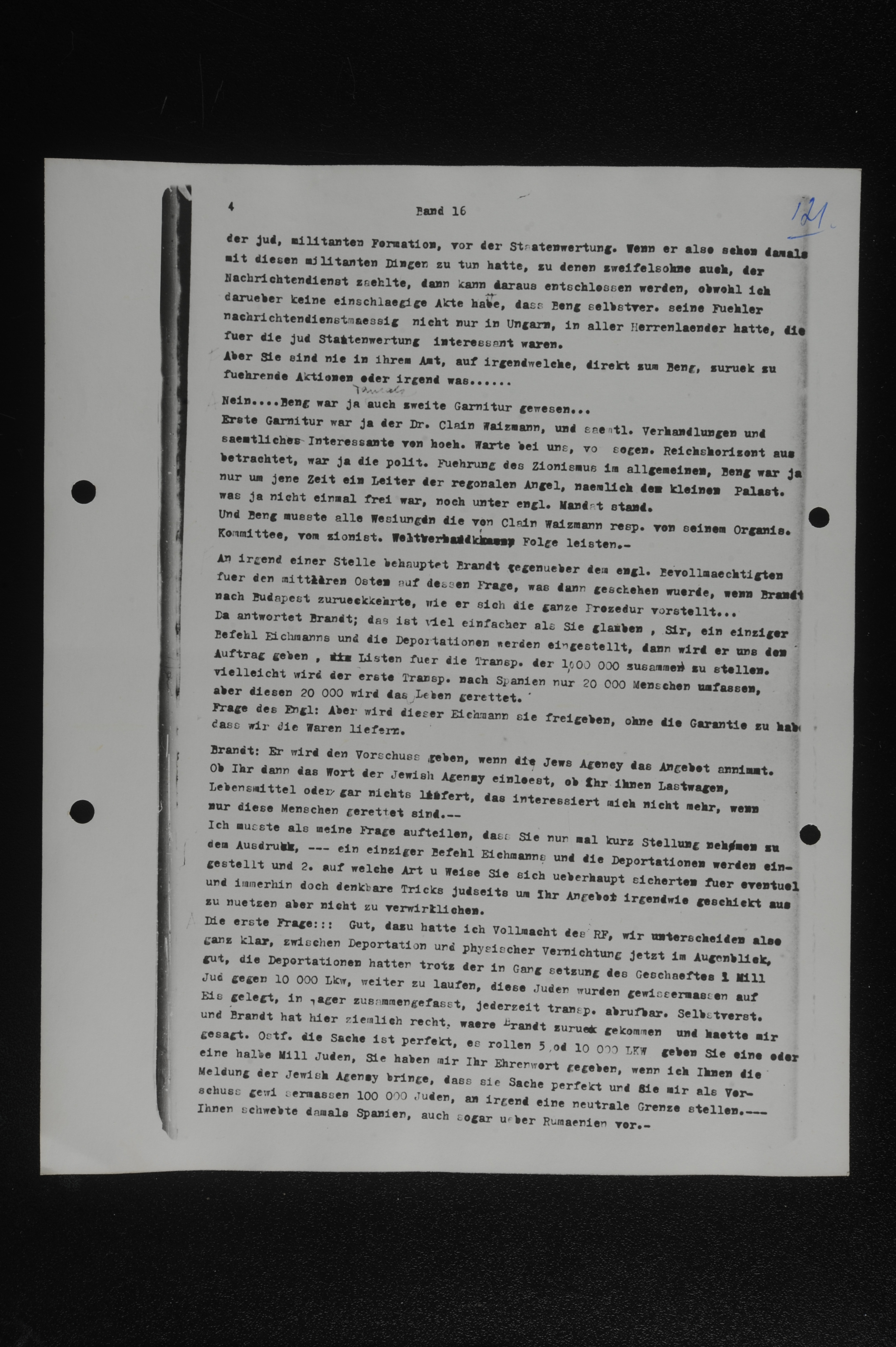
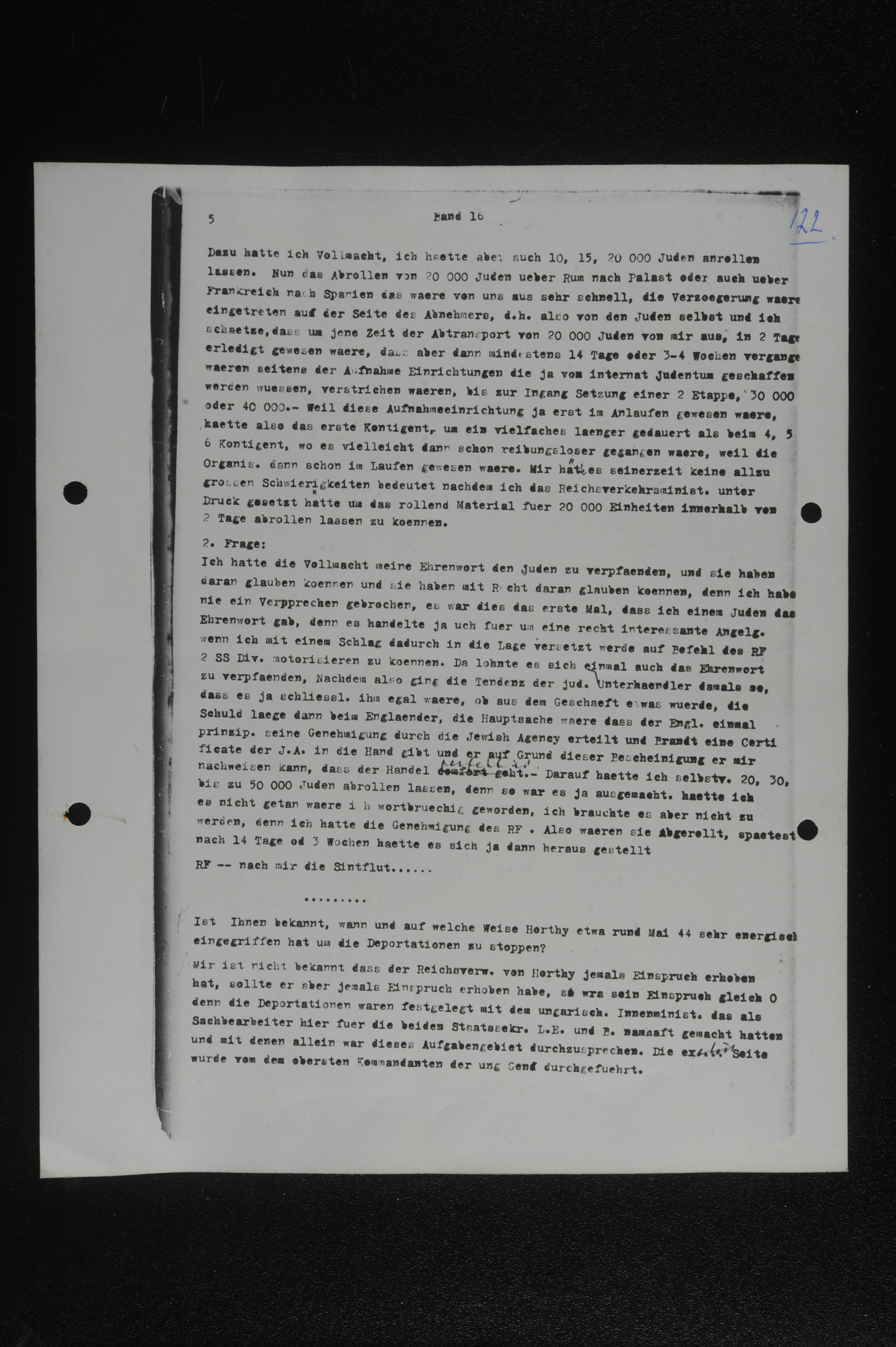
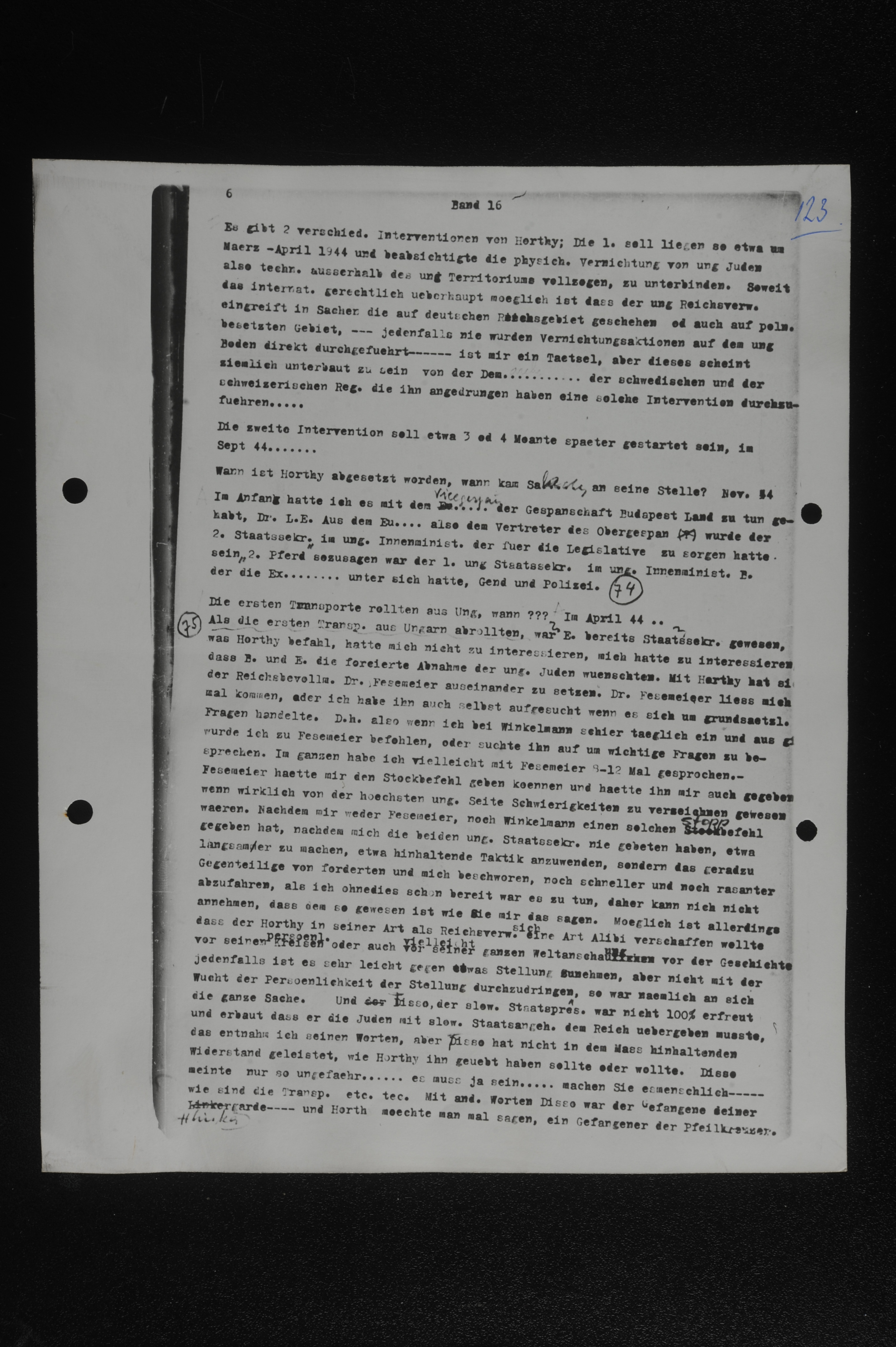
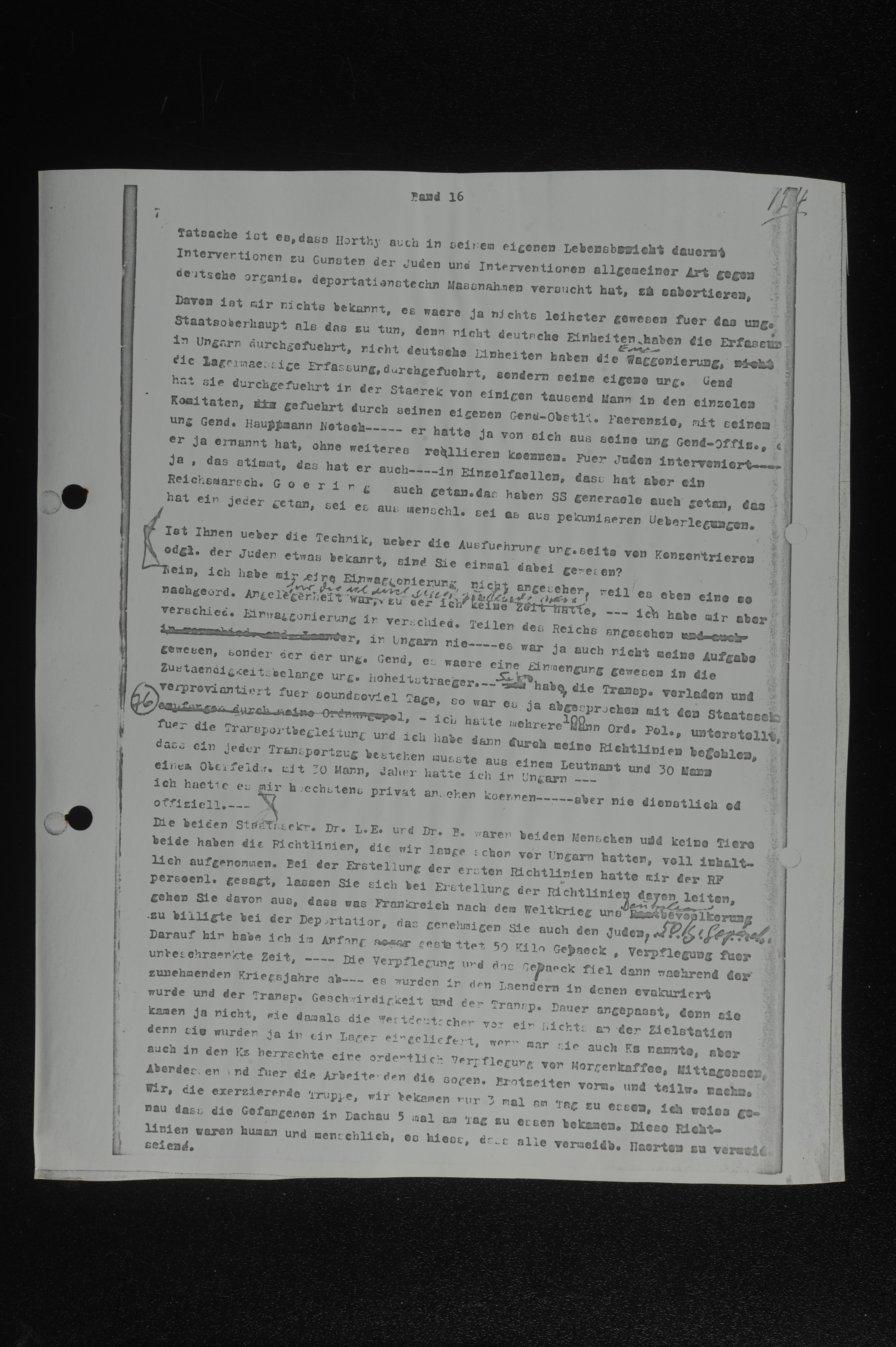
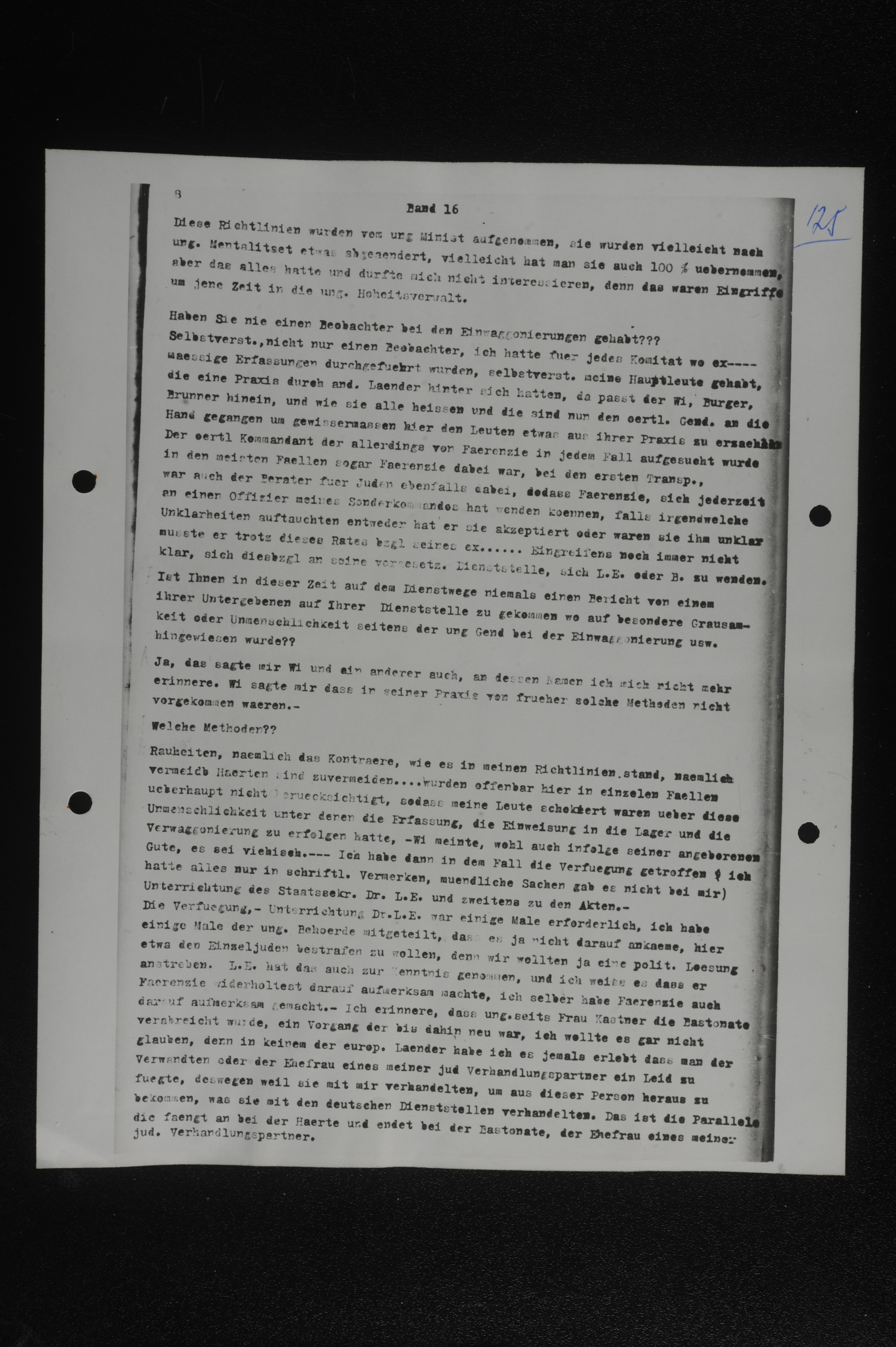
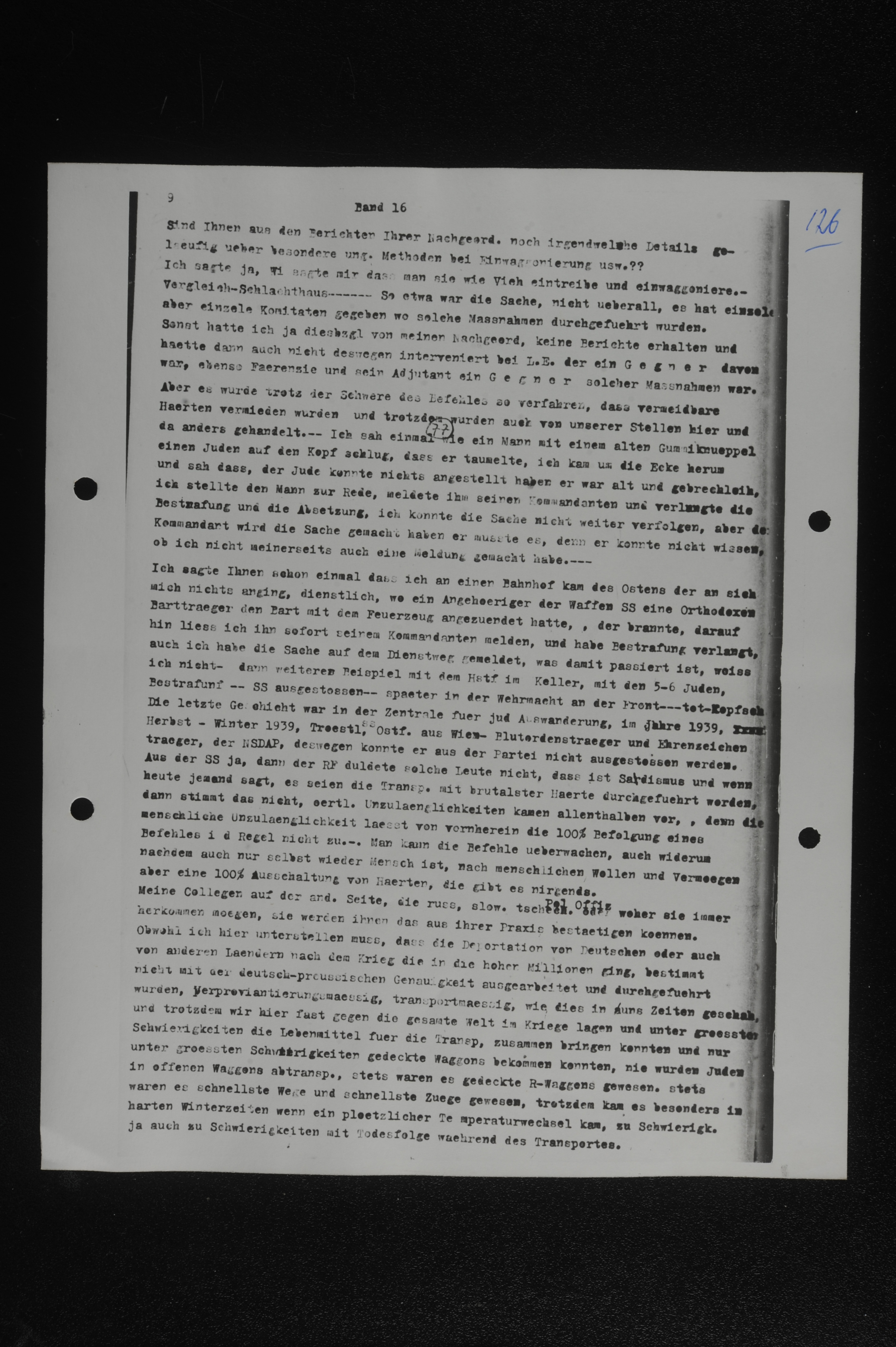
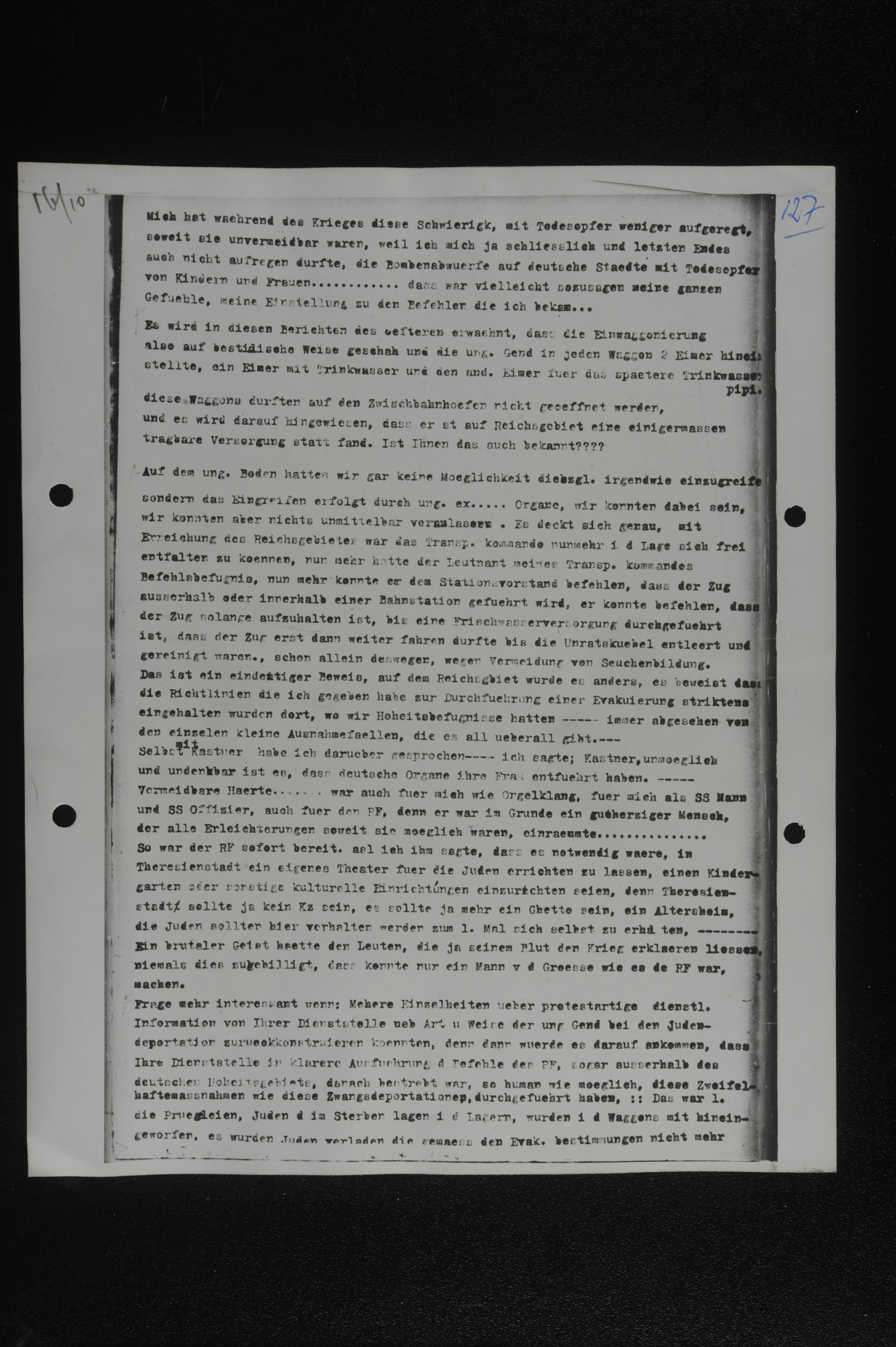
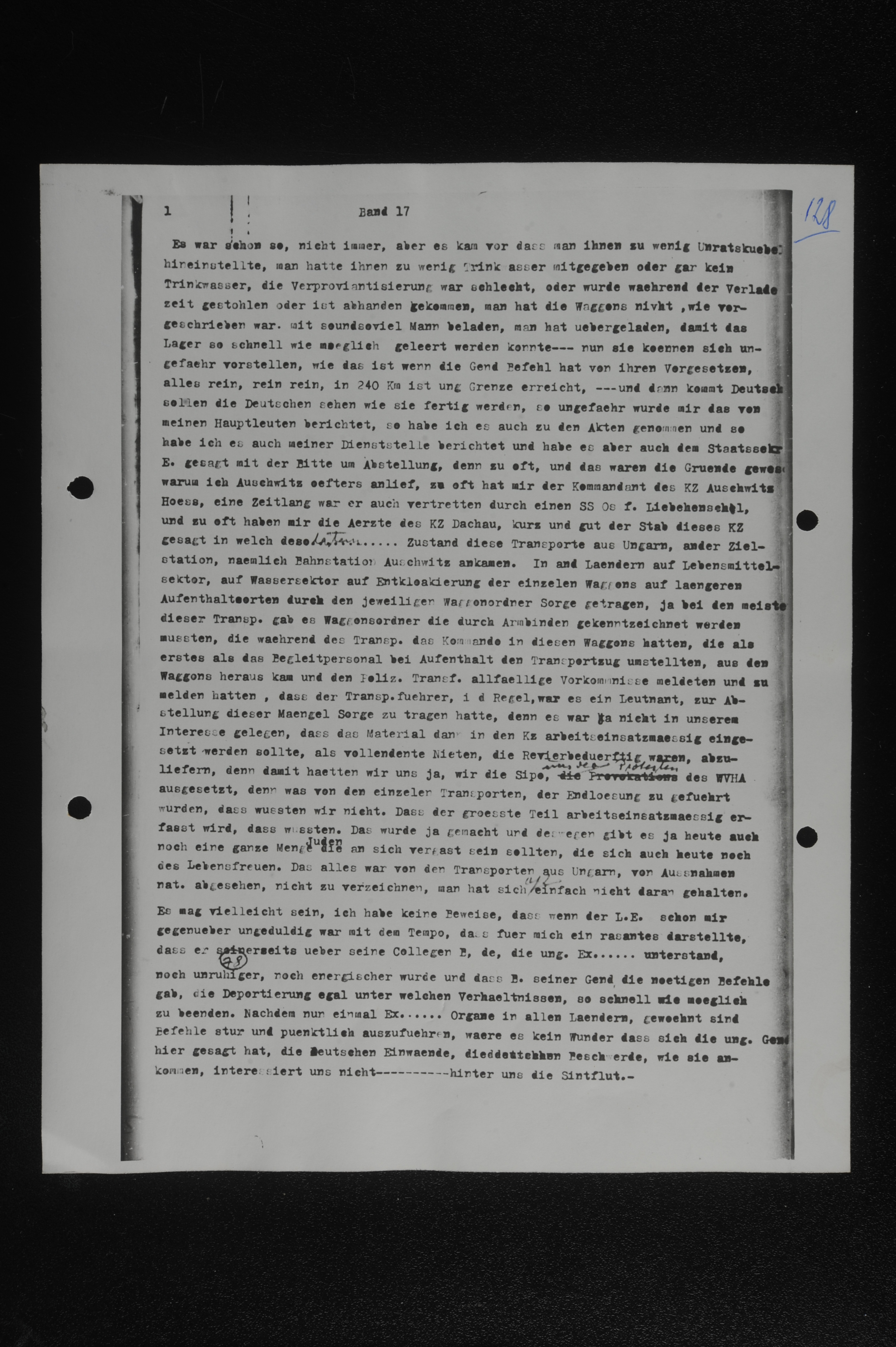
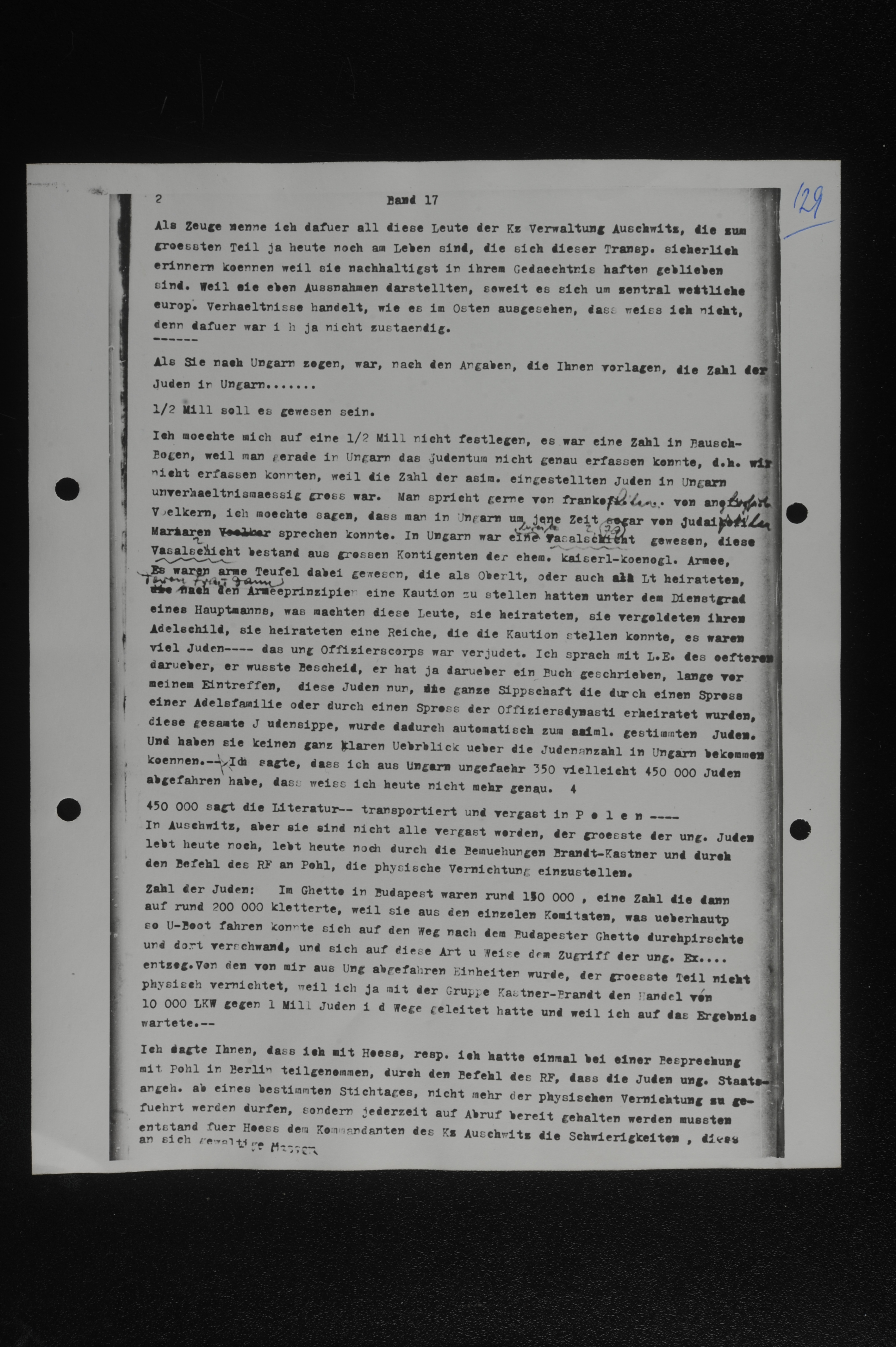
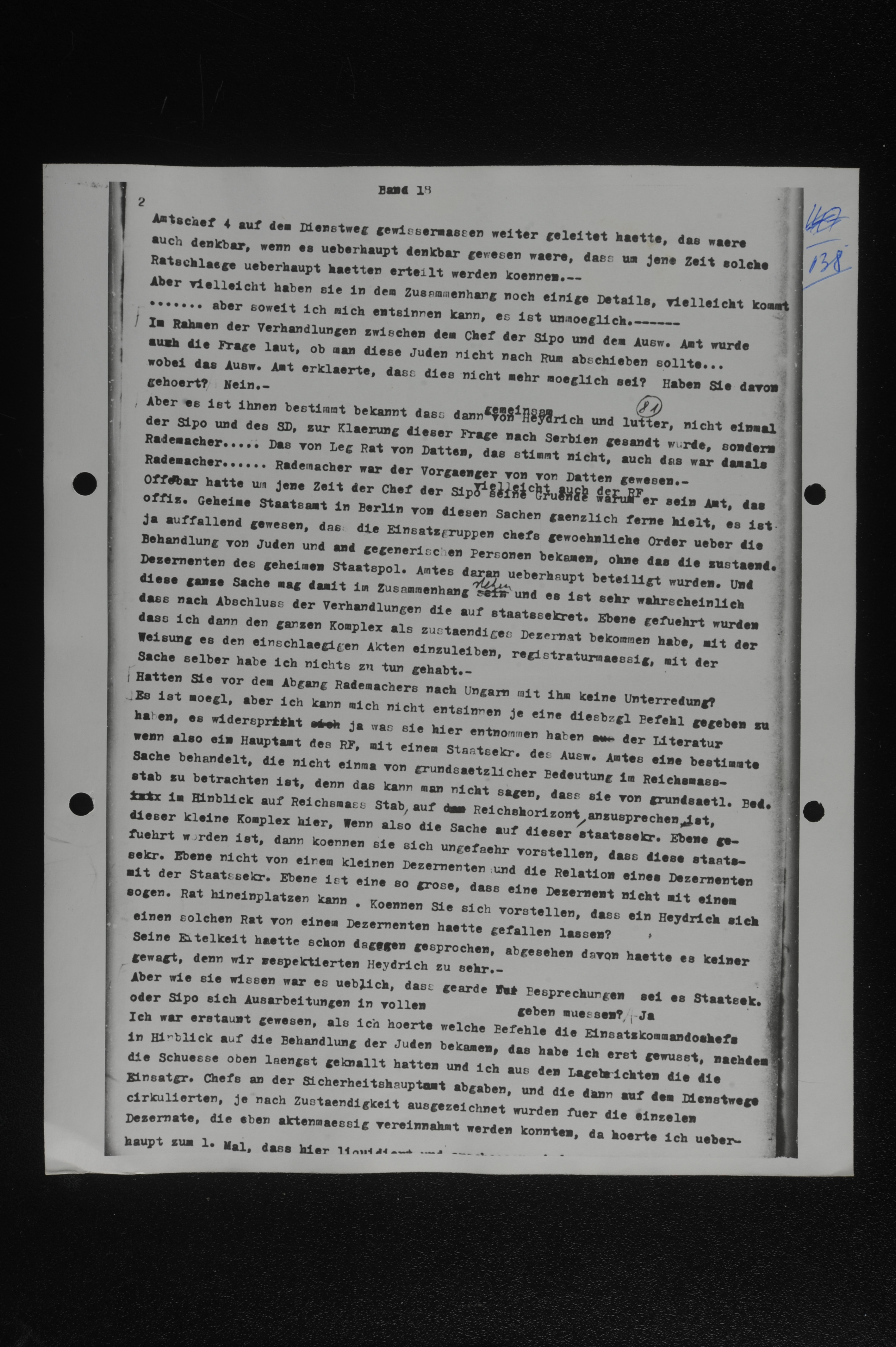
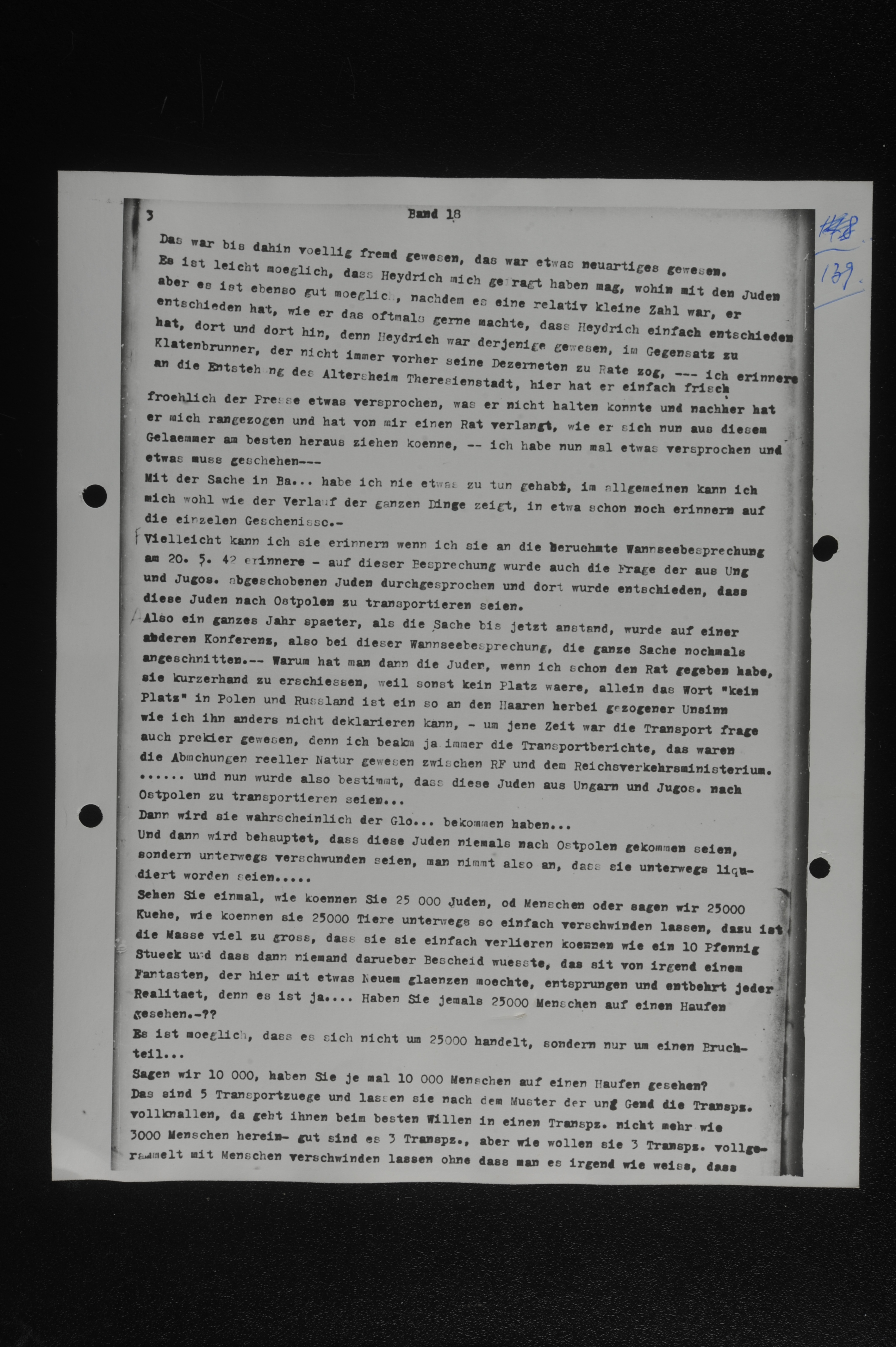
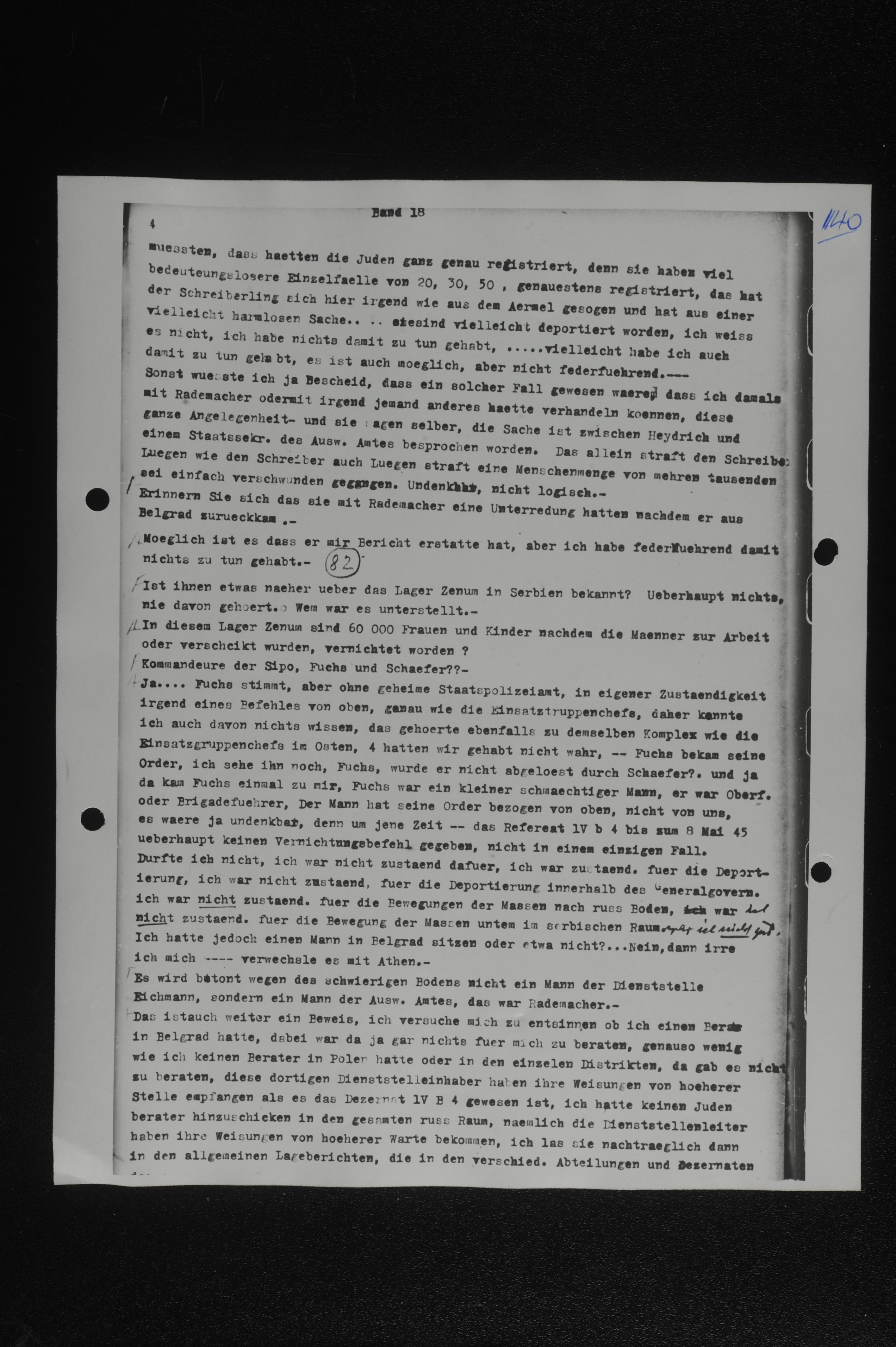
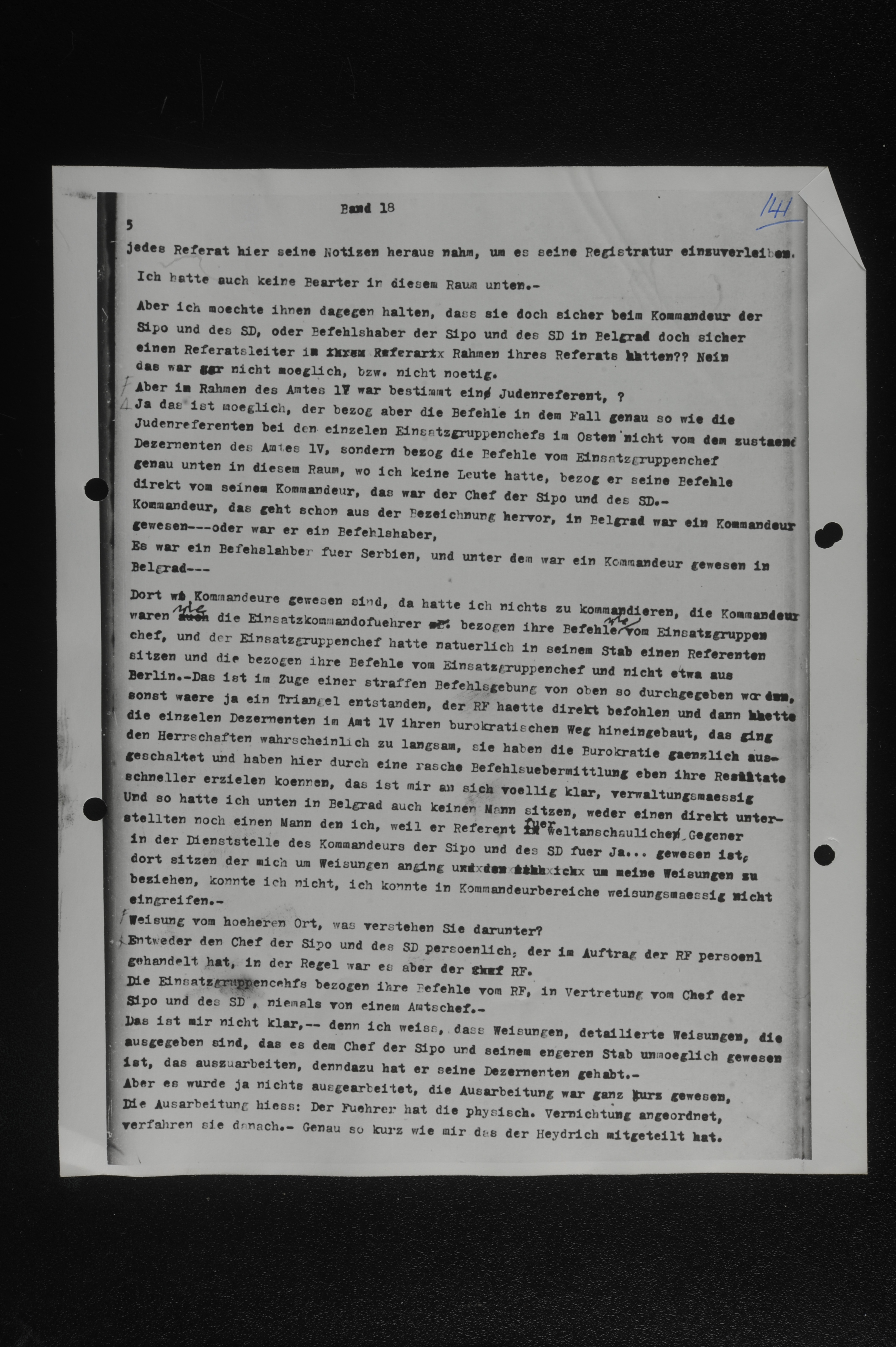
German transcription
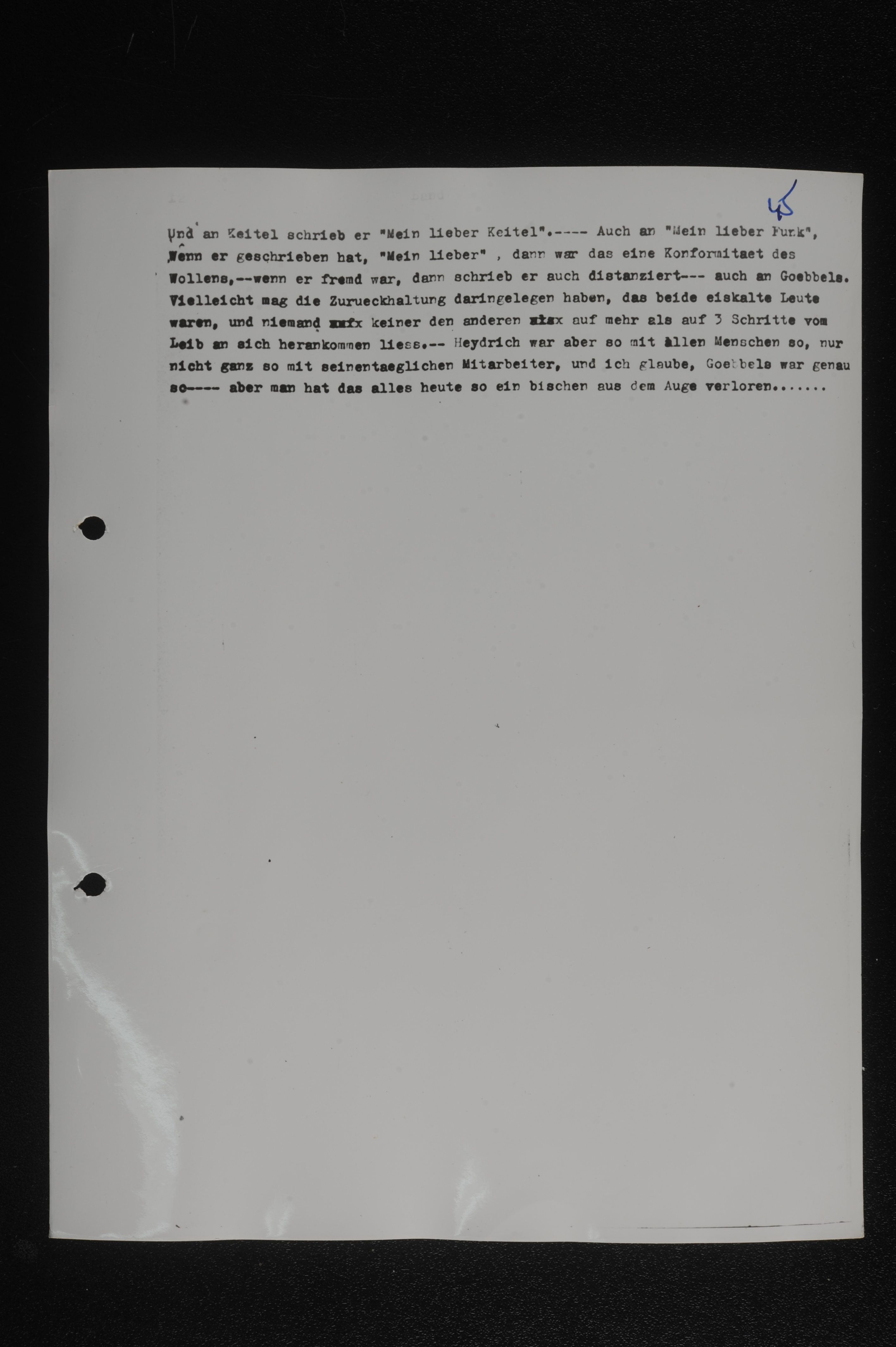
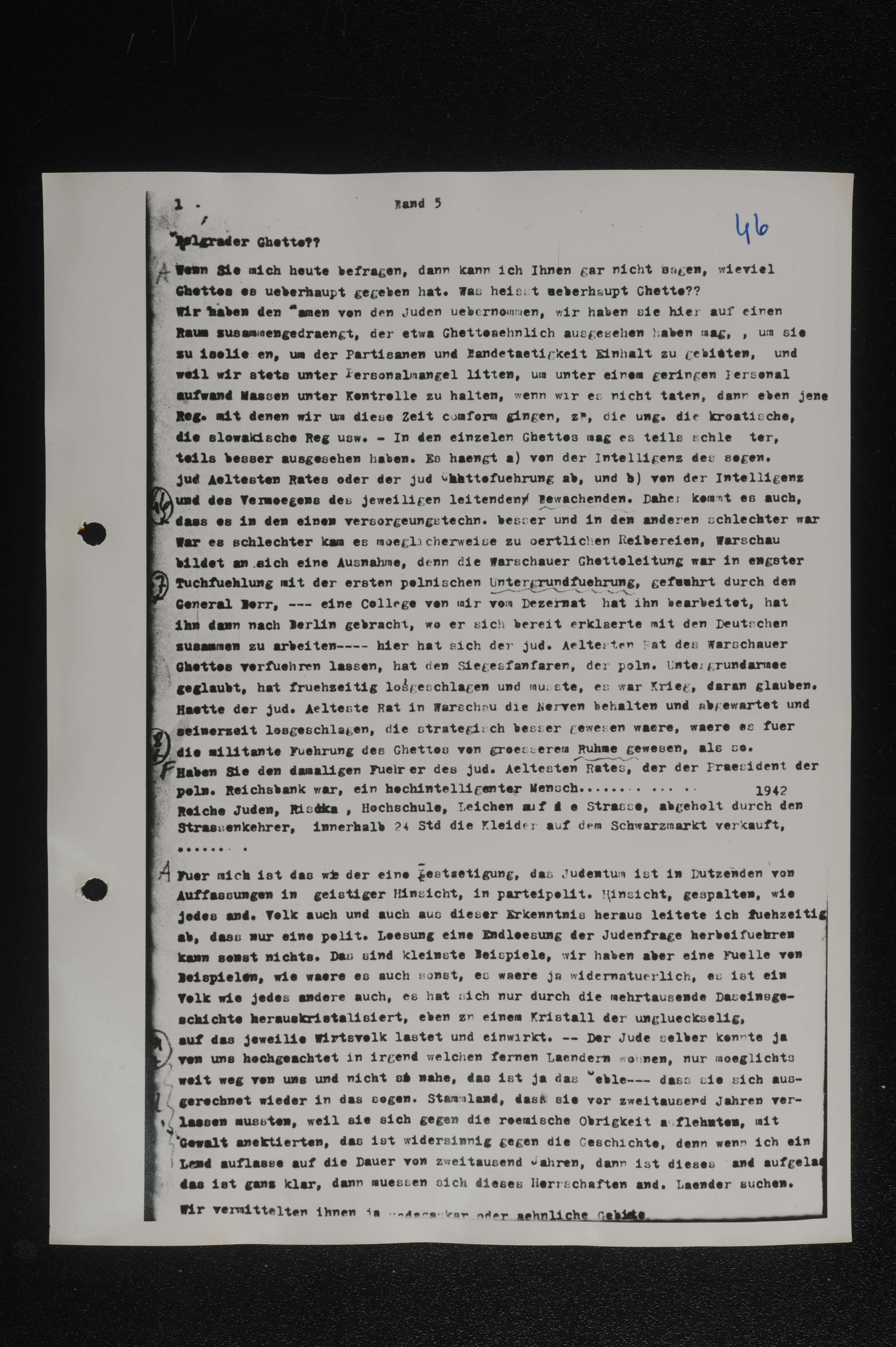
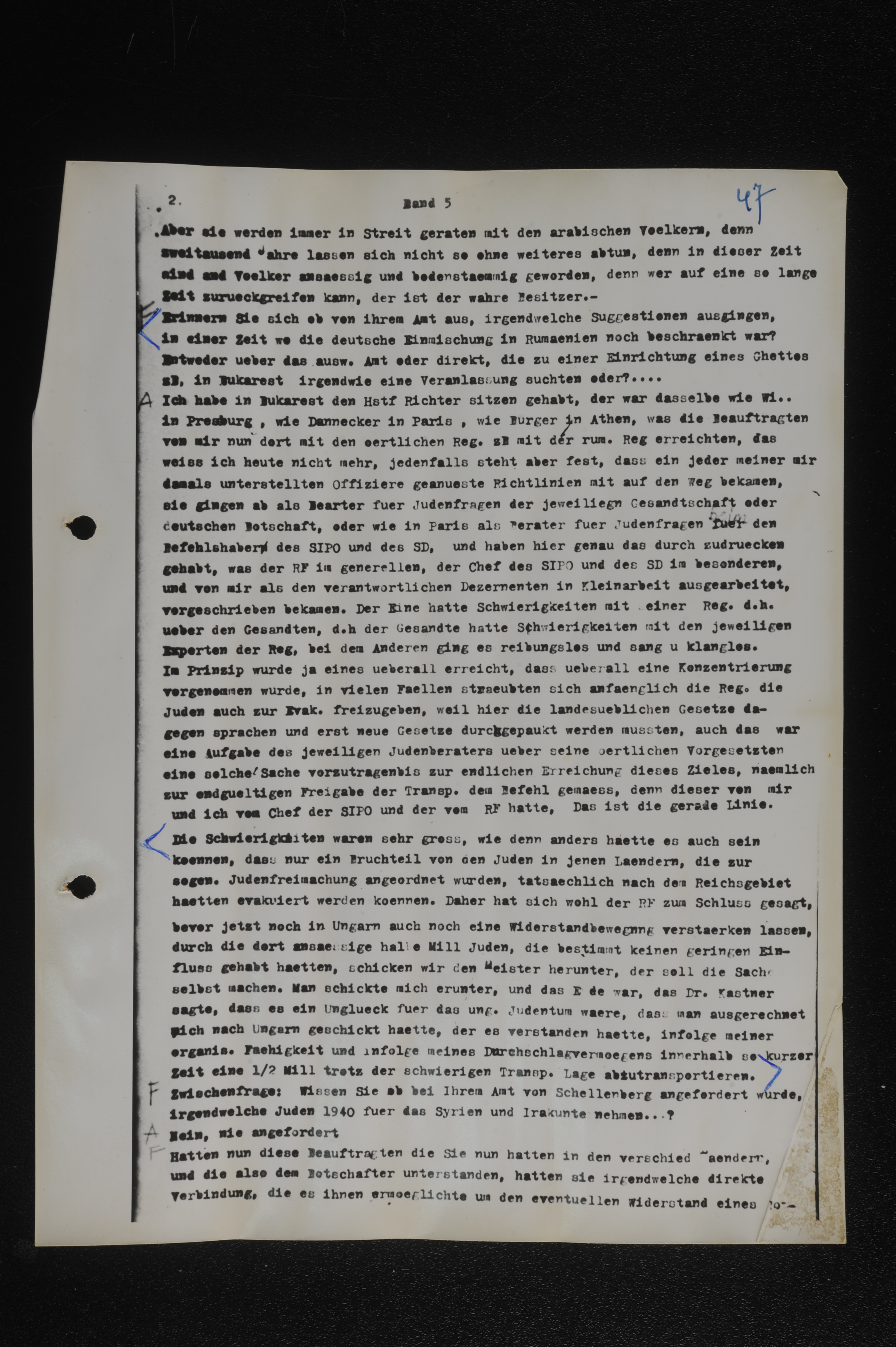
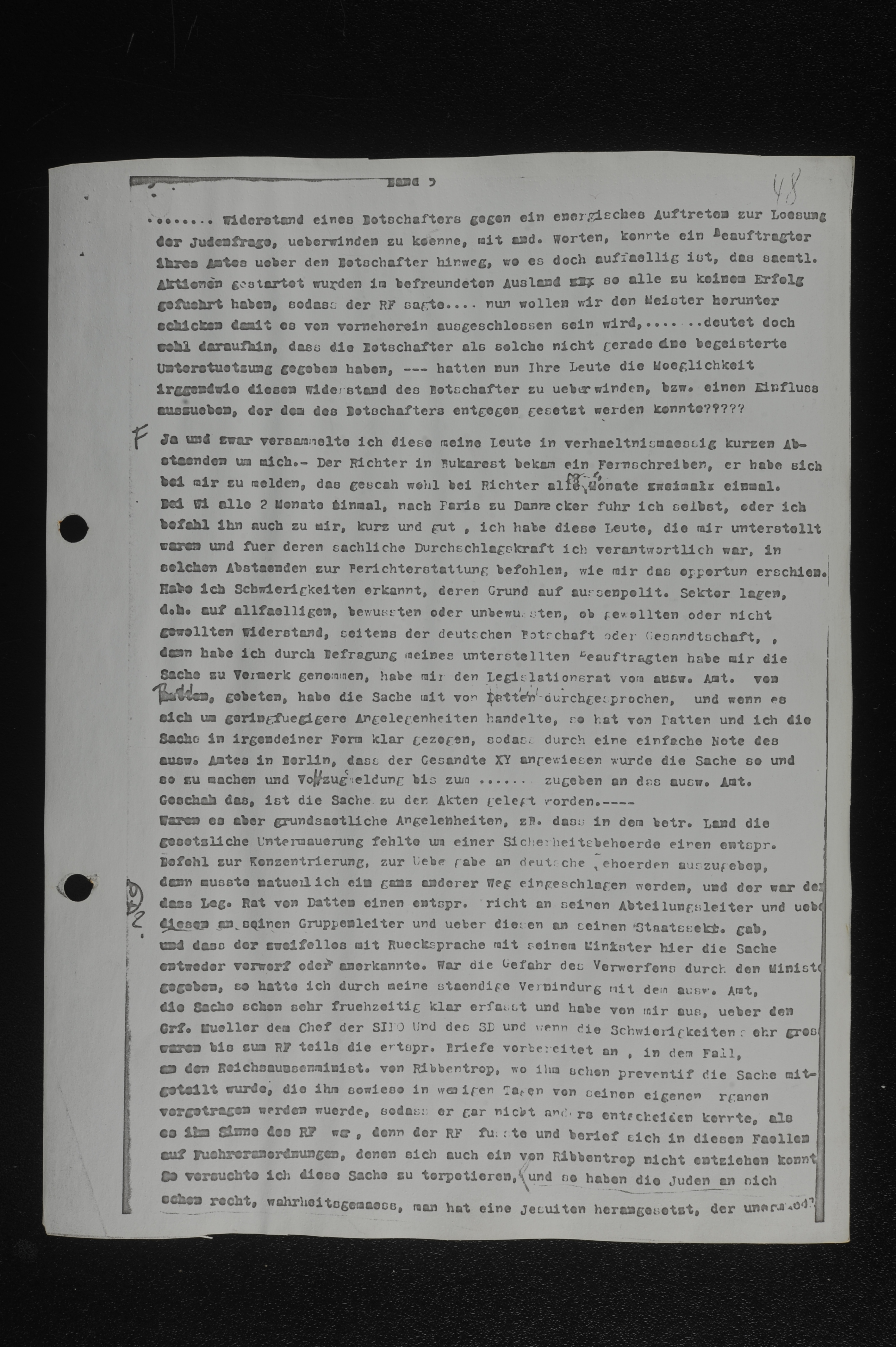
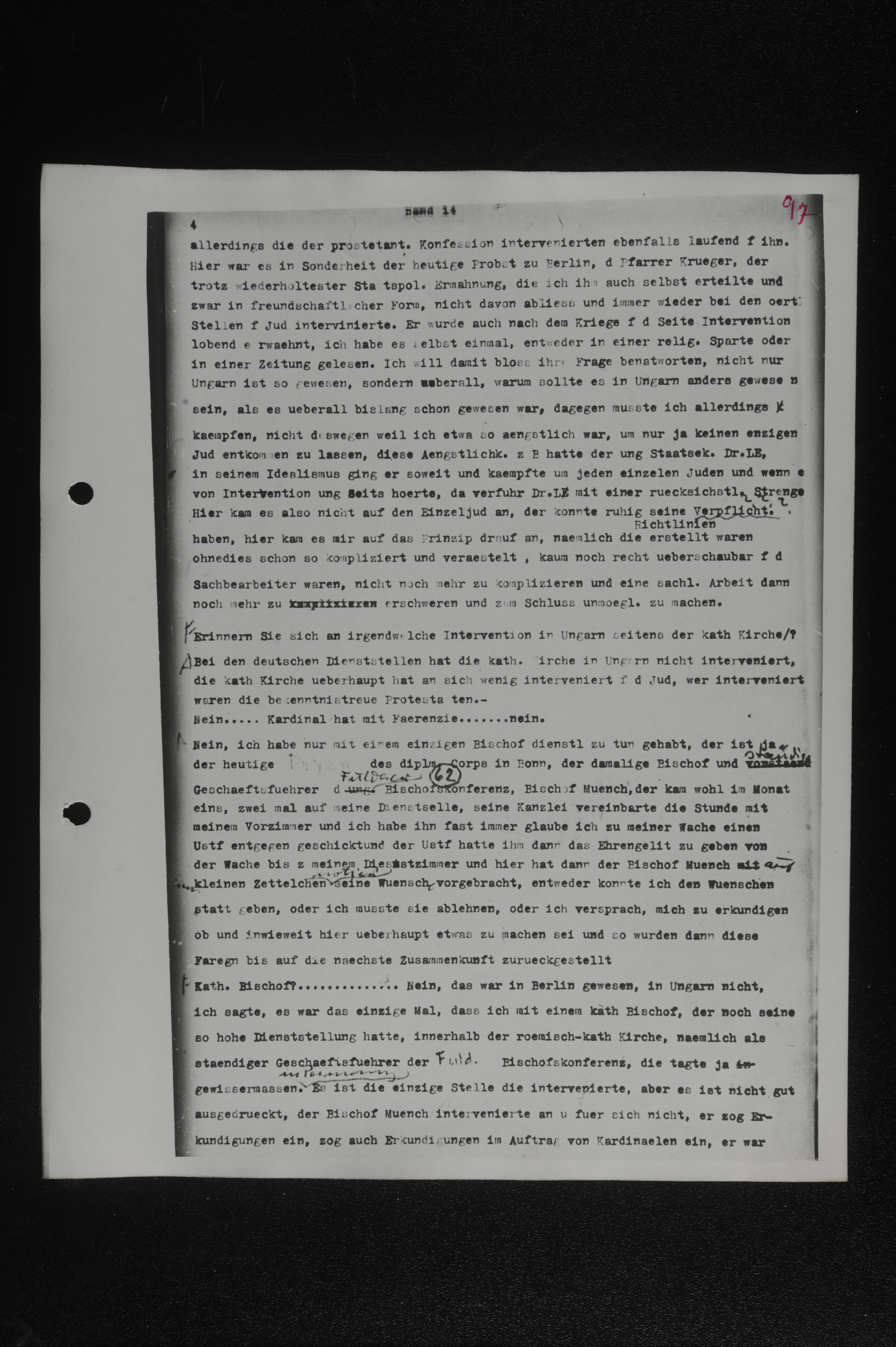
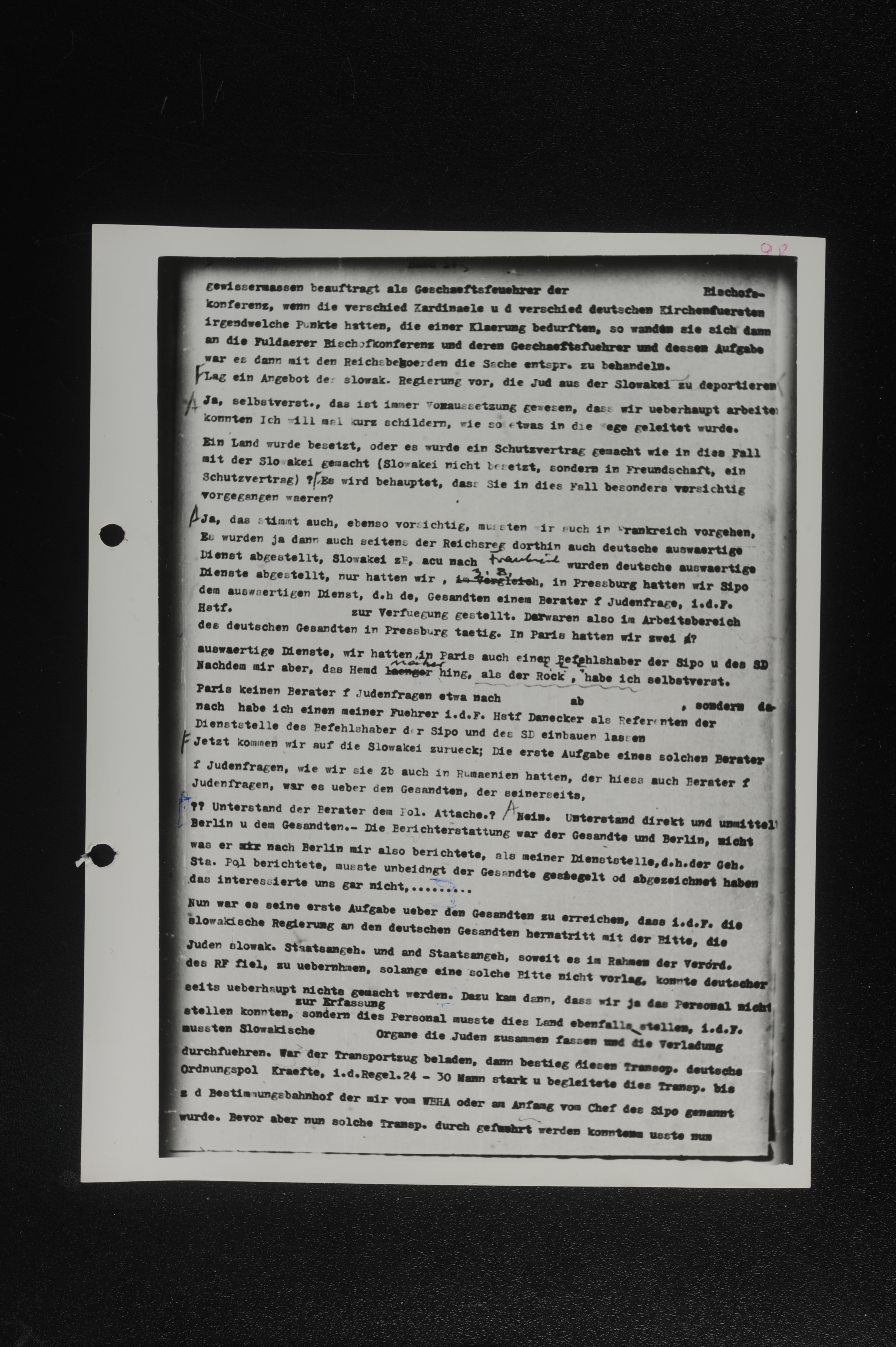
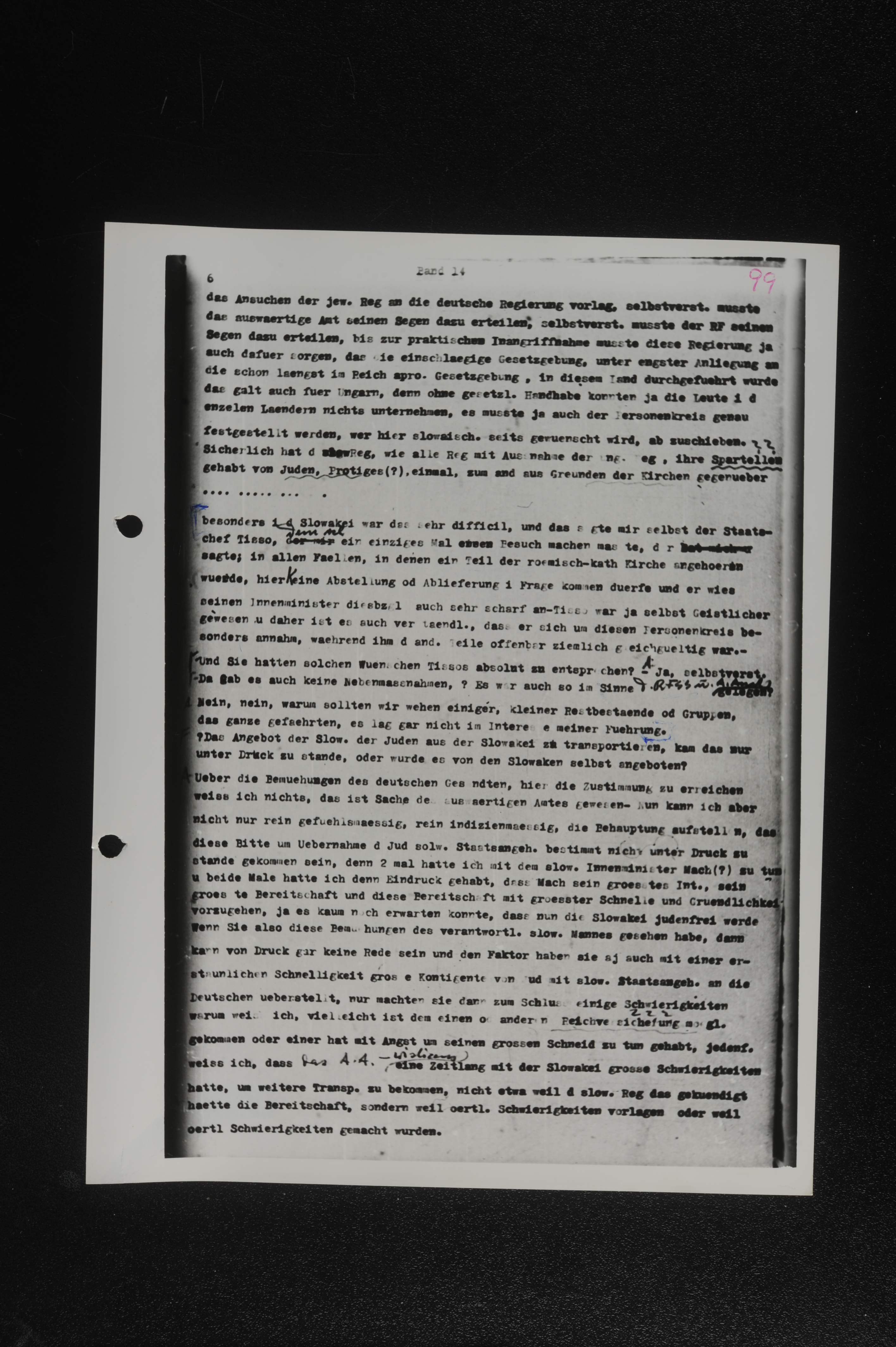
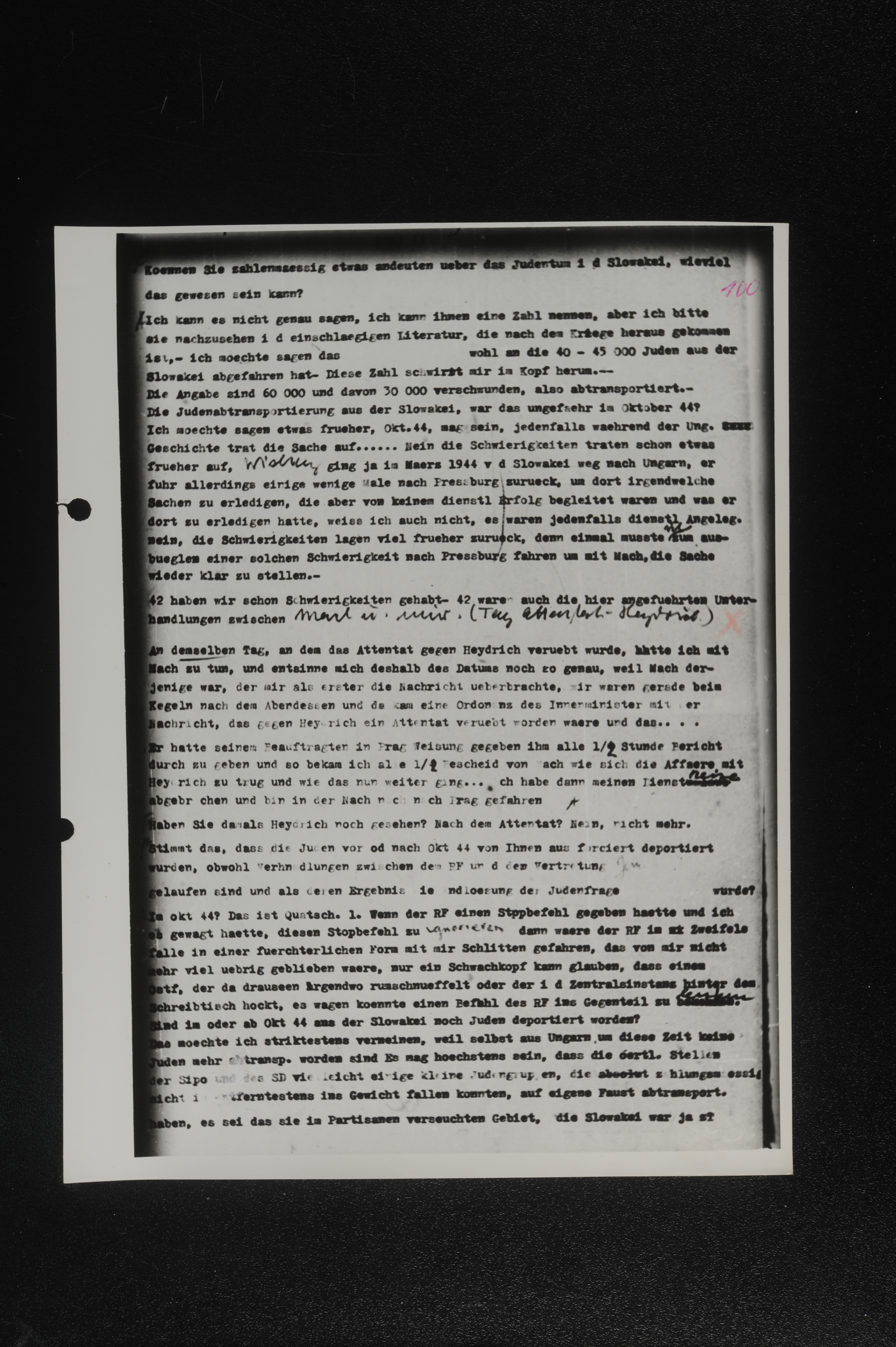
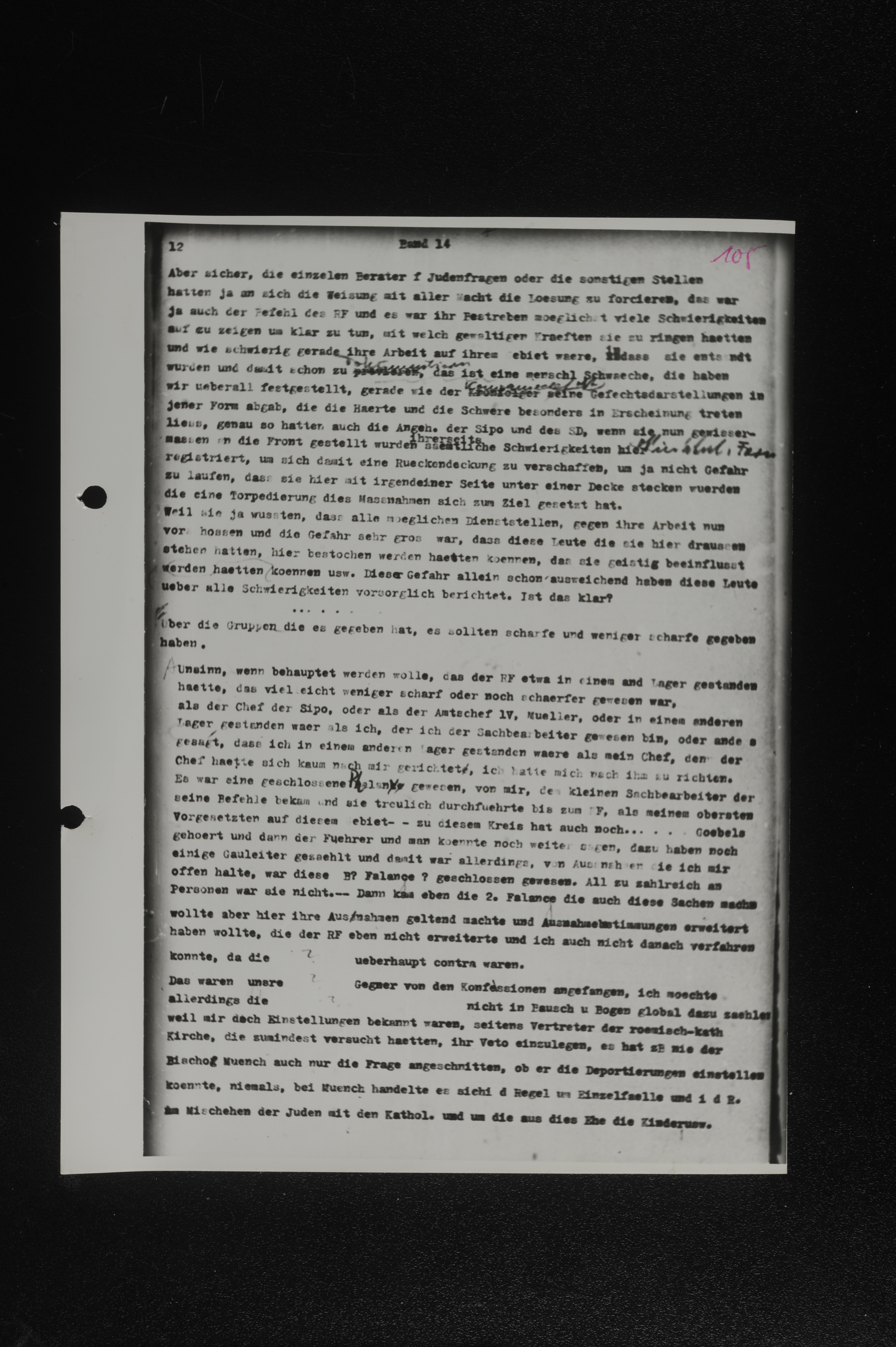
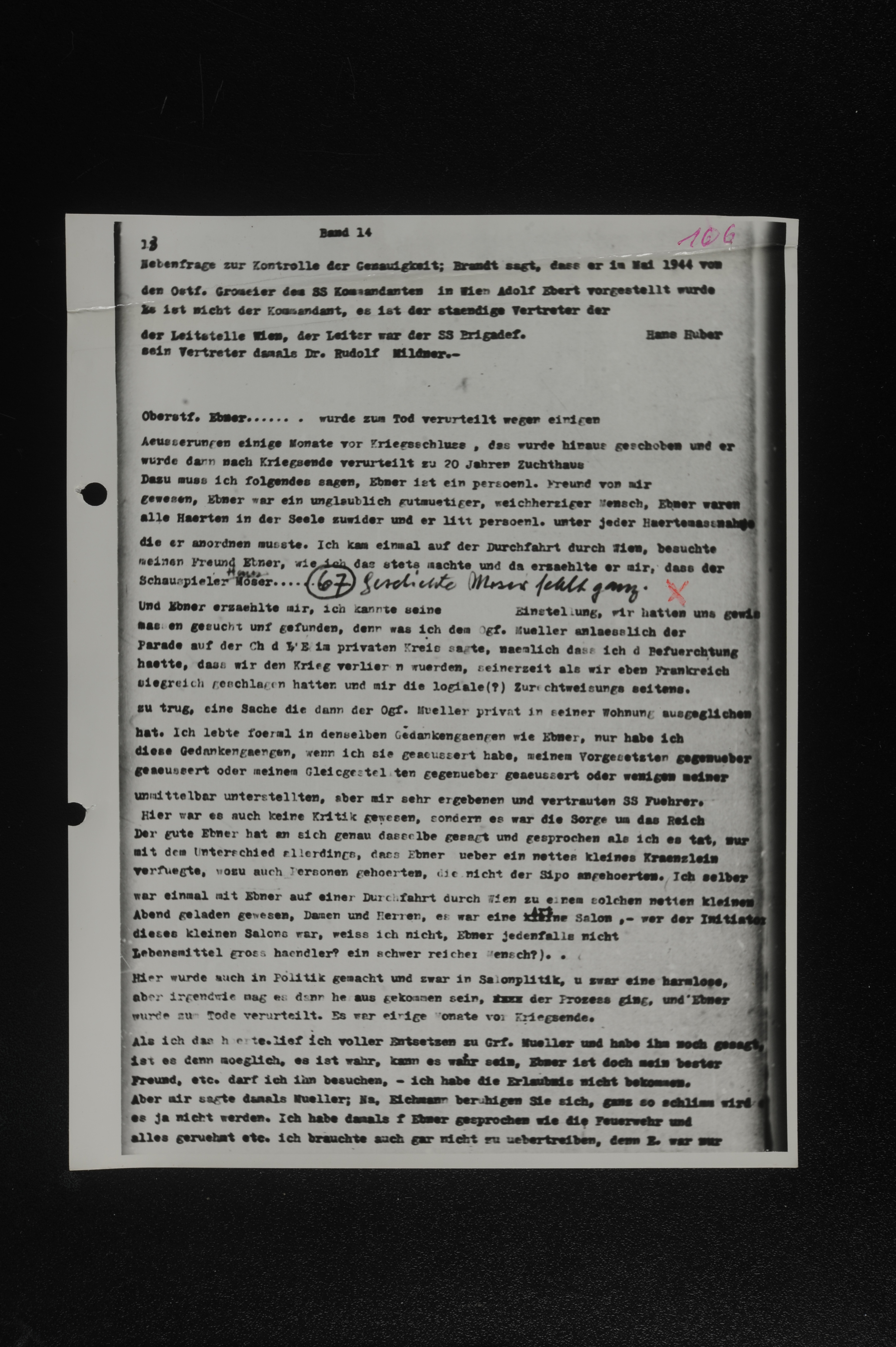
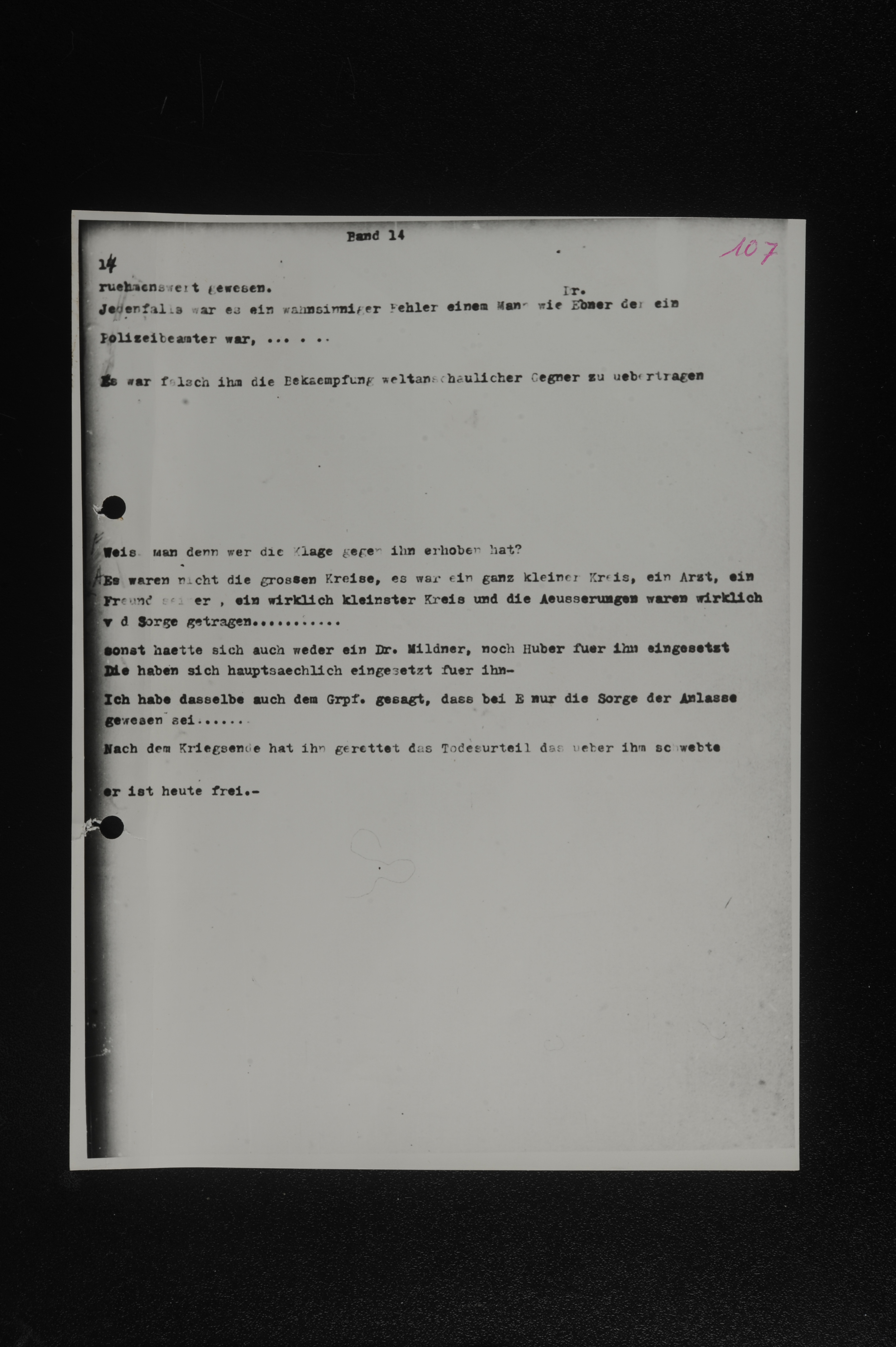
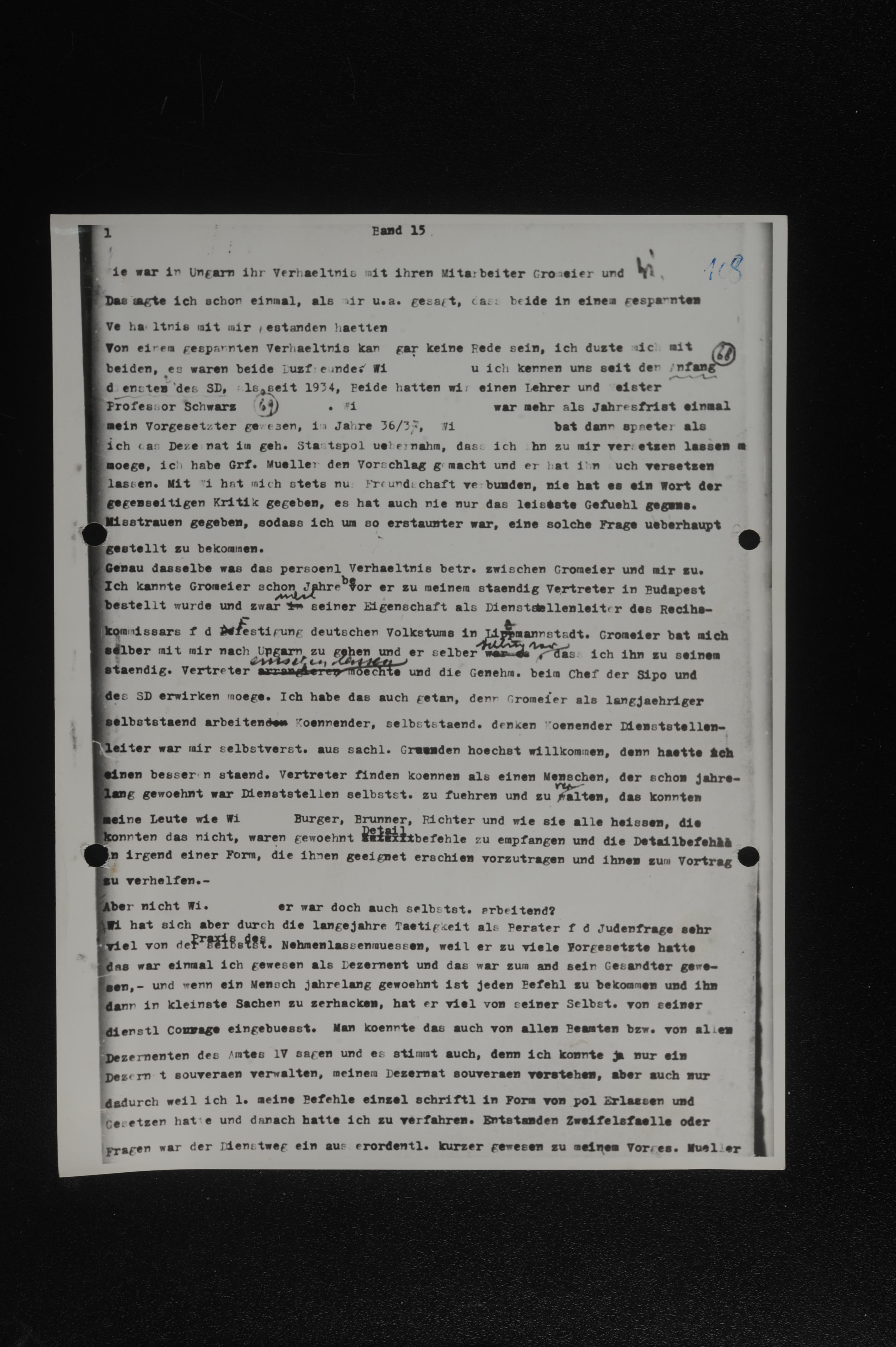
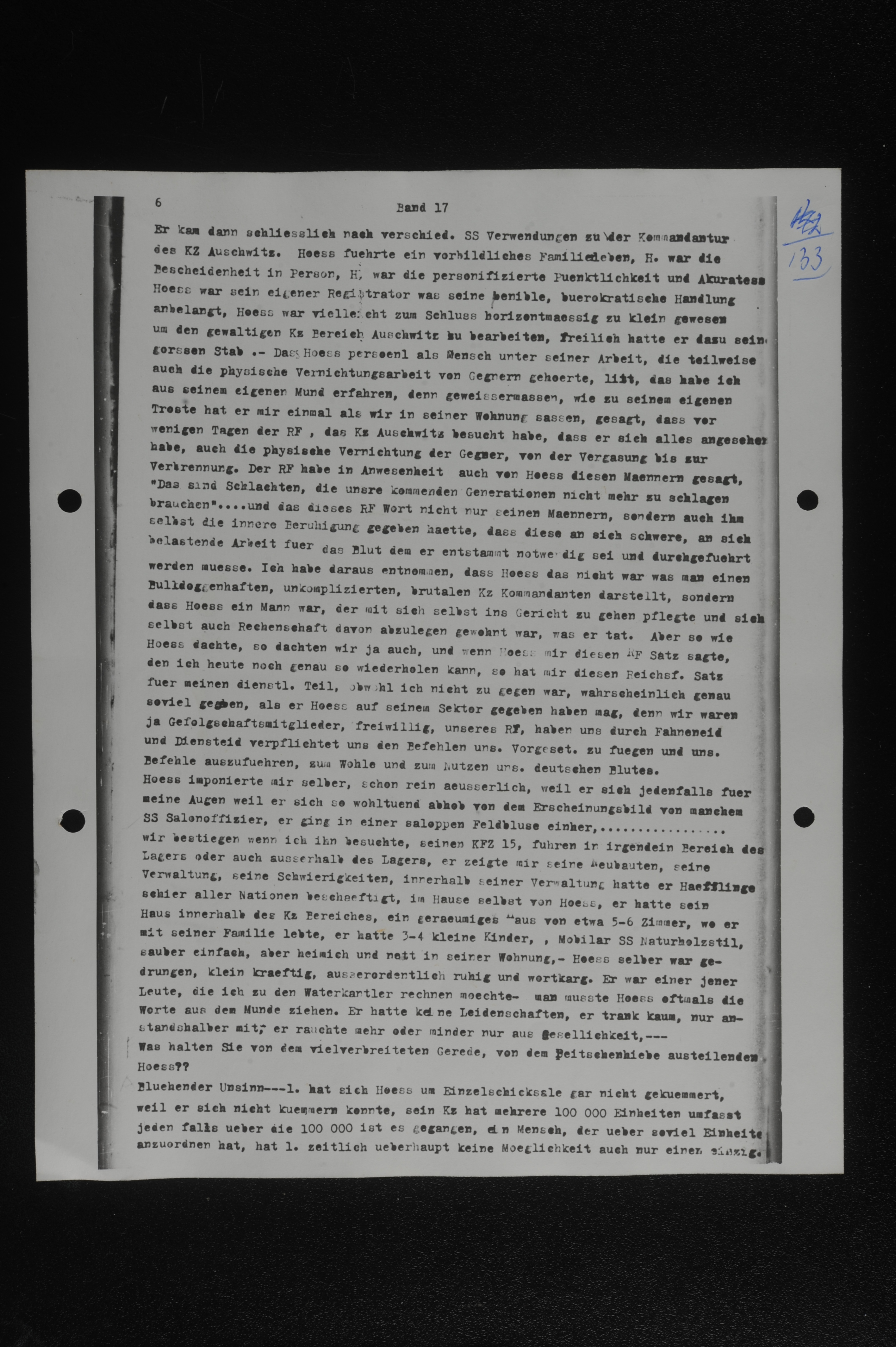
Er kam dann schließlich nach verschied. SS Verwendungen zu der Kommandantur des KZ Auschwitz. Höß führte ein vorbildliches Familienleben, H. war die Bescheidenheit in Person, H, war die personifizierte Pünktlichkeit und Akurateß Höß war sein eigener Registrator was seine benible, bürokratische Handlung anbelangt, Höß war vielleicht zum Schluß horizontmäßig zu klein gewesen um den gewaltigen Kz Bereich Auschwitz zu bearbeiten, freilich hatte er dazu sein großen Stab. Das Höß persönl als Mensch unter seiner Arbeit, die teilweise auch die physische Vernichtungsarbeit von Gegnern gehörte, litt, das habe ich aus seinem eigenen Mund erfahren, denn gewissermaßen, wie zu seinem eigenen Troste hat er mir einmal als wir in seiner Wohnung saßen, gesagt, daß vor wenigen Tagen der RF, das Kz Auschwitz besucht habe, daß er sich alles angesehen habe, auch die physische Vernichtung der Gegner, von der Vergasung bis zur Verbrennung. Der RF habe in Anwesenheit auch von Höß diesen Männern gesagt, "Das sind Schlachten, die unsre kommenden Generationen nicht mehr zu schlagen brauchen"… und das dieses RF Wort nicht nur seinen Männern, sondern auch ihm selbst die innere Beruhigung gegeben hätte, daß diese an sich schwere, an sich belastende Arbeit für das Blut dem er entstammt notwendig sei und durchgeführt werden müsse. Ich habe daraus entnommen, daß Höß das nicht war was man einen Bulldoggenhaften, unkomplizierten, brutalen Kz Kommandanten darstellt, sondern daß Höß ein Mann war, der mit sich selbst ins Gericht zu gehen pflegte und sich selbst auch Rechenschaft davon abzulegen gewohnt war, was er tat. Aber so wie Höß dachte, so dachten wir ja auch, und wenn Höß mir diesen RF Satz sagte, den ich heute noch genau so wiederholen kann, so hat mir diesen Reichsf. Satz für meinen dienstl. Teil, obwohl ich nicht zugegen war, wahrscheinlich genau soviel gegeben, als er Höß auf seinem Sektor gegeben haben mag, denn wir waren ja Gefolgschaftsmitglieder, freiwillig, unseres RF, haben uns durch Fahneneid und Diensteid verpflichtet uns den Befehlen uns. Vorgeset. zu fügen und uns. Befehle auszuführen, zum Wohle und zum Nutzen uns. deutschen Blutes. Höß imponierte mir selber, schon rein äußerlich, weil er sich jedenfalls für meine Augen weil er sich so wohltünd abhob von dem Erscheinungsbild von manchem SS Salonoffizier, er ging in einer saloppen Feldbluse einher,… wir bestiegen wenn ich ihn besuchte, seinen KFZ 15, fuhren in irgendein Bereich des Lagers oder auch außerhalb des Lagers, er zeigte mir seine Neubauten, seine Verwaltung, seine Schwierigkeiten, innerhalb seiner Verwaltung hatte er Häftlinge schier aller Nationen beschäftigt, im Hause selbst von Höß, er hatte sein Haus innerhalb des Kz Bereiches, ein geräumiges Haus von etwa 5-6 Zimmer, wo er mit seiner Familie lebte, er hatte 3-4 kleine Kinder,, Mobiliar SS Naturholzstil, sauber einfach, aber heimich und nett in seiner Wohnung, – Höß selber war gedrungen, klein kräftig, außerordentlich ruhig und wortkarg. Er war einer jener Leute, die ich zu den Waterkantler rechnen möchte – man mußte Höß oftmals die Worte aus dem Munde ziehen. Er hatte keine Leidenschaften, er trank kaum, nur anstandshalber mit, – er rauchte mehr oder minder nur aus Gesellichkeit, –
Was halten Sie von dem vielverbreiteten Gerede, von dem Peitschenhiebe austeilendem Höß??
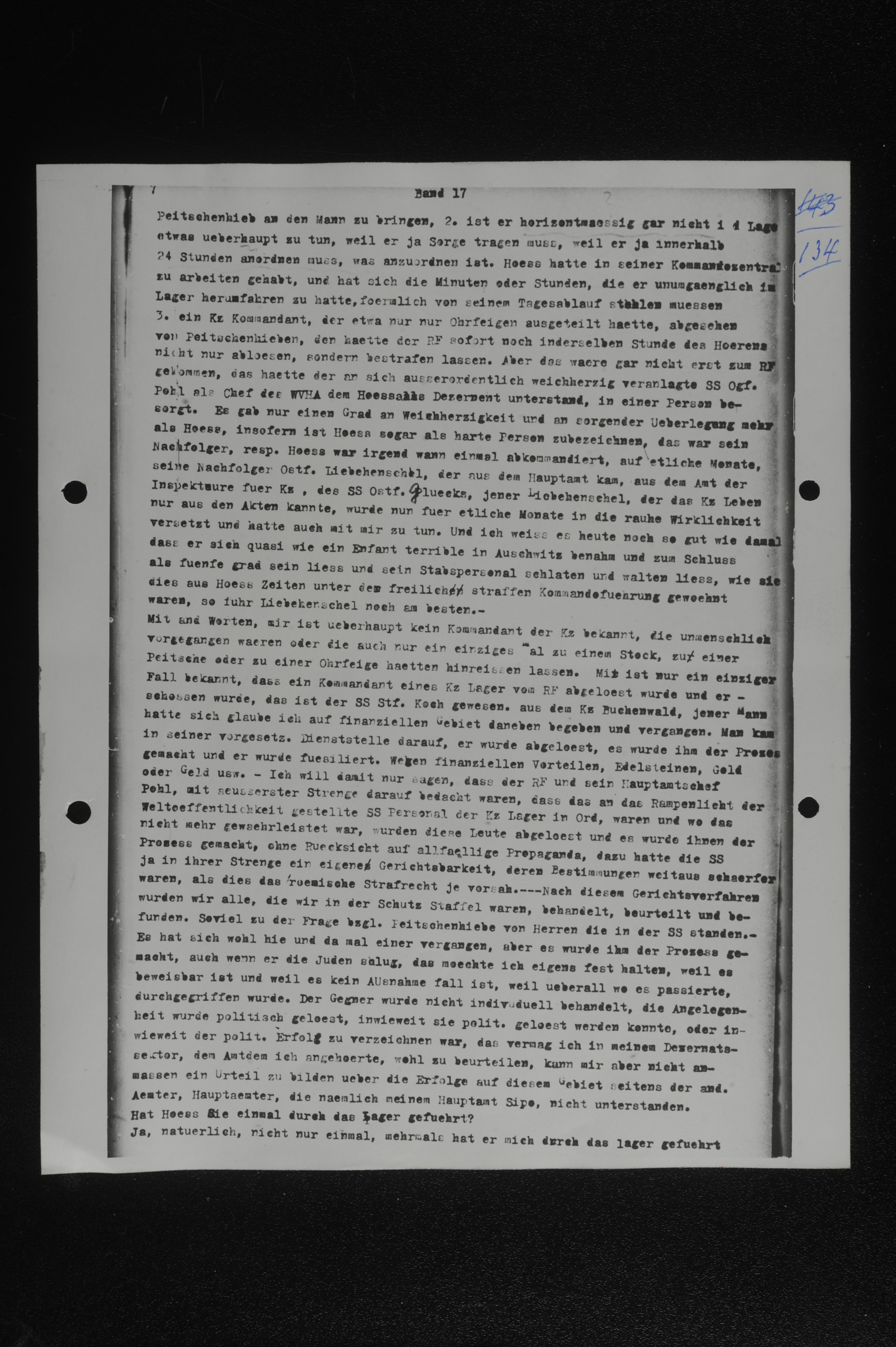
Blühender Unsinn – 1. hat sich Höß um Einzelschicksale gar nicht gekümmert, weil er sich nicht kümmern konnte, sein Kz hat mehrere 100 000 Einheiten umfaßt jeden falls über die 100 000 ist es gegangen, ein Mensch, der über soviel Einheiten anzuordnen hat, hat 1. zeitlich überhaupt keine Möglichkeit auch nur einen einzig.
Draft translation
6 Volume 17 [HW: 132?]
[HW: 133]
He then finally came, after various SS assignments, to the Commandant's office
of the Auschwitz concentration camp. Hoess led an exemplary family life, H. was
modesty in person, H. was punctuality and accuracy personified.
Hoess was his own registrar as far as his [benible — unclear], bureaucratic conduct
was concerned. Hoess was perhaps in the end horizon-wise too small
to administer the enormous Auschwitz concentration camp area, though of course for that he had his
large staff.— That Hoess personally as a human being suffered under his work, which in part
also included the physical extermination work against opponents, that I learned
from his own mouth, for so to speak, as if for his own
consolation he once said to me, when we were sitting in his apartment, that a
few days before the RF [Reichsführer] had visited the Auschwitz concentration camp, that he had looked at everything,
also the physical extermination of the opponents, from the gassing to the
burning. The RF had, in the presence also of Hoess, said to these men,
"These are battles that our coming generations will no longer have to
fight".... and that this RF word had given not only his men but also him
himself the inner reassurance, that this in itself heavy, in itself
burdensome work for the blood from which he descends was necessary and had to be
carried out. I took from this that Hoess was not what one portrays as a
bulldog-like, uncomplicated, brutal concentration camp commandant, but rather
that Hoess was a man who was accustomed to sit in judgment on himself and
also accustomed to give himself an account of what he did. But just as
Hoess thought, so did we too think, and when Hoess said this RF sentence to me,
which I can still repeat today exactly the same, this Reichsf. sentence has
for my official part, although I was not present, probably given me exactly
as much as it may have given him, Hoess, in his sector, for we were
after all followers [Gefolgschaftsmitglieder], voluntarily, of our RF, [we] committed ourselves through oath to the flag [Fahneneid]
and oath of service [Diensteid] to submit ourselves to the orders of our superiors and to
carry out our orders, for the good and for the benefit of our German blood.
Hoess impressed me myself, already purely outwardly, because at any rate for
my eyes because he set himself off so pleasantly from the appearance of many an
SS salon officer, he went about in a casual field blouse,.................
we boarded, when I visited him, his KFZ 15 [vehicle], drove into some area of the
camp or also outside the camp, he showed me his new buildings, his
administration, his difficulties, within his administration he had prisoners
of virtually all nations employed, in Hoess's own house, he had his
house within the concentration camp area, a spacious house of about 5–6 rooms, where he
lived with his family, he had 3–4 small children, , furniture SS natural-wood style,
clean simple, but homey [heimich — sic] and nice in his apartment.— Hoess himself was
stocky, small [and] strong, extraordinarily calm and taciturn. He was one of those
people whom I would count among the Waterkantler [coastal folk / North-Sea coast dwellers]— one often had to draw the
words out of Hoess's mouth. He had no passions, he hardly drank, only for
decency's sake along [with others],— he smoked more or less only out of sociability,---
What do you make of the widespread talk, of the whip-lash-dealing
Hoess??
Flourishing nonsense----1. Hoess did not concern himself at all with individual fates,
because he could not concern himself, his concentration camp comprised several 100,000 units
in any case it went over the 100,000, a person who has to give orders over so many units
has 1. temporally no possibility at all to [attend to] even a single