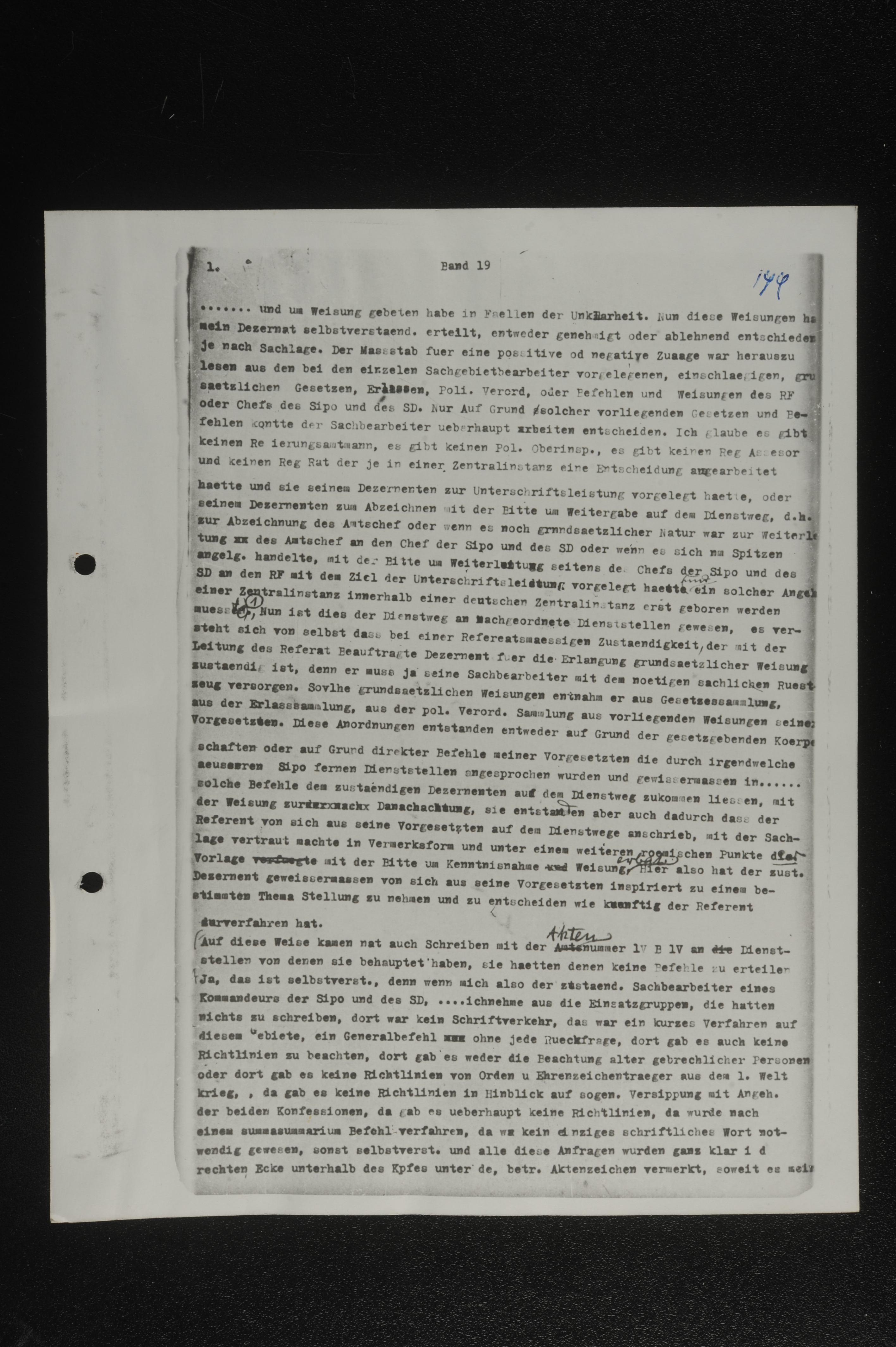
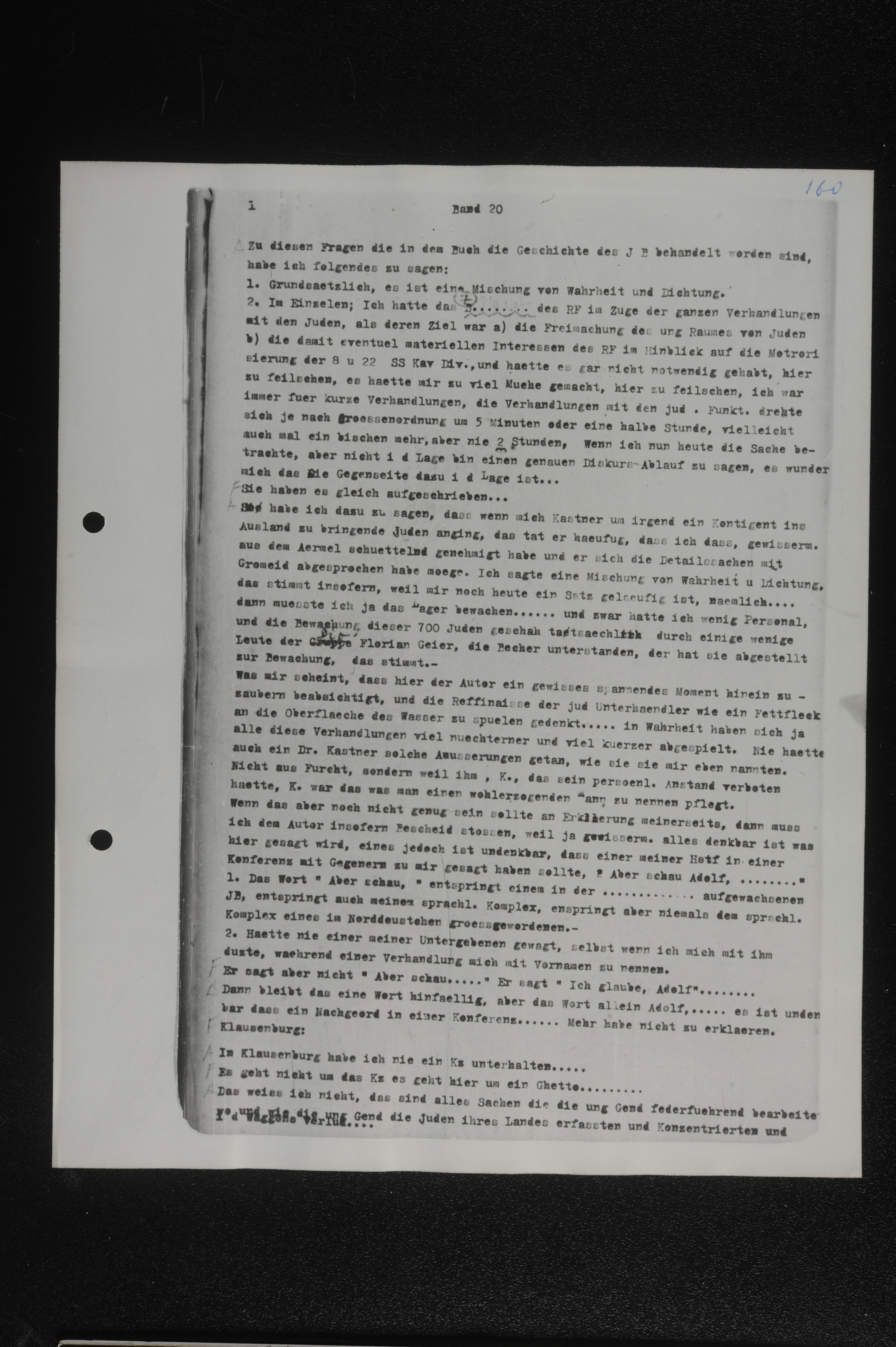
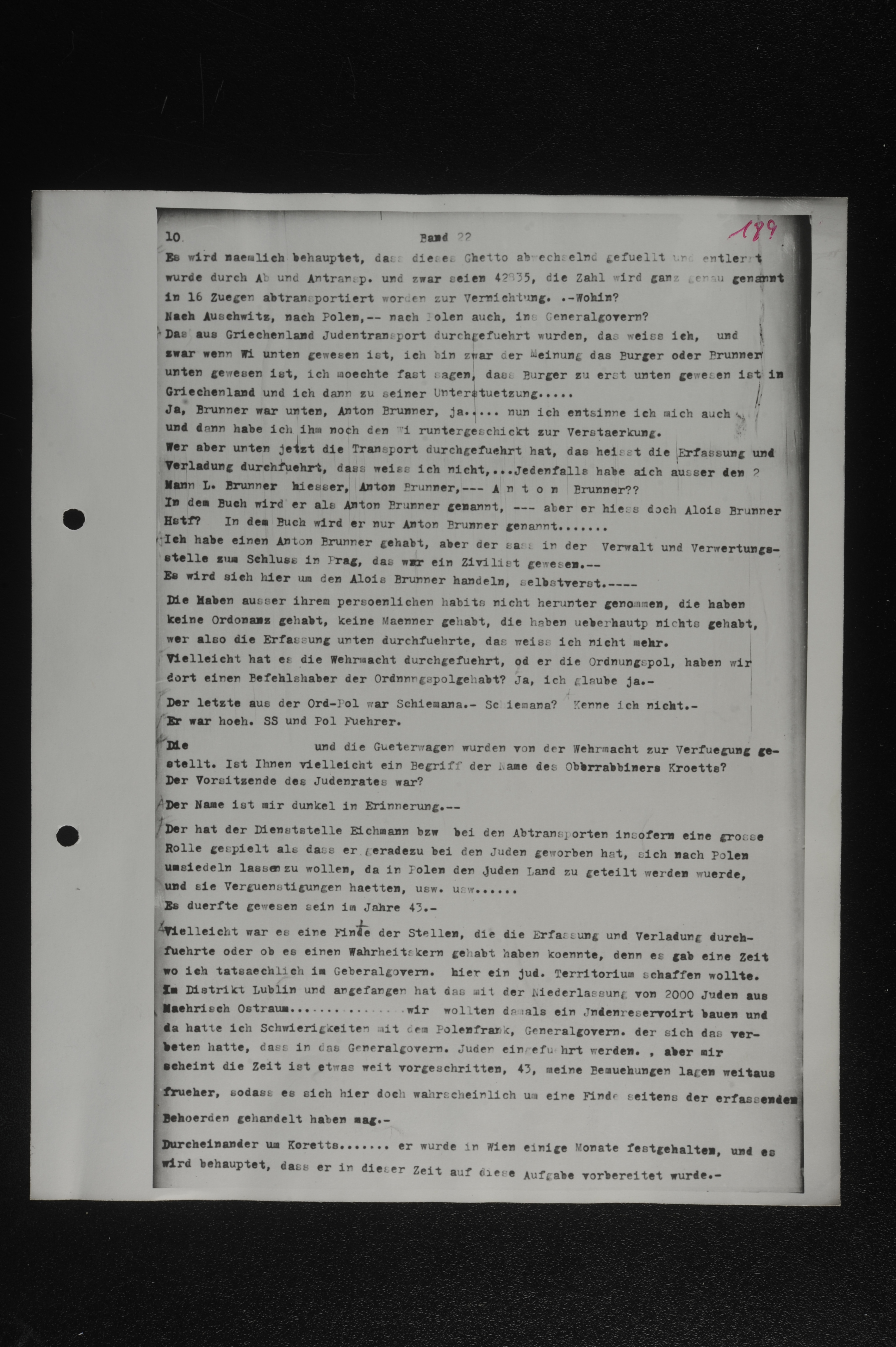
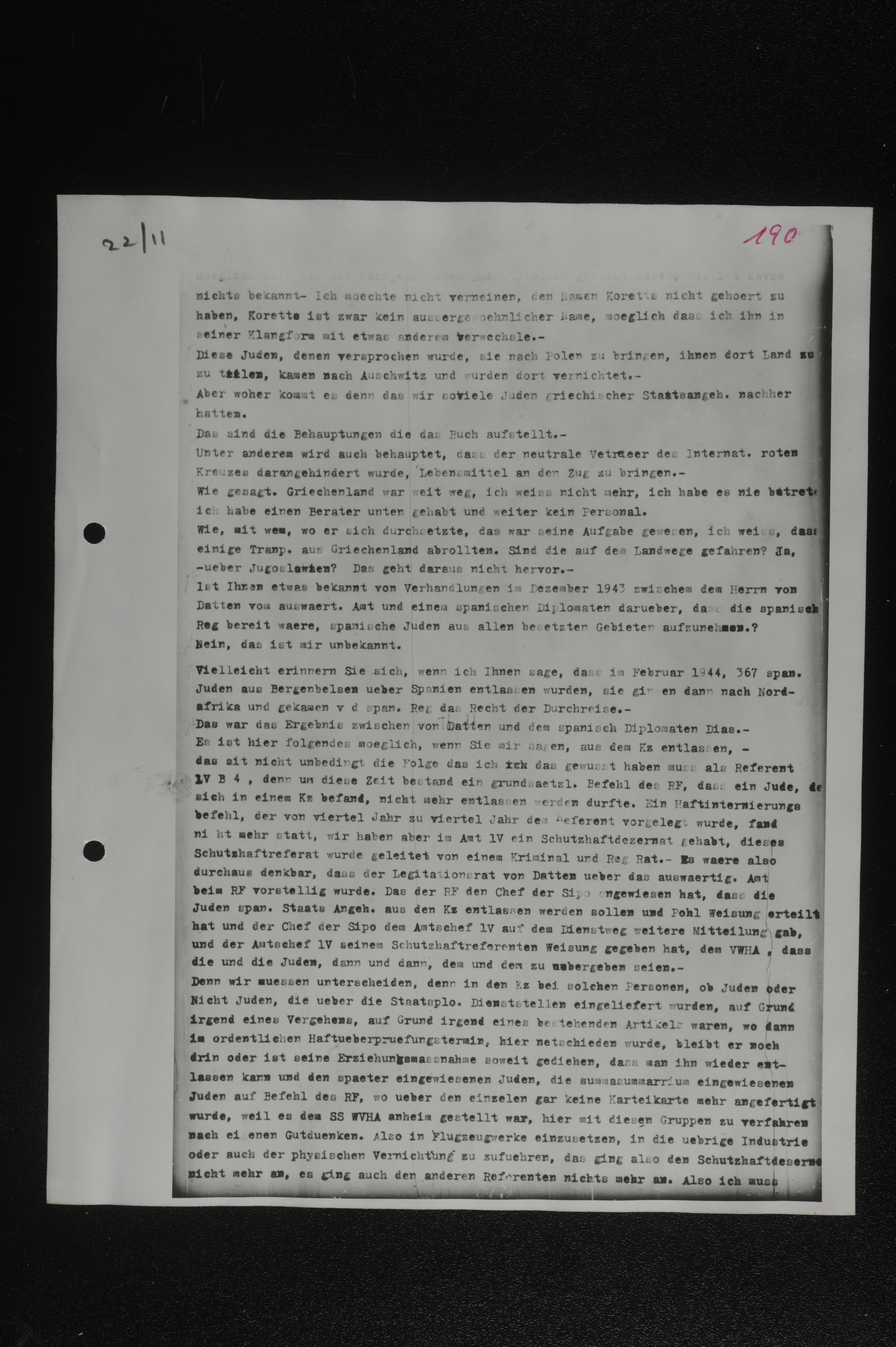
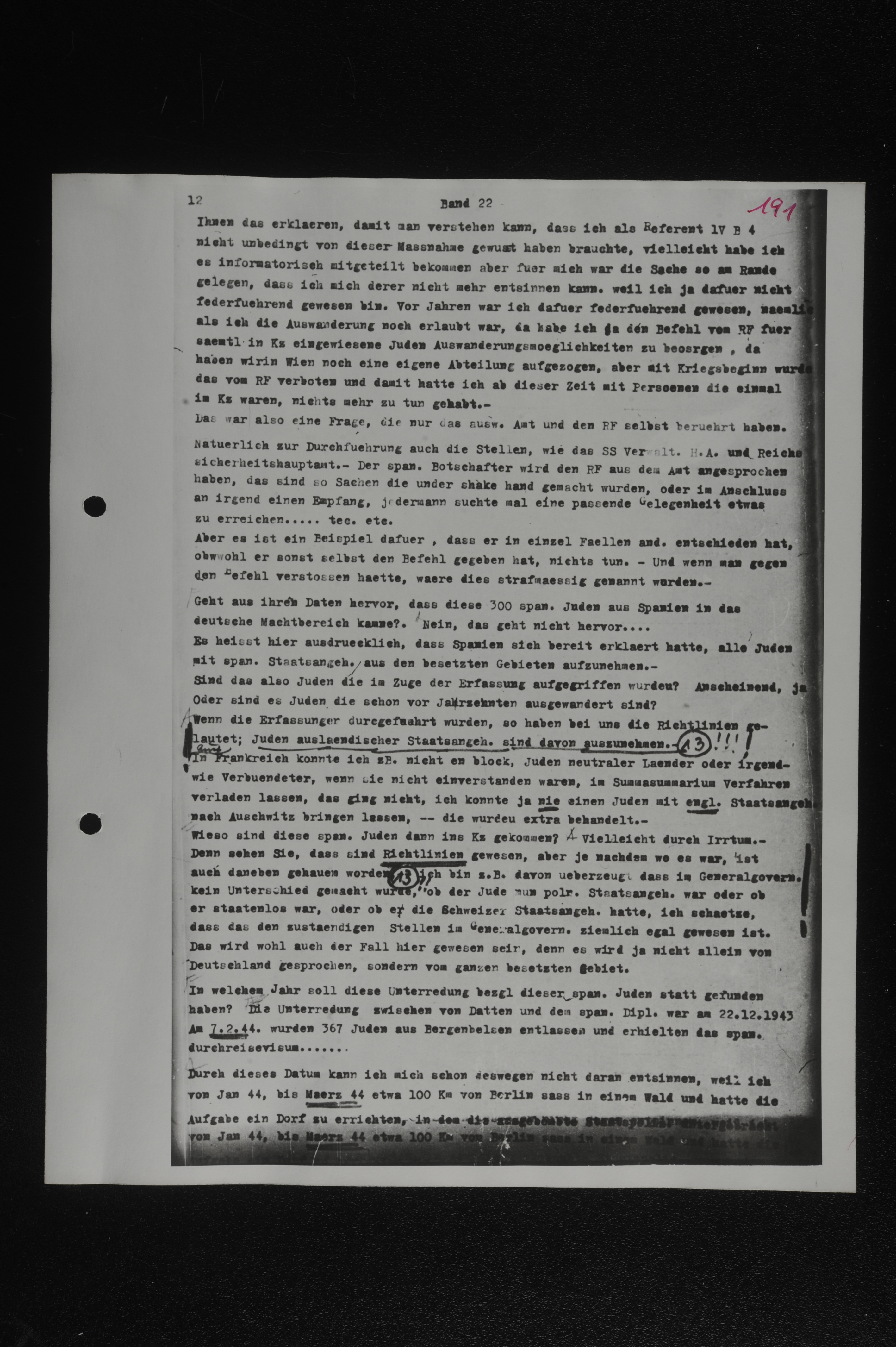
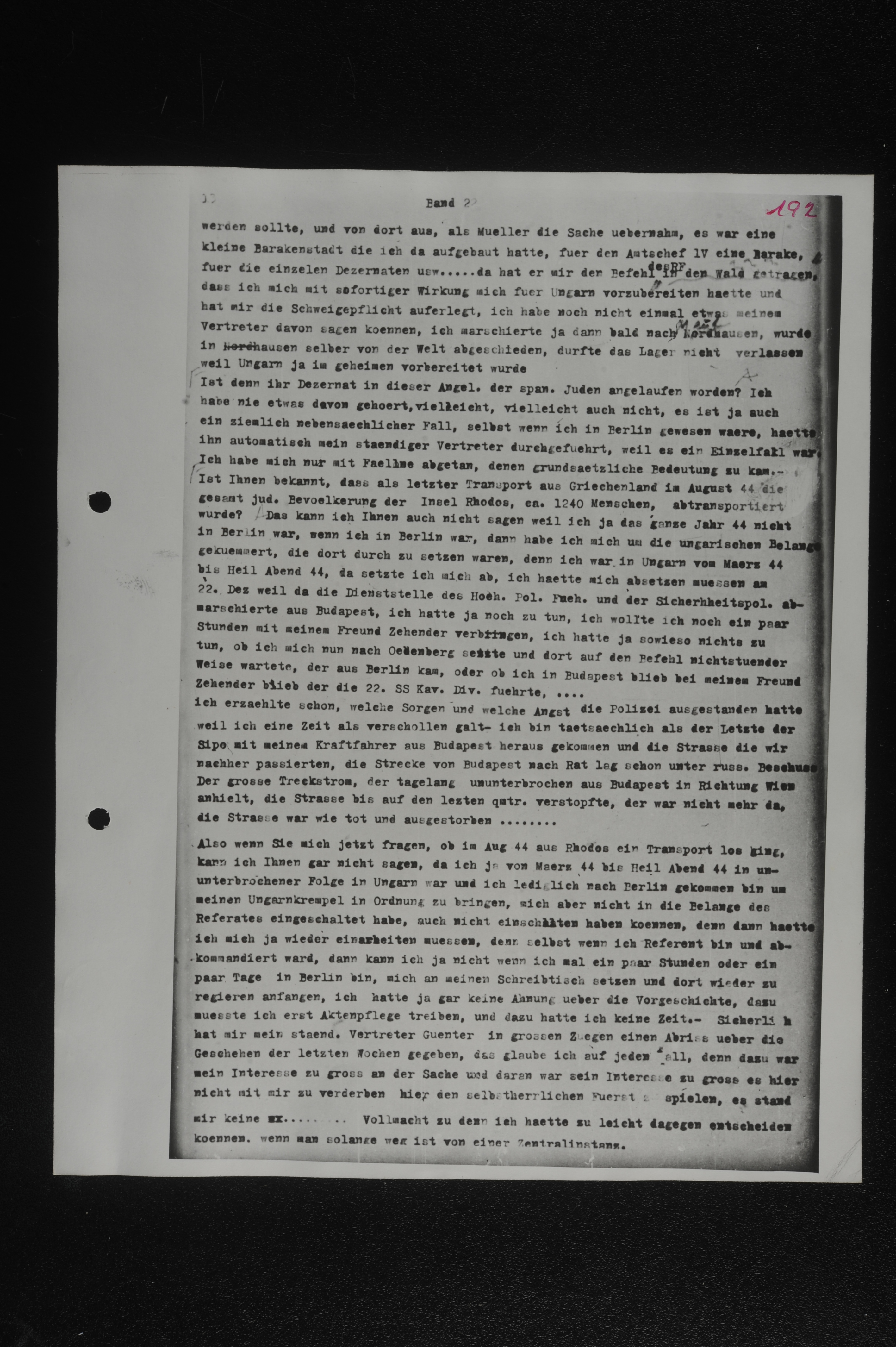
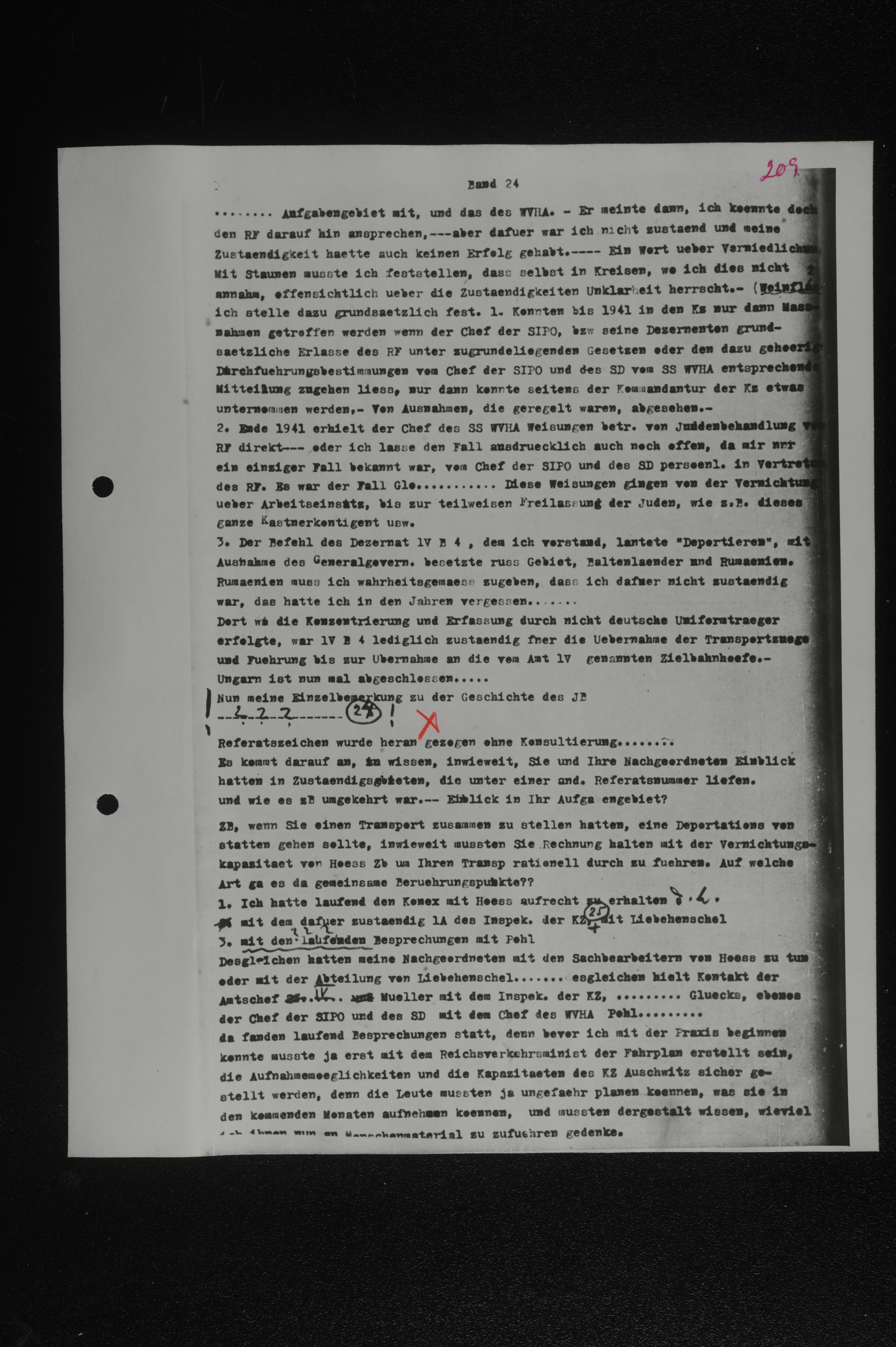
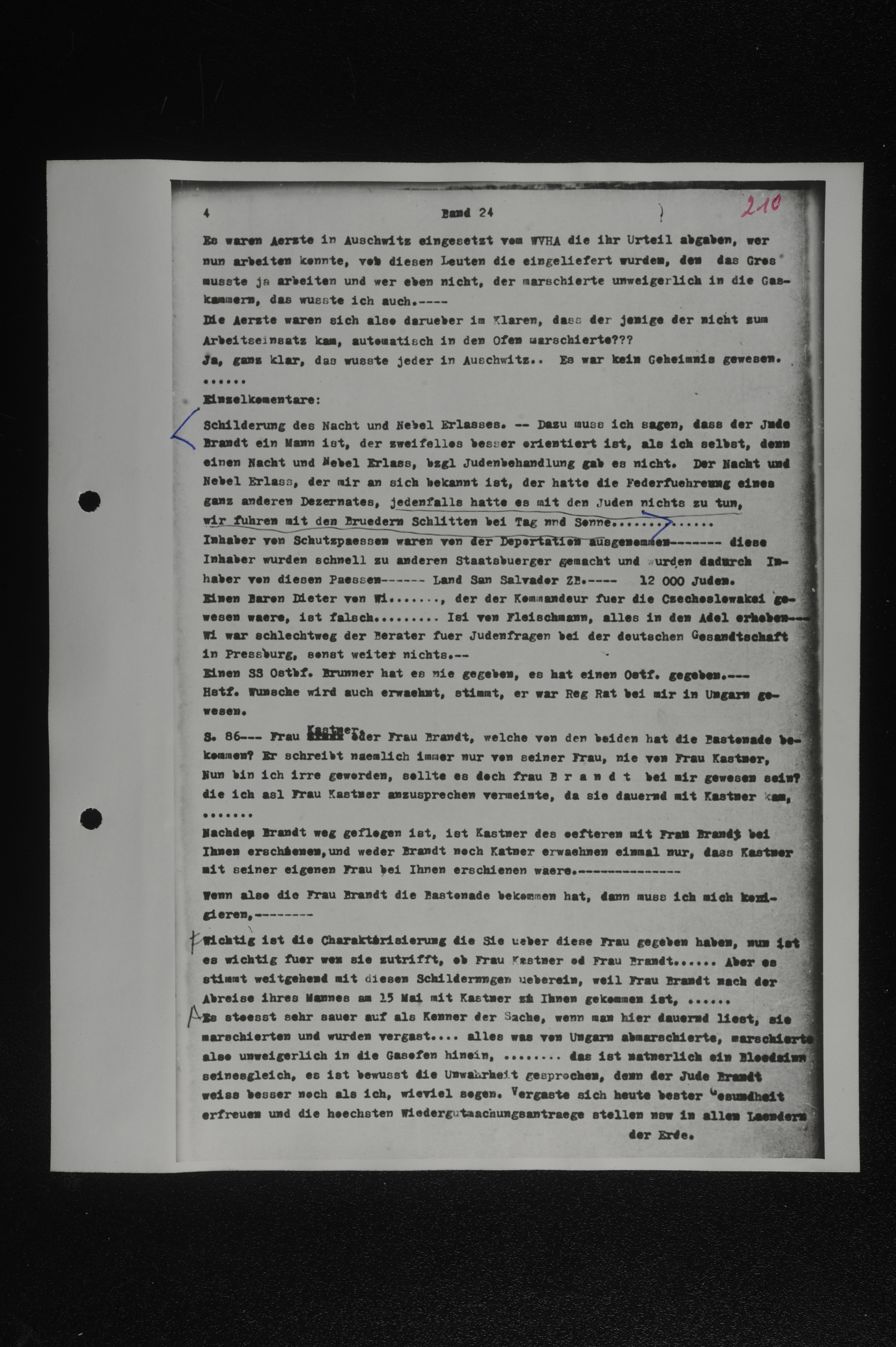
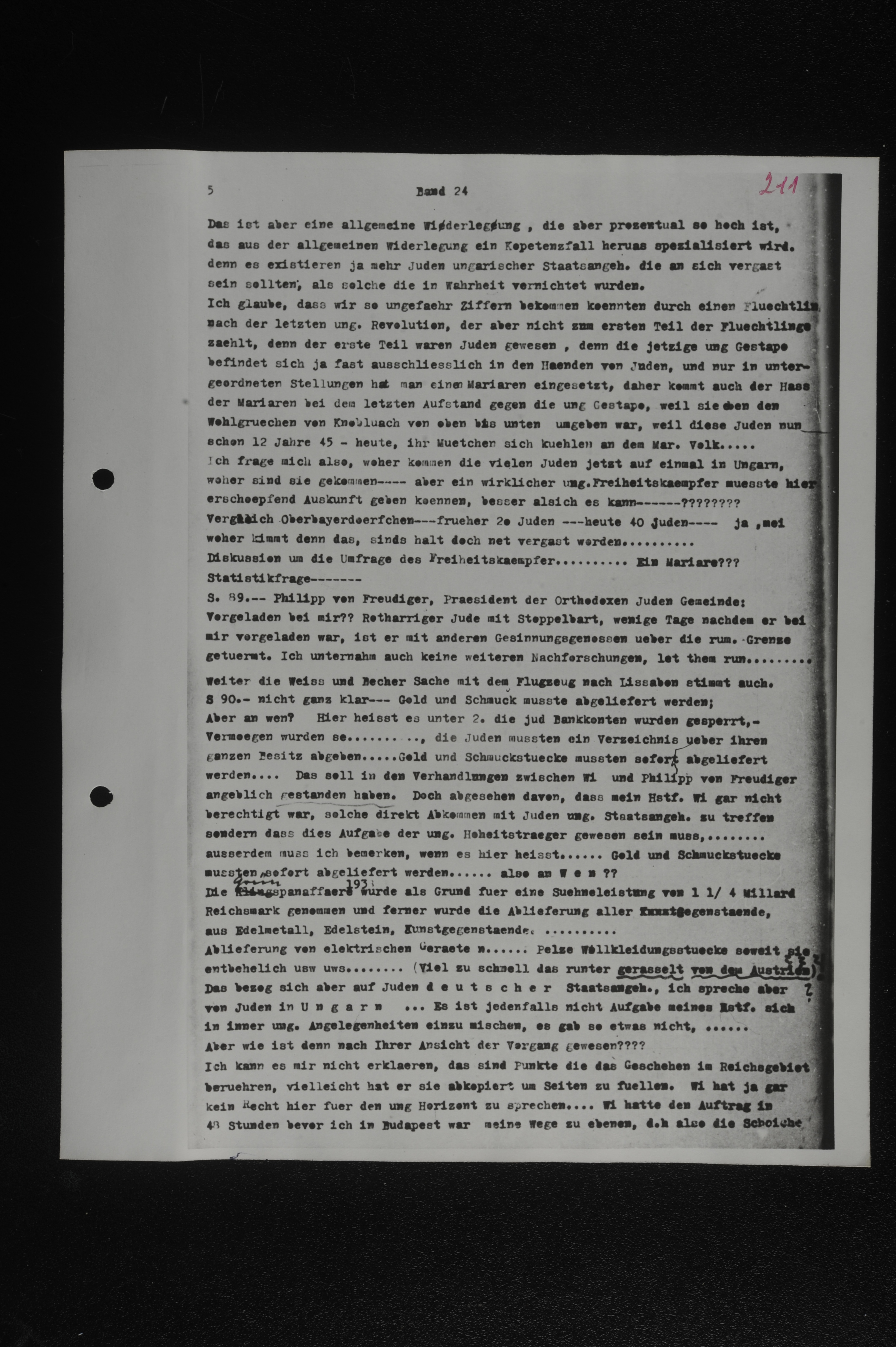
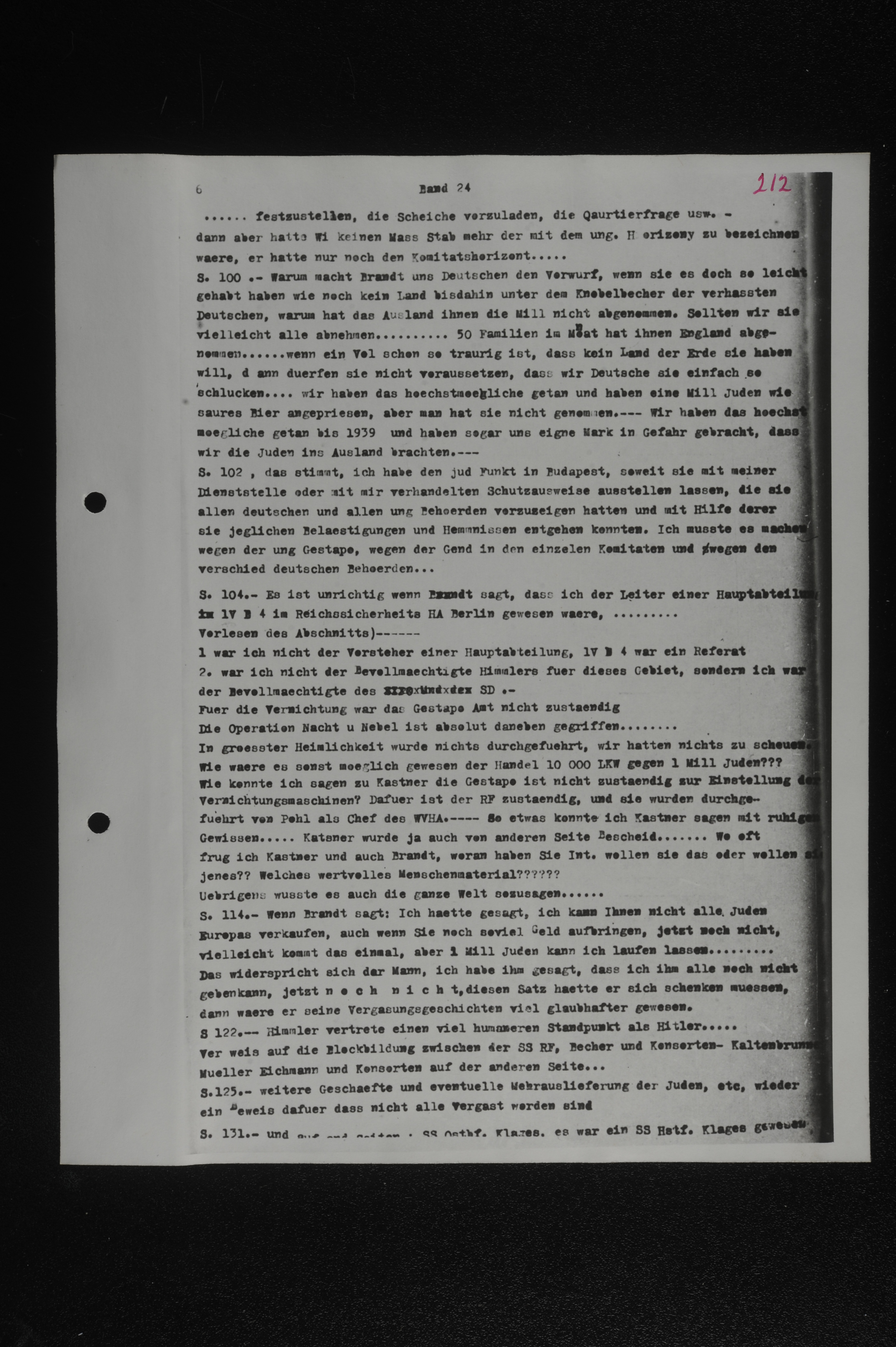
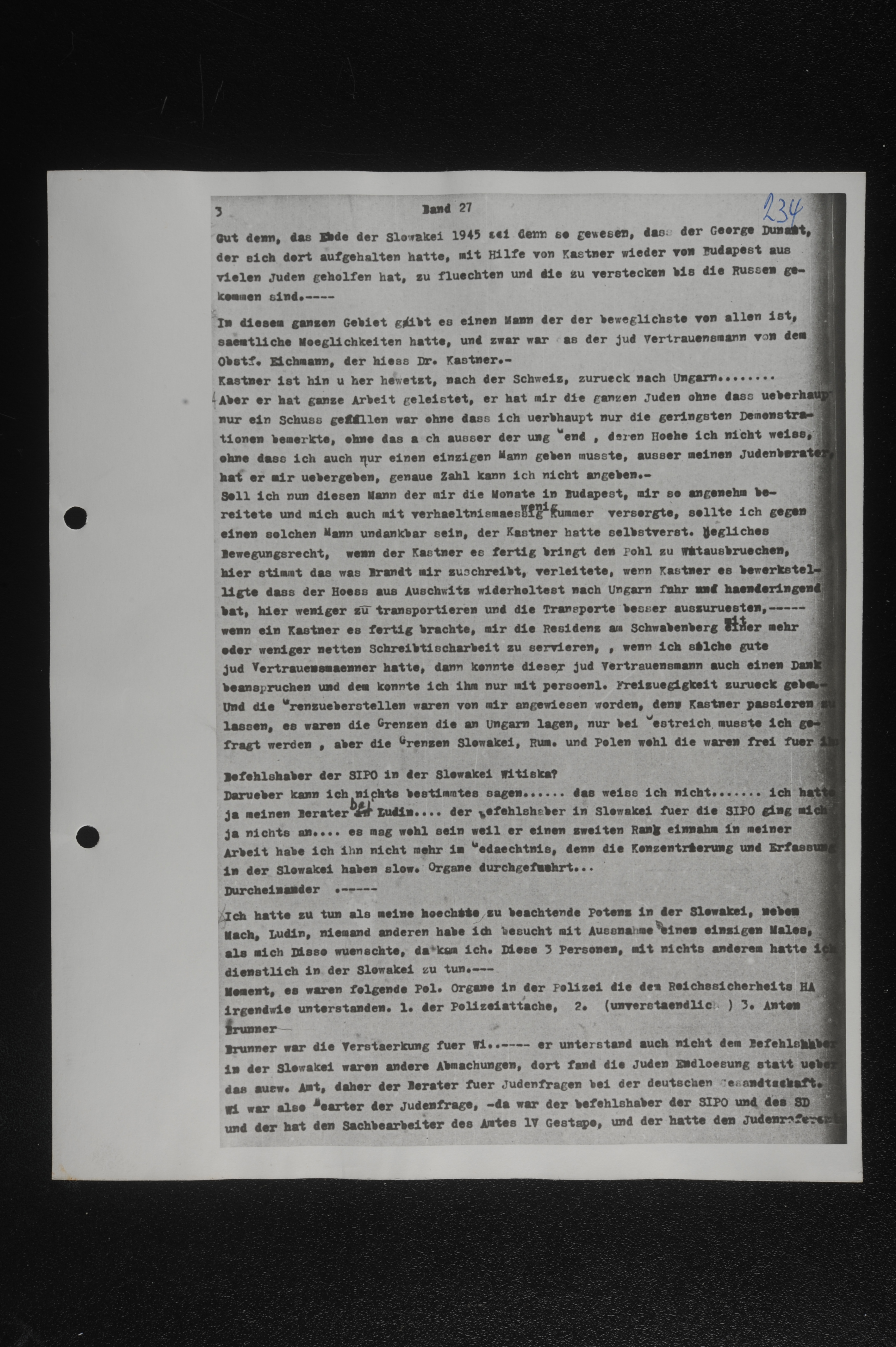
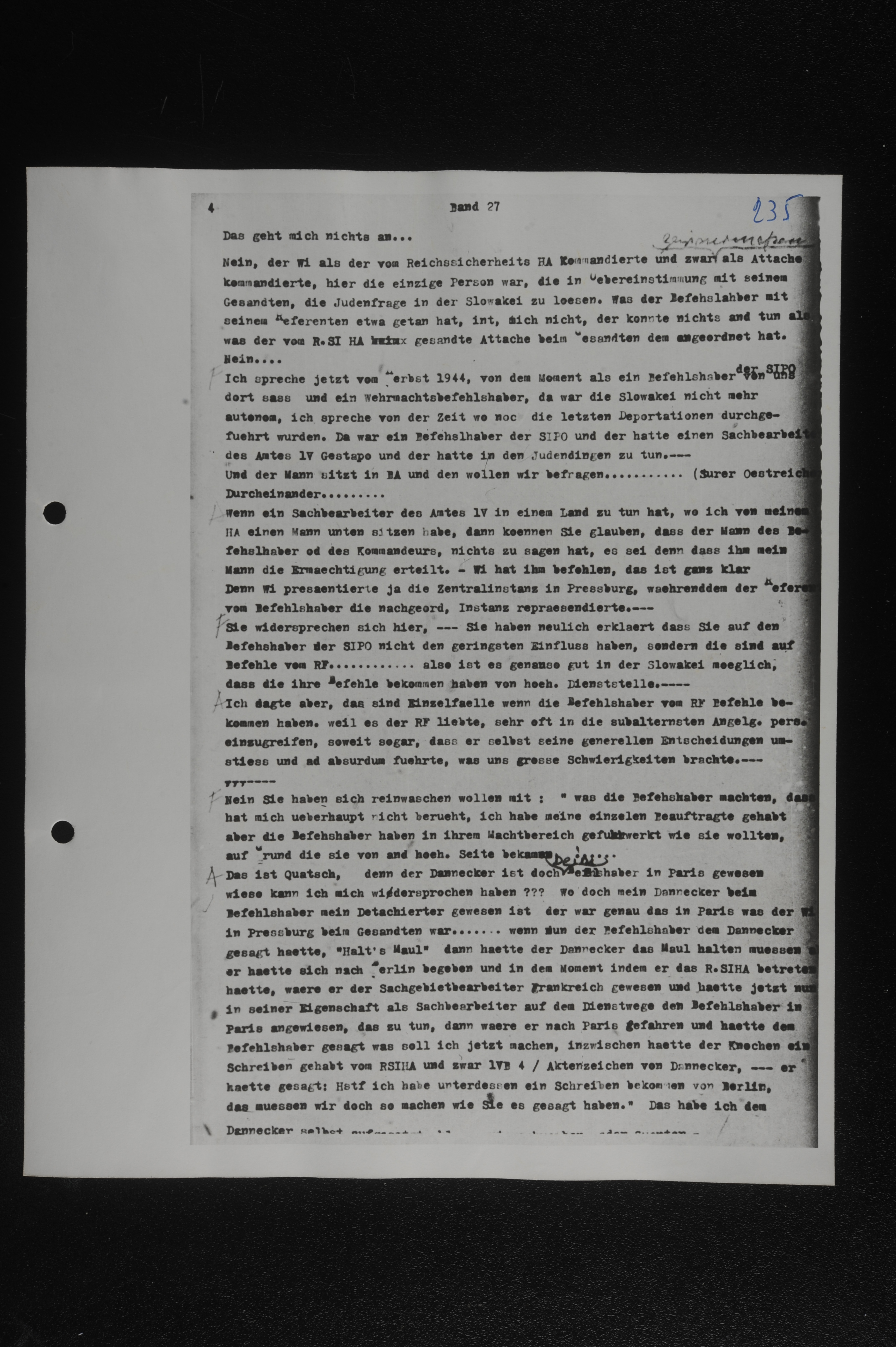
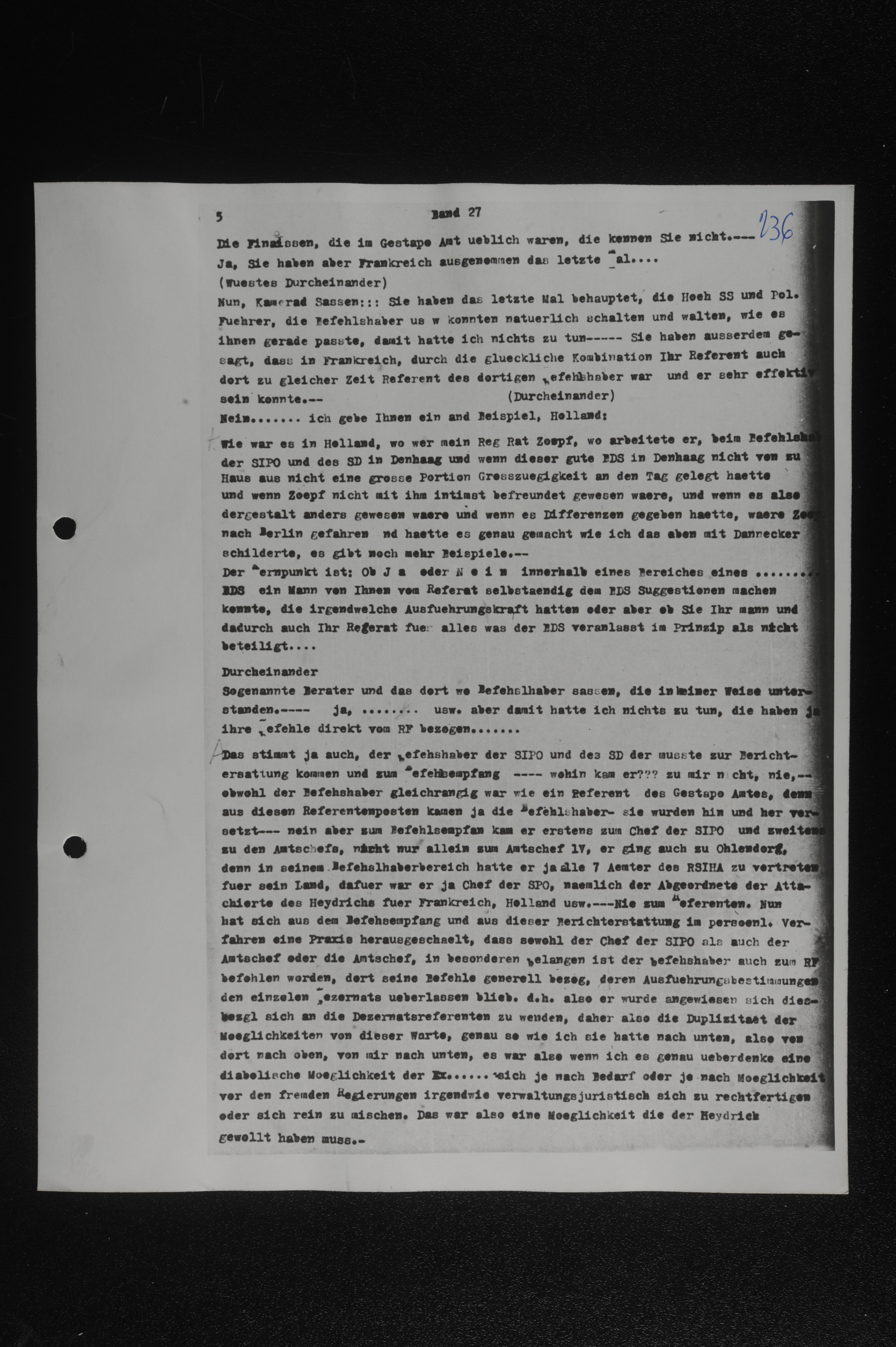
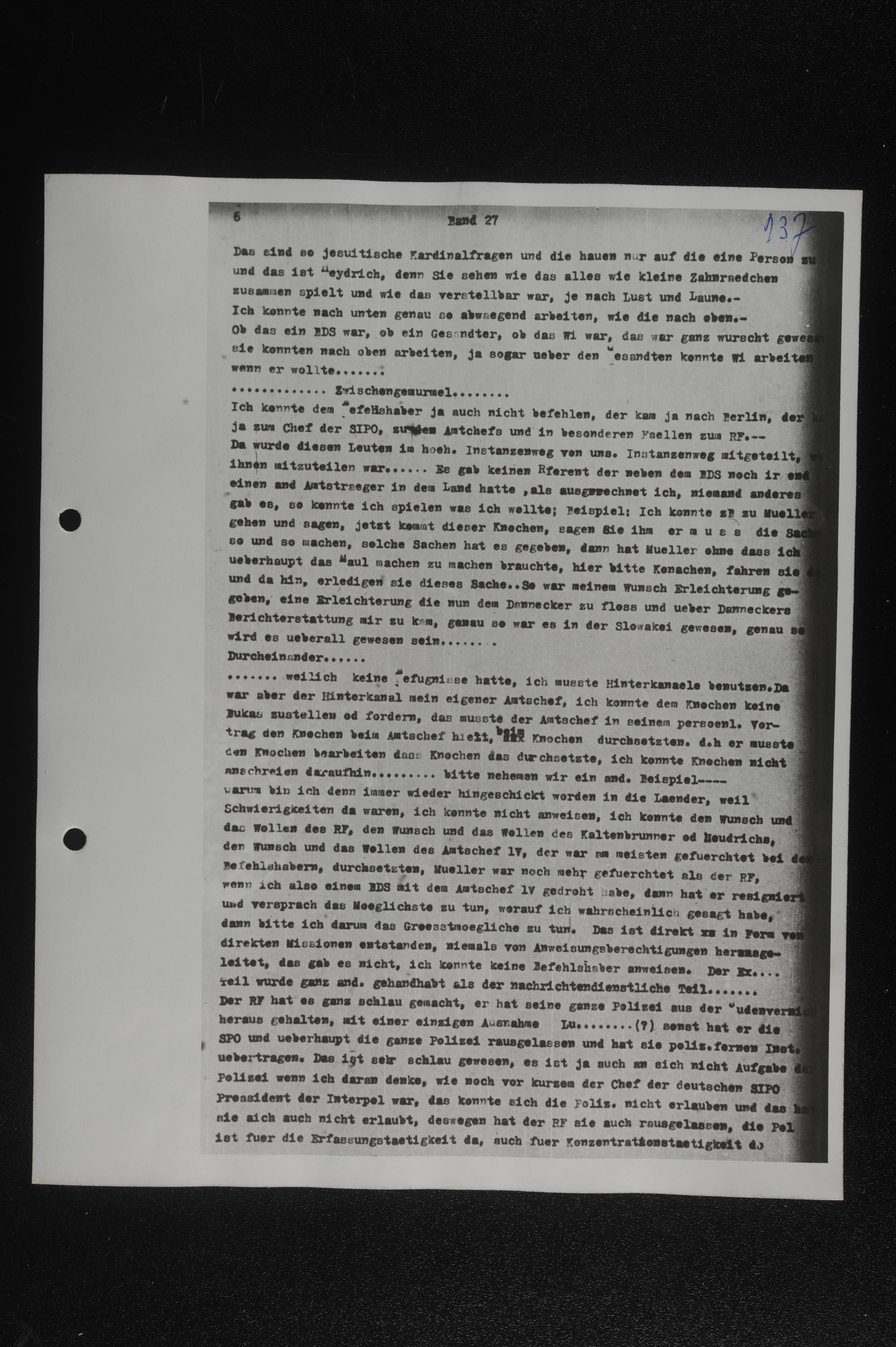
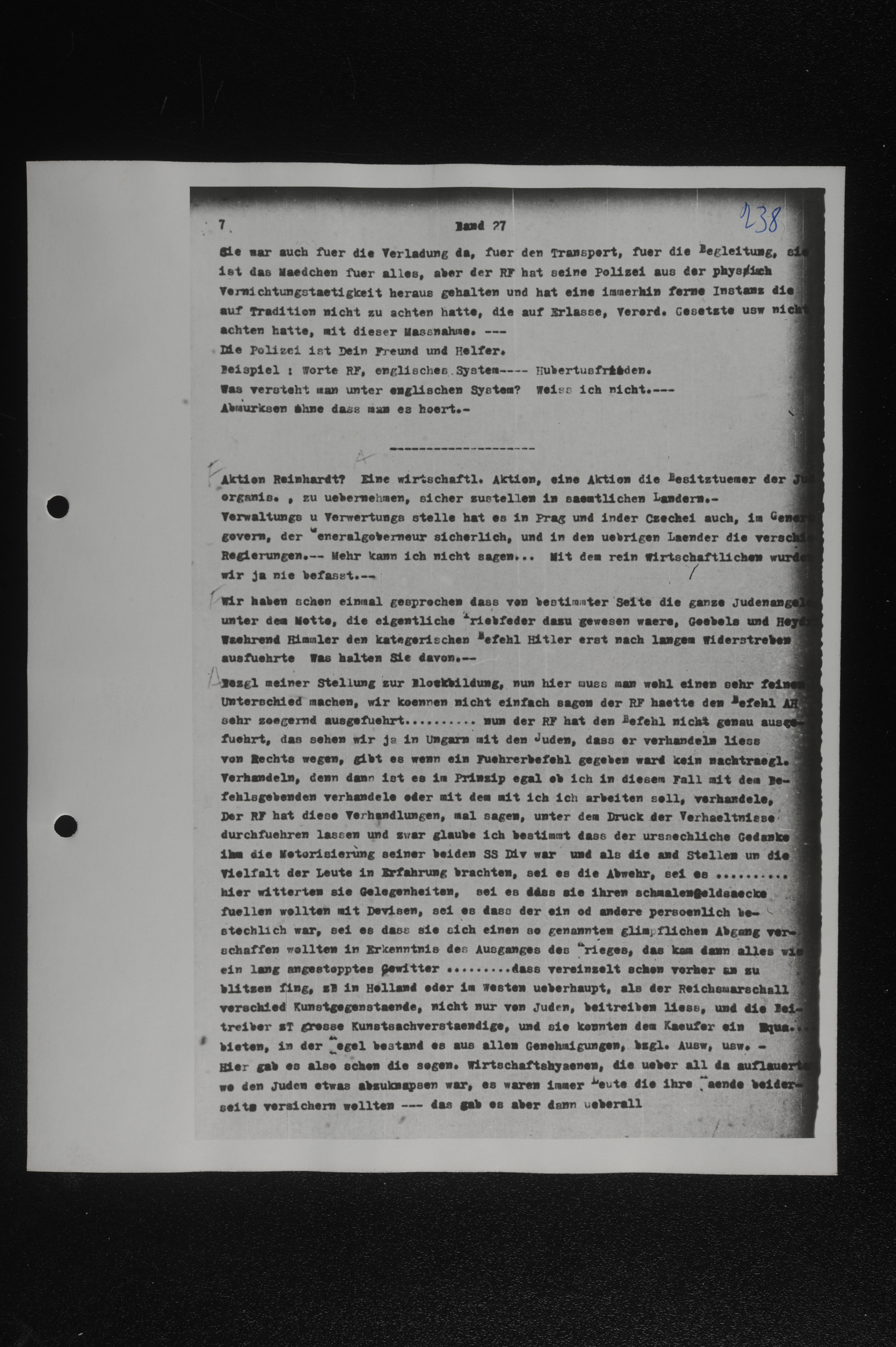
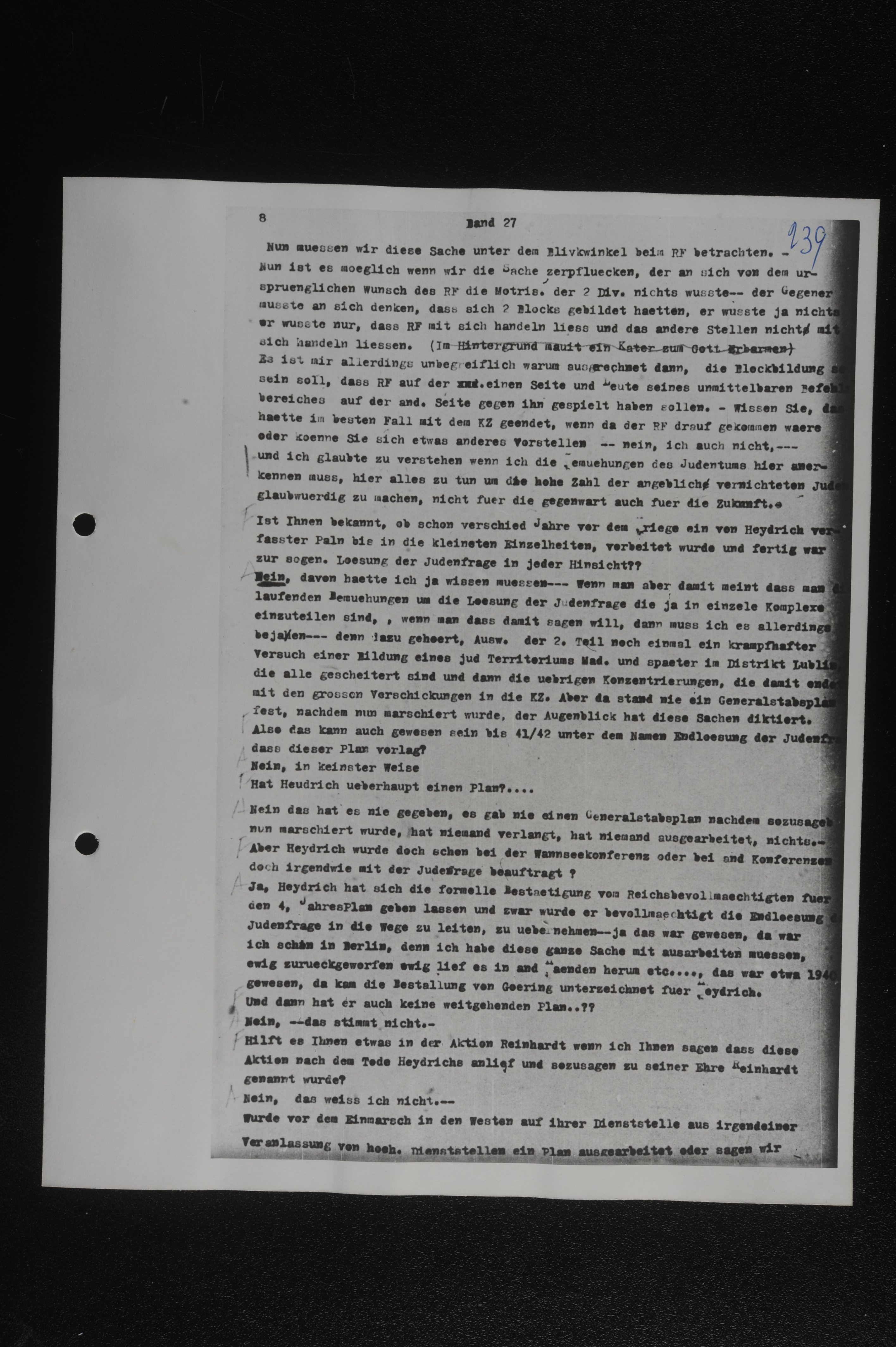
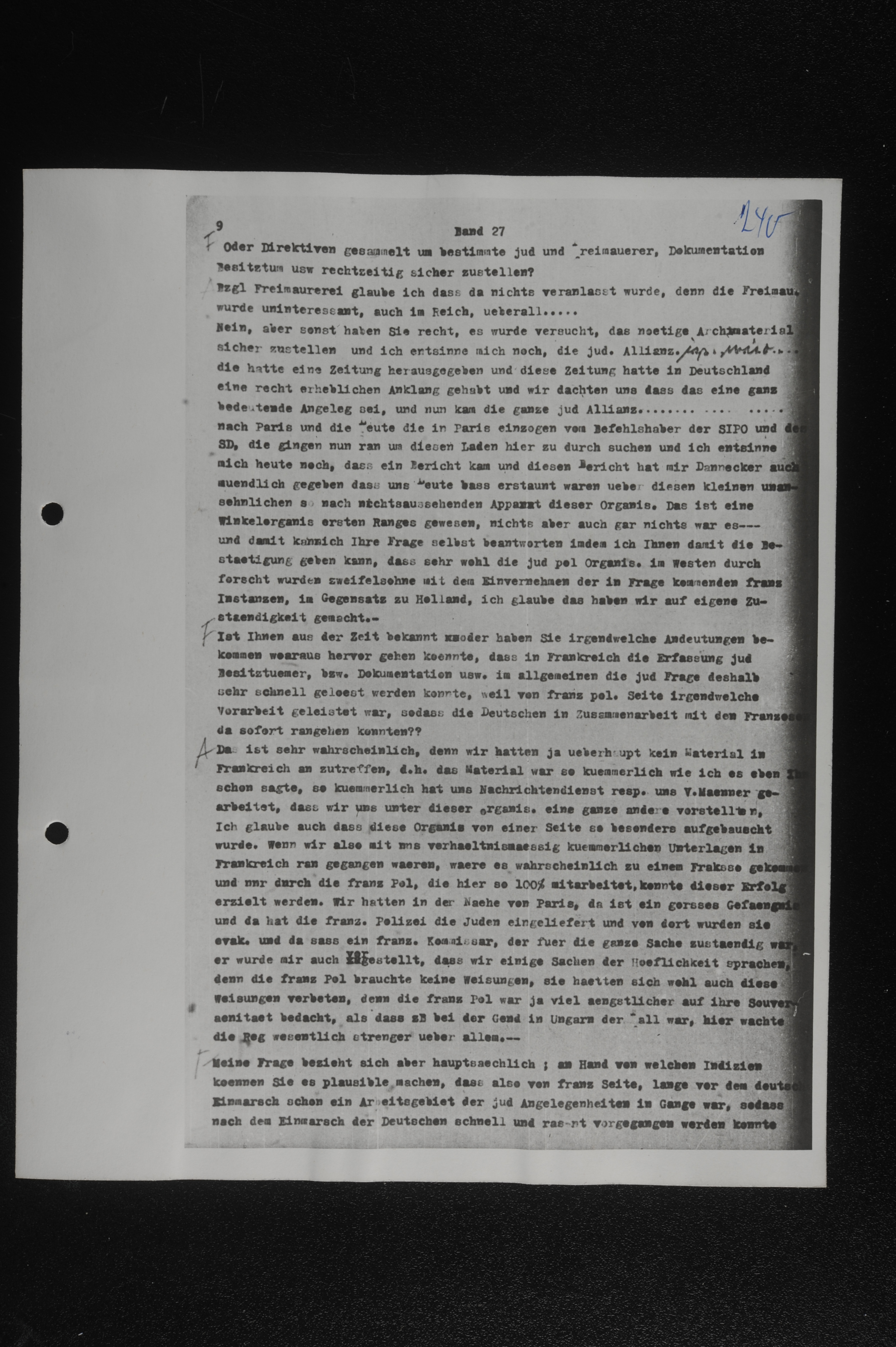
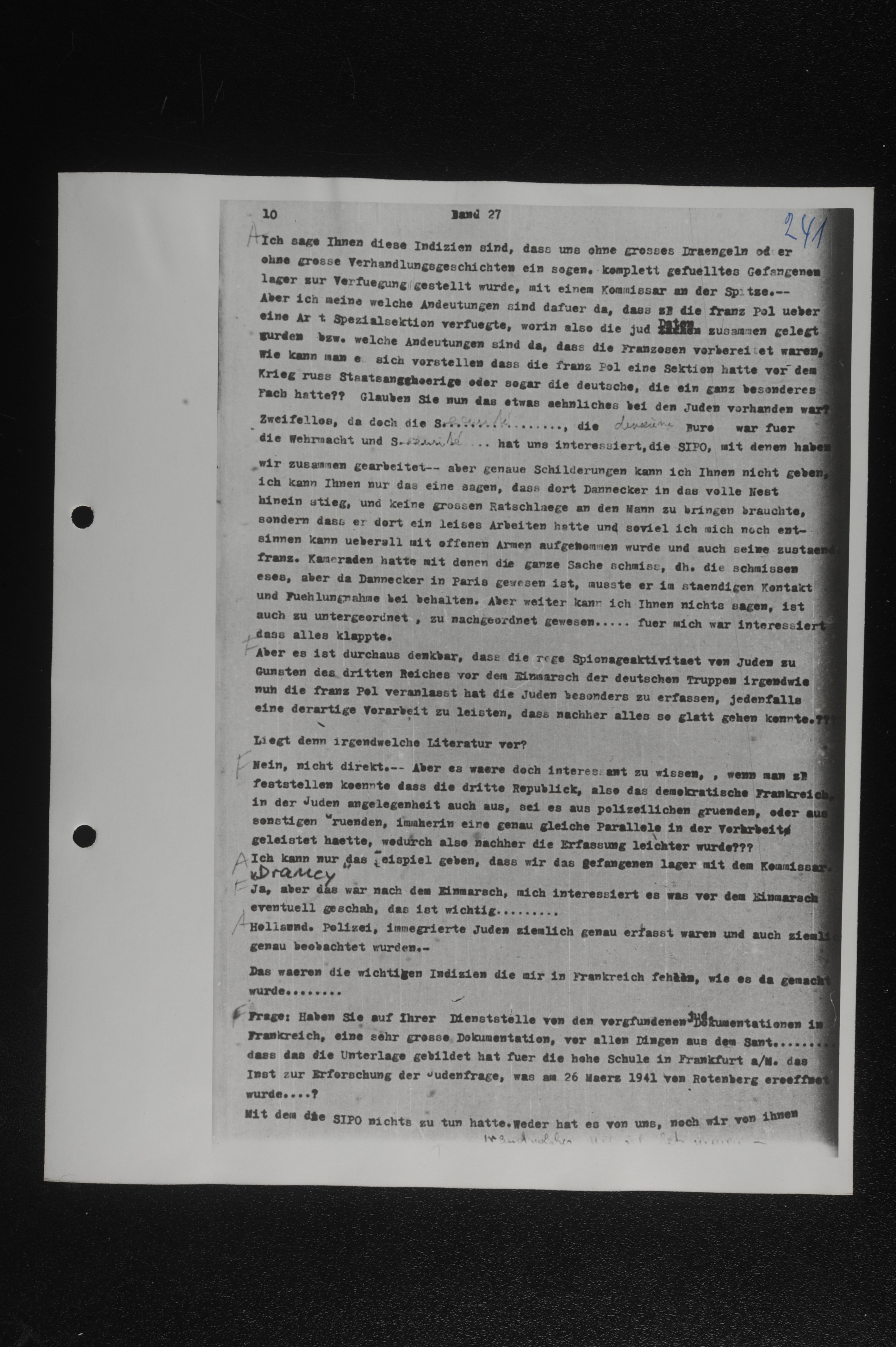
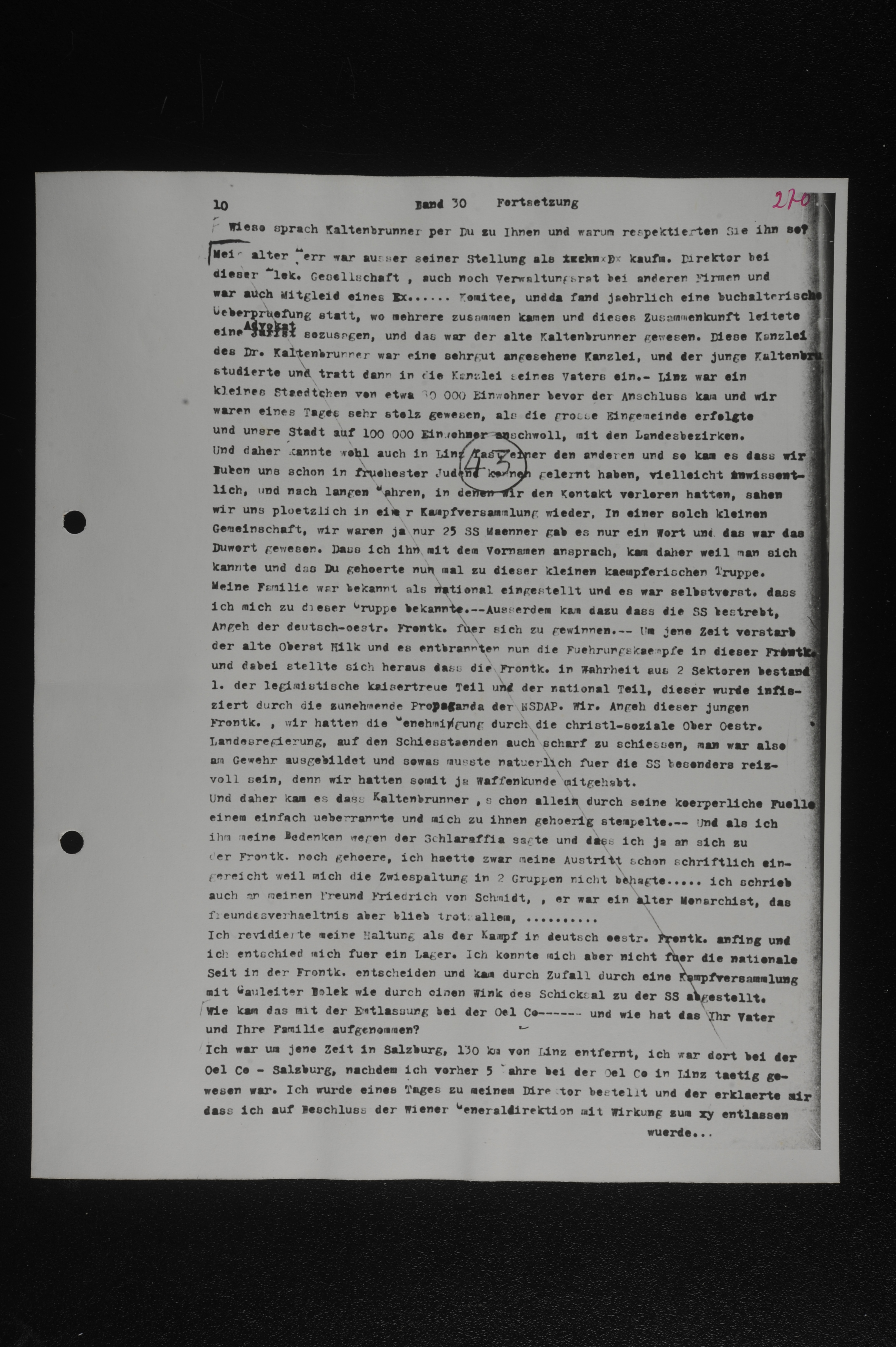
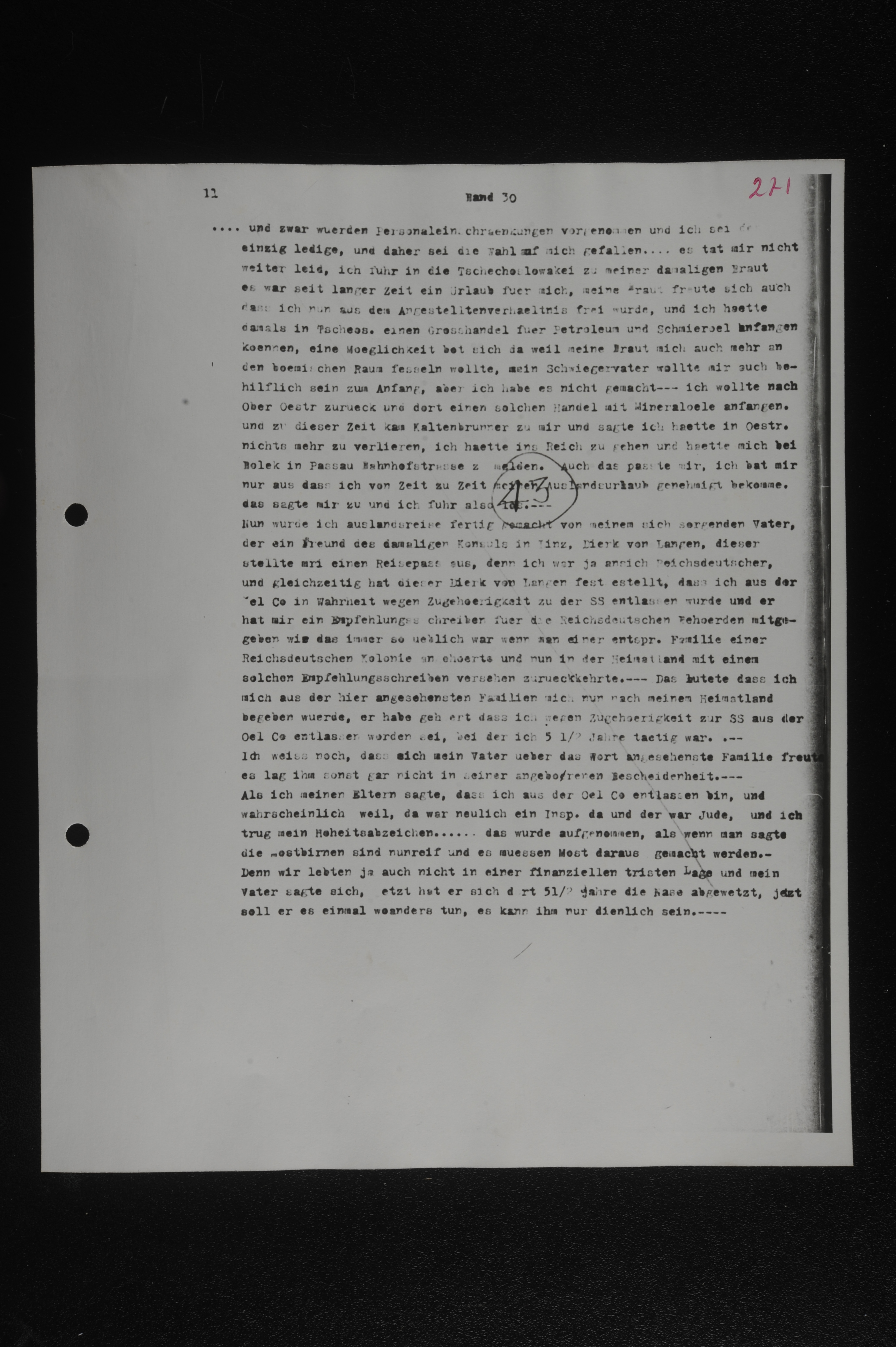
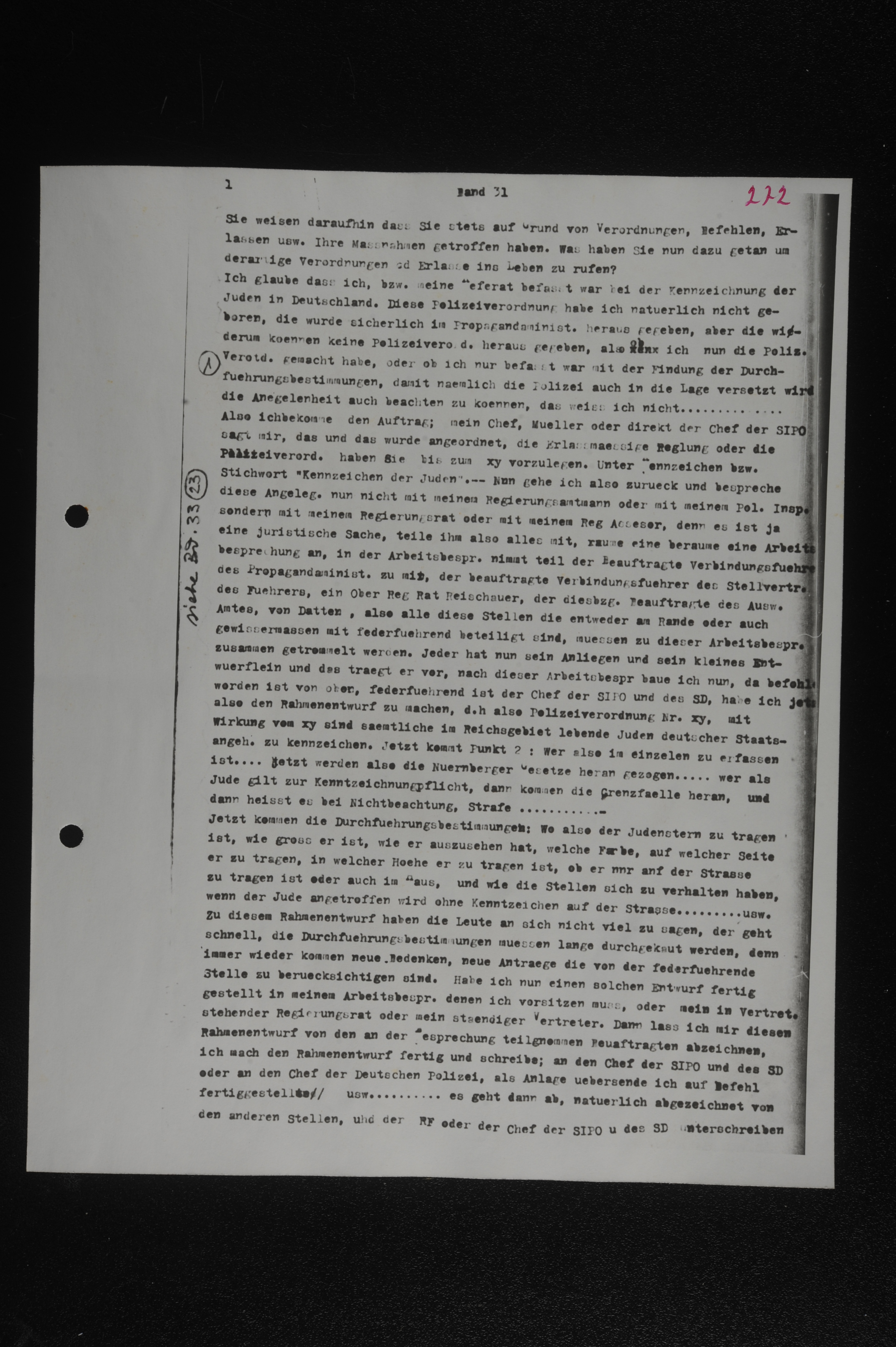
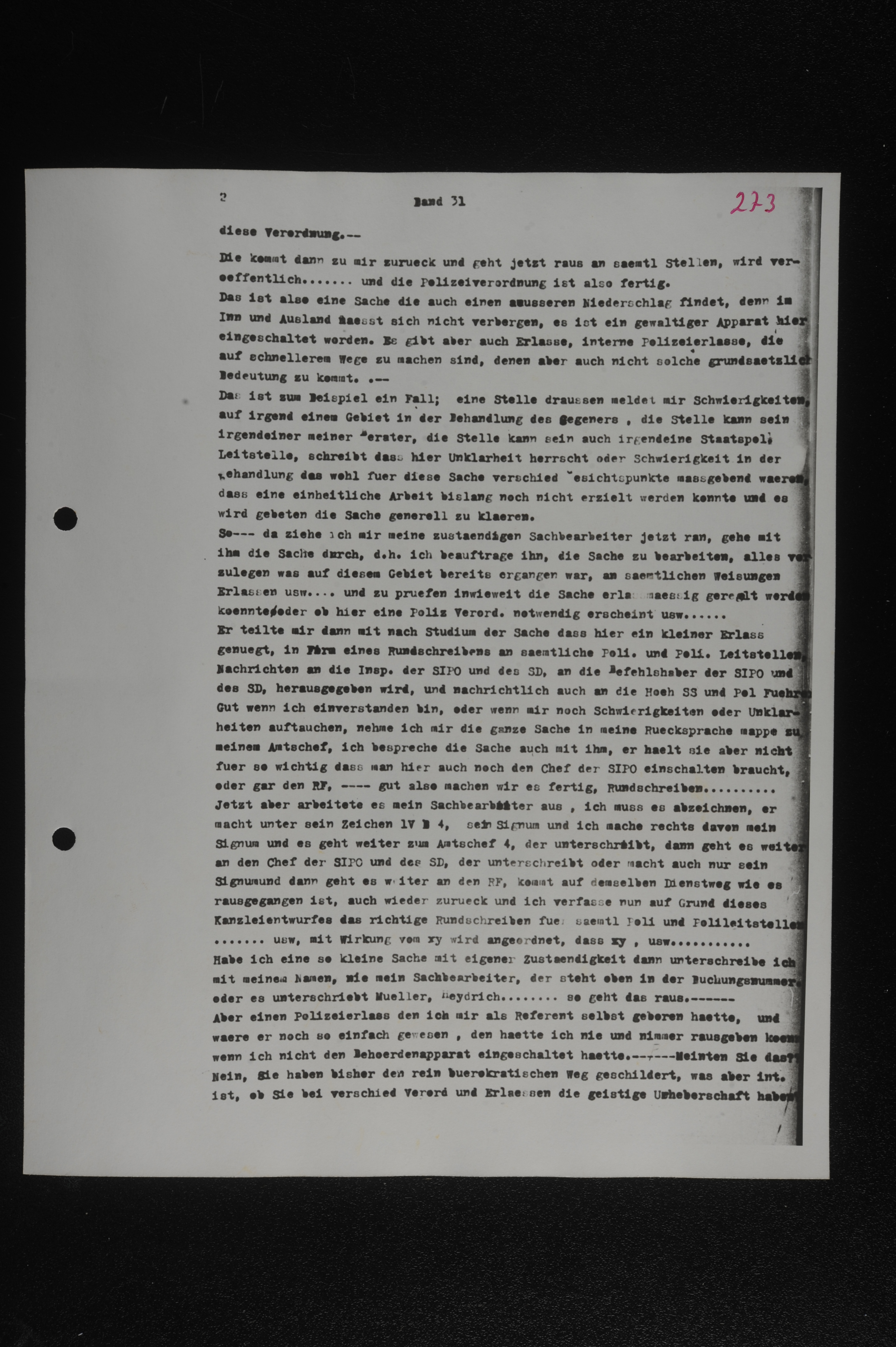
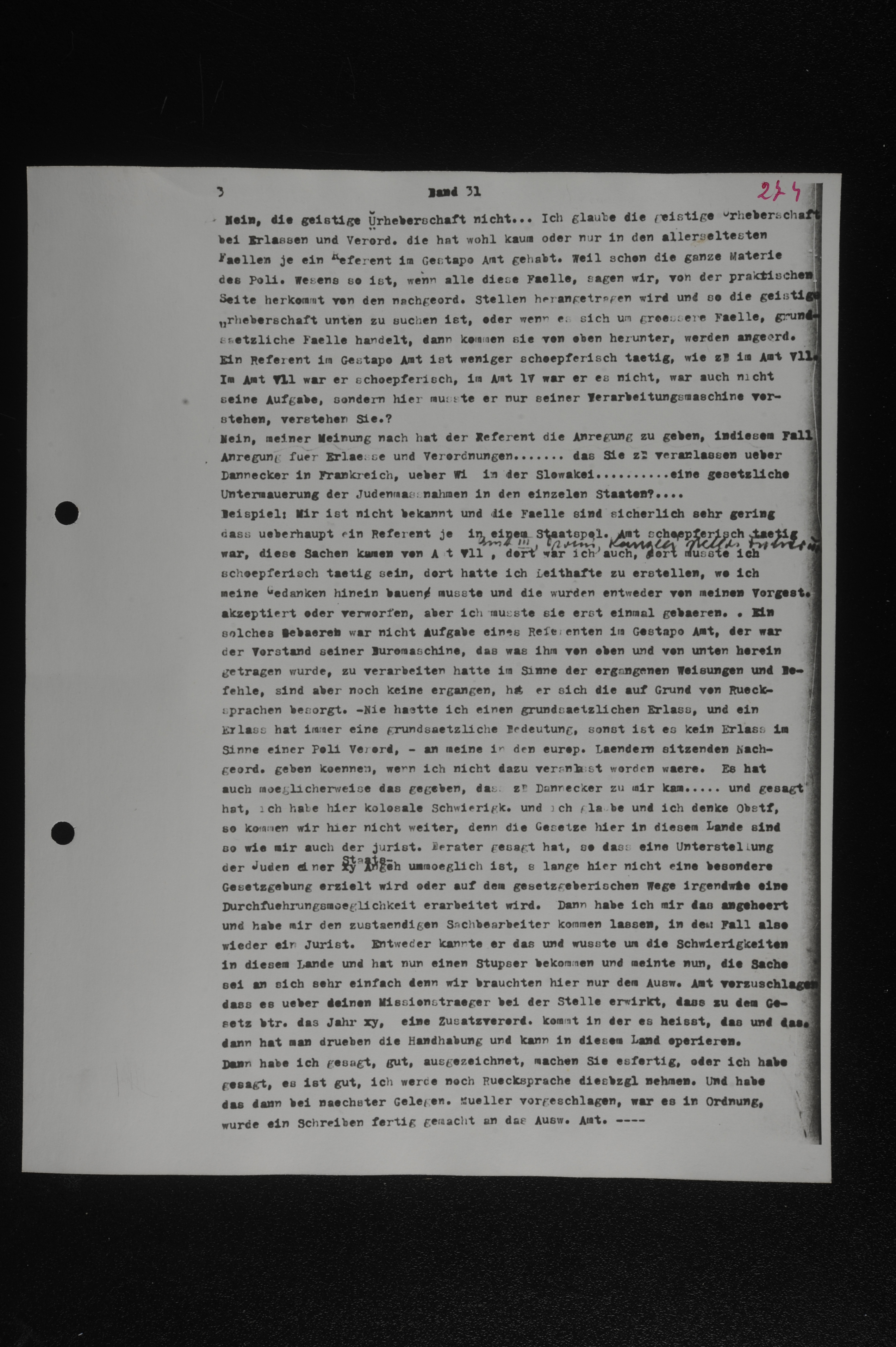
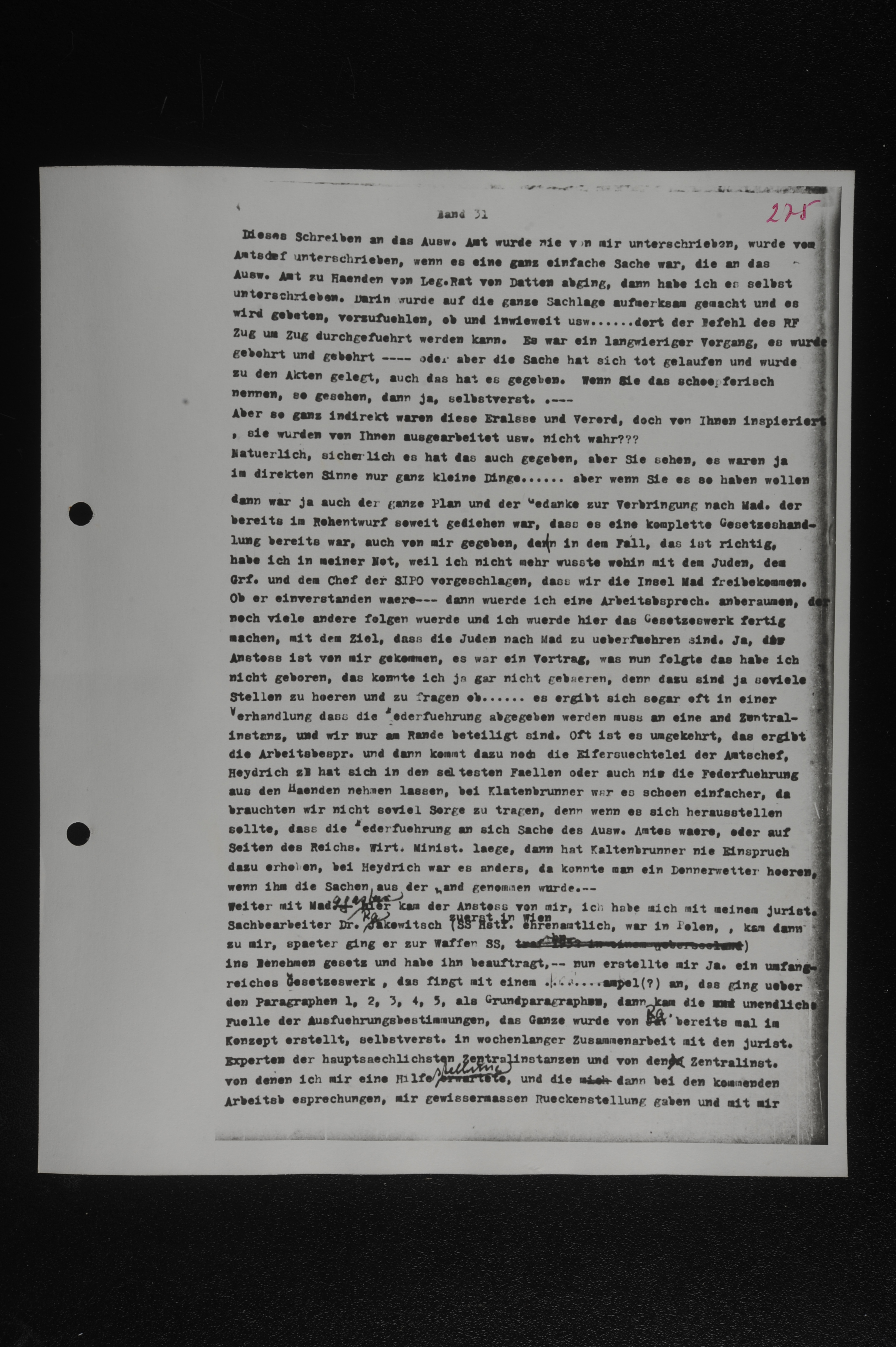
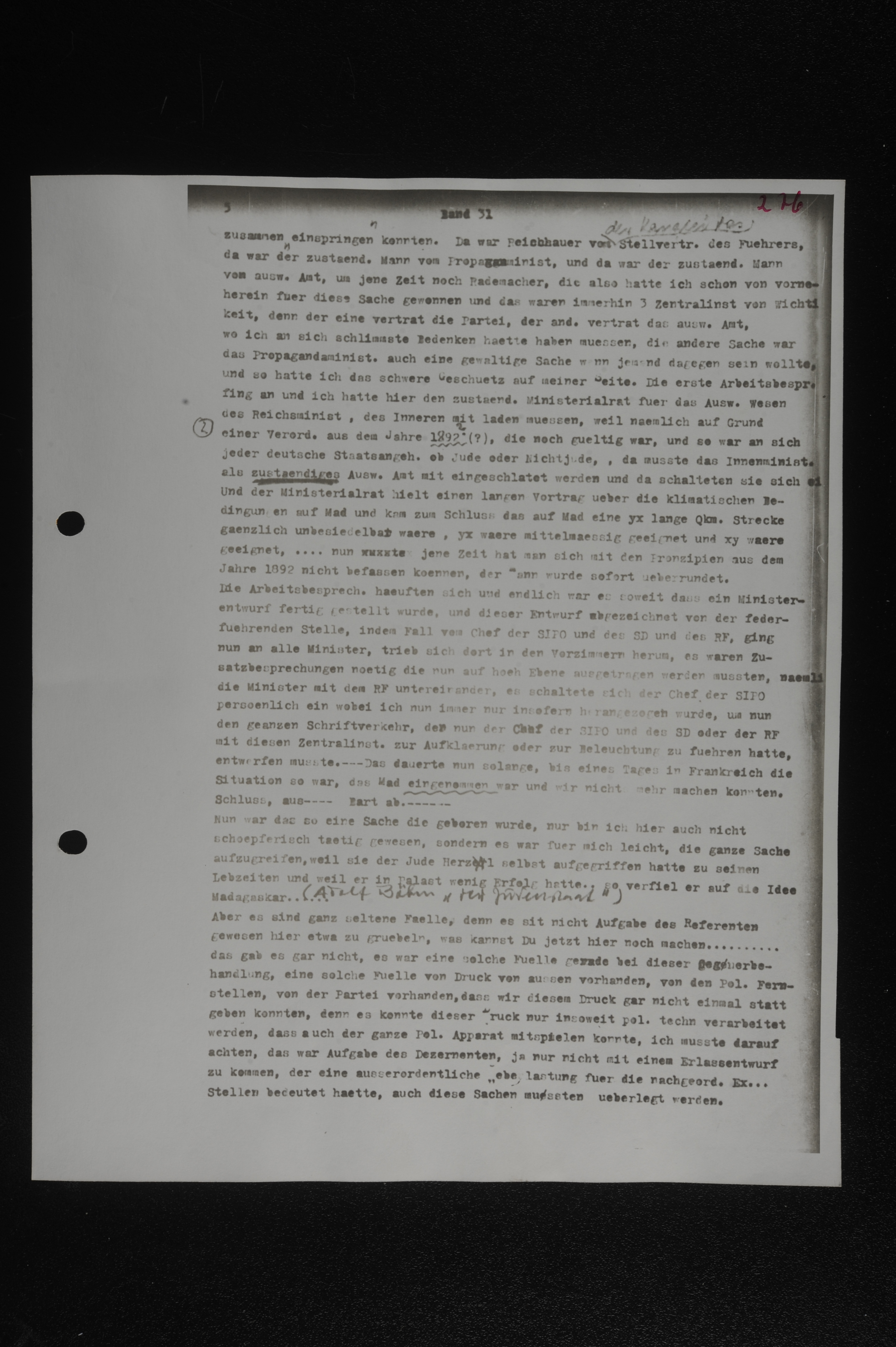
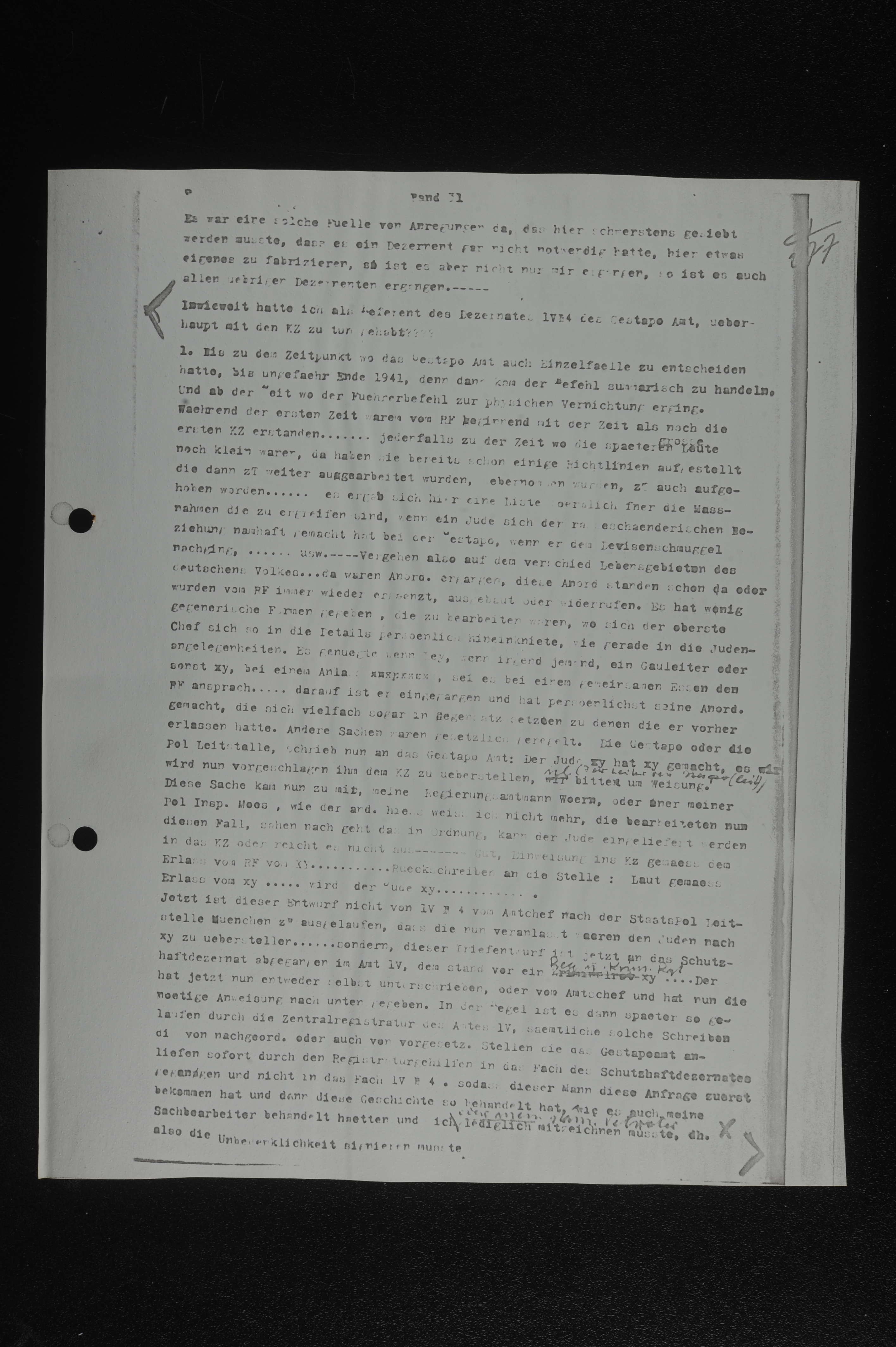
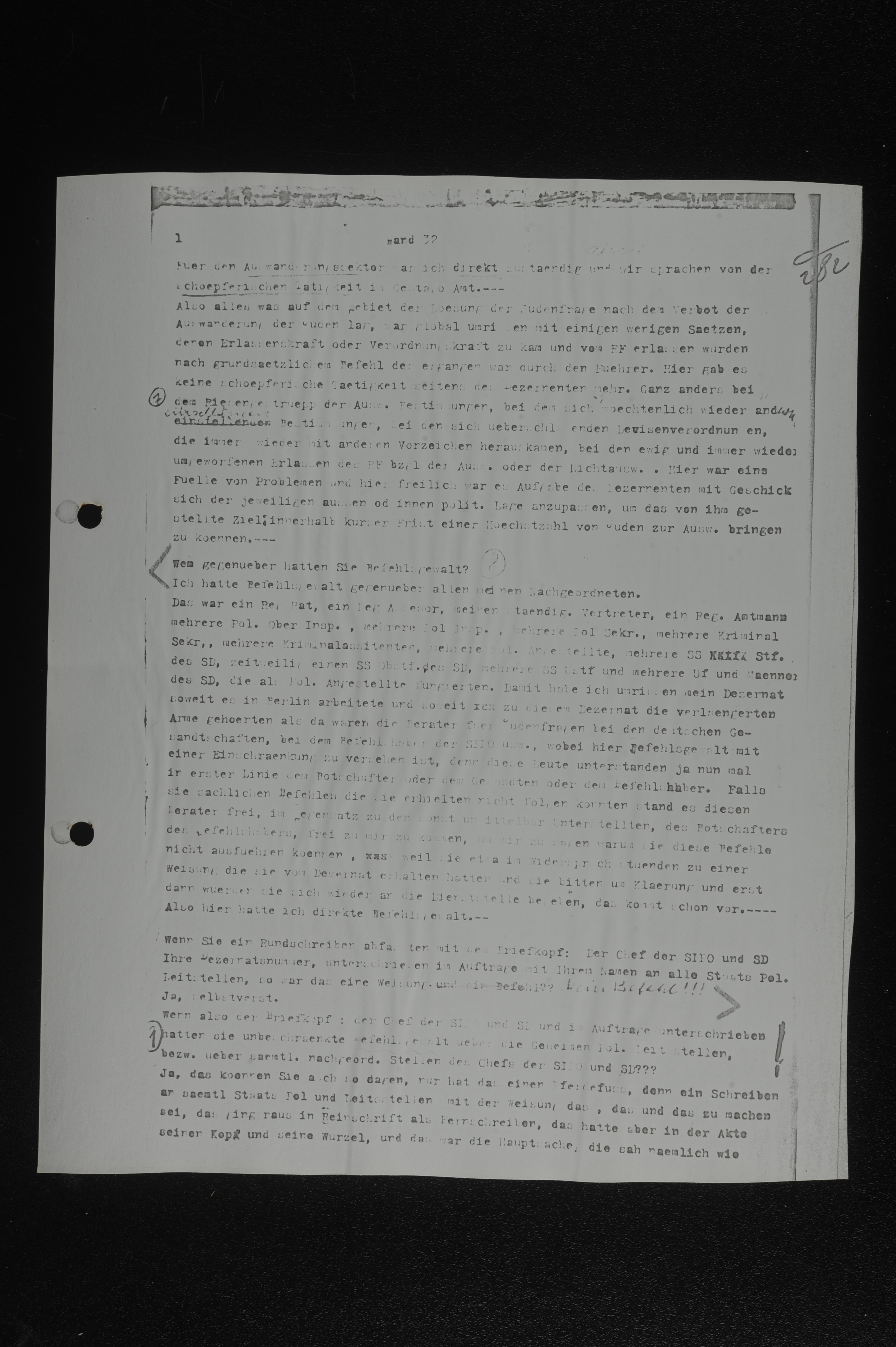
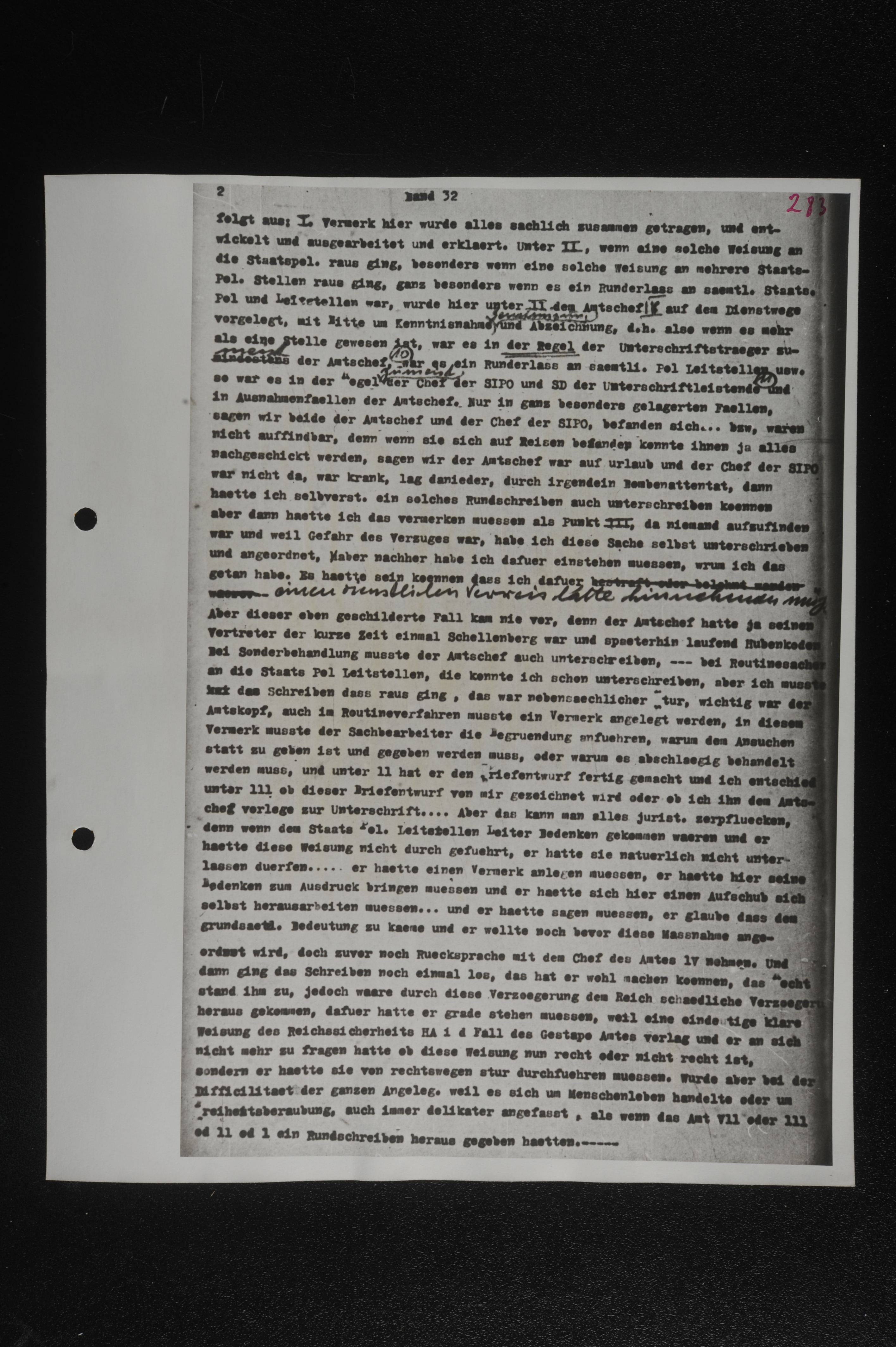
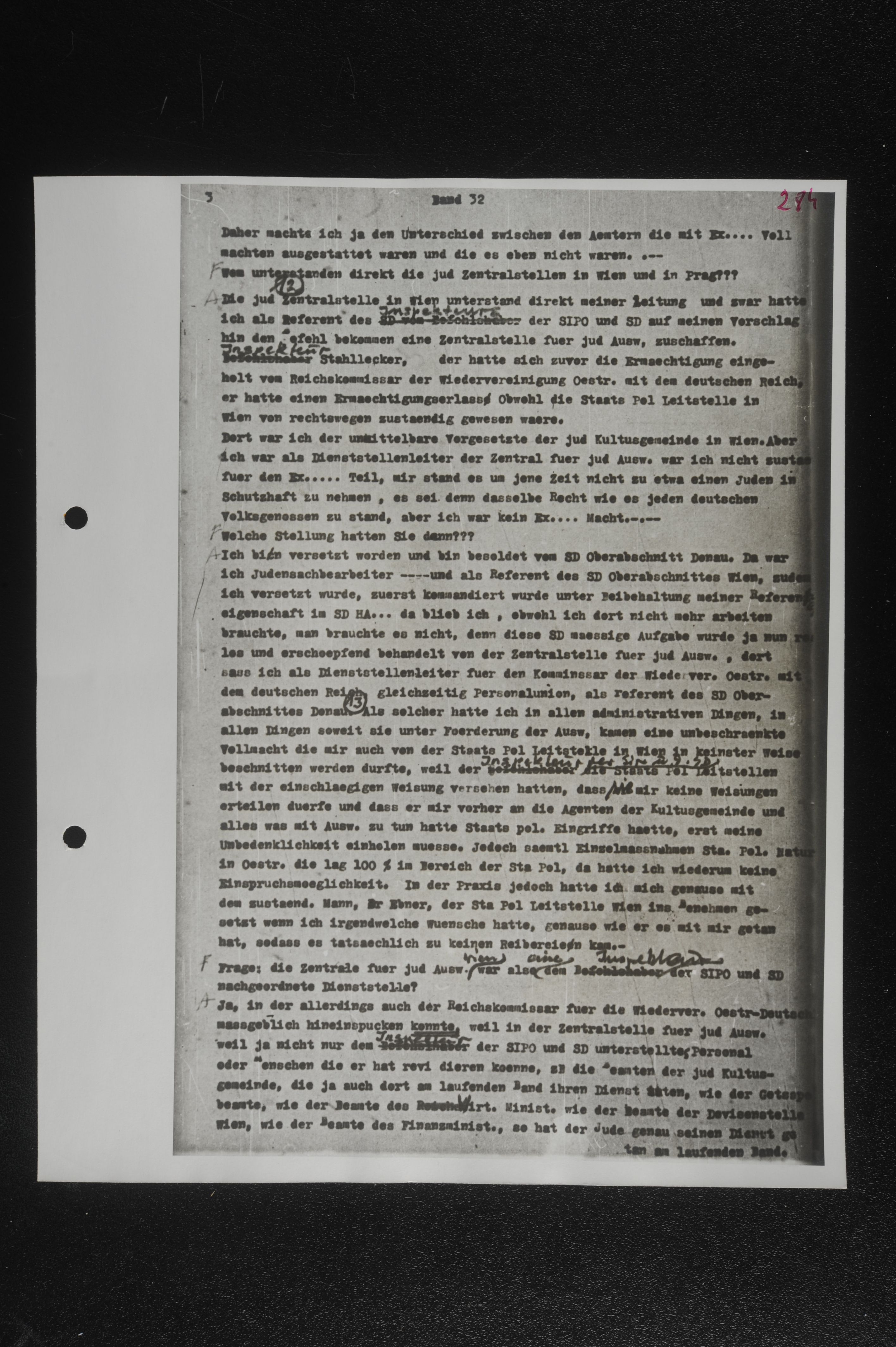
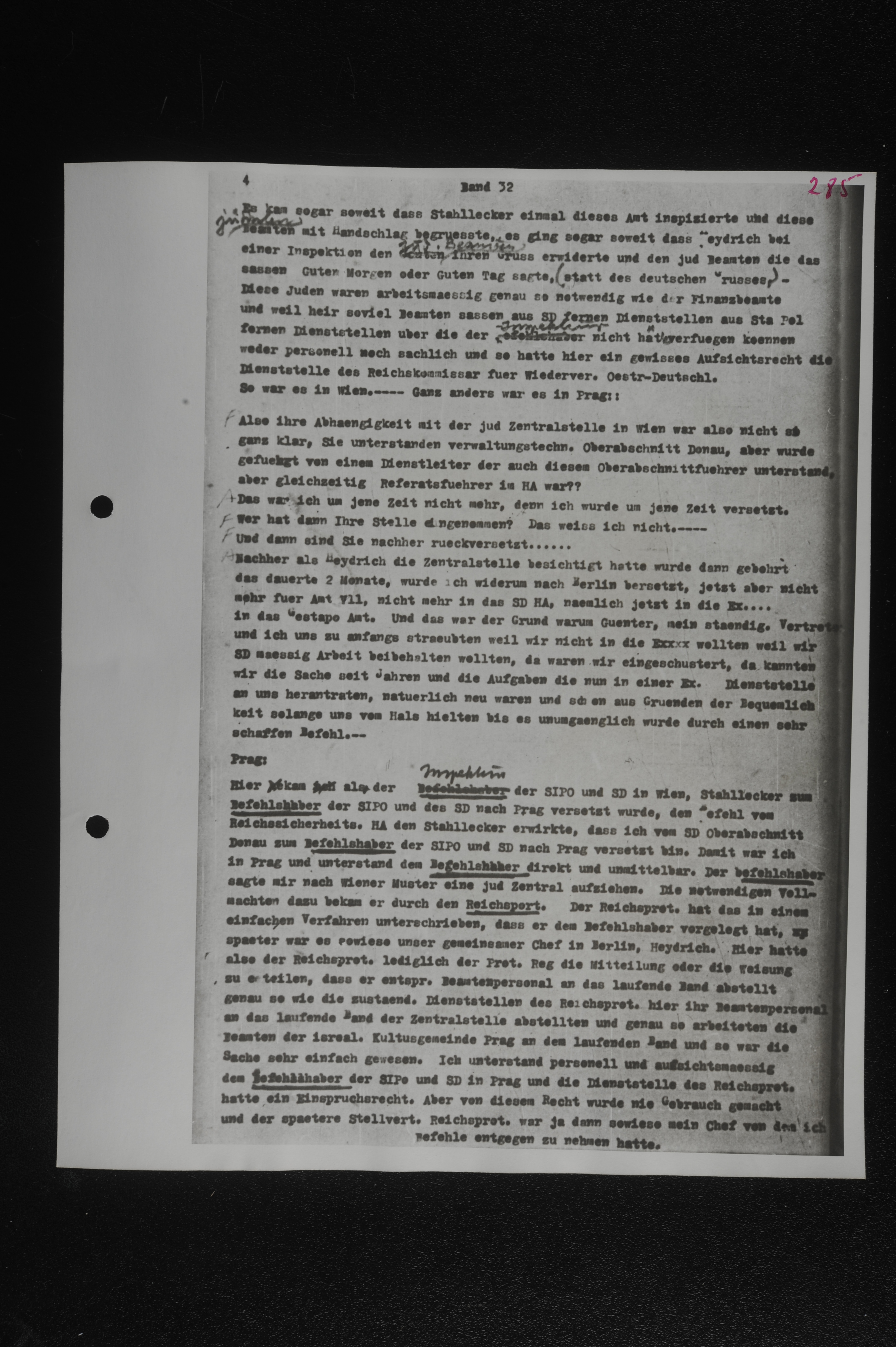
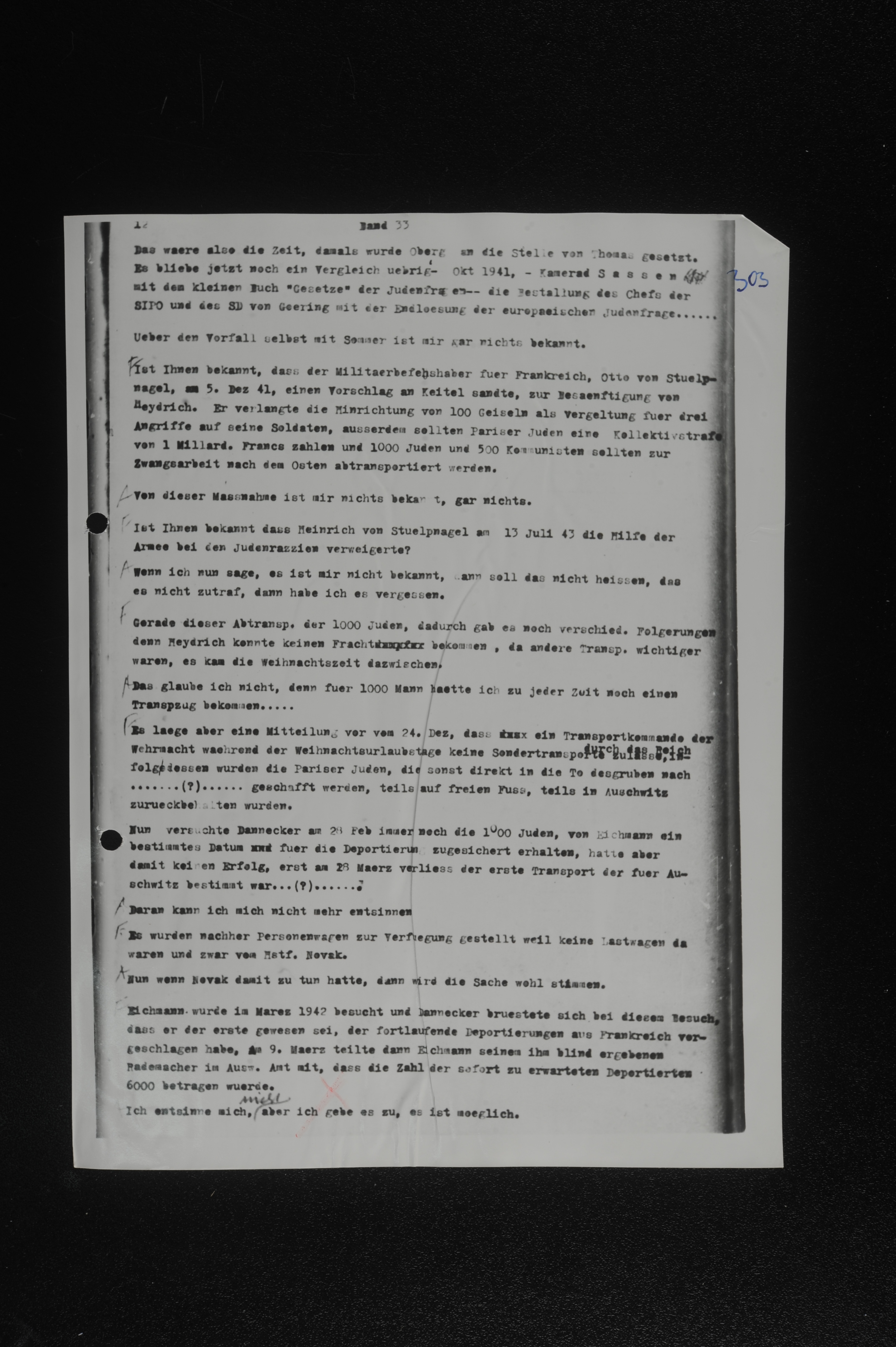
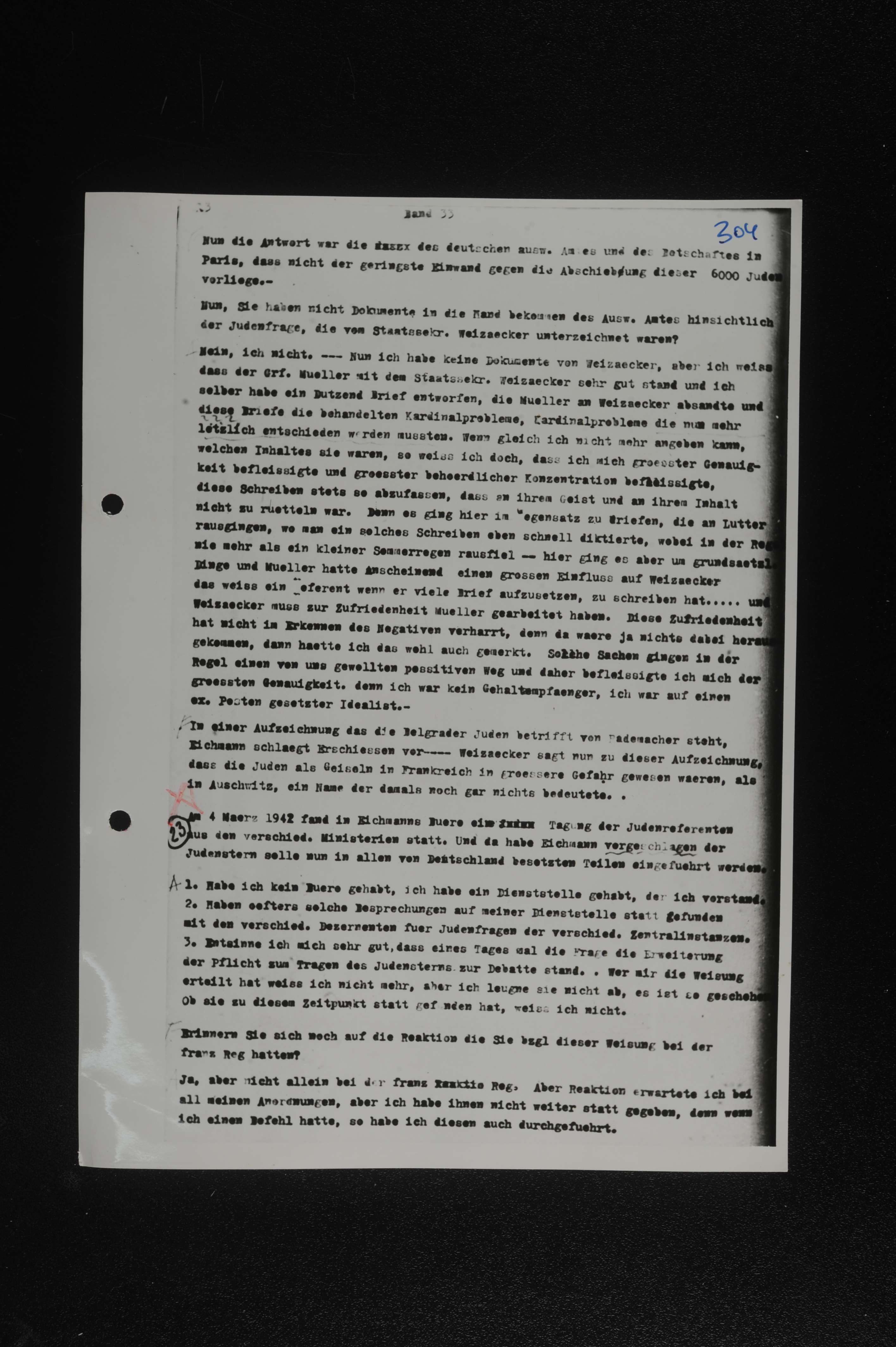
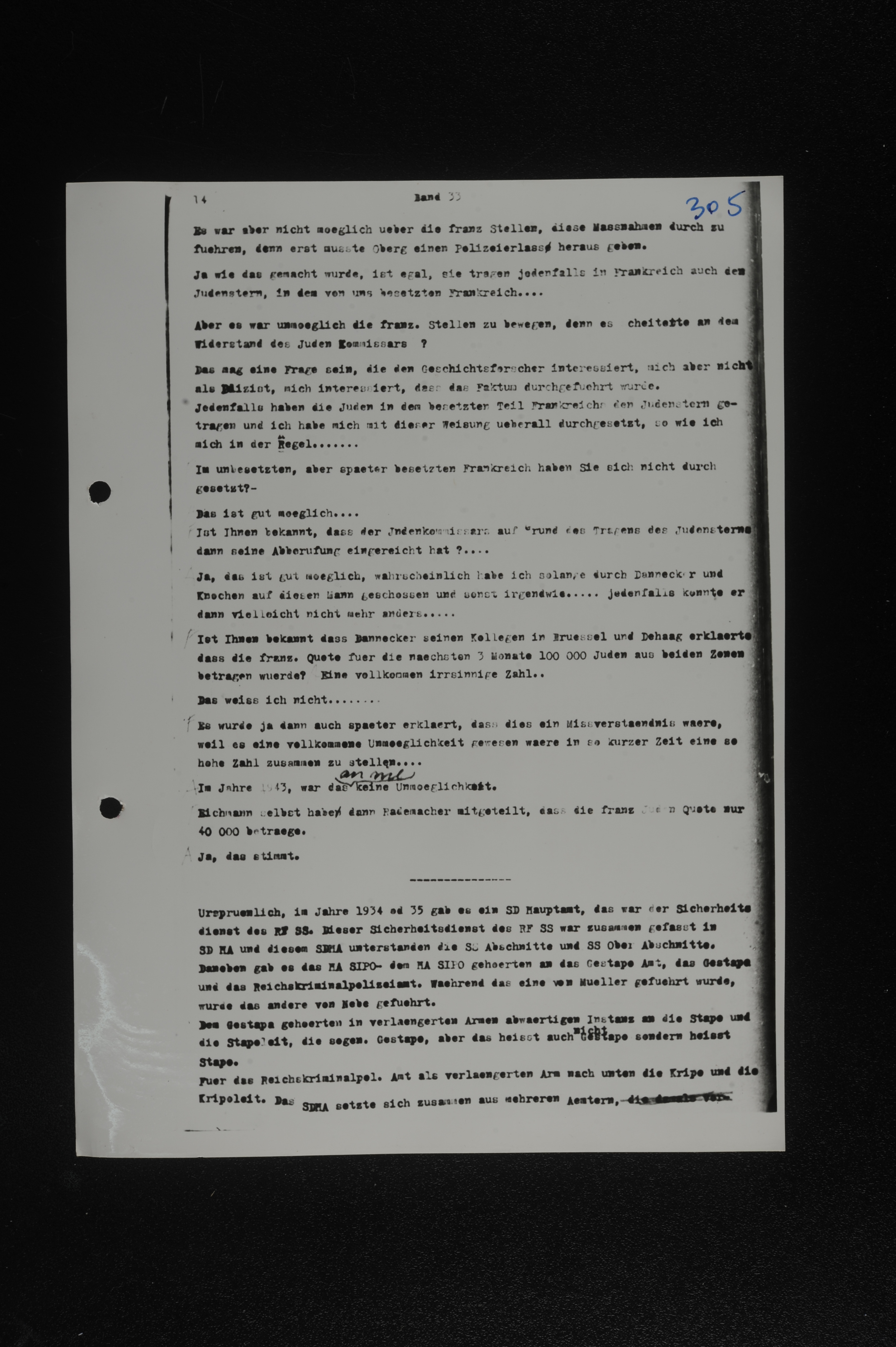
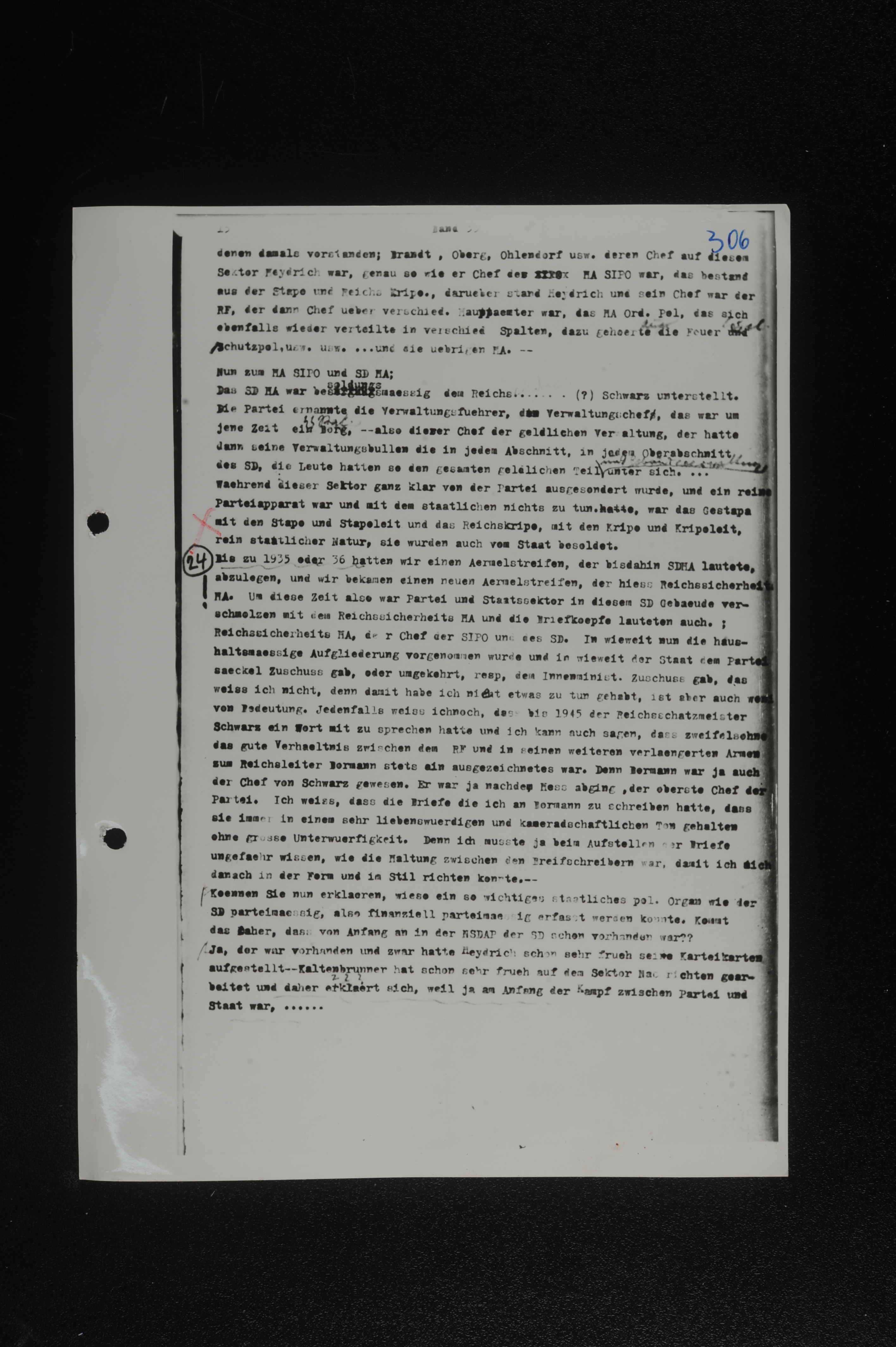
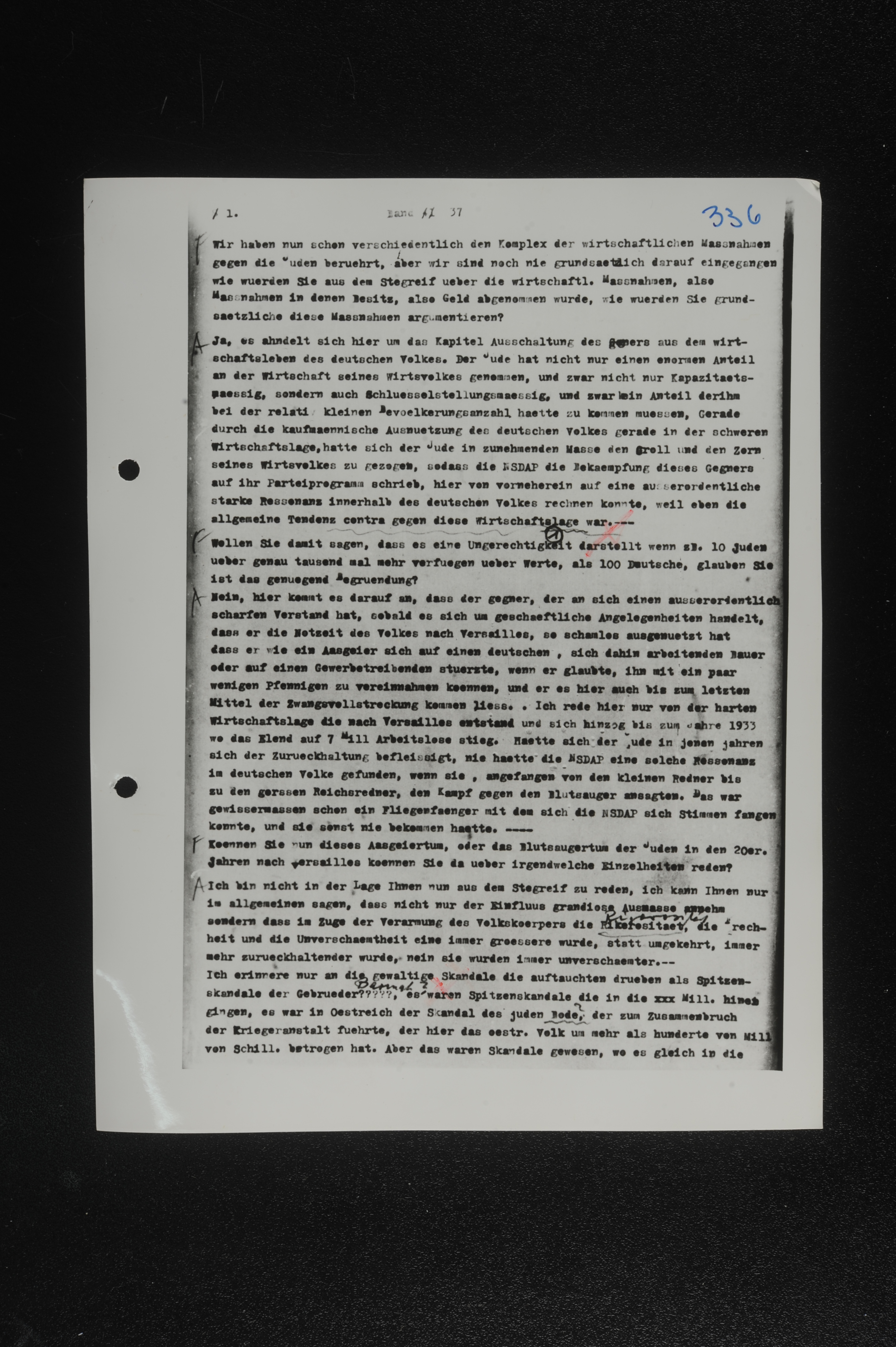
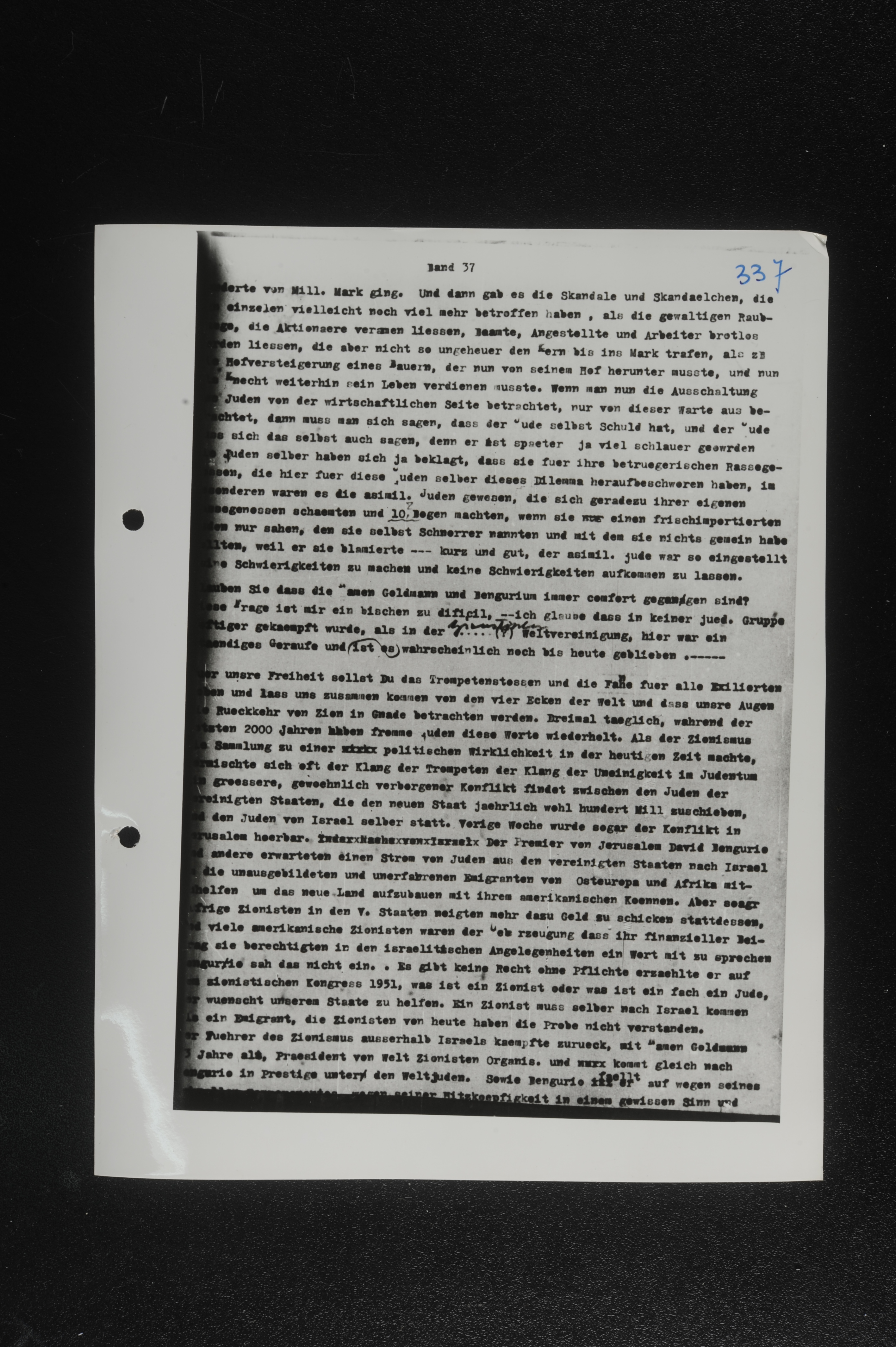
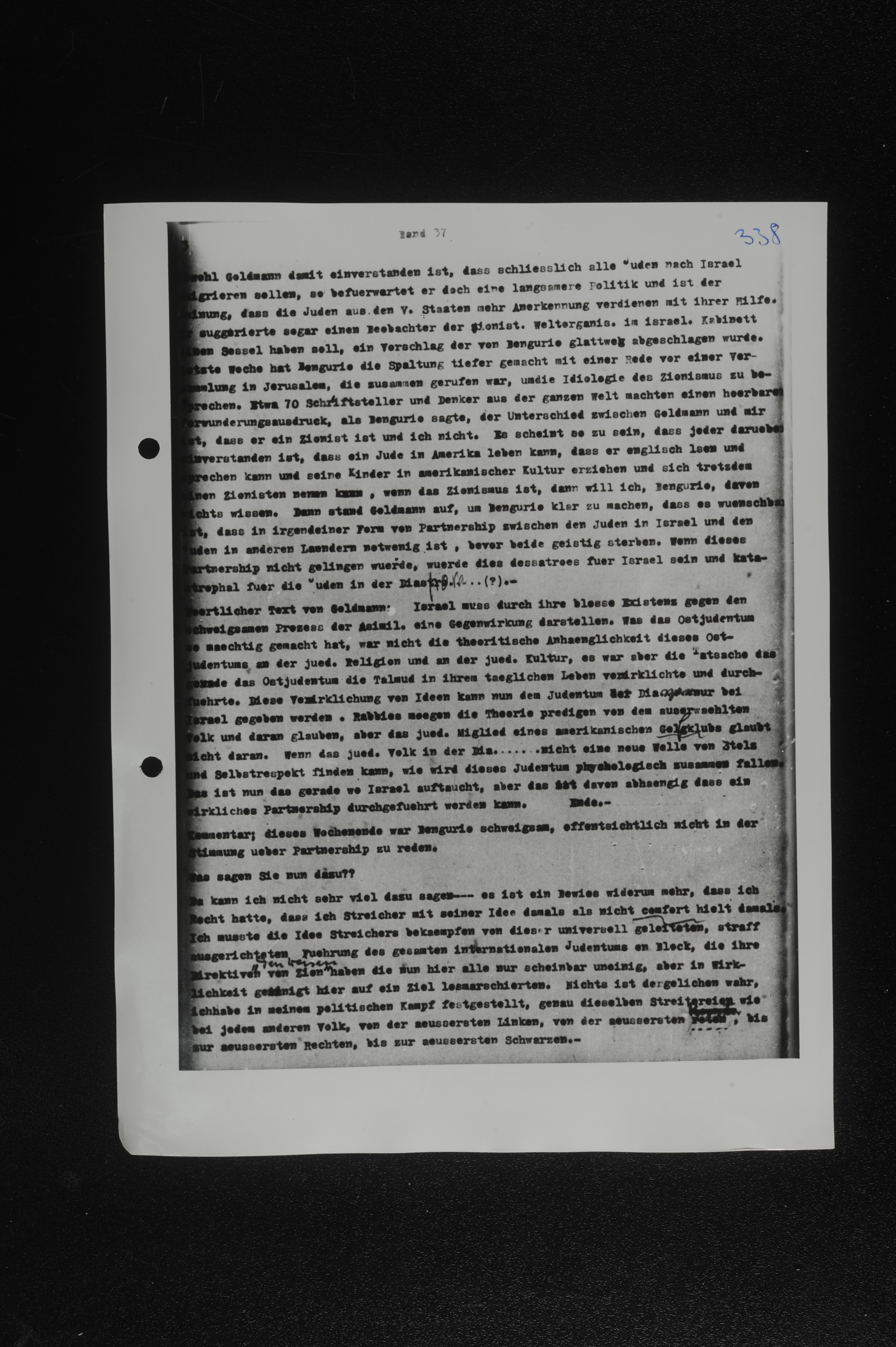
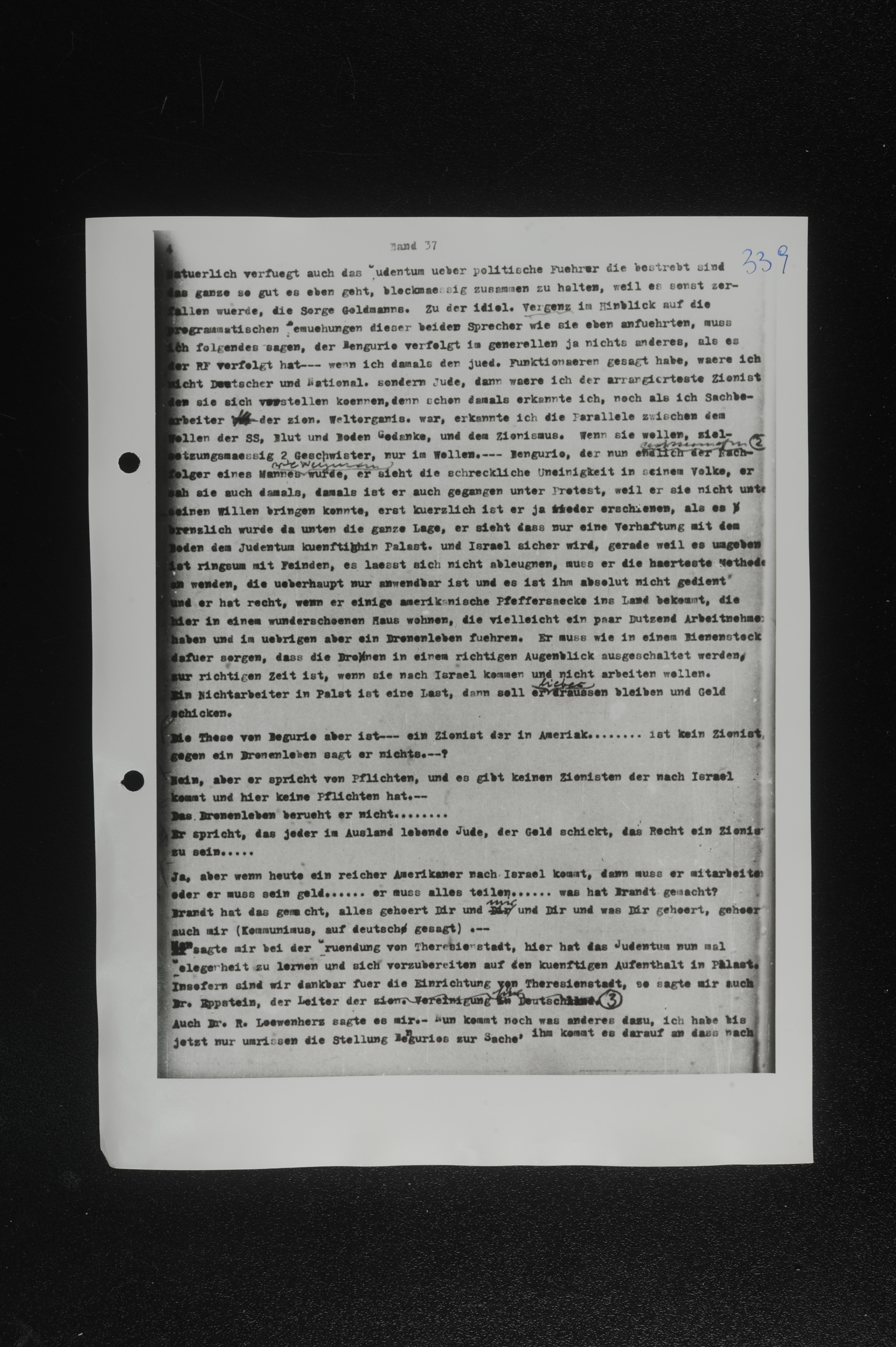
… and asked for instructions in cases of uncertainty. Naturally, my section issued those instructions, either approving or refusing, depending on the circumstances. The standard for a positive or negative answer was to be found in the relevant basic laws, decrees, police ordinances, or orders and instructions of the RF (Reichsführer-SS) or the Chief of the Security Police and the Security Service available to the individual caseworkers. Only on the basis of such existing laws and orders could a caseworker work and make decisions at all.
I believe there is no senior government administrative officer, no police senior inspector, no government assessor and no government councillor who ever worked out a decision in a central authority and submitted it to his section head for signature, or to his section head for initialing with a request to pass it on through official channels—that is, for the office chief to initial it, or, if it was of a still more fundamental nature, for the office chief to forward it to the Chief of the Security Police and the Security Service, or, if it concerned top-level matters, with a request for the Chief of the Security Police and the Security Service to forward it to the RF (Reichsführer-SS) for signature—and such an … of a central authority, within a German central authority, would first have to be born.
Now that was the official route to subordinate offices. It goes without saying that, when a matter fell within a section's jurisdiction, the section head entrusted with running it was responsible for obtaining basic instructions. He had to provide his caseworkers with the necessary working material. He took such basic instructions from the collection of laws, from the collection of decrees, from the collection of police ordinances, and from existing instructions from his superiors.
These orders arose either from legislative bodies or from direct orders of my superiors, who were approached by outside offices remote from the Security Police and, in a sense, in… passed such orders to the responsible section head through official channels, with instructions to comply. They also arose when the officer wrote to his superiors on his own initiative through official channels, explained the situation in memorandum form and, under another Roman-numeral item of the submission, requested that they take note and give instructions. Here, then, the responsible section head had in a sense prompted his superiors, on his own initiative, to take a position on a particular subject and decide how the officer should proceed in future.
In this way, of course, letters bearing file number IV B IV also reached offices to which you claimed you had no orders to give.
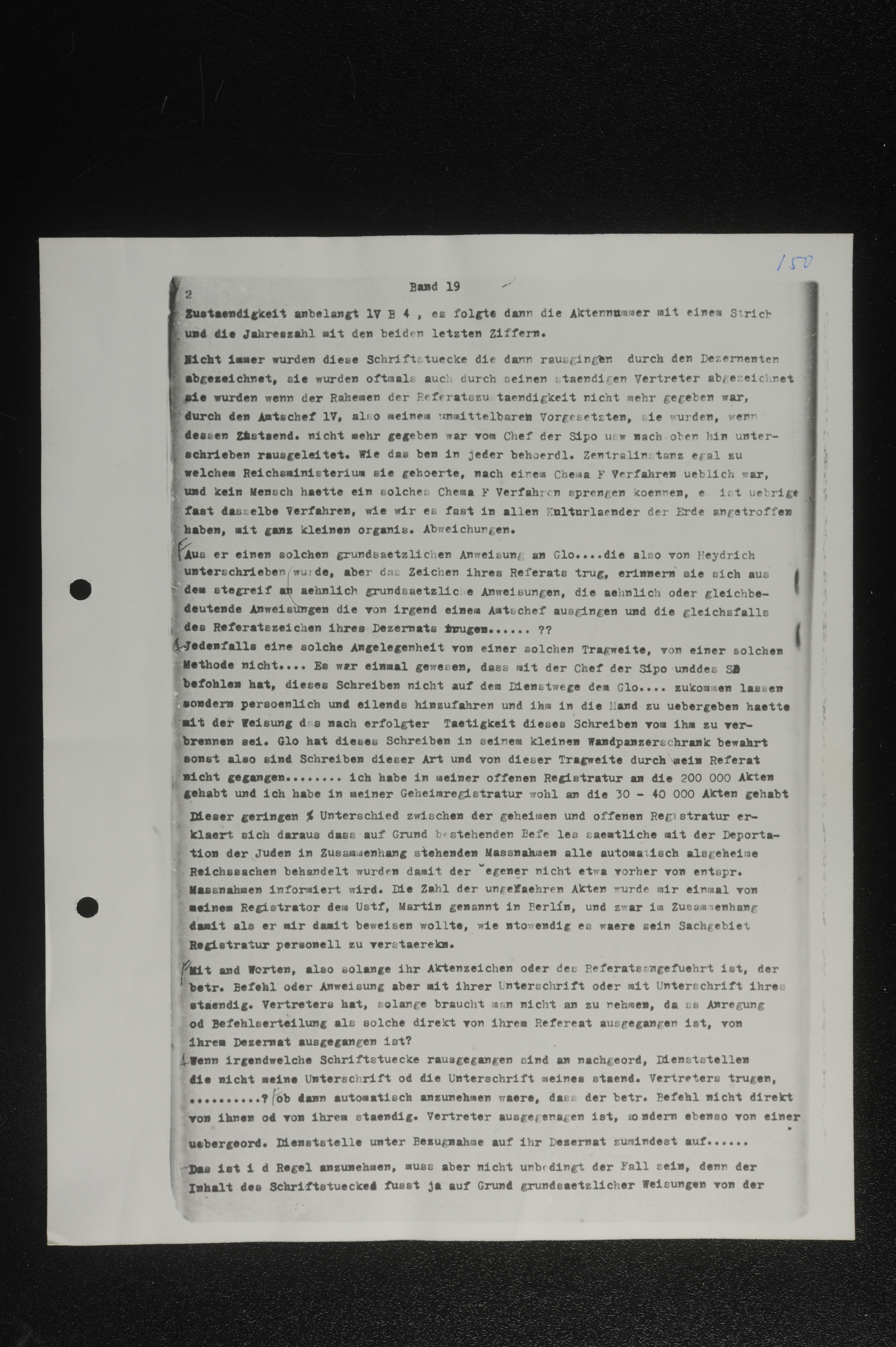
Yes, of course. For if the responsible caseworker of a Commander of the Security Police and the Security Service … me… I exclude the task forces (Einsatzgruppen): they had nothing to write; there was no correspondence there. It was a summary procedure in that area, a general order without any further inquiry. There were no guidelines to observe there, no consideration for old, infirm people; there were no guidelines for holders of medals and decorations from the First World War. There were no guidelines concerning so-called kinship by marriage with members of the two confessions. There were no guidelines at all; they proceeded under a blanket order, and not a single written word was necessary. Otherwise, of course, it was, and all these inquiries were quite clearly entered in the right-hand corner below the heading under the relevant file reference, insofar as my
Open page image and German